Date
Author
Александр Генис; Соломон Волков
Source

Preserved copy
Translated material
Dialogue on Broadway
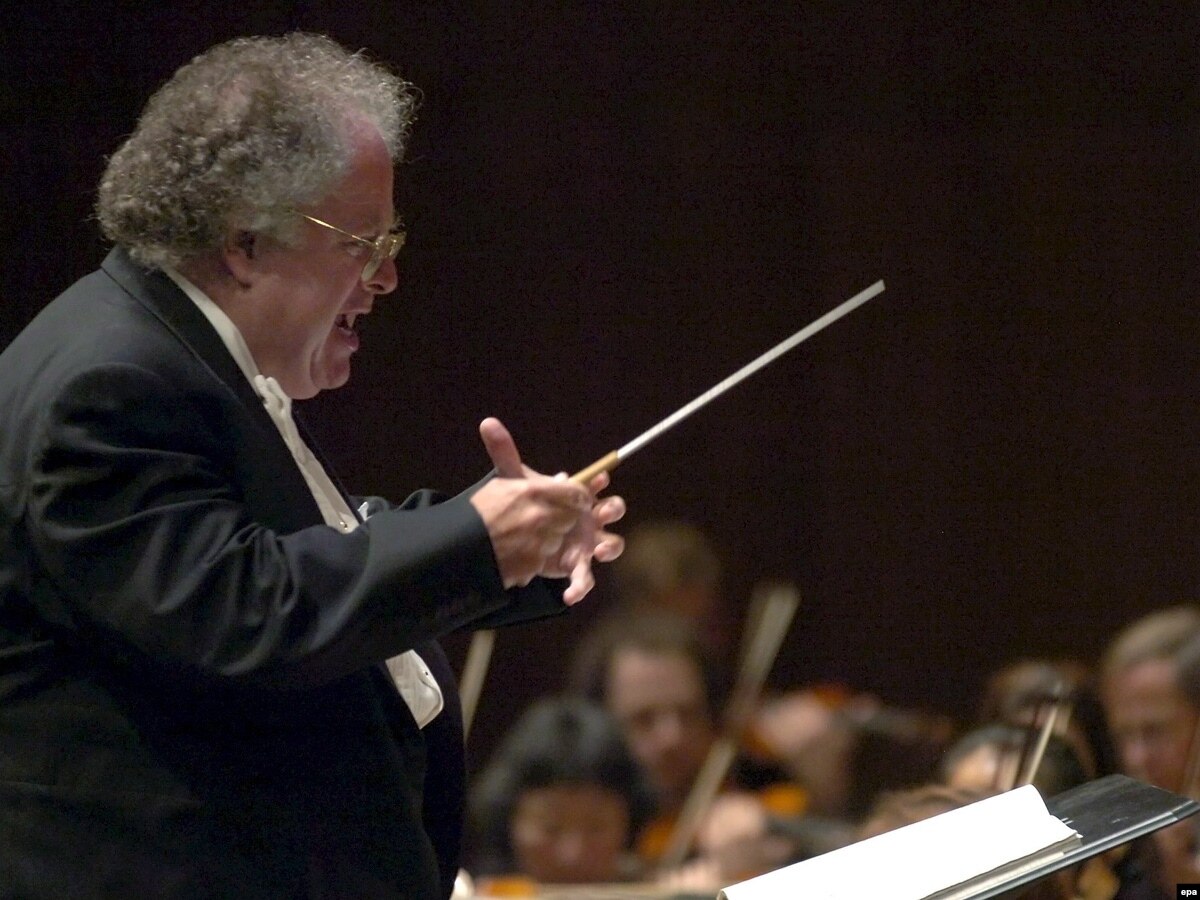
“Tangaiser”: Livine behind the Metro remote control. Sviridov: By the centenary of the composer
Alexander Genis: Solomon, what is they talking about Broadway?
Solomon Volkov: on Broadway, they lively discuss the appearance of Livine behind the conductor's remote control in the metro-Opera, where he spent the opera of Wagner Tangeyer. This was a major event in the musical life of New York primarily because Livine has recently become less and less to appear in the theater. In particular, he canceled his participation in the production of the opera of Albert Berg, and Berg is one of Livine's favorites. If not for Livine, Lula would not have been in the repertoire met. The fact that he abandoned Lula in order to be able to prepare the Tangaiser, alerted both critics and the audience. Because it suggests that Livine’s health is not in the best form.
Alexander Genis: You know, I was lucky, lucky, one might say, to visit this view, to listen to Livine precisely in the Tangaiser, and this is one of the largest achievements of the conductor.
But first of all, it is necessary to explain why the New York music lovers are so worried about their pet. The fact is that Livine and the Metro are mutual vessels, they are created for each other. Livine conducted more than any other conductor in the history of the metro. Since 1971 (he made his debut in “Taus”) Livine spent two and a half thousand performances!
Solomon Volkov: Livine is a met.
Alexander Genis: This is the 45th season, which he spends behind the remote control. I got to the theater and was completely happy that I got tickets for such a rare performance. This representation in all respects was special - it was broadcast around the world. Livine is now a rarity for the conductor’s remote control, which is why they are already preparing to create its textbook. And the performance that I saw will be one of the classic, which will be equal to the next generation.
Spectators understood this, the longer Wagner lovers in the metro. This is a special caste. Usually elderly and poor, they often come with their sandwiches, because the performance lasts five hours. After all, the opera Wagner is how to fly to London, takes about the same amount of time. You are sitting in a tight chair, your legs, arms swell, this is a fairly large test. I imagine what Livine how to conduct such a difficult performance. An excited audience goes to the hall. I am going in the elevator on my distant balcony, where I had tickets. Everything in the elevator is neatly dressed old women, I think this is the widow already, unfortunately. One says the other out loud, so much so that the whole elevator hears:
“You know, Darling, I would live here.”
- Where is here? her girlfriend asks.
- Yes, even in this elevator.
With the same enthusiasm, the hall meets Livina, who leaves for a wheelchair. Two people are taken to the remote control so that he can conduct this giant opera.
You, Solomon, always like to say that for you the main party in the opera is an orchestra. I must say that Wagner said the same thing, for him the orchestra was the main character of the opera. Therefore, I, taking advantage of the fact that Livine himself sat (and not stood) behind the remote control, carefully watched not so much after the singers as the orchestra. It seems to me that for the first time I realized your innocence. What does a good orchestra in the opera mean? It's like good movie music. She does not emphasize the course of action, does not illustrate it, but enters into a dialogue with the film, enters the duet with him. This is a contradiction and an alliance. This is a constant struggle, as in a concert, say, Mozart, when a soloist and orchestra argue all the time, but this is a love dispute. Watching how Livine conducts the opera by pleasure. I must say, for the first time I enjoyed Wagner, which can get bored in five hours, at least to me.
Of course, it is also important that the production of Tangaiser is old. She was resumed specifically so that Livine flashed. And it’s good that it is old, because there were no extravagant innovations, like a threatening car in a “ring”, which almost broke the floor on the scene of little things. It was a fairly conservative production, except, of course, the opening of the opera, which became famous for this. Because at the beginning, when Tannahizer lives in the grotto of Venus, there are quite outrages on the stage. Actors and actresses in the Triko are tumbling in an erotic ballet, which is a little reminiscent of the old "playboy". This, of course, is extremely amused by the audience, the beginning of the opera always caused a violent reaction. I must say that in New York at the beginning of the twentieth century they wanted to prohibit this opera, because it was considered immoral, but now it seems just as it should.
Solomon Volkov: You see, the play “Tannheiser” in the Novosibirsk opera was also proclaimed immoral, and this means that in “Tangaiser” it can be fired that the anger of the authorities of those who are in charge will cause.
Alexander Genis: This is because Wagner, like all our great world, always had conflicting desires. On the one hand, he wanted to show holiness and goodness, and on the other hand, as Brodsky said about Dostoevsky, “there was no more than the defender than Fedor Mikhailovich.” Wagner, on the one hand, indicates how good it is to be a saint, and on the other hand, he is so seductively depicting a vice that it is difficult to resist.
Solomon Volkov: Regarding the role of Livine in the interpretation of the opera, in particular, in the interpretation of Wagner I can notice the following. Remember, a few years ago they spent a full cycle of Nibelung Rings in a meter? The first two operas were conducted by Livine, and then the next two, problems with his health began, there were other conductors on the patch. I have not seen a greater difference in the artistic level in my life.
Alexander Genis: And this despite the fact that the orchestra itself is wonderful.
Solomon Volkov: The same orchestra, the same singers.
Alexander Genis: He is considered one of the best, if not the best orchestra in the world.
Solomon Volkov: Livine made him like that. The best opera orchestra than in the metro, really is not all over the world - and this is completely the merit of Livine. I would even say that: Livine is very respected, they love as a symphonic conductor too, but for me he was never a great symphonic conductor. Because there he has competitors who may be stronger than him in terms of interpretations. But in the opera he is incomparable precisely because he managed to achieve unity, that product, we use here such an inappropriate, not too artistic word, the result that Livine reached from the evening to the evening is unique in its completeness, in skill.
Alexander Genis: Gesamkunstwerk is the very Wagnerian unity that creates a performance as life. Actually, this must be a view. It is not for nothing that such long performances, you leave, changing - this, in fact, is what Wagner dreamed of.
Solomon Volkov: Therefore, everyone is worried, anticipating the inevitable moment when the metro is without a livne. Because there are no competitors or applicants for someone to adequately replace it. Although, of course, when Livine came, a young Livine, no one could predict that such a wonderful opera conductor would grow out of him.
Alexander Genis: When the performance began, and he, as you know, begins with the great overture and a very long overture, then with every tact you feel how you are breaking away from everyday life. This is exactly the theatrical effect that Wagner cherished so much, who wanted his operas to be the mysteries. Even before the singers entered, before the curtain rose, we were already in another world. I think that the overture for Tangaiser is one of Wagner's greatest works, everyone knows him precisely because it is so bright and expressive. And it was there that the audience broke through: the performance did not have time to begin, as the applause had already struck. Here is this overture. Lyvain conducts.
(Music)
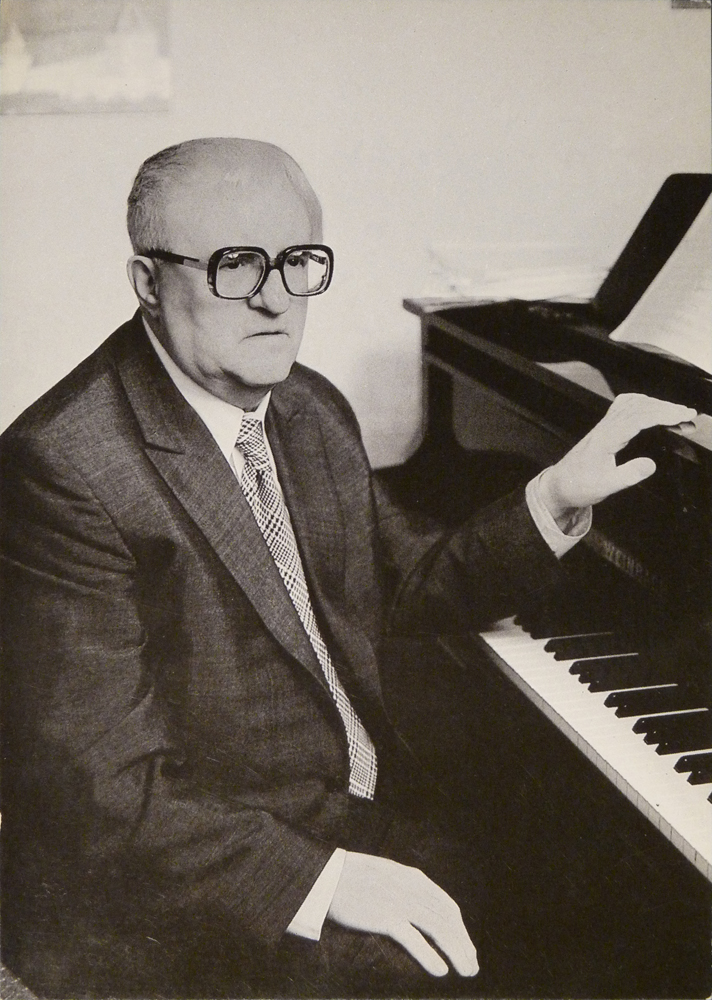
Solomon Volkov: Today I want to talk about a very significant date - it turned one hundred years since the birth of George or, as his friends called him, Yuri Vasilyevich Sviridov, of course, one of the most significant Russian composers of the second half of the twentieth century. I was lucky to be a friend with him, to talk, I came to his cottage, I met with him in his Moscow apartment, and we had good trusting relations.
I know that today some of my friends have a wary attitude towards Sviridov. This is primarily caused by diary records published after his death, in which he speaks out, firstly, quite sharply about all kinds of recognized and respected figures, including his teachers Shostakovich, and that, according to my friends, there is a shade of anti-Semitism. This is a separate issue and very complex, because the question of what anti -Semitism is and what is it, what is called, they eat, whom we can attribute to this caste or sect is very complicated. Was Pushkin anti -Semite? Were Gogol and Dostoevsky anti -Semites? Or a block? Or the same Wagner we just talked about.
Alexander Genis: This is a difficult question when it comes to people of the long -dead, who lived in a completely different cultural climate. (Although in the case of Vagher this is not a question, but an answer). But when it comes to our contemporaries, I am quite satisfied with the definition of Dovlatov, who said: "Show me an anti -Semite who would be a normal person in all other relationships."
Solomon Volkov: You know, I can still have a simpler definition on this score: I think a person who says that he is anti -Semite. From the moment when a person says “I am not anti -Semite”, this question is already becoming much more complicated, because in the twentieth century there were enough anti -Semites that were not at all embarrassed by their anti -Semitism and which, on the contrary, insisted that they were anti -Semites. But there are other cases. Say, Solzhenitsyn, who, as you know, also made similar accusations. He said: no, I'm not anti -Semite, I am trying to figure out the relations of the Russian and Jewish peoples.
Alexander Genis: I am much more interested in the cultural function of this kind of statements. The fact is that Sviridov in this regard shares the fate of many Russian-ruble writers. Think about what important role they played in Russian culture. The villagers in 1960-70 was an advanced detachment of Soviet literature. Belov’s works, whose “familiar business”, whom I loved very much, partly Prose of Rasputin, the books of Soloukhin, whom we adored for his “third hunt” about collecting mushrooms.
Solomon Volkov: And for "Black Boys".
Alexander Genis: And for “black boards” and for travel notes. I have a whole shelf of Soloukhin. When he died, I wrote an obituary, sincerely mourning this person who was undoubtedly an anti -Semite. But this is not the point, the fact is that davives played an important role in our culture, without them Russian literature would be incomplete. There can be no literature without soil. But look at what happened to them after perestroika: they all spoiled their reputation in one way or romo, and Belov, and Rasputin. They all allowed indecent statements, wrote indecent articles, and gradually came to naught, somehow they rarely remember them. Distributions have not played the role that they played in our time for a long time. Agree with this?
Solomon Volkov: Yes, I agree. Although I think that their time will return, their works will eventually live in the end, they did not die completely, I assure you. But with Sviridov, another happens. I believe that his music is still extremely popular and extremely influential. Because Sviridov was the first to voiced the poems of Khlebnikov in music, Pasternak’s poems, really deeply revealed, I believe, Mayakovsky’s poetry in his “pathetic oratorio”. They do not know how to listen to real music with us. He received the Lenin Prize for the “pathetic oratorio”. Since they decided that it should be a sort of party composition. No one listened. Meanwhile, this is a grand requiem in Russia.
Sviridov did the same on more traditional material, because he was the first to truly voiced Yesenin. The Yesenin works of Sviridov are something out of the ordinary out of penetration into the foundations of the Russian soul, on the study of the tragedy through which Russia passed in the twentieth century. The same with the block. Outside of the Sviridov block of the musical block does not exist, everything else is not standing nearby. Nothing deeper than the “voice from the choir” of Blok through the music of Sviridov, I do not know. If I were now asked to name the greatest Russian romance of the twentieth century ... But this can not be called a romance or a song-this is a piece of some life that was enriched by music through poetry and here is the “Voice from the Choir” of Blok Sviridov. They cannot even be divided. When I am now reading the Blok poem, one of its strongest, which, incidentally, refused to print when the world war began, because Pessimistic sentiments in this poem were too expressed even for the Apollo magazine. When I am listening to this opus now, for me it is one of the most, maybe the strongest essay in the vocal genre of the twentieth century. Today I cannot separate Blok's poems from Sviridov’s music.
Alexander Genis: I wonder what you are talking all the time about vocal works, and Sviridov’s instrumental music?
Solomon Volkov: also a very interesting question. Sviridov began as a student of Shostakovich, and also, which is now forgotten now - the most beloved student of Shostakovich, Shostakovich of the soul did not dwell in him. At first, Sviridov imitated him, these were very interesting works, but with obvious traces of the influence of the professor, with obvious traces of Shostakovich’s influence. By the way, for one of his first instrumental works, for the Trio, Sviridov received the Stalin Prize precisely on the recommendation of Shostakovich, which then had a great effect on such things. Further Sviridov developed, starting from his also amazing cycles to the poems of Isaacan, then the famous, brilliant Burnsov cycle translated by Marshak. What could be more beautiful in Pushkinian of musical than the opuses of Pushkin’s poems “approaching the Izhora” or “autumn” drops his bugrian forest, than the works of a very young Sviridov. This is a evidence of a genius, which, of course, is sowers for me. He moved further and further on the path of the composer of the vocal in the first place.
It is a pity, he thought about the opera all his life. Do you know what topic he wanted to write on? New "Word about Igor's Regiment." It would be something fantastic.
Alexander Genis: What does "new word" mean?
Solomon Volkov: There is “Prince Igor” Borodin, he wanted to write his opera for the same plot.
Alexander Genis: That is, to create competition for Borodin?
Solomon Volkov: This is curious. After all, Prokofiev wrote the music for Evgeny Onegin and the “Queen of Spades”, but he never also decided to write his opera “Peak Lady” and his opera Evgeny Onegin, thinking that they would not compete with any things. I think maybe the same considerations stopped Sviridov, but a pity. But that vocal and choral, which is also important to emphasize, the legacy of Sviridov, which he left us, it occupies a huge place.
Alexander Genis: A huge place in Russian music. And how known for Sviridov abroad?
Solomon Volkov: much less than he deserves. But this is vocal music, traditional, very emotionally Russian. Something prevents this music from crossing the threshold of perception by the Western audience.
I want to show in the conclusion of our conversation, in my opinion, the amazing vocal essay of Sviridov called “The Holy Love”, which was heard for the first time in the play “Tsar Fedor Ioanovich” in the Maly Theater of Moscow. The role of the king was played by Smoktunovsky.
Alexander Genis: But I saw this performance, I was lucky. They came to Riga. With great difficulty, I took out tickets. Smoktunovsky on stage made a gigantic impression on me - for life. I saw Smoktunovsky twice in the theater: in the role of Myshkin in the performance of the BDT “Idiot” and here in this performance of the Small Theater. Each time I thought how lucky the Russian stage, and not just Russian cinema, that we had such a thin, intellectual and sensitive actor. This is a whole era in the theater.
Solomon Volkov: There were two heroes in this performance, two main characters - Smoktunovsky and Sviridov’s music.
(Music)