
Translated material
Is there life after the "chip"?
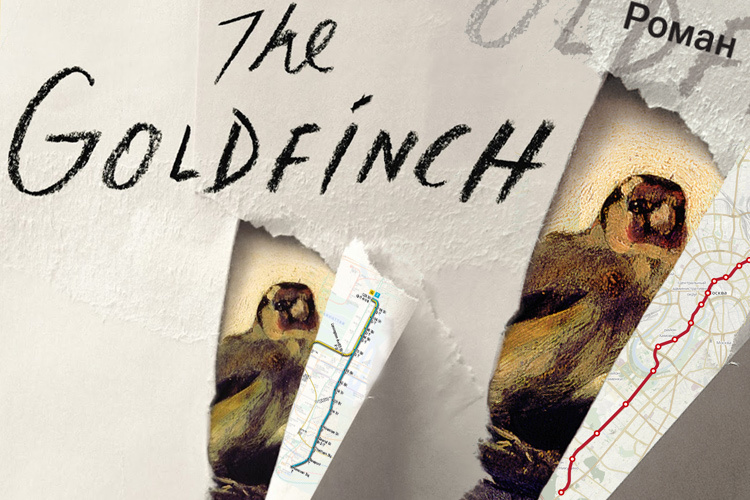
In November 2014, Donna Tartt was published in the Russian translation by Anastasia Zavozova. And by the end of November 2015, Corpus published a “little friend” (the second in a row from the three novels of an American writer), and again in the translation of Zavodzova. In an interview with COLTA.RU, the translator tells why it was necessary to re-translate into Russian “little friend”, how Tartt’s New York works, for which it is necessary to distort the time, what it is-to translate according to a thick novel every year and whether it is difficult to work with the plot, the action of which takes place in the present time.
- Can we start at once about the present? I calculated when the denouement “chipped” occurs: in the final of the book, the heroes are exactly in December 2015.
- Why did you decide so? Tartt has time violated, and as a real chronological support time to her, in general, does not matter. In one of the interviews that Tartt gave in connection with the release of the “scrapped” in 2013, it seems that it was an interview with Lore Miller for the “salon”-she said that everything was happening in a certain alternative reality, because there was no explosion in the museum in the present and there was nothing at all, so she was not necessary, in general. She needs her own novel time.
- But there is one exact date in the novel: an employee of the American embassy asks theo to call back on Monday, December 28, because now it is an Christmas Eve and they are already closing. But December 28 falls on Monday just in 2015! (The last time it was 2009 - but it is too early ...)
“But you can also look into the future.” Monday December 28 will be in 2020. In the interview that I talked about, Tartt also calls the date - I checked - she says: “Of course, because eight years ago no one exploded a meter.” That is, Tartt itself determines the date of the explosion of 2005. At that time, Theo 13 years, at the end of the novel, is 27 years old, that is, by 2005, it is necessary to add about fourteen.
- It can be two thousand twenties!
-Yes, but in general I generally like the idea in parallel of the current time, so, it seems to me, it does not matter when the denouement occurs-this is like Blum's Day, which, thanks to readers (with someone) every year.
- It's just about readers: you can fly to Amsterdam, get to the Hague, go to the Mauritzheys Museum, look at the “chip” and think that this is all in the book, exactly now is happening now. Not in the past, not in the future, but exactly now. A striking feeling for the reader - but for the translator? What is it: to translate an absolutely modern novel? When you understand that everyone understands English, they were in this museum in New York and in that casino in Las Vegas, hold these iPhones in their hands, understand antiques or in drugs-so the translator cannot be mistaken at all?
-A modern novel is rather a relief for the translator, here it is still many times more difficult to establish. When you translate the novel with a non-modern one, even such as a “little friend” -the action takes place there in the 70s-you need to catch yourself by the hand all the time so as not to use some very modern word. By the way, it was very ridiculous when my children were in a “little friend”-the main characters, such an unpleasant inventor Harriet and a boy in love with her in love with her-discussed some horror stories, and Hili says: but they say, they showed the transmission of how one aunt took her phone to her grave so that she could call her there after death. And I have the first thought - oh well, the battery will sit on the phone! And only a second after thirty it came that the phone was wired, stationary, at least call. And if you have to translate something quite long, then you can accidentally plunge Jane Osten of some modernism.
- Are you having fun at work?
-When I translated the Graham Smith Stemi Roman, which he concocted from the text “Pride and Prejudice” and naturally mushrooms with a slaughterhouse, all the time I was afraid to let the 21st century in the era of the regency. Of course, it is understandable that it was even possible there, but I wanted the contrast between the ideal, funny and not in the most important pure text of Osten and the scraps of the Graham Smith crafts from the alphabet was very noticeable, so I had to check myself. Pushkin’s letters helped well. By the way, Pushkin is somewhere like Jane Osten-and I'm not talking about the fact that they both ventilated their native languages, freeing them from the sticking Trediakovsky and conditional Maria Edgeworth. They both have wonderful letters, very real letters that people really write to friends and acquaintances without looking back at the glory and literature textbooks. Jane Osten in letters in a pleasant way gossiped, discussed the bought muslink and styles of hats, but Pushkin - well, everyone remembers about Zhukovsky, who is sowing hexameters ...
- And the Baratynsky laughs and beats!
- Yes, the person obviously did not think how to get up in a gold frame, and for a translator there is nothing better than such a real news from the past.
The modern novel is generally good-Donna Tartt in Schegla described so well New York so well that when I got there for the first time, just in 2014, I easily went along the route that theo got home from the blown up museum, and found the Hobi house. Here you need to understand that I have the perfect topographic cretinism and generally very bad with a sense of space, I print the card to find Ritz-Carleton, but he is through the road from my work. But Tartt created some kind of emotional map of New York: the gates of the Central Park, the door launched by iron, topiary in tubs-and it turned out to be easier to navigate on these marks. Tartt is generally all about emotions - I read a lot of reviews where important, serious people wrote: well, they say, what it is - here is a non -binding, here it would be a lot, here it would be a lot to twist, but here it would be cut off, well, just like a restaurant they went: but I am a gluten novel, please, but Tartt is not about logic and structure, it clings to the reader for sincere insidies - like those like those who are sincere. The masterpieces about which Khobi discusses at the end of the book (“Hey, Small, hey, yes, I tell you”), - and even if you do, and she caught you on the hook, on the pipe, if you want or not.
Of course, it would be cool if I could come to work, throw off Lubutena and write: “By the way, there is such a powder, just wow, guy, shine!”
“I remember this rare feeling when you seem to dive into the book.” And then you emerge and spend some time to get involved in your reality-you look around again: where is New York? ..
- Yes, namely - Tartt in an interview, speaking of her love for Stevenson and Dickens, called this feeling Gleetful , Greedy Reading - a happy, greedy reading, and, it seems to me, this Tartt itself is very applicable. Her tangibility of the text, the present of the world created by her - and this is her huge talent.
- You could correspond with Tartt and receive from it to be translated?
- This is also very convenient and rather facilitates the translation. It is bad when the author died and did not spend his phone into his grave; Then it is very difficult.
- You on Facebook asked readers to inform about typos or errors in the text - did it come in handy for you to print the circulation? Did you send something valuable?
-Yes, we caught ten to fifteen searches in this way, people read very carefully. But these were precisely typos, some kind of nonsense of nonsense like the "day of the dead" instead of the "day of the dead", something like that.
“You were in a hurry?” I understand that the work happens a little different from the inside, but from the outside it looks like this: in November 2014, Schegol came out on 600 pages, and in November 2015 a “little friend” appeared in the stores in your same translation. Cool pace.
- Well, in Shchegle there were 800 pages, and I finished it to translate it at the end of July 2014, and at the end of August I knew that there would be a new translation of the “little friend”, and began to slowly do it. “Friend” smaller, there are 630 pages of the Russian text, I had a little more time for it, so the pace is not cool, the most common pace.
- And at the same time you work every day in the editorial office, in Condé Nast , where strict rules and schedule.
- My work was more likely to a plus than a minus. I understand that in the collective unconscious lives the image of a translator of fiction as a kind of free artist who does not accept any borders, creates where he wants, stands in the first hour in the afternoon, wrapping himself up in a shawl, looks out the window or on Facebook at a life passing by, and then closer to the midnight he grabs himself for inspiration and writes ten copyright sheets at once. And from the graphs and plans he has heartburn. But there is an absolutely incredible writer of Khana Yanagihar, who recently wrote such an American novel “A Little Life” . He gathered all the nominations and in general all the enthusiastic reviews of critics, even those who, instead of a boiled testicle, spread Jonathan Franzen for breakfast. And so she worked for a long time in Condé Nast Traveller , and she is also constantly asked about this - they say, do you really create and even go to the office? To which she always answers very calmly that work in CNT taught her a lot: to observe the deadlines, not to wait for the muse, to organize internally and take the text on time. So for the translator, this is generally the most important. Especially about taking the text on time.
- This is generally for all working with texts - the most important quality.
- And nowhere, except in the monthly magazine with a strict Monday schedule, you will not learn this magical skill. Yanagikhara wrote her own bestseller - she came from work at nine in the evening and for a year and a half wrote every day until one in the morning. On the weekend - nine hours. I translated about the same graphics and I can say that it works. Of course, I always want more time. Of course, I would like to “chip” for two years, and the “little friend” could have sharpened for another ten years, just until the next Tartt novel, because “friend” for the translation is very complex and slow, there are many different voices for which you have to play alternately. But there are publishing terms and laws, so you turn off this inner warm shawl, you sit down and translate. Of course, then I had to exhaust and rewrite huge pieces, and two times aloud, both novels had to be read - so errors are more noticeable, but still there will always be enough time, and this must be accepted as part of the work.
-And what is it: for days to sing powders, and then come home and this is “... therefore everything was furnished with such splendor, with such aatricality, with a gloomy ritual mood, as if Kitsy was some forgotten Sumerian princess ...”
-Well, about the powders-you are very free, but I understand that in the same collective unconscious there is a glossy worker, who is all such in style and Fayneen, sticking out the tip of the tongue, writes some hwe-i-kvi and le-i-li and how to lose weight by Sunday. So, he lives only in this unconscious, there is no more of him anywhere.
- They will not believe us.
- Well, I would, I myself would be more willing to believe that every day I go to work in order to be just beautiful there. Be sure to believe in something like that. It is possible in aliens, or you can - in a glossy worker. The second, of course, is more fun. But now I will explain how it really is. I really like to read books. And I really love the production genre. This is when books are told in great detail about the wrong side of the case: the most striking examples are, of course, Haley’s “airport” or some relatively fresh “silk-trunk” Rowling about book publishing. Even Tartt in Schegle has elements of such production: wood work, fakes, auctions, the sale of antiques. So, gloss is the same exciting production. Allure , where I am working now, is almost a novel: every month you have to understand something medical, chemical or biological, and this is very exciting. Of course, it would be cool if I could come to work, throw off Lubutena and write: “By the way, there is such a powder, just wow, guy, shine!” -But in fact, you have to figure out what micro-iskapsulation is, why the perfumes of ethylmaltol and how to deal with people who in 2015 still think that in winter it is impossible to smear their face with a moisturizing cream, because the erysipelas will immediately freeze and crack.
- And what, will not freeze?!
- No. And you say - powders ... it's wildly interesting.
“But no one sees this work from this work.” But please, the modern metropolitan girl, who does not go to the cinema, does not dangle in parks with a longboard, does not drink cocktails on the roof and does not catch a wave on surf cat-she just sits and translates. This is the only option: sit down and do it? ..
- Eep , as the Americans say. Sit down right and do it. This, probably, can not be very understood, but it seems to me that everything is very simple. After work, someone goes to the gym, for example, and I-translate, because this activity brings me tangible physical joy.
- By the specialty, you are a translator of Scandinavian literature: are you working with this now? Or is it not too relevant for current publishers?
- By the specialty, I am a teacher of the Danish language and fiction, a translator of fiction is an additional specialty. Now I don’t work with this, except that I translated two seasons of the series “Bridge”, but it didn’t work out with books, but I really want, of course. The Danish language is insanely beautiful for me, although they say about him that he looks like laryngitis. But he is like an Icelandic singer Bjork. Here's a beautiful Bjork or not? Yes, no one thinks about her in such categories, because she is space. So the Danish language is the same.
- And if you transfer now from Danish - then what?
- I don’t even know, honestly. I recently ran around the Danish bookstore. Three quarters - translated prose, a lot of Swedes, but right now Danish and interesting - such that it could be taken out for export - not enough. Well, there is a relatively fresh novel by Peter Hyoga, well, Sissel Yo-Gazan wrote the second novel, Karsten Jensen-the twentieth, and Pak Damsgord quickly concocted something relevant about Syria, but in general I have some kind of feeling from modern Danish literature-temporary, I hope-amazing isolation on myself. For twenty years now, in the literature, a foreign social situation that fell on them, when the Danes lived, lived on them, and then suddenly they also had to become a multinational society and somehow move, take some other people into their circle. (Danish sociologists, now I won’t call names on the move, there is such an idea of a typical Danish society as a circle of people - people are sitting in a circle, pleasantly talking, everything is facing each other, but if you stand behind them, no one will let you into a circle and will not turn to you.)
- And about this whole literature?
-And they have a lot of such literature, where they try to let all this novelty into their circle. Suddenly, someone will find that in the center of Copenhagen there is a criminal ghetto or that a person’s neighbor is a drug addict, and this is a direct event, you need to write about it, think. The writer Ien Sönyord has such an old story - “flies” is called, there about a man and his neighbor. The man sees that the neighbor has some problems, but she annoys him with her presence, because somehow she needs to react to her, and she only interferes with him, turns on the music, quarrels with the men, and then suddenly calms down-and he is like this: well, thank God. And then flies, such as in the garbage, are starting in his apartment. And then it turns out that this neighbor under him in the apartment for six months decomposes. And this story-well, about ten years, if not more, but this feeling in literature, as people covered people, somehow, in my opinion, is still clearly preserved.
- Taking advantage of the fact that we are a little familiar and that I saw a photograph of your apartment in your FB, I want to ask about that hybrid of the bed with a rack. That is, you really sleep on a book shelf?
- Yes, true. I have a very small apartment and a lot of books, so I was very lucky that I managed to buy such a bed, otherwise I would just have to sleep on a book shelf, for example. It would not be so convenient.
- Didn't you want to take a break after the “chip”? Well, leave for three years in Bali?
- No, I have a mortgage.
In fact, I somehow did not think about it. After the “chipped”, probably, I did not want to - he was very sincere lifting, or something. There is a lot of love inside the novel itself. In some interview, Tartt said that the reader enjoys the text on the same level, and the writer, when he writes the book, descends one more level deeper. So, under all these levels of pleasure there is a third - and it is translation. And at this level, at this level, so much love responds from the novel that it works like an eternal battery - no fatigue, one golden art and peace, the whole novel - despite the narcotic trips, gloomy Amsterdam and death - he is all like a Hobi workshop, as a deck of “Maria Selestes”, a continuous 1835 year, the rays of light on wooden floorboards and no media noise.
— Все, кому я целый год нахваливаю ваш перевод «Щегла», поделились на две части: одни не прочли, а другие каждый день спрашивают, что еще теперь читать и есть ли жизнь после «Щегла». Как хорошо, что вы заново перевели «Маленького друга»!
— Вот с «Маленьким другом» как раз хотелось передохнуть, да. Он многоголосый, очень узенький и тесный, там каждый герой сидит себе, запертый в собственном мирке, и каждый мирок наполовину состоит из снов, придуманных сюжетов, метамфетамина и убойных транквилизаторов. Сестра Гарриет, Эллисон, постоянно спит и не знает, где она и что она. Гарриет, девочка, воспитанная книжным шкафом, живет в мире, придуманном тетками. Мать в отключке после десяти лет транквилизаторов. Отец в отъезде. Кертис — умственно отсталый. Юджин — проповедник. Дэнни и Фариш торгуют наркотиками, но чаще едят их сами. Пембертон бесцельно колесит по городу. У их жизни нет никакого внятного сюжета, никакой любви, одно мыканье героев по замкнутому пространству и отдельные попытки навоображать себе настоящую жизнь. Дэнни хочет уехать, тетки хотят уехать, Гарриет хочет найти убийцу брата, потому как боится, что у нее нет никакой цели в жизни, и решает, что вот тогда и такая цель — игрушечная и очень книжная — подойдет. И вот все это — несмотря на то что на читательском уровне роман движется очень-очень быстро, там постоянно вроде бы что-то происходит и кто-то куда-то по сюжету движется — на переводческом уровне раскручивается крайне медленно, путаются голоса, чужие сны, приходы и попытки запихнуть мир в книжку, а это, конечно, изматывает.
— А «Тайную историю» есть планы переводить?
— Нет, ее очень хорошо перевели Наталья Ленцман и Денис Бородкин, в повторном переводе нет надобности. Это «Маленького друга» пришлось заново, потому что в первом переводе с оригинальным текстом обошлись достаточно вольно и в издательстве «Корпус» решили восстановить справедливость.
— То есть у вас есть лет десять до следующего романа?
— Да, я думаю, что у Тартт такой производственный цикл. Она давно еще сказала, что у нее внутреннего материала где-то книг на пять; вот и посчитайте.