
Translated material
Aria with an electric drill
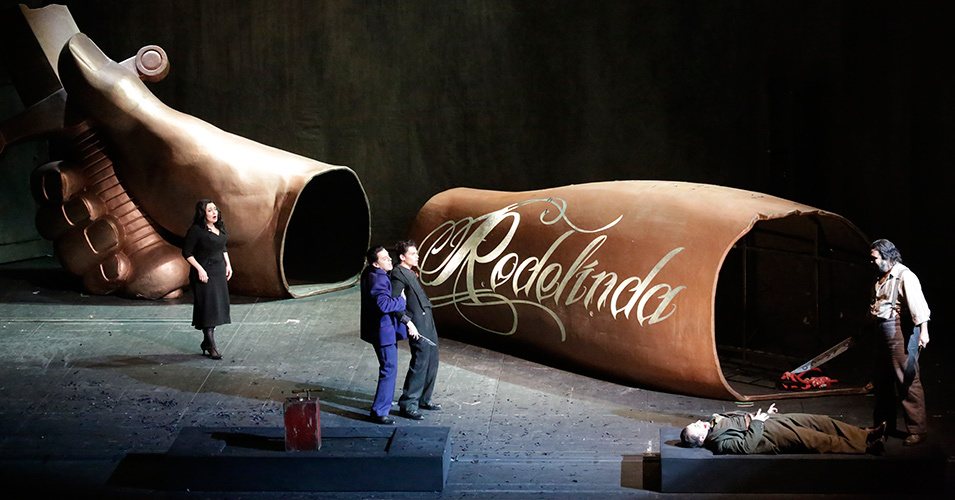
There was a quiet, uncomfortable revolution in the Bolshoi Theater - Handel’s opera was set up here. That is, formally, of course, Handel was even in the Soviet Union. In the 80s, Julius Caesar was in the Bolshoi Theater. But this was before the onset of the era of mature authenticism in our country is not considered.
In the past few decades, new executive standards have been formed in the world about what instruments to play this music on, what sound to sing, what pace to follow, what to reduce in the score, and what is not, where to insert improvisation, how to reconcile the public with a four -hour duration of the play and what to do with castrates. For some time it was believed that only orthodox specialists-old-fashioned people on residential strings and in a low system could do this. But gradually ordinary musicians were also recognized as amazing, Handel operas lost their exciting-secretary flavor and dragged into a normal opera life next to the “travis” and “bohemians”. The leaders in this direction are the theaters of Munich and London, where the operas of Handel do not leave the posters.
And it is precisely this point of view that the brand “Roddinda” reflects - the first Handel in the latest history of the Bolshoi Theater, which is co -product with the English national opera, where the premiere of the play took place two seasons ago. This project, at least with a delay for a year, was supported by the current leadership of the Bolshoi Theater, and was conceived even under the previous one. The then program director Mikhail Fichtengoltz never hid his passion for Handel.
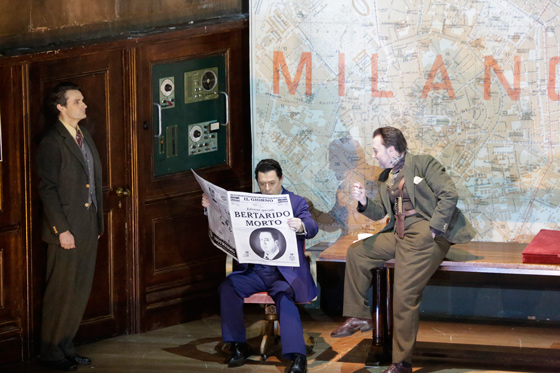 © Damir Yusupov / Bolshoi Theater
I must say that while the Bolshoi Theater was gaining courage, the Moscow Philharmonic already gave everyone a head start. Over the past few years, in the concert version, the Gendelev operas of Orlando, Ariodant, Hercules, Alcin and Alexander have been represented here (mostly with the help of active love), and the beautiful singers and sometimes the same Christopher Muldes for the remote control, which was now working on Rodelinda. Therefore, in a paradoxically, the revolutionary prime minister did not become such a revelation for the special segment of the Moscow public, ready to buy tickets for Handel.
“We saw casting and abruptly”-something like this in the air during the first action of the premiere performance. After the first intermission, the only Russian -speaking soloist, a native of Moscow and a graduate of the youth program of the Chicago opera Dina Kuznetsov, performing the capital party, discovered marvelous subtleties in her rich, but not always accurate voice. Lamensic arias are better than bravuras. With the general professionalism of the rest of the soloists and even if there are a mild and neat timbre as part of the star American contrastacker David Daniels, it was she who left the only warm musical impression.
Daniels sings the batch of the ousted king Langobards and the husband of Rodelind Bertarid, originally intended for the most fashionable voice of the castrate in the Gendel times. For an unprepared part of the public, the main exotic was a little Babi flavor, in which strong male friendship is painted: the faithful comrade-in-arms of Bertarid Unulf is also a former castrate, now a counterattacent, it is sung by an exemplary English-Free Handican William Tauers. Their excited recitative dialogs are really not devoid of comicism, however, however, fit into the directorial concept.
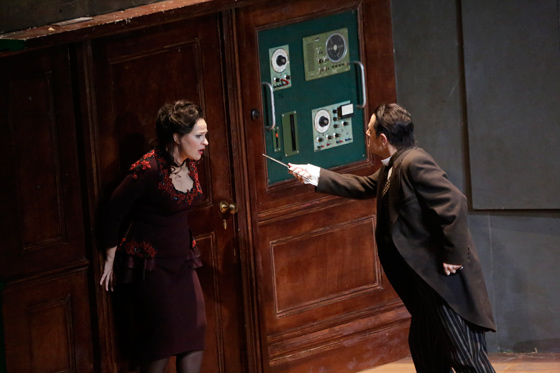 © Damir Yusupov / Bolshoi Theater
The obligatory tyrant, separating the loving couple of the main characters - he is called Grimald in this opera - Paul Nilon with a disciplined and colorless tenor. His servant-prisoners Garibald (Richard Burkhard) and the sister of King Edwig (Ricandra Donosis) repenting of his vile, make up a second, alternative, mundane pair.
The composition of the singers is one, there are four performances in the premiere block, the second block will be in the spring, two more - next season. Then the performance from the new scene of the Bolshoi Theater will return back to London. These are the conditions of co -product. Therefore, the real, its own premiere of "Roddind" does not look. It seems to be almost a tour. But there is an important participant from the Bolshoi Theater - this is an orchestra, in which the youth composition is mainly recruited for this project. And he is very pleasing.
At a pre -premiere meeting with the public (for the sake of such an unusual production, the Bolshoi Theater resumed this format, invented in 2009 for Votskk), Maestro Molds told how Strunnikov taught to abandon Vibrato in his left hand, and to seek expressiveness from the right, holding a bow. The violins are modern, with metallic strings, but shortened boweds were useful, bought for Don Juan, when Krentzis conducted here. The orchestra is raised from the pit, the conductor sits in front of the harpsichord, the Continuo party with him is improvised by Peter Kondrashin on the cello and Asya Grechishchev on Theorbe, several more ancient winds were stolen into the overall composition for the paint. Of course, the Gendelev experience is an incredible expansion of the horizon for orchestras and the main confirmation of the success of all this venture.
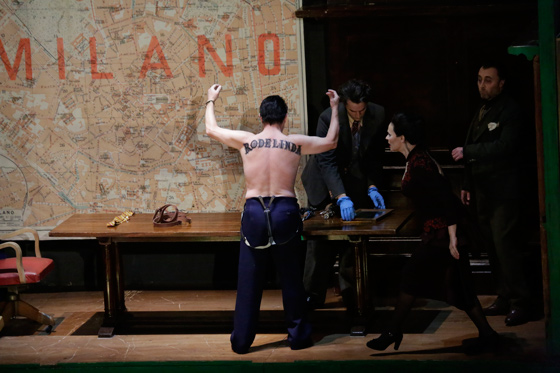 © Damir Yusupov / Bolshoi Theater
However, the revolution is not limited to this. Roddinda is the Russian debut of the famous English director Richard Jones, who works a lot of both the opera and in the drama. Together with the scenographer Jeremy Herbert, he composed an incredible density of theatrical text, very musical, inventive and virtuoso, which is serious work to read, and Chernyakov was not used to it with all the efforts of Chernyakov. Especially the part that loves Handel.
Retelling this performance is almost more difficult than to state the puzzling plot of the opera itself. In short, in the first action we are allowed to get to bush, in the second - they can move, in the third - they amused with black humor. The directors tried to do everything so that the criminal reading of the first half of the 18th century became a criminal reading for the modern viewer. To do this, to the music of Handel dance tango and try to drill the head of the enemy with an electric drill.
It is amazing that all this happens here simultaneously with the premieres of Carmen and Iolanta . True, after all, it is on different scenes. Sometimes it seems that the two buildings of the Bolshoi Theater are not across the road from each other, but very far, in some different realities. If the historical scene tries to find the way towards the bastard and import substitution, then the new one is towards the elite club of world theaters. So far, the second one is better.