
Translated material
Among Russians, dissatisfaction with the grocery embargo is growing
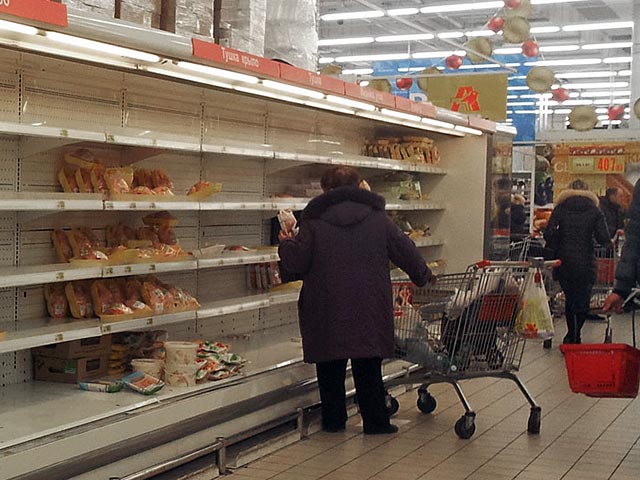
A year and a half after the introduction of a grocery embargo, most Russians still support this measure and consider it a productive response to the sanctions policy of the West. This is evidenced by a survey conducted by the All -Russian Center for the Study of Public Opinion ( VTsIOM ).
According to him, the number of Russians who approve of the introduction of the embargo is 73% in November 2015 against 84% in August 2014. At the same time, the proportion of those who do not approve of counter -sanctions involving the embargo has increased more than twice in a year - from 9% to 20%. 7% of respondents found it difficult to answer.
The number of those who believe that the grocery embargo turned out to be a productive measure - in August 2014, 80% of the respondents adhered to, while now - 63%, in August 2014. From 9 to 23%, the number of those who believe that the embargo did more harm has increased than good.
- VTsIOM: the trust of Russians in domestic goods over the year has grown by 5%
From the moment of introduction of the ban on the import of foreign production products, the vast majority of Russians (87%) have not noticed a food deficiency. Moreover, every second (52%) believes that there was an increase in Russian agriculture. More than half (64%) note an increase in the share of domestic products on store shelves.
Respondents, in their own words, began to consume more domestic food. In particular, they began to buy more Russian cheeses (84% in November 2015 compared to 75% of last year), fish (83% versus 72%), fruits (74% versus 63%), etc.
Some growth was noted in the consumption of domestic sausages and meat products (from 86% to 90%), pasta (from 82% to 88%), dairy products (from 92% to 96%), nuts (from 58% to 61%), chocolate (from 74% to 79%).
At the same time, 42% of respondents believe that Russian food foods are superior to imported analogues, 16% of respondents announced the opposite. At the same time, a third of Russians (32%) believes that according to this criterion they are equivalent.
Half of the respondents (51%) suggest that the Russians began to prefer domestic flowers: a year and a half ago, 48% of Russians grown in Russia, grown in Russia. As for drugs, a year and a half ago 51% of respondents preferred domestic drugs, today there are 55% of them. A third of Russians (33%) suggest that a year and a half ago, they mainly bought imported medicines, and 27% of respondents are currently acquired.
In August 2014, Russia introduced a grocery embargo on a number of products from Europe as response measures for European sanctions. Pork, poultry, beef, milk, fruits, vegetables, etc. fell under the ban. In June 2015, counter -sanctions were extended until August 2016.
In December 2015, the grocery embargo was introduced against Turkey. From January 1, 2016, Turkish tomatoes, cucumbers, onions and other vegetables and fruits fall under the ban on January 1, 2016.
The other day, the Central Bank admitted that the policy of import substitution of food has not brought success in most categories of goods. The proposal of beef, butter, fish and vegetables decreased the most significant thing, and in plus it was possible to go out only on poultry, pork and potatoes.
Earlier, the fact that the embargo introduced by Russia had a negative impact on the situation in the food market was recognized by experts of the analytical center (AC) under the Government of the Russian Federation. In August, in its Bulletin, the Food Embargo: import substitution and change in the structure of foreign trade "they reported a significant increase in consumer prices for all key socially significant goods. Another consequence of the embargo in the AC was called a deterioration in competition, which, in turn, led not only to rising prices, but also to a decrease in product quality.