
Translated material
Oil has fallen in price - a country in a crisis
Why Azerbaijani Manat lost half of its value in a day. Short
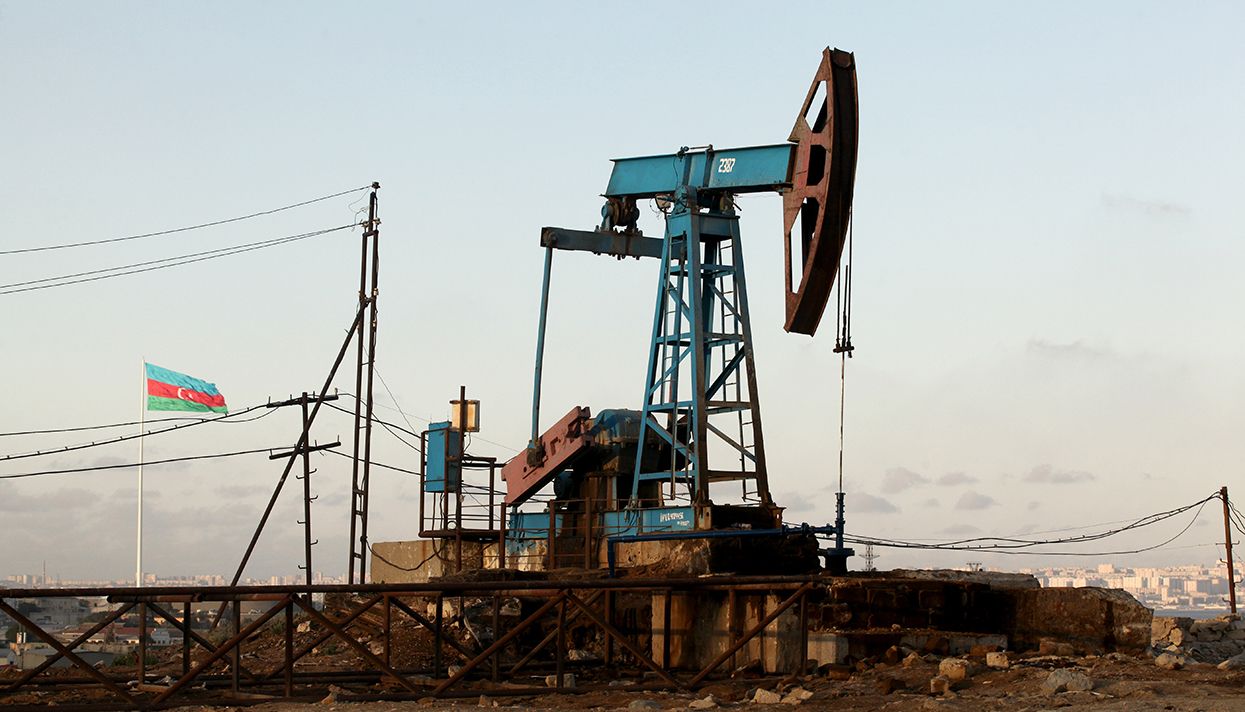
The Central Bank of Azerbaijan decided to abandon the hard attachment of the local manat to the dollar and released the local currency on free swimming. She immediately began to sink: During the day, Manat depreciated one and a half times. This is the second devaluation in Azerbaijan for the year: reducing oil prices and a drop in the currency of the currency of neighbors led to the fact that the official Baku could be left without reserves at all. Medusa briefly tells how this happened.
Azerbaijan is the birthplace of Russian oil. Baku oil crafts began to be developed during the time of the Russian Empire; In the Soviet Union, oil from Azerbaijan played a huge role - until the moment when giant deposits in Siberia (in the post -war period) were opened. In the era of independence, little has changed: oil still remains the most important source of Azerbaijan. There is a merit of local leaders-they very much built several oil pipelines (Baku-Supis; Baku-Tbilisi-Jaikhan and others), so the export of oil grew all 2000s. If in 2004, Azerbaijan mined about 300 thousand barrels per day, then in 2014-848 thousand, and in 2010 this indicator exceeded a million barrels. Along the way, gas production has been actively developing, which has increased almost four times over the past decade.
Oil boom = superior. Throughout the zero, the economy of Azerbaijan grew an unprecedented pace, and in 2006 the country's GDP increased by incredible 34.5%. Seven years from the first decade of the XXI century, Azerbaijan GDP rose by more than 10%, of which three times - more than 20%. Behind the oil sector, of course, the construction stretched: the capital turned into one large construction site. Azerbaijan did not save money, but still his trade balance was positive: in 2013, the country sold 28.6 billion dollars abroad, and bought $ 15.2 billion. Oil actually exchanged for cars, food, luxury items, aircraft and so on.
Azerbaijan has become a country with a skewed economy. Many Russian problems in Azerbaijan manifested themselves with hypertrophied power. Oil and gas in modern Azerbaijan are 95% of exports, three quarters of the budget and 40% of GDP. At the same time, Azerbaijan has substantial reserves: at the beginning of the year, the local Central Bank had reserves for 13.8 billion dollars, and the country had something like a Stabfond for $ 35 billion. Naturally, against the backdrop of a protracted drop in oil prices, Azerbaijan had very difficult - the reserves were reduced to $ 6.8 billion, the stab fund was first printed.
The main trading partners have already carried out devaluation. Azerbaijan mainly buys goods in Russia and Turkey. Both the Turkish Lira and the Russian ruble over the past year and a half have been significantly sank by the dollar, to which Manat was attached (since the beginning of 2015-to the bivalyut basket of the dollar and the euro). Maintaining a manat course in these circumstances is madness, because devaluation for countries such as Azerbaijan is perhaps the only way to at least somehow make ends meet in the budget.
Residents of Azerbaijan were ready for devaluation. Immediately after Manat was released in free swimming, there were reports of closed currency exchange points and stores in Azerbaijan; Businessmen began to recount prices right there. This is really possible in importing the country, but still the excitement should not be overestimated: according to the results of June 2015, Fitch reported that about 70% of bank deposits in Azerbaijan were located in foreign currency. The holders of these deposits from devaluation (taking into account the fact that inflation will not be promoted immediately) only won.