
Translated material
Air and asphalt fee
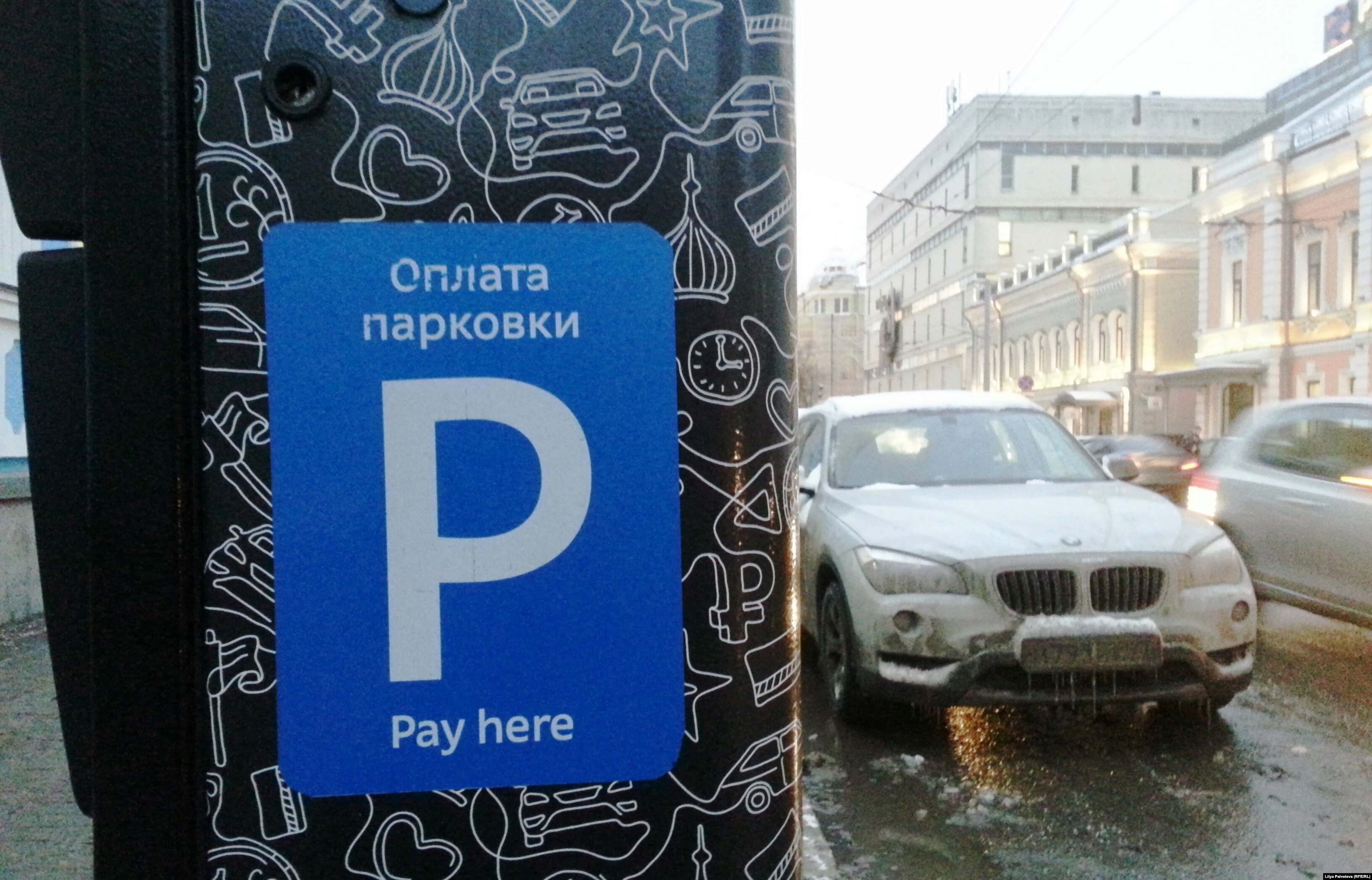
From December 26, the area of paid parking lots of vehicles has been expanding significantly in Moscow
New plots of paid parking in Moscow are introduced pointily "in some areas", according to the Moscow Parking portal. However, this is far from "some", but 52 of the district, including the so -called "sleeping", located outside the third transport ring. Most addresses are streets and lanes near 35 metro stations, as well as next to railway platforms and large shopping and entertainment centers. However, there are many places that do not apply to routes with intensive movement. Be that as it may, it is reported that the expansion of the zones of paid parking lots is made in the interests of the townspeople. As a special New Year's gift of the Moscow government, a message is presented that on holidays, parking will still be free. Therefore, from January 1 to 10, car owners have nothing to worry about.
The first paid parking lots on the sidelines of roads in Moscow appeared in 1997. The official dachshund was not large - from 9 to 11 rubles per hour. However, the practice of "gray parking" soon spread widely. Loof men were in no hurry to show permits, but regularly took from car owners who stopped at shops, offices and theaters of the bribes - in the amount that the intuition prompted them. Where the income came - it was only possible to guess.
In 2000, the first parking meters appeared, but there were little sense from them: people loomed nearby in green vests. Only three years later there was a transition to non -cash calculation everywhere. The Moscow authorities began to report on increasing revenues to the city budget. Therefore, for the general good. The cost of the service was steadily increased every year, and the territory of paid parking lots was equally steadily expanded.
However, the chairman of the public movement of Russia's motorists, Viktor Pokhmelkin, does not consider such an achievement of modern urbanism a service. Rather, just by the “Air and Asphalt” by the “for air and asphalt”:
For no reason, I have to pay for keeping a car near my house
- I am a fundamental opponent of paid parking in the form in which they are implemented in Moscow. Moreover, unlike those who have recently got into the system of wrestlers, I have been from the very beginning, from the moment they arose in the city center, stated that this was fundamentally wrong. Firstly, because it is legally incorrect to introduce a fee for what was still free without providing any additional services. They took and declared paid what people used for free. Secondly, it must be understood that motorists in the center of Moscow are by no means attracted by idle curiosity, although this in itself is not so bad, but first of all, jobs-about 50 percent of all jobs are concentrated in the center of Moscow. It is clear that they go there and on personal cars. Thirdly, there is no equality before the law. Look at the parking lot near the State Duma, the Council of the Federation, Prosecutor General and many more state institutions. There she is free for those who use it. The fee was introduced for all other Muscovites who are not related to the nomenclature.
Finally, from any point of view, the introduction of a resident fee for local residents is completely unacceptable. Suddenly, for no reason, I have to pay in order to keep a car near my house. In my opinion, the Moscow government leads a consistent line to supplant motorists, transfer them to public transport. This is on the one hand. On the other hand, to tear off as much money as possible from them.
- However, many, including Vladimir Putin , say that paid parking for Moscow is salvation and good. What otherwise not to cope with extraordinary transportation. In particular, they argue that thanks to such a measure in the center, it was possible to partially cope with traffic jams.
-Firstly, if it became easier to ride, then not much. Secondly, no one proved that the reason is paid parking. Let us recall that we now live in an economic crisis, when gasoline has risen very seriously, when car sales fell very significantly, when many people simply began to use the car less often than they did before.
In addition, it seems to me that even if it were so, socially useful goals cannot be achieved by unlawful methods. A much more effective and radical way to solve the problem of movement in the city center is to remove jobs from there. I don’t understand why all these state institutions that use parking lots are deployed in the center of the capital? Why not disperse them and, thereby, deprive people of an incentive to go there? It is no coincidence that there is no such excitement on weekends. It is no coincidence that the parking on Sunday was made free, because there is no such bust. People go there to work - this is the main motive, the main reason.
Sometimes I have to ride the subway. At the rush hour there is hard. If an additional number of passengers pours there, I do not know how much and how the metro cope with this
If I have been and remain an enemy of paid parking lots in the center, then even more so against them when they went beyond the third transport ring. In many places where these parking lots have now been made, there were no traffic jams. Moreover, there were no problems with parking spaces. For example, I very often come to the VDNH and Ostankino areas. I never had problems with parking. I know this area well. I know where you can put the car. Now a paid parking is everywhere in the west.
- Indeed, this is Sergey Eisenstein Street, longitudinal passage, Ostankino and Khovanskaya streets.
- The question is - what is this done for? Now people will go there much less. Among other things - to shopping centers. But they make purchases there, and this money goes to the Moscow budget. Not directly, but through taxes. So why limit the influx of people there? Where is the economic meaning of all this? But money is needed here and now, including at the expense of fines for unpaid parking. The interests of motorists, and Sergey Sobyanin is not trying to hide, not in the first place and not even in the fifth for the Moscow authorities.
- But you can also get by public transport. By the way, often a trip to the subway takes half as much time than by car.
- Public transport is now overloaded. Sometimes I have to ride the subway. At the rush hour there is hard. And if an additional number of passengers still pours there, I do not know how much and how the metro cope with this. Is he prepared for this? I'm not sure about that. For such a metropolis as Moscow, it is necessary to develop the entire infrastructure - both road and public transport, ”says Viktor Pokhmelkin .