
Translated material
"Freud would cry"
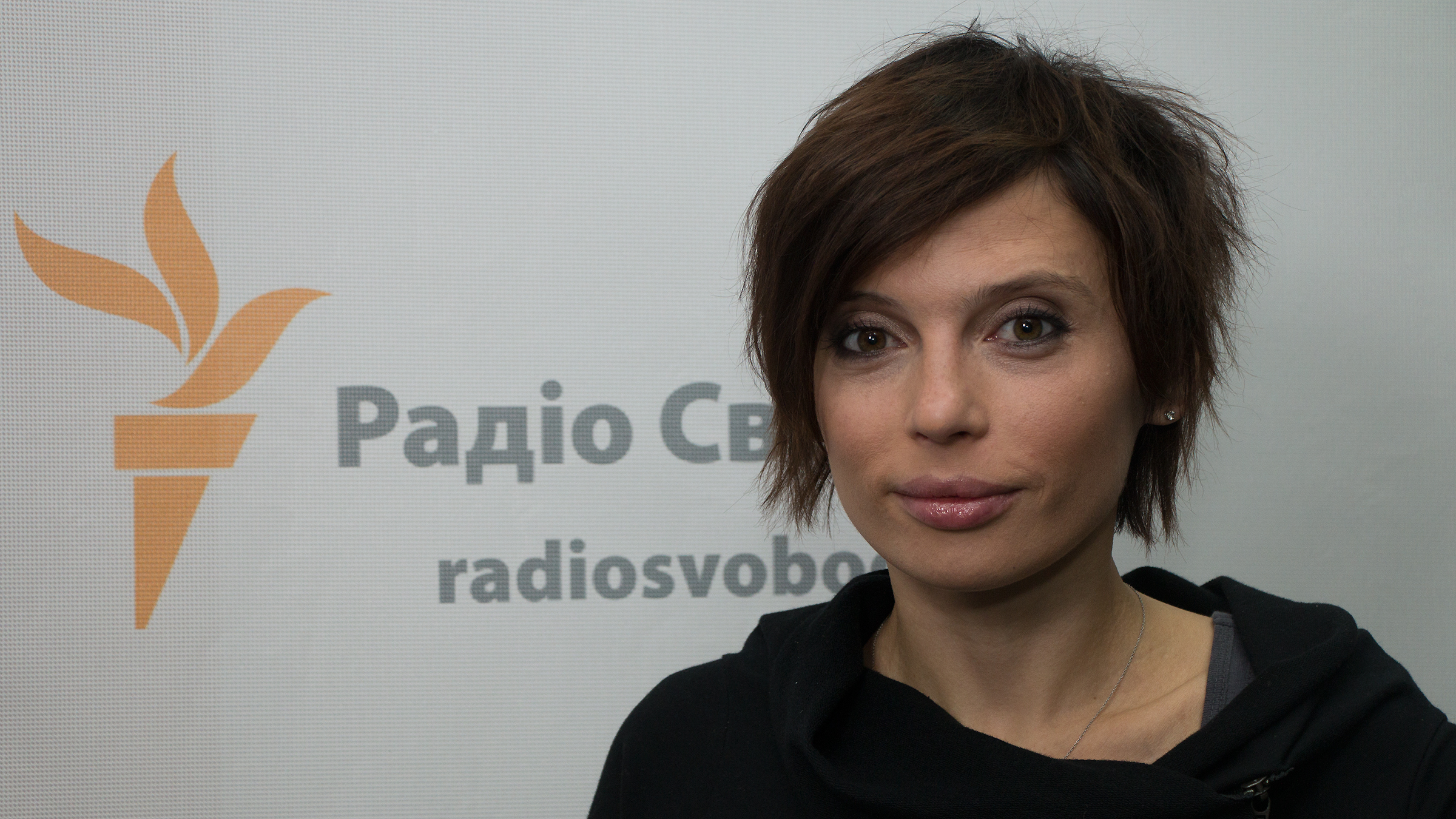
Irena Karpa , Ukrainian writer, TV presenter, translator, musician, leader of the Qarpa group - about the case of Nadezhda Savchenko , about war and culture, propaganda and literature, about the Maidan and East of Ukraine. About "quilted jackets", "embroiderers" and anti -war cartoons of their own production, about Ukrainian politicians, about the “letter of Russian friend”, “Internet on coupons” and food sanctions. Satire and lyrics, Charles Bukovsky and Frida Kalo, a dress of lard and Marilyn Manson, history and modernity, high and mass culture in Irena Karpa's creative life. Clips of groups "Qarpa" and "Actually Sami".
Elena Fanailova: Radio Liberty in the Kiev editorial office. With me in the studio of Irena Carp , a writer, musician, singer, TV presenter, actress, director, public figure, and in addition, a linguist by education, a translator from English and French.
Irena Carpa: a French and English teacher, yes.
Elena Fanailova: We met on the day of the memory of Sigmund Freud, one of your books is called "Freud was crying." I propose to name our program in the same way, because it is recorded in the first days of the trial of the hope of Savchenko. We just looked at the survey how people react to this court, what are their ideas about this. And there was a great remark of the military.
Irena Carp: Yes. "I am a military man, I am not supposed to think." This meme, in fact, can become. It seems that not only the military is not supposed to think, and people somehow voluntarily refuse this function. If Freud bequeathed that a psychoanalyst appeared in every village on some day, well, there is a priest, so that there is a psychoanalyst, then in our time it turns out that the priest’s function replaced the TV-people communicate with him every day and conduct duccessing conversations, and believe him in everything. And in this video, people appealed to this: how they are served, here she is a terrorist, she crossed the border, pretended to be a refugee, shot our guys, and it’s a pity that there was no death penalty ... They don’t even raise the question that maybe the TV is lying. This had many people here before: well, the newspaper wrote, the TV said ... And it is thanks to our some perturbations that it becomes clear that the media can be on serving a particular person, the owner of this media. In Russia, of course, everything is on maintenance - either you are with the state, or you are almost none.
Fragment of the survey:
“I can’t say whether she is to blame or not.” And by the way the media present us, it is guilty. And it’s guilty - I must answer.
- The terrorist who came to us across the border, and here they took her. Of course, she needs to be judged!
- She bombed Donbass, that's all.
- I heard about Savchenko. She shot journalists, it seems, in Ukraine.
- Two correspondents of our Russian. I think they canceled the death penalty in Russia in vain. Even so, yes.
- Not such a simple thing. We are ordinary people ...
- No, no, the boys are sorry! They are young. Here you are a correspondent, let me kill you. They did not fight, they simply covered this war, fucking!
Elena Fanailova: Let us return to the video called "Letter to the Russian Friend", which appeared a year ago on the Ukrainian website of Radio Liberty, and then instantly spread through the networks. You are addressing there specifically to our common Moscow friend, he is a public activist and a person who has a direct relationship to the protest movement. And then the reaction was negative not only in the so -called "quilted jackets", but also for people who relate to our common circle, this concerned the criticism of your statement about "McDonald's" and about the Internet. You literally said: "You seem to have the Internet on coupons there," McDonald's "is closed, and soon there will be nothing to eat." For some reason, it caused everyone terrible ...
Irena Carpa: ... indignation. And then they did not know that there would be a "prohibition". I'm sorry, as I looked into the water, unfortunately. That is, I am always for people to have something to eat, like every normal Ukrainian, but it is now very scary. For example, my friend, a guide in Barcelona, tells me that he has some Russian clients from Moscow all the time, and they simply panic buy what is now called forbidden. I remember a shortage in childhood, and they are also taking ... but this, sorry, insanity! This is cooler than any Internet on coupons and McDonald's behind the fence, when there is burning geese lives or crushing cheese and fruits. Such insanity was difficult to imagine a year ago. I did not monitor how these things support these things with a simple Russian man, but I think that this does not fit into any more or less healthy head.
Elena Fanailova: They are little supported by a simple Russian man. There are petitions with a lot of signatures for the abolition of this process. I would say that you will scare Russian people with grocery sanctions, because everyone remembers the hunger of the early 90s, but in order for their own government to begin to destroy food in the country that is proud of its military past, it is simply cognitive dissonance.
Irena Carpa: Those who survived the blockade of Leningrad - how is this at all? Just a matrix should have a person.
Elena Fanailova: Yes, in St. Petersburg there were the most difficult reactions.
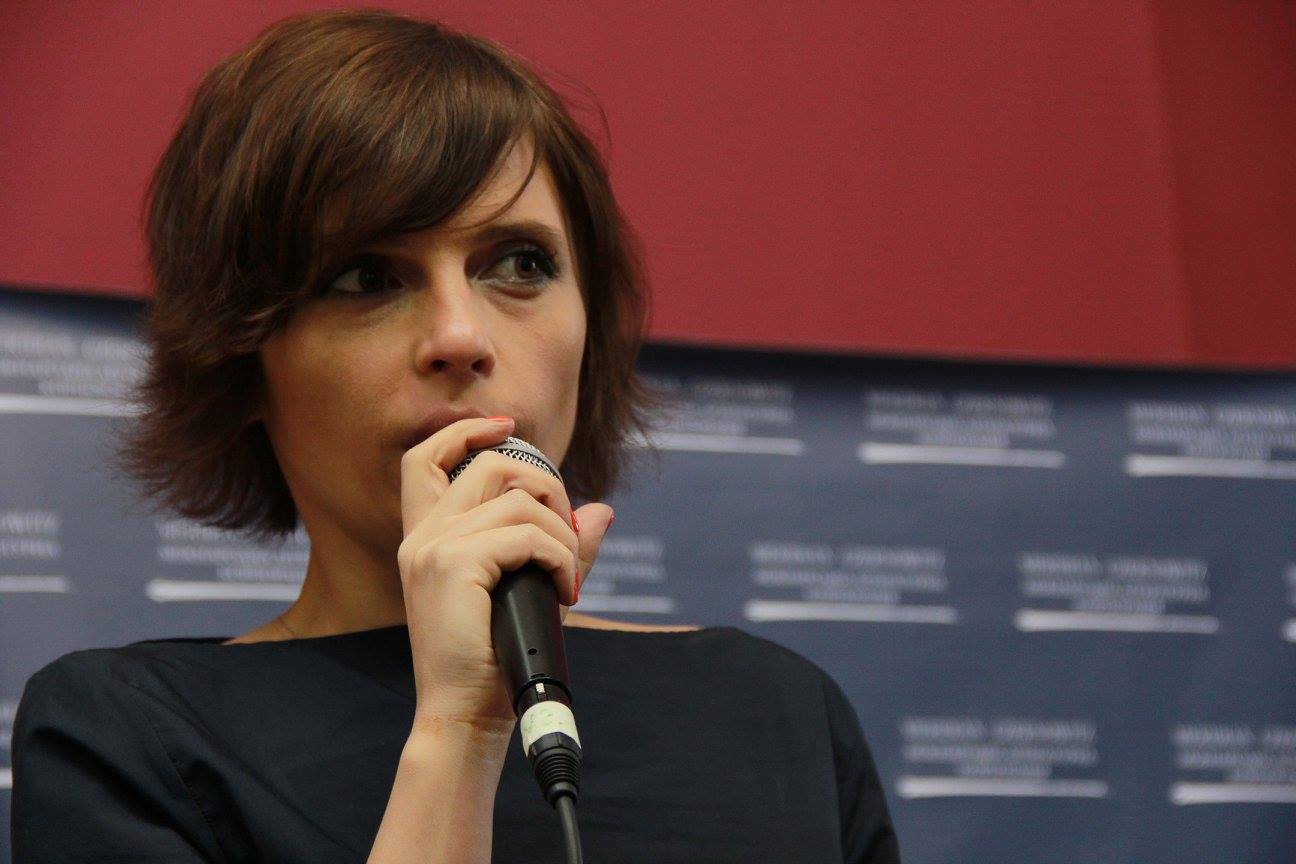
Fragment of the video:
Irena Carpa: Hello, dear Grisha! I know that you are just not a "quilted jacket", and you can say little about a real situation. I just want to thank you, your friends, all those who look like you, because you have the courage, being in such a totalitarian, very difficult country, still go out for protests, help those who are bad to tell the truth. And sooner or later, I'm sure we will all achieve that the empire will collapse. And you just need to tell others as much as possible that the TV is zombies, that people say constant lie, that you just need to analyze the information, some others ... I don’t know if there is an opportunity in Russia now, you even have the Internet, in my opinion, some of the coupons now, not to mention the McDonald's, and there is nothing more. I don’t know, leaflets, probably write, somehow try to talk with them. Because it is a pity if those of you, several thinking people who remained in Russia, will leave to live somewhere in Berlin, in Europe. Because it will be easy, I will understand you, friends, if you do it, because it is now a very difficult country. Many of you want to become Persons of Non Grad, but still try to carry out some kind of educational activity until the last. And in general, it’s very funny-I speak Russian now, despite the fact that you are involved in Ukrainian MOVA. Glory to Ukraine! Sooner or later, the prison of peoples will fall, and they will live just free, confident, happy people.
Elena Fanailova: Tell me, and you, as now the author of satirical cartoons, did not want to do some cartoon about food?
Irena Carpa: About food ... Well, there was a Moscow partisan, carried under Parmesan under his arm. (laugh) Slepakov has just a song about the fact that all these products dreamed of dying with an old woman at dinner or in an orphanage, and they were given their tractor. Sorry for the banality, it would be funny if it weren’t so sad. And on the other hand, this is already the measure of bullying, which was supposed to the most blindfolded person who prayed to the TV and bowed to Putin’s portrait, to somehow clarify something in his head. It’s just some kind of genocide against their own people psychologically begins! It seems that one fine day Putin and Medvedev will leave the Kremlin, hugging, and say: "And we have divorced all of them! And they believe!" And they believe! " They do more and look, the people are getting some next garbage, generally anti-human, or it will pass. So far it goes away. And it surprises me! Not everyone, people from a snoch, a simple mental construct, read only a primer in childhood. A lot of excellent, educated people, not only from the opposition, but also from those who are loyal to the authorities, and they also think. How they can allow me to mock themselves - I do not understand this.
Elena Fanailova: It seems to me that the fact is how the media is served. Normal people in Russia are sufficient, but because of the media situation, it seems that the voice of idiots is very strong. I want to ask you about a wonderful animated project. How did you come up with this whole story about the "quilted jackets"?
Irena Carpa: It was not my idea at all, it was the idea of a program that entered the copper -driving, and then even the channel sued the subsidiary so that they would not disgrace, because such an anti -Russian video, as it seemed, did not agree to issue. In general, the situation was difficult. But it all started simply. They already removed two cartoons about humanitarian aid that came from Russia, where Yanukovych was looking out, and then I was offered a holistic story to make it to grow into the series. And the funny thing is that the person who has this whole thing in his head appeared, he is from Moscow, and works here in the media. That is, it was not a Bandera order (laughs), but just from Russia the legs grew. I really liked it, and I did not expect such a reaction that it caught people, whom I did not. After this cartoon of this cartoon about a man, this is a schmuck in the training that sits, itching and watching the TV, eats the cutlet that the wife has prepared - indignant women began to write to me: we are sitting here in the basements, in Donetsk with children, and you do such a mockery of us! But I did not see this, and this is just the image of such an incomparing person who believes the TV and is looking for the meaning of life in aggression, which, in turn, is heated from the screen. All the yutyubs were blown up by comments on how to kill the multiplier, in what way. And then it went on, we shot 10 episodes. This is not very cheap pleasure, unfortunately, and if the financial situation improves, the project will continue.
(Cartoon)
Irena Karp: It is very strange that this caused a lot of negativity even from the Ukrainian side. They said that we have a difficult situation, and you stimulate the split with this, say that the east is terrible, and the west is cool. Although this was not discussed at all. Because of this, we made a cartoon about "embroidery" in order to somehow balance. This caused even more public indignation - now I ran into my own. In fact, satire is such a thing, no one will ever be happy because people will recognize themselves, but if not themselves, then their neighbors ...
(Cartoon)
Irena Carpa: In fact, I see a much big problem in the fact that people who shouted about lustration on the Maidan, punish all the perpetrators, will change everything, these people are now buying 70 apartments for themselves and their children, put their children with directors ... Here is one musical cartoon, by the way, about this-about politicians, “before the pable” is called. Somehow I am not used to silent, in fact, and I do not really think about the possible consequences, but just if people are not ashamed to do something, then any writer should not be ashamed to say this, in some kind of artistic form to convey this to the viewer, the reader.
(Cartoon)
Elena Fanailova: I wanted to ask about your artistic addictions, literary, musical. It seems to me that you are a girl passionate about a punk rock, on the one hand, with some female alternative figures, such as Suksi; On the other hand, you have a romantic side. As for literary creativity, who influenced you? Bukovsky, Swift ...
Irena Carp: Bukovsky, yes. One of the most beloved authors. When something is not great, you can write so capacious and accurately. Hemingway, Bukovsky ...
Elena Fanailova: And French sources?
Irena Carpa: Sartre, of course, Camus. Who did not hang on existentialists in childhood? Mishima is the same.
Elena Fanailova: And yet you are a satirist. Do you suffer from this quality when people criticize you? Or do you like to troll the society a little, pinch and so on?
Irena Carpa: I really love when people laugh. When people laugh, they are freed. All this carnival culture is very correct. Any revolution is also a carnival, people are changing. When you start a conscious provocation, there is a chance to see a person’s real face when he is not ready. You do not ask him a polite template question, and in your head there is such a leaflet from which we read all this, and a person can somehow show himself at least for a second to those who really are, may not hold himself in his hands, not be so polite scum, but to show what he is. I really like to write funny texts, most of all. It is much more important if they tell me that someone was sitting in the subway and laughing at the whole car, reading my book than if ten eminent critics wrote good reviews about me. Because I live here and now, and it is important for me what I am doing for my reader. Laughter is freedom. People already have a lot of their daily cargo, and if you can make someone laugh, I do this.
Elena Fanailova: And the Maidan was a carnival? How did he affect you at all?
Irena Carpa: Maidan, of course, was a carnival. At first it developed like such a right party: you came with a seagull, saw many friends, as in 2004, laughed that on the arena, all those who went to some protests in the last 10 years met, who were a freelancer, who could leave, listened to the DJs, rock musicians. Then the carnival, of course, began to subside, and that it was scary when the real carnival of the Middle Ages began, they began with executions. Fortunately, psychology has changed, Ukrainians are generally much more peaceful people than even some European you will now pull it out of ordinary life; We did not have broken windows, burned cars. Look at Greece or any country where there are some social messes. This was unique in that if something had to be done, the men simply endured someone else's car. This is very Ukrainian, in fact, a respect for the fact that it is someone's. It is interesting how it worked there, and it is very disappointing that it does not work somewhere in the forest, where for some reason people leave a heap of garbage behind, not realizing that all this is also mine. But these survivals of the scoop, probably, will probably have to be eradicated for a very long time that there are no common entrances where you can litter, there is no common forest that can be packed.
And how the Maidan changed me ... if I put it pathetic, I probably realized why I was born here. I had some kind of speech at the very beginning, it was very scary, because the audience was for the first time in the life of 100 thousand people-in the European square, and no one taught me to say, I have no manual political strategist. I just said what I had in my head, which I wanted the same simple person, like me, to say, who has brains. And to hear your voices here, and to hear there - it was a very dumb such a surreal feeling that you hear your voice twice - here and from the speakers. But it was very good, and that time, it seems to me, it inspired many people. Some are not pathos, learned, words written by someone, and what you think yourself and would say to your friend. It was that I say now the Russians. Why are people, normal, smart, not angry, generous, why do you allow you to treat some kind of people who hold you in fear like that? It was my message. We are all with our experience, achievements, children, friends, what we are proud of and what we are, why do we allow someone to treat with us like a cattle? And it hit the point, because everyone felt it at that moment.
Elena Fanailova: Everyone felt it, but it was a shame to listen to the Russians. The first reason - you did it, but we did not succeed. I mean the protest movement. And perhaps it is a shame that this is not a person from Moscow, but a man from Kyiv, that the Ukrainian tells us, as smart as we behave, and we cannot cope with our puppeteers.
Irena Carpa: I even have small children, when my video was on Facebook, touching, at three years they pointed to the map of Russia and said: "Russia, get up!" And it was some kind of message, performance, that even a small child understands that something was wrong. And we supported the rain when it was closed. That is, in fact, every person who has the courage to go outside, for a protest in Russia, he is simply worth its weight in gold, he is cooler than a thousand Protestants here. Even in the days of Yanukovych. Still, we did not feel in such a danger. I will forever remember this grandmother, who in some provincial Russian city said: "Even if I have to crawl, if I can’t go, I will protest, because you can’t live like that." She is old, she is about 90 years old, she has some Georgian features ... When a person has a power of spirit, we are ready to support as much as possible. For me, freedom was always a priority value. This is a hackneyed truth, but if a person chooses bread between bread and freedom, then he will be left very soon without everything, even without bread.
Elena Fanailova: What do you think about the situation in the east of Ukraine and the people who live there? The thought that I hear during my stay in Ukraine is that the main wine lies with Russia in the information policy that was held there. And partly the fault of Kyiv is that he allowed the pro -Russian information policy. People there really differ from Ukrainians who live in central Ukraine, or in the West?
Irena Carpa: Well, all people are somewhat different and are somewhat similar. Here Zhadan said very well in Lviv, he is more familiar with the region, he lives in Kharkov. I have many friends from there, someone who lived here already, and they speak better in Ukrainian than I, for example, are very adequate. But my parents ... My friend’s mother was the director of the school in Donetsk, the Russian school with the coolest Ukrainian class that was there, the children took all sorts of prizes at the Olympiads, and at one time they beat the windows at the school because he refused the Dnrov elections to apartment. And her mother is now here, she never found herself. Her whole life remained there, all books, a library, all social ties. She often travels to Donetsk, because her grandmother remained there, and she says that people wash their brains very much. It was beneficial for someone that it grows into a conflict in which it is now convenient to wash money, but then the situation was different-70 percent of the population was absolutely pro-Ukrainian. If at that moment it was possible to vote honestly, 70 percent would say that they want to stay in Ukraine. As we are held by Yanukovych-Stayle elections, we know very well. You can’t rely on those results that they have passed. These were not elections, but a full circus.
And people are very cool. Those who came to this festival are such cosmopolitans who listen to normal music there, read books, watch movies, travel ... They are absolutely cool, normal people! There will always be simpler people and people are more complicated, but they do not differ. And I know that the guys from Ternopol are fighting for LNrovites now, because they were paid. My friends, who are fighting, caught two Separs, and they are from Ternopol. I never divide the world into white and black. I know that there are many those who will never go to the army in their lives, and just the Western Ukrainian areas lead in this. That is, there are more fighting the East and Central Ukraine more. That is, it is strange that the replicated image of the Bandera did not work here. And these are Russian -speaking guys. The Right Sector is Russian -speaking guys. Vlad Troitsky, the key figure of modern Ukrainian culture, which makes some unrealistic number of world-class projects, it is Russian-speaking, but it is a much larger patriot who will tear the embroider and beat everyone with a portrait of Shevchenko. It is necessary to judge on cases, and not by where you are and how you say. The most terrible "rightrships" are Jewish boys who will quote Brodsky by heart.
Elena Fanailova: We were in Lviv and participated in the discussion "War against the backdrop of culture. Culture against the backdrop of war." The topic, on the one hand, is fruitful, and on the other hand, I always think how defenseless culture is in the face of war. What person do you choose for yourself as an artist, as a media star, against the background of military events?
Irena Carpa: It is very difficult. There is a great danger if you are stenuing reality, and I often do this when I write about some social things, and you have a risk of being from the opposite side in two months, when today's hero will turn out to be a looter, a rapist and a military criminal. Here the ideal position is the position of the observer. Everything should somehow get tired. Now we are going to the European tour with the Meridian Chernivtsi festival.
Elena Fanailova: This is a festival dedicated to Paul Tselan, he arose in Chernivtsi, and this is such a big journey throughout Ukraine. In Kharkov this year this project began, then Chernivtsi, then Lviv, and now the German part.
Irena Carpa: Yes, this is Frankfurt, Metz, Brussels, Paris ... And just my task is to write something about the situation in Ukraine, something artistic, and it is very difficult for me. The only thing I can now judge is impartially is volunteers, the attitude does not change towards them, only in a good direction. Because on their shoulders everything here has been holding in recent years, starting from the Maidan.
Elena Fanailova: And you participated in the literary collection "Volunteers".
Irena Carpa: Yes, I am his moderator, compiler, I invited the authors there. Because these are real heroes of our time. Always, of course, there will be military exploits, some heartbreaking stories that there was an orphan boy there, or there the girl went by a signalman and took away the wounded, this is a lot, and this is very important. I was always infuriated that the media would once again write what color the panties of Britney Spears, but they would be silent about who is a real person. I have a couple of such stories with development for a book. I am now working with the story of a middle -aged uncle, who was captured, shot his farewell speech of the "Ukrainian punisher" and all that, it was all in Utube, they said many times: "That's it, we are now taking you to execution." The psychological state of a person is very important to delve into it, but this is a very difficult task. The satirist is one thing, but it is very difficult for me to write about situations that I have not lived myself. And I promised the publisher to finish the book before the fall, but I don’t know how many years I would take it for it, so that it was not the topical and passing, which are now a lot of books about the war, and no one knows how polarity will change in a few months.
Elena Fanailova: You and Zhadan said that you should not wait for a big novel or a great art work about the war in the style of Hemingway or Remarque, but maybe it is worth hoping for benign reporting work?
Irena Carp: Yes, what does not go in official sources. Most likely, these will be some field correspondents who are there, and if you already trust this person as a writer, you can collect it all in the archive for a long time, and you can write some kind of large form. I am sure that some writers are fighting now, and journalists. The same Michael Schur, who makes such a stalking, satirical program, I know that he was also called there now. That is, now it is difficult to predict. To write about it normally, you have to be there. I am sure that it will be dishonest to write about something that you, in fact, know only from the interview.
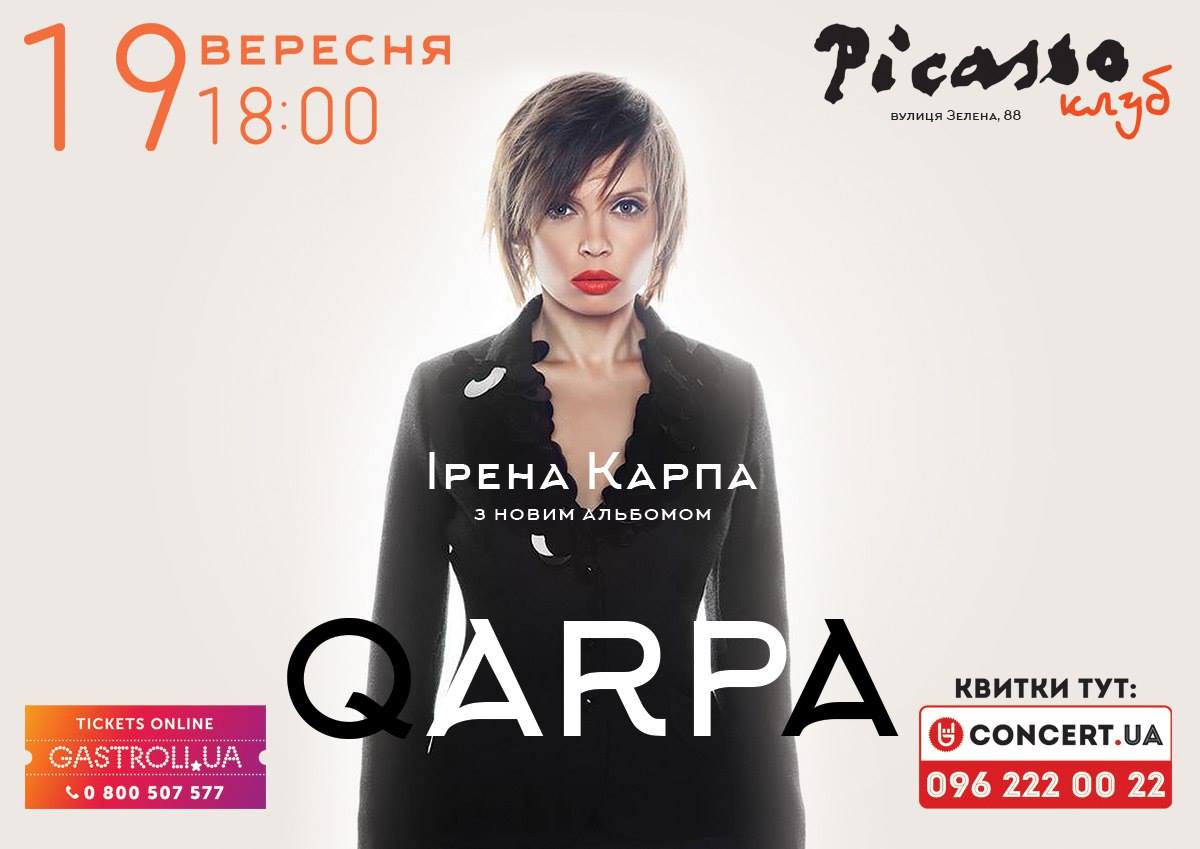
Elena Fanailova: Culture and War are wider things than only literature and war. This, including media culture. For some time you acted as a leading program that talked about Ukrainian stars in Moscow, "Our Rush", does it exist now?
Irena Carp: No. The program was good in terms of journalism. I really liked to talk with directors, actors. But, unfortunately, the viewer voted only for some serial starlets.
Elena Fanailova: The anthropological part was interesting there when you explored the life of this person in Moscow.
Irena Carpa: Yes, where they live, what they eat ...
Elena Fanailova: And this was completely not a glamorous story. Now this is impossible, because the cultural ties between Russia and Ukraine are collapsing, or is it only the level of pop council, or is it a matter of pro-Russian statements by the leaders of the Russian pop world?
Irena Carpa: At that time, the project just ended. It was closed much earlier than the revolution happened, but now this is really such a painful question, they constantly ask: how do you feel about the fact that our stars spend their tour in Russia calmly, the pop singers are traveling to take the next gold samovars? I don’t know, I don’t really follow this, because the singers do not interest me as a citizen of Ukraine in any way. I am interested in the same Vlad Troitsky, for me it is more important that he will say somewhere in France than some Irena Bolek in Crimea will say. Honestly, somehow, anyway, I will not identify myself with her in any way. On the other hand, everyone has their own choice, and Primkorni had such a project that 365 people were supposed to quote one of Shevchenko, there was Nigoyan there, the first died from the “Heavenly Hundred”, and here is one such singer, his wife said: “Only no politics, please!” Already the authorities even changed, but they looked ahead: what if we will not be invited later to Russia? On the other hand, there are very correct people, it seems to me, to do the right thing, as Zelensky, who received a fee in Russia and spent it here. It was very cool, this is respect!
Елена Фанайлова: Вы, мне кажется, свой образ выстраивали вполне сознательно политически, хотя, может быть, слово "политика" в вашей голове не звучало. Я имею в виду образ молодой эмансипированной украинской женщины, европейского класса. Вы выходите на сцену и, возвращаясь к роли панк-певицы, поете какие-то истории под названием "Секс" или "Кокаин", что-то в этом духе, хотя, зная вас, я понимаю, что это истории не про вас, а про некую лирическую героиню. Вы сознательно над этим работали, вам хотелось сделать "новую украинку"?
Ирена Карпа: Ну, эти песни – это тоже стеб, и они очень хорошо идут в люди. Должна же я была сделать что-то попсовое. Скорее всего, это был мой способ дать людям массовый продукт, и это было стебно, то что я слушаю у западных исполнителей. Они не особо заморачиваются политкорректностью, как они выглядят со стороны. Конечно, я не о Мерилине Мэнсоне или Оззи Осборне говорю…
Елена Фанайлова: Вы у Мэнсона же на разогреве выступали, была известная история. Кстати, как это было?
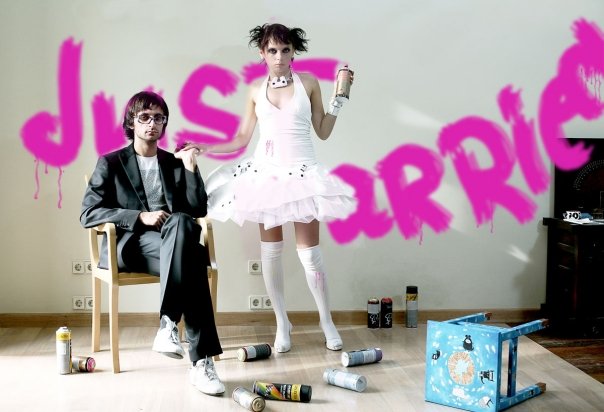
Ирена Карпа: Это было в платье из сала. Это тяжело, кстати, было, и это был такой "привет Леди Гага", которая в платье из мяса, а украинский вариант – платье из сала. Плюс это был какой-то очередной конец света, который на следующий день должен был наступить по всем парадам планет. И это был тоже стеб, что украинцы выживут, потому что мы даже одеваться можем в сало. Это такой стеб из китча. А Мэнсон, на самом деле, очень приятный и спокойный дядя, который научил меня том, что можно с очень маленьким бюджетом делать шоу как у них, очень компактное, бюджетный вариант. И где-то за три часа до концерта он ни с кем не общается, просто медитирует, читает книжки, одевается, может быть, в розовую шапочку перед зеркалом – никто не знает, никто не подглядывал. (смеются) Поэтому тексты читать мне нравится очень смешные, исполнять, когда люди прыгают, но писать мне нравится что-то медитативное и лирическое, как в литературе какие-то глубокие вещи, эмоционально прочувствованные, так и в музыке. Но это очень разные жанры. Мне кажется, что такую музыку можно слушать только у себя в наушниках, и книги читать, только когда ты под пледом где-то, с настольной лампой. А смешное что-то можно на концерте слушать или читать в метро, на бегу, когда хочешь себе поднять настроение.
Елена Фанайлова: Но в Ютьюбе, кажется, самые популярные ваши ролики – романтические, где вы поете по-французски или по-английски, в таком ужасно милом девочковом имидже, в платьице. Это стилизации каких-то известных вещей?
Ирена Карпа: Нет, это мои находки. Я каверы не пою никогда. Может, в караоке было два раза в жизни (смеется), на сцене – нет.
Елена Фанайлова: И вопрос о клипе "Soledad", который посвящается Фриде Кало, культовой фигуре ХХ-го века, кино о ней существует, благодаря чему ее роман с Диего Риверой пошел в народ. Вы в ее образе выступаете. Это же такая женщина-революционерка в искусстве.
Ирена Карпа: Да, она очень крутая! Я сейчас еще и книгу перевожу о ней с французского, тоже такой долгоиграющий проект. Она мне очень близка, на самом деле, по духу, по этой драме, как это все развивалось у нее. Я очень люблю наив-арт, а здесь и наив, и очень сильный экспрессионизм, просто революционность. Задолго до того, как я познакомилась с ее судьбой поближе, она мне как-то интуитивно была близка. И из меня ее очень быстро сделали как-то – просто бровь дорисовали, и косу… Очень похоже получилось.
(Song songs)
Елена Фанайлова: А что за текст?
Ирена Карпа: Там испанский текст, об одиночестве, на самом деле, каком-то тотальном внутреннем одиночестве. Текст я написала после пятого урока испанского, кстати, пришлось после этого заговорить на этом языке, и сейчас я им владею кое-как. И это еще одно из доказательств, что если откуда-то идет продукт творческий, тебе не надо быть каким-то детальным профессионалом, он может появиться просто таким наивным способом. Наверное, из-за этого мне нравятся авторы, которые не гнушаются быть просто передатчиком того, что откуда-то приходит.
Елена Фанайлова: Украинская культура продолжается. Идут военные действия на востоке Украины, с другой стороны – Гоголь-Фест и Бьеннале современного искусства. Что вы думаете о состоянии современной украинской культуры, о соотношении консервативного и модернистского начала в ней? В России сейчас, очень огрубляя историю, есть склонность говорить о консервативном продукте как основном, исконном, присущем нам. Ну, это, конечно, государственные веяния. И есть довольно большая часть людей и институций, которые занимаются современным искусством на европейском уровне, и в Нижнем Новгороде открываются новые выставочные пространства "Арсенал" И есть Дмитрий Энтео, который громит выставку Сидура. Как для вас выглядит соотношение старого и нового в украинской культуре? Многие недовольны культурной политикой сейчас.
Ирена Карпа: Что я могу сказать о культурной политике…
Елена Фанайлова: Да и вообще о культурной сцене.
Ирена Карпа: Тот же Троицкий на приеме у швейцарского посла говорил, что главное – это Швейцария, которая поддерживает Украину здесь, это важно, и это единственный выход, что можно делать для адекватного промо, - участие в общих проектах европейских, интегрироваться туда, притаскивать их сюда, ездить… Иначе ты рискуешь быть закапсулированным в себе, провинциальным. Этого нельзя допускать в нашей ситуации ни в коем случае! Конечно, будут всегда какие-то части, пережитки, типа домов культуры, обзоров художественной самодеятельности за прошлый год. Это все есть, есть в этом и хорошее, потому что детей учат нотам, играть на чем-то и петь, но есть еще и страшная какая-то административная составляющая – обязаловка, нормативы и так дальше. Цитируя того же Троицкого, важно понимать, что нужно просто создавать конкретный продукт нормального уровня, который будет не стыдно показать. Если это музыка, сначала услышат, что это классная музыка, а потом спросят: "А откуда, кстати, группа эта?" Когда мы слушаем тот же "Muse" или "А-ha", сначала ты слышишь музыку, и только потом вспоминаешь, они из Дании, из Швеции, из Америки или из Англии. Иначе ты рискуешь остаться на международных фестивалях, где будет этно-сцена, все пришли, попели на своих языках и уехали. Всегда будет какое-то отличие, и всегда важно повышать уровень и иметь свои отличительные черты, и тогда получается очень хороший продукт. Вот это получается в проектах Троицкого. Они на разных языках это делают, и они никогда не упускают украинскую составляющую, которая очень правильно подана. Либо это какие-то аутентичные песни, которые всегда на вес золота, всегда это очень важное, потому что не забыто у нас, прожило уже все голодоморы и репрессии, и до сих пор это способ подпитки для украинской души. И мировые вещи из попсы, из медиа-сцены, то есть то, что будет как-то цеплять. Это очень правильно – уметь такое делать. Then everything will be fine. Потому что на государство надеяться – это будет вечный фестиваль вареников и вышиванок. Пока новые люди не запустятся в эту систему, не организуются нормальные культурные центры Украины за рубежом, это будет совок. А от него надо очень долго избавляться во всех сферах. И в культуре это самое печальное, на самом деле, когда ты смотришь, что прошло уже 20 лет, а такое впечатление, что где-то время застыло, машина времени остановилась просто.