
Translated material
New times without Chaplin
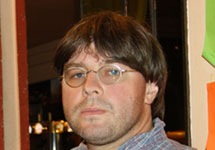
On December 24, the Holy Synod of the Russian Orthodox Church peculiarly celebrated Christmas in the Gregorian calendar. At his meeting, the association of two synodal departments (church ministries) was announced, as a result of which the head of the liquidated department for the interaction of the Church and Society (Sheep), Archpriest Vsevolod Chaplin, lost his position. In addition to gratitude in the order for the establishment of relations of the Church and the state, he did not receive any compensation and an hour after the meeting of the Synod gave his first interview to the Rain television channel, which accused Patriarch Kirill of the loss of the spirituality and actual usurpation of the authorities in the church, as well as to create an ineffective and fanned bureaucratic apparatus. Over the next days, Chaplin developed these thoughts in numerous interviews, becoming the most important Russian New Smaker of the Christmas week.
The direct reasons for the resignation of Chaplin, despite all her surprise, lie on the surface. Over the past decade, a church official, previously known mainly to the religious establishment and specialists, created a reputation as church Zhirinovsky. He became one of the most famous anti-libella “trolls” of the country, in which almost every self-respecting department hires a clown’s press secretary, who knows how to shock the public and attract the attention of the media with vivid statements on the verge of foul.
Chaplin's hyper -conservative statements have never been disavowed by the leadership of the Moscow Patriarchate and, apparently, fully complyed with the attitudes of the current Patriarch. However, over time, it turned out that Chaplin’s stormy activity began to create serious problems not only for the church itself, but also for the state.
The contrast between the obvious to the episcopate, ordinary clergy and active laity people with the frivolity of Chaplin’s postmodern statements and the public media effect from his aggressive rhetoric has long caused discontent within the Russian Orthodox Church. The fact that it broke out in the report of Sergei Chapnin and at the diocesan meeting in Minsk was a vivid symptom, however, as Andrei Kuraev correctly noted , the figure of Chaplin could cause much more serious problems on the bishop's cathedral planned for February 2016. Quite possible protests of the Ukrainian, Belarusian and, for example, Baltic delegations regarding the mandatory report of the head of the sheep (or his previous statements) could cause a serious scandal. But it was precisely the disagreement with the patriarch about the degree of the possible "denunciation" of the authorities of Ukraine Chaplin called as one of the probable reasons for his resignation.
The former head of the sheep as a consistent Russian nationalist with a Black -Sotent past realized his views in the political sphere. It was he who (partly with the head of the Patriarchal Commission on Family Affairs and a great lover of clowning, Archpriest Dimitri Smirnov) controlled the activities of near -church political organizations and individual figures. Since 2012, they tried to translate the case of the struggle with the "liberals" and "atheists" from the Internet to the streets. And only the small number of near -church activists did not allow separate skirmishes (on pro -Ukrainian demonstrations, on the pickets of protest against the construction of new temples or when Smirnov’s plaque to the festival of the Silver Rain radio), go to riots. At the same time, part of the activists supervised by Chaplin - the Group of God's Volya, led by Dmitry Tsorionov (Enteo) - in 2015, the informal framework of acceptable "actionism" established by the state and turned into a full -fledged extremist community.
The authorities were particularly indignant at the attack of God's will on the exposition of the sculptor Vadim Sidur and other authors in the arena, arranged on August 14. Having broken one of the work, the participants in the organization encroached on state property, since the exhibits were part of the museum fund. Under the pressure of many outraged officials of different levels and the museum community, Chaplinsky protege first received a pend. As a result, Enteo himself served ten days and currently, according to reports on social networks, is hidden in Abkhazia. His girlfriend Lyudmila Esipenko (known in social networks as Mila Clagova), who defeated the exhibit, on December 24, the court decision was sent for a monthly examination in the Alekseev psychiatric hospital. Investigators, and then the court had doubts in a state of spiritual health of a 29-year-old girl who has been in the immediate vicinity of Enteo for several years, but publicly proud of preserving her innocence, as well as working as a teacher in kindergarten, but loving to publish photographs of divided babies or just children's corpses.
Responsibility for the protection of extremists, apparently, was the first reason for the cooling of relations between Chaplin and the presidential administration. Chaplin played the role of a communication officer between the Russian Orthodox Church and AP at least a decade. This can be seen, for example, from the facts of lobbying for his certain candidates in the Public Chamber that had opened in June 2012. Its role is also known in knocking out state grants to support those very near-church activists (including the “God's will” in 2012-2013). In the fall, in the public statements of Chaplin, notes of discontent by state power began to slip. This was felt, for example, in the speech made by him on November 11 at a meeting with representatives of the diocesan departments. And finally, there are reasons to agree with those who, together with Andrei Kuraev, claims that the church speaker created serious problems to the state, having agreed to the concept of a “sacred war” in relation to the Russian military operation in Syria.
Be that as it may, and Chaplin lost his second support in the person of AP this fall. His resignation was predetermined, and the sensational episode with a campaign in McDonald's , which clearly highlighted all the deceit and absurdity of the declared ROC of anti -Westernity, only accelerated it.
At the same time, it would be wrong to see the reason for the resignation of Chaplin only in his own mistakes. Commenting on the recent resignation of Sergey Chapnin, I assumed that such dismissal indicates a split in the church elite and that the Russian Orthodox Church is on the verge of great changes. The dismissal of Chaplin and his subsequent revelations only confirm this assumption.
According to Chaplin, the Patriarch, who was once a “collective project”, that is, who came to power as a leader united by the general ideas of the team, now rules alone, without listening to anyone and receiving information (more precisely, reasons for resentment) by monitoring social networks. And his immediate environment is the servants serving his residences, and not church officials.
If this is true, then the first line of the split is clearly visible here. The Patriarch came to his post at the head of the team, intending to modernize the Russian Orthodox Church. It was partially a success, but after 2012 the team began to break up. Successful administrative reforms caused the emergence of new bureaucratic structures, the expansion of the apparatus of the Patriarch himself. They significantly limited the possibilities of the maneuver of those who are accustomed to the former command and ease of access to first persons. The dismissal of Chaplin and Chapnin, who quarreled or lost contact with the senior members of the team - Metropolitan Hilarion (Alfeev) and Patriarch Kirill - only the logical consequences of this.
So, the gray and boring new administrative apparatus, which was also from the provincials, defeated the bright, ideologically motivated old apparatchists of the Moscow sourdough.
The second line of the split is ideological. The Cyril team was one when it was about the necessary intra-church administrative reforms, but in church and political issues it was only partially in solidarity. For Cyril, after a failure for his reputation in 2012, the main task was the struggle against secular liberals. At the Moscow Diocesan Assembly, held on December 21, he clearly expressed his credo :
*Rev. Joseph Volotsky and his associates became an insurmountable barrier on the path of external heretical influences that penetrated Rus' at the turn of the XIV and XV centuries. During the period of one of the most dangerous in the history of our Fatherland and our church spiritual crises, the Rev. with his firm faith, strong spirit and strong word, the development of heresy, the rooting of which would have irreversible, destructive consequences for Russian culture.
We know that the shocks that occurred in Western Europe began with the shocks within the Catholic Church at the beginning of the 16th century - and occurred precisely because in the Western world those ideas that tried to bring to the Russian land, but which were reflected by Rev. Joseph Volotsky, were perceived and rooted. And after this in the West, a reformation, revolutions and, in general, the development of such a view of God and man, which we now call the liberal approach, followed, although, of course, this is a very conditional designation, in fact, we are talking about the crowding out of God from a person’s life, from the life of entire peoples.*
The priest or even more so to the bishop to be rich and live in luxury is good, and the one who condemns it is the soulless agent of the West and liberal. With this simple motto (which was repeatedly proclaimed and Chaplin), Patriarch of Moscow and All Russia in recent years has reached the direct support of people whose ideology is very reminiscent of Russian fascism. In addition to those near -church activists who were oversaw Chaplin, this is the personal protection of the Patriarch’s events - the forty forty group, which the Moscow Patriarchate tries to use to fight Muscovites opposing the construction of temples. In the theoretical plan, a similar set of ideas, including both the Western influence of any forms of influence, and the fundamental conflict with universal ideas about human rights, and Russian imperial nationalism, in addition to Chaplin, was developed by the Patriarch himself and the angry Metropolitan Ilarion (Alpheev) , and the newly made Bishop Tikhon (Shevkunov).
However, not everyone inside the Russian Orthodox Church was ready for such a radical turn. Moreover, it turned out that the vast majority of active members of the Church were completely disagreed with him. The reasons for this were different. Some members of the Kirillovskaya modernization team (the brightest of them - Sergey Chapnin) adhered to much more modern views on the world, finding not only fear and horror, but also positive in western experience. Those numerous priests in the center and in the regions, in St. Petersburg and in foreign parishes, who in their practice, were convinced that reasonable cooperation with foreign Christians and domestic liberals and democrats is quite possible and that not all their actions and ideas should be evaluated as anti -Christian or Russophobic.
Supporters of such views, which in general can be called Christian humanism, built public ties and gained confidence in their own abilities on numerous charitable projects. And they begin to try to give a voice even in adverse external conditions. Was it possible to imagine a year ago that the rector of the Cathedral in the city of Kalach-on-Don of the Volgograd region, that is, the third most important priest in the Kalachev diocese, will publish an article condemning the Russian military operation in Syria? And now nothing, publishes. And his colleagues throughout Russia are happy to reproduce her in their blogs, posts and statuses.
Of course, every church authorities can create problems for every Christian humanist. However, will it want to create them? No wonder both Chapnin and Chaplin are talking about church silence. Cyril and his ideological right -wing group have recently received very few support signs from the church community itself. For example, the circle of commentators of Kirill Frolov, which was once quite popular in the Russian Orthodox Church, who was on the content of Chaplin and voiced theses, which the owner himself did not dare to pronounce, was reduced to 10-12 people, of which half a housewife make up. On the circles of the Orthodox radicals widely announced in the circles of the Orthodox, the court session over Lyudmila Esipenko came as a support group of all four people. The political declarations of Cyril and his entourage were not relayed by those who seem to be in their position to support and promote them, that is, bishops, especially from the number of new ones.
Yes, on the network you can find priests in solidarity with the most radical statements by Cyril - however, these are ideological Russian nationalists who will support and promote such ideas in any layouts. They have not done weather in the church for a long time.
Much more important, in my opinion, the position of those priests and bishops, who, without clearly supporting any ideological groups, prefers to do their own business. Those who repair and build temples, who hill the faithful community, who walks around hospitals and prisons, who stuff pockets on the "tremblies" and who in the evening opens their favorite pages on the network, trying to understand what is happening there, upstairs. The position of these "average" priests and bishops, willingly executing those orders from above that they like, and silently torpedoing orders with whom they do not agree, far from the desired by the patriarch. In politically, they are concerned about one thing - talking about the revolution coming in Russia and caring for their own fate in this context.
These people as a whole supported the election of Cyril by the Primate of the Church in the hope that he could advance and make it stronger. The first few years it was so, and the average church figure was obviously pleased with Cyril. However, after 2012 and against the backdrop of the expected revolution, it became obvious that the personal problems of the Primate can pull the church ship to the bottom and put a risk of conquering the last 25 years.
In addition, it turned out that Cyril is not the genius of personnel policy and many of his appointments - the same Metropolitan Hilarion, put on the St. Petersburg department, Metropolitan Barshofia, many newly elected bishops - simply not in their place. So, for example, an illiterate and greedy barsonophia, sent to Peter from Mordovia, managed to quarrel with the whole clergy of the diocese and with the very sympathetic Russian Orthodox Church by the governor of the "cultural capital". But Peter, along with Smolensk and Kaliningrad, was considered the estate of Gundyaev.
Thus, one can distinguish the third direction of the intra -church split: between the frightened “average” priest or bishop and the conditional patriarchal team, which did not justify hopes and by no means looking as a saving support in the event of a strong political storm.
And finally, the last line of intra -church separation sample between the Russian clergy and the bishop and the church figures from other countries belonging to the ROC. Although in Ukraine the UOC MP is considered an "agent of Moscow", the mood of the local clergy, as a rule, is completely different than in Russia. In the episcopate, a faction is strong, insisting to sooner or later achieve complete independence from Moscow. In Belarus, where there is no full -fledged church, there is a noticeable movement for real autonomy, which has recently become political support from the head of state within the framework of the general process of “Belarusization”. The movement acquired such a scope that his ideas began to promote Metropolitan Pavel appointed from Moscow. Starting this year, another Moscow appointment - the personal representative of the Patriarch began to control him, but the experience shows that no controllers are able to hold the began social processes.
Representatives of the Russian Orthodox Church, which are part of the Russian Orthodox Church included in the Russian Orthodox Church, which, contrary to the initial plans, was also not self -destructed. Moreover, the ROCZ retains all the opportunities to withdraw from the anchor again and go into autonomous swimming. So if at the upcoming bishop's cathedral objective contradictions between all these large subjects of the church space will not be declared directly, then they will be taken into account when compiling joint documents and in practical work.
As a result, it can be stated that 2015 generally showed the exhaustion of the previous ROC control model, which Cyril and his environment were built in the early decade. The stormy December dismissals and the behavior of the dismissed are unprecedented for the Russian Orthodox Church for more than two decades. They symbolize only one thing - the long -accumulated deaf irritation of the church lower classes with the entire system of church administration and the activities of the head of the church begins to break out. The exchange of figures no longer saves the situation. And 2016 promises to be hot for the Russian Orthodox Church - even without taking into account factors of possible external influence. However, how does the church differ from Russia as a whole in this regard?