
Translated material
Future of sports
How the Internet of things allows you to learn about the athlete all
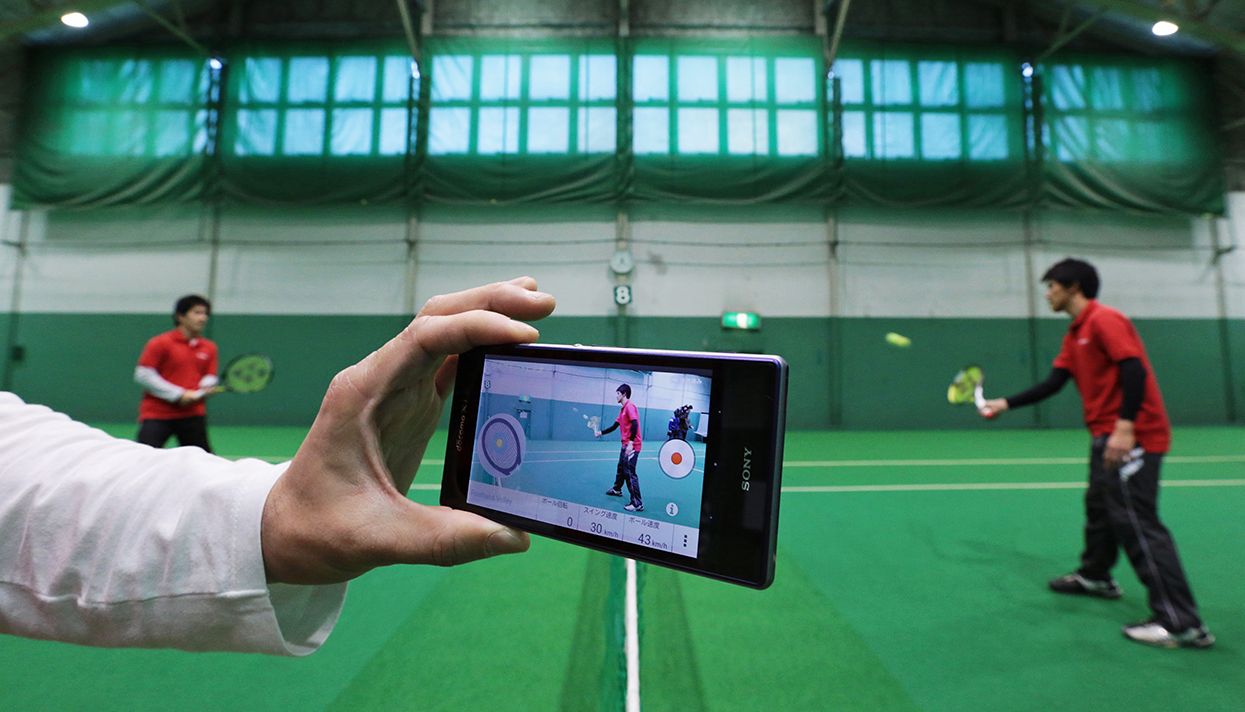
"Medusa" and IBS continue the story of how the Internet changes everything at all . Sport is another area where the Internet has taken root for a long time and for a long time. The most banal run for running in the smartphone that fixes the route, pace, pulse and calorie consumption is also the Internet of things. But technology is needed not only for amateur exercises, but also for professional sports.
The Internet of things is used by many teams in football, hockey, Rugby, golf and other types. As in all areas where the Internet of things is used, the main meaning of technology in sports is the collection and analysis of data. This is not a very new idea, which is best, perhaps, reflects the film "The Man who has changed everything." The manager of the athletics baseball club Billy Bin takes as assistants to the economist Peter Brand. The brand analyzes the personal statistics of the league players and offers to buy not the most eminent baseball players, but those who are best suited for specific tasks. While everyone around is twisting with a finger at the temple, Atletiks is successful with several inexpensive players who seem to everyone with no suitable disputes.
The film describes the events of the 2000s, but the understanding that a competent analysis of the data leads to good results has come to sports much earlier-already in the middle of the 20th century. Only then, the employees of the coaching staff had to monitor the game with the pencil in their hands and record the actions of the players or watch the recording of the meeting after the matches for hours, and now everything is happening in real time and people are much less involved in the process. But coaches are not the only people in sports who need technology. The Internet also helps fans, judges, sports doctors and television companies.
For coaches: how to make you give a job in training
Players of the American football club Seattle Saunders are putting on vests that fit tightly to the body before each training. Two small devices are fixed on the vests - one monitors the heart rhythm, the other is a little more complicated: it includes an accelerometer, gyroscope, magnetometer and connected to GPS. Thus, the system receives a lot of data about how the player accelerates, how he slows down, how his body position changes, how the pulse works and so on. The coaching staff does not engage in raw data - as in many other clubs, there are employees who specialize in technology at the Saunders. The information comes to the coaches already in a processed form - for example, in the form of points, which shows who trained well and who hacks. Club analysts followed the connection between the intensity of speed exercises and the exposure of the players of injuries. Therefore, coaches can feel the limit of the player’s capabilities - how to load him in full, but not to be risked to go to the hospital. The happy ending of this story is this: in 2014, Saunders won the regular MLS championship.
For doctors: as smart jaws and helmets do not allow players to hide injuries
In the United States , up to 3.8 million concussions caused by sports are recorded every year. In fact, there are much more concussions, just athletes do not report them, and this is a big problem. People continue to train and perform trauma, which often leads to much more serious consequences. In 2004, researchers studied a group of student league players (we are talking about American football) who had previously diagnosed a concussion. It turned out that less than 47% of players reported their symptoms. Another study showed that 27% of athletes who are engaged in contact species hid the symptoms of concussion. In contactless species, the share of such players is less - 14%. Most of the disperses do not report injury because they want to continue to play and are afraid to let the teammates. Often, athletes simply believe that the injury is not so serious as to report it. All attempts to convince athletes that health is still more important than victory, do not lead to success.
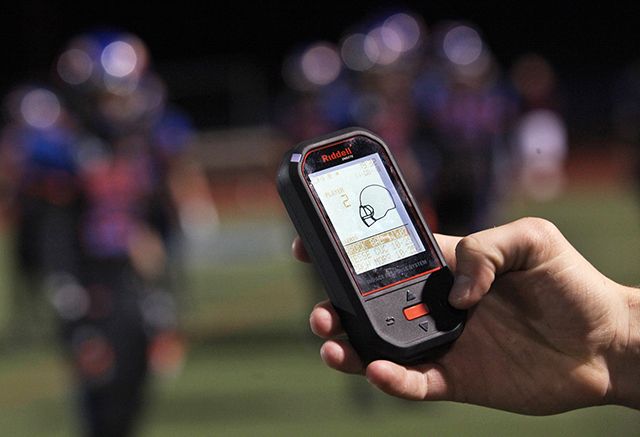
Recently, several ideas have appeared at once on how to solve this problem using the Internet of things. Riddel Insite produces special sensors for football helmets that fix shocks to the head. Data comes to the monitor to the coach or club physician, which of the players received a blow, where exactly he fell, with what force and speed was inflicted. In the event that some extreme values are overcome, the system gives an alarm.
FitGuard is in a similar way - an electronic cap that the player holds in his mouth during the game. Many hockey players and football players play with a cap to protect their teeth, but Fitguard is more cunning. Data about the strikes come directly to the smartphone to the coach or doctors.
Such devices are already used by professionals, but many sports experts are skeptical of them. Experts say that while the work of these devices has not been studied properly, it cannot be argued that they really bring serious benefits.
For business: how to fight for fans using the Internet of things
Again, the story of American football, which, in general, is not surprising. For two reasons: firstly, in the USA, the Internet is developing especially rapidly, and secondly, American football is one of the most popular sports in America. In 2015, the final match of NFL (National Football League) gathered the largest television department in the history of American television - 114.4 million people. Industry participants are constantly looking for new ways to attract and hold new spectators and the Internet of things play an important role in this.
Everyone is already used to the fact that there are more and more data in sports broadcasts. At first, only the score was displayed on the screen, then during the break the statistics of attacks on the goal appeared, then the percentage of ownership of the ball, the distance overcome by the players and so on. A year ago, NFL took a very big step forward in this direction. Rather, I made a jump.
Since the fall of 2015 , RFID-beaces were installed on the shoulder shields of all players-one on each shoulder. These devices allow you to determine the location of the player with an accuracy of 15 centimeters. As well as its direction, acceleration and speed. At each NFL stadium, receivers are installed that accept data from RFID meters. This allows fans to receive much more information about what is happening on the field than they are used to.
In order to understand what we are talking about, it is best to watch a video with a detailed analysis of games that NFL releases every week. The fan sees, for example, at what distance was the closest defender to the player of someone else's team, before he made a touch-distance. At what speed this player ran away from the rivals. Whether his race was the fastest this week - and so on. Of course, this is only one of the formats - many data spectators at the stadium and at the TV receive in real time.
No less powerful breakthrough is a new repetition system. NFL allows you to watch broadcasts through Xbox and review any moment of the game from all possible angles on the company model. The repeat shows who, how, in which direction at what speed was moving.
This is how it works.
The name of the project - Next Gen Stats (new generation statistics) - is quite fair.
Other materials from the joint project "Medusa" and IBS read here .