
Translated material
Turn to nowhere
"Carnegies" on "Medusa". Alexander Gabuev - on the results of the Asian policy of Russia in 2015
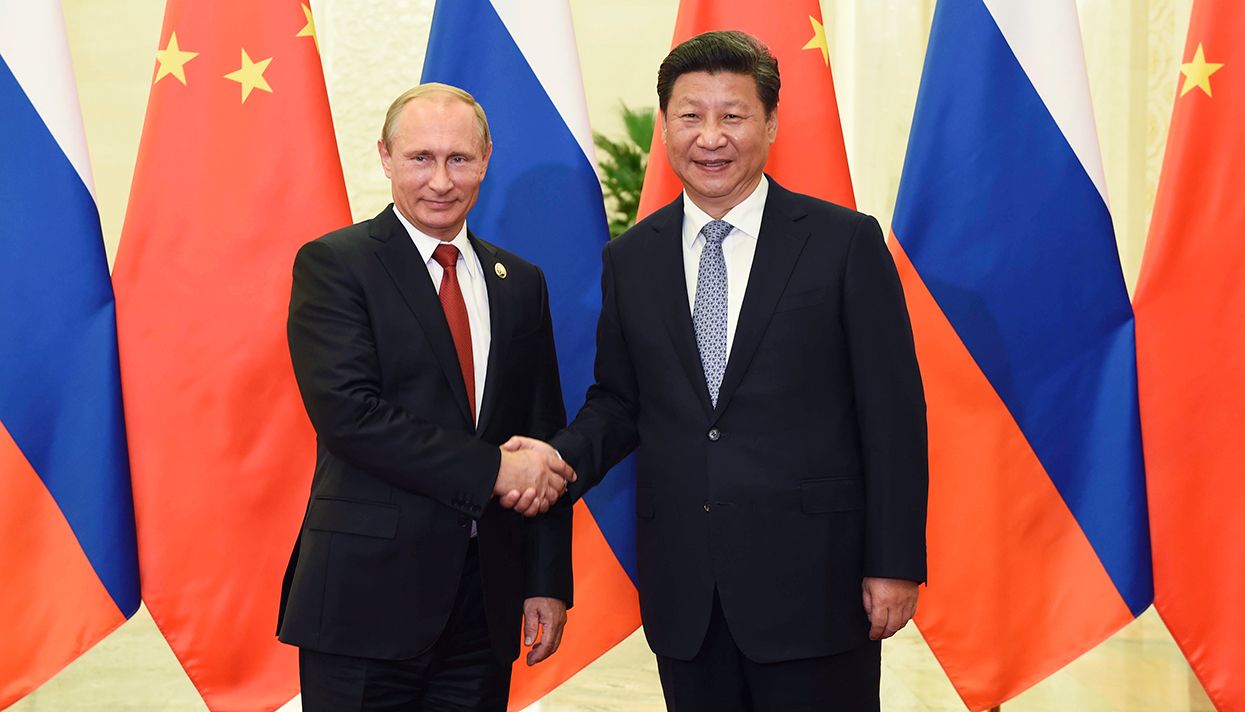
Medusa continues a joint project with the Moscow Center of Carnegie . In the next material, journalist Alexander Gabuev sums up the results of the Russian “turn to the east”, declared after the annexation of Crimea and the introduction of Western sanctions. Gabuev states that trade with Asian countries has fallen, investments have been reduced, and banks are in no hurry to lend to Russian business. The refusal of Vladimir Putin from a trip to the APEC summit, according to Gabuev, "was perceived as a final diagnosis: Russia did not take the course to turn to all Asia, but to turn China into a younger partner."
“There is no turn to the east,” said First Deputy Prime Minister Igor Shuvalov in June, polemicizing at the St. Petersburg Economic Forum with Alexei Kudrin. Shuvalov, who, on behalf of Vladimir Putin, personally oversees economic diplomacy with the Asia -Pacific countries, wanted to say that Russia began to "develop ties with the eastern world much earlier, when there was no sanctions package." However, the phrase turned out to be a prophetic: by the end of 2015, even the most avid optimists among officials and businessmen became clear that Russia would not succeed in the east. At least the “reversal” in the sense that was put into this word in 2014.
The east will not help us
The phrase “U -turn to the east” entered the everyday life of the Russian elite after Putin’s triumphal visit to Shanghai in May 2014, shortly after the accession of Crimea and the introduction of the first Western sanctions. Half of the Cabinet of Ministers and many persons involved in the Forbes list brought from that trip, if not agreements or firm contracts, then at least memorandums of indestructible friendship with Chinese partners (many composed such memoranda directly to the president’s trip, and then frantically searched for Chinese counterparties). The main champion of Friendship was the head of Gazprom Alexei Miller, who left with a gas contract for $ 400 billion (oil at that glorious time cost almost $ 110 per barrel). Already in September, at the Sochi Forum, Miller reasoned that "it was impossible to measure and work with European arshin in the Asian gas market" and that "our respected Chinese partners had a member of our largest consumer of Gaza - Germany within one day."
Although the head of Gazprom is known as a master of exaggeration, his words as a whole reflected the general mood in Moscow. Many believed that the Chinese would try to use the quarrel of Russia with the West and rush to buy assets, give loans and provide access to technology. Shanghai, Hong Kong and Singapore were supposed to replace Russian companies London, New York and Frankfurt. After the spring of 2014, Gennady Timchenko headed the Russian-Chinese business council, dear people began to look for the opportunity to lead at least some committee, council or working group with China. Those who did not have enough China were looking for other Asian countries.
The sobering began to advance at the end of 2014, but it was 2015 that helped to realize the reality. The most objective indicator for assessing the effectiveness of the turn can serve as trade data, generalized by the Ministry of Economic Development in a detailed certificate. In January - October, trade with the APEC countries decreased by 30.4% compared to the same period of the previous year. The APEC is not identical to Asia, since it includes the United States, Canada, Australia, New Zealand and the Latin America country going to the Pacific Ocean. However, this figure reflects the tendency, which is easy to verify by looking at bilateral trade with the largest Asian economies. So, according to Russian customs, trade with China in January - October 2015 decreased by 29.6%, with Japan - by 31.2%, with South Korea - by 33.3%, with ASEAN countries - by 36.3%.
Sad statistics are explained simply. The first element is a fall in raw materials, which forms the basis of Russian exports anywhere, including to Asia. Even before the collapse of November - December, the price of the Urals barrel was already 46%lower than last year ($ 46.8 on average of October), the price of aluminum - lower by 22%, by nickel - by 35%, for copper - by 23%. The second element is a decrease in the purchasing power of Russian companies and households due to the reduction of the economy and the devaluation of the ruble, which led to the fall of imports.
Of course, the same factors acted in trade relations with the EU. The fall there was even sharper: in January - September, trade decreased by 38.5% compared to 2014. As a result, the share of the APEC economies in the foreign trade turnover of Russia even slightly increased (from 26.3% in 2014 to 27.8%), and the share of the EU decreased (from 49% to 45.6%). Looking at these figures, if desired, we can say that Asia began to replace Europe as a Russian trading partner. However, two years in turbulent foreign economic conditions are not the most reliable material for generalizations. One thing can be said for sure: a quick miracle, as one would expect, did not happen.
No less indicative of investment figures are. For example, for the whole of 2014, Chinese direct investments in the Russian Federation amounted to $ 794 million, while the total volume of China investments abroad exceeded $ 116 billion. In 2015, investments, according to Russian statistics, are still falling: in the first six months they amounted to only $ 330 million, although at the end of the year you can expect growth due to the recent closing of two large transactions-purchases of purchases-purchases The Silk Road Foundation at Novatek’s share in the Yamal LNG project and the purchase of Sinopec shares in Sibur.
Banks, exchanges, funds
There is no complete data for assessing the interaction of Russian business with Asian financial institutions that have hopes in the light of Western sanctions. But indirect signs indicate that the situation sometimes has become even worse than before turning. For example, in 2015, Russian companies did not conduct a single public placement of joint -stock or debt capital on Asian exchanges. There are examples of obtaining loans in Asian banks, but they are a few and mainly concern for the sanctions of first -class borrowers like NLMK, to which, before Ukrainian events, Western bankers nearly line up. The state banks and the companies fell under the sanctions experienced great difficulties with the involvement of funds, about which the top managers of VTB by the end of the year began to speak publicly.
It turned out that even the “big four” of Chinese state banks observe Western sanctions, although it officially condemns Beijing of sanctions. Choosing between the possibility of expanding the presence in the risky market of the Russian Federation (and so small, and now also boring) and the opportunity to strengthen positions in the huge stable markets of the United States and the EU, Chinese state -owned Bankers choose the second: “Strategic Partnership” does not imply the lack of commercial logic. The only financial institutions of the PRC that sign agreements with Russian counterparties are two political banks of development (China and Export-Import Bank Development Bank), as well as the Silk Road Foundation created in 2014. At the same time, we can often hear from the Russians that the conditions are “just robber”, and often the schemes for bypassing sanctions for receiving money in the EU are cheaper and easier. Private Asian funds also see risks in Russia rather than opportunities. To the questions what Russians need to do to attract money in Hong Kong or Singapore, from the managers one could hear: “When the word“ Russia ”will disappear from the Financial Times for a couple of days, we will think about investments.” After the start of surgery in Syria, this KPI was unfulfilled.
Additional difficulties for attempts to turn to Asia created internal problems in China. This is not only about the inhibition of the economy of the PRC or about the summer collapse of the exchange, which greatly scared Moscow officials and state -owned bankers, but almost did not affect the interests of Russian business. The main problem was the anti -corruption campaign, which has been led by Xi Jinping for the third year. Starting in 2013-2014 in the field of fuel and energy complex, by the end of 2015 it covered the financial sector and spread to private companies, which inhibited the decision-making speed in China and reduced incentives for Chinese officials and state-owned companies to do something.
The problems were not limited to working with China. And Japan, which introduced symbolic sanctions against the Russian Federation as a member of the G7, and South Korea, who did not impose any sanctions, did not burn in Russia with the desire to invest in Russia. Neither the increase in the positions of the Russian Federation in the ranking of the World Bank of the Doing Business, nor the creation of the territories of advanced development (TOR) and the free port in Vladivostok have not yet convinced. So, of several dozen residents of the Tor, so far there is only one foreign company, and even that experiences problems. Russia's attempts to play on the contradictions of Tokyo and Seoul with Beijing and scare them with the prospect of losing projects in the Russian Federation due to competition with the PRC have not yet been successful. There are concerns about the Russian-Chinese rapprochement, especially in Tokyo, but they belong to the medium term for 10-15 years and do not affect the volume of Japanese investments in the Russian Federation.
To Asia backwards, to Syria in front
All these difficulties were caused by objective factors - approximately such a reaction of the Asian business and states to a Russian turn should be expected in the current conditions. To succeed in a direction that the previous 15 years has not been a priority for anyone in the Russian elite, in the conditions of falling raw materials prices, sanctions and the lack of infrastructure (not only “tough” like pipes, roads, bridges and ports, but also “soft” like a good oriental examination or established bonds with local elites) would be a truly miracle. The most annoying thing is that Moscow made in Asia several unreasoned mistakes in those situations when everything was in the hands of Russian bureaucracy.
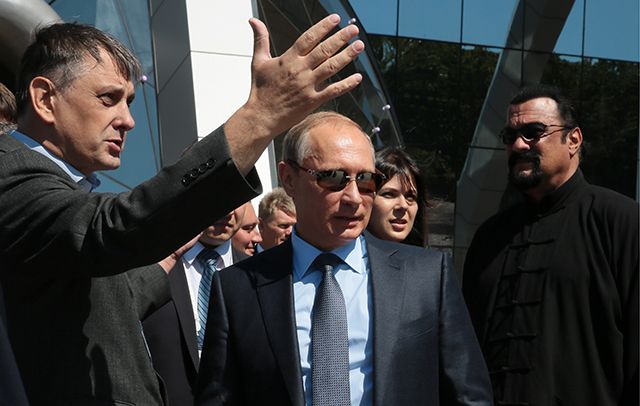
If you follow the formula of Vyacheslav Volodin “Russia is Putin”, the personal participation of the Russian leader was extremely important for the success of turning. And it was precisely by this main resource that Russia did not control particularly skillfully. The first mistake occurred in September in Vladivostok during the first eastern summit, which was conceived as the main platform for promoting projects in Siberia and in the Far East for Asian investors. Due to Putin’s hardware conflicts, at the last moment, a meeting with large businessmen of the Asia-Pacific region with assets under the control of almost $ 5 trillion was abolished at the last moment-instead, he made a short speech, and spent the remaining time at the company of actor Stephen Sigal. Many large businessmen, who, because of this meeting, had to break the schedule twice, were extremely annoyed and not even shy, despite the standard politeness for Asia, to express dissatisfaction with high-ranking Russian officials in increased tones.
The second misfire occurred in November, when at the last moment Vladimir Putin decided not to go not only to the East Asian summit (you), but also to the APEC summit (he missed it for the first time since 2002). It is known that Putin is very burdened by meetings in multilateral formats and flies to them for the sake of bilateral meetings. The Russian leader fulfilled the G20 summit in Ankara, and then held a repeated round at a climate conference in Paris at the Syrian two -grunts. Under these conditions, he considered to fly “into such a distance” as the Philippines, and on a regional tour of the countries of Southeast Asia simply did not have enough agendas and contracts. The president seems to have succumbed to the general mood of the elite, which by the fall ceased to consider the turn something important and priority, and the specialized bureaucrats simply did not find arguments in order to convince Putin.
Demonstrative neglect of you, where Moscow has been suggested since 2007 and where the President of the Russian Federation has never gone after the adoption of the country in 2011, has long been in Asia the subject of grievances and evil jokes, especially among the countries of the ASEAN. After all, even the President of the United States, who accepted you in the same 2011, skipped only one meeting in five years (in 2013 during the technical closure of the government) and was criticized for this. The refusal of Putin from a trip to the APEC in Asia, where symbolism is the basis of politics and relations between countries, was perceived as a final diagnosis: Russia did not take a course to turn to all Asia, but to turn into a younger partner of China.
The turn is dead, long live the turn?
Success, albeit a few, were also. True, some of them were related to how the team of Igor Shuvalov had to overcome the resistance of the Russian bureaucracy lying on the surface of sound ideas - how this happened with the protracted entry into the Asian Bank of Infrastructure Investments. Other steps can be attributed to the category of a mini-wagon-for example, on May 8, the statement of the Eurasian Economic Union (EAEU) and Beijing, promoted by Beijing of the Silk Road, creating a free trade zone between Vietnam and the EAEU, the abolition of the import of Russian grain in the PRC.
True, all these agreements are only the first steps on the way, where the final success has not yet been guaranteed - everything will depend on business activity. The business, perhaps in the past year, turned out to be the only one who tried to turn to Asia seriously, especially private. Moreover, this was the best in small and medium -sized companies that do not shine in the right place in the queue in the VEB or Sberbank, such as manufacturers of the Splat pasta or those Russians who filled the shelves of Chinese supermarkets of Alenka chocolate.
Other texts of the Carnegie Moscow Center on the topic:
How Kazakhstan becomes a friendship champion with China
How Chinese regions solve problems through neighborhood with Russia
With tears in the eyes: how economic relations with China have changed over the year of sanctions
Alexander Gabuev
Moscow Center of Carnegie