
Translated material
Event of the year: project "Last address"
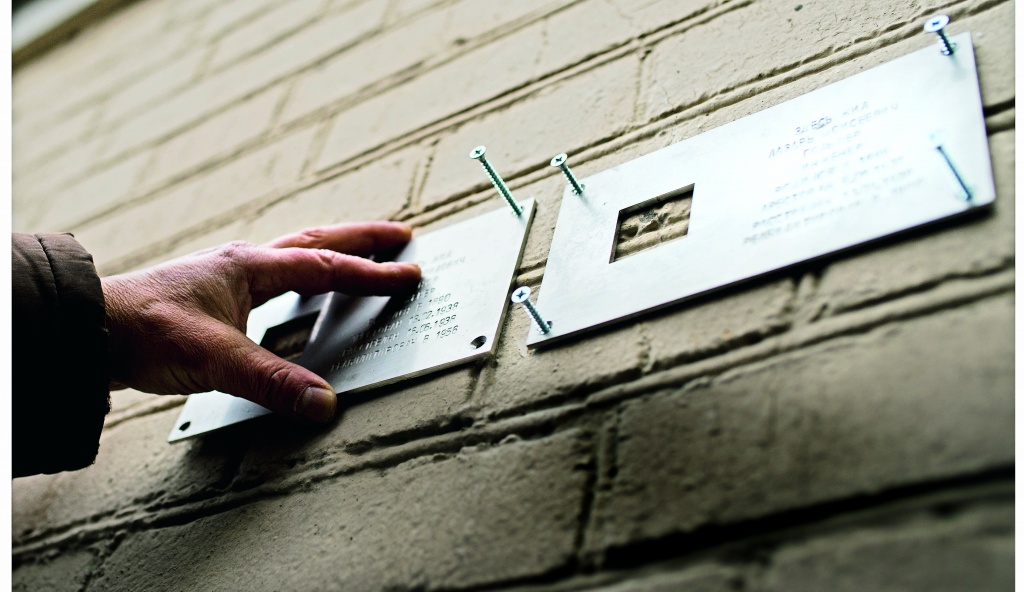
“Last address” - the project of journalist Sergei Parkhomenko and the Memorial Society - is dedicated to the memory of those who died from torture, illness and humiliation in Stalinist prisons and camps, who were shot by sub -sentence in stone basement bags and training grounds, those who died without saying goodbye, not saying the latter “sorry” to those who did not have a sung and for whom they did not read. Kadish, those who have no graves or tombstones, whose bones are buried with the bones of hundreds of others, whose ashes are mixed with ash of thousands of others, those from whom there should not have been nothing, and if family memory is a whisper and if the photo is hidden from the eyes of others
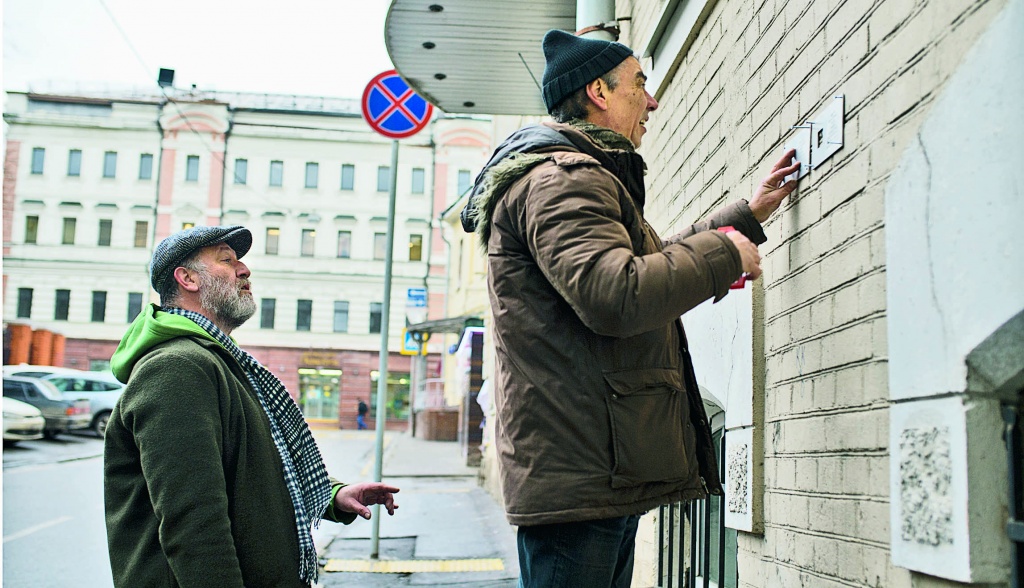
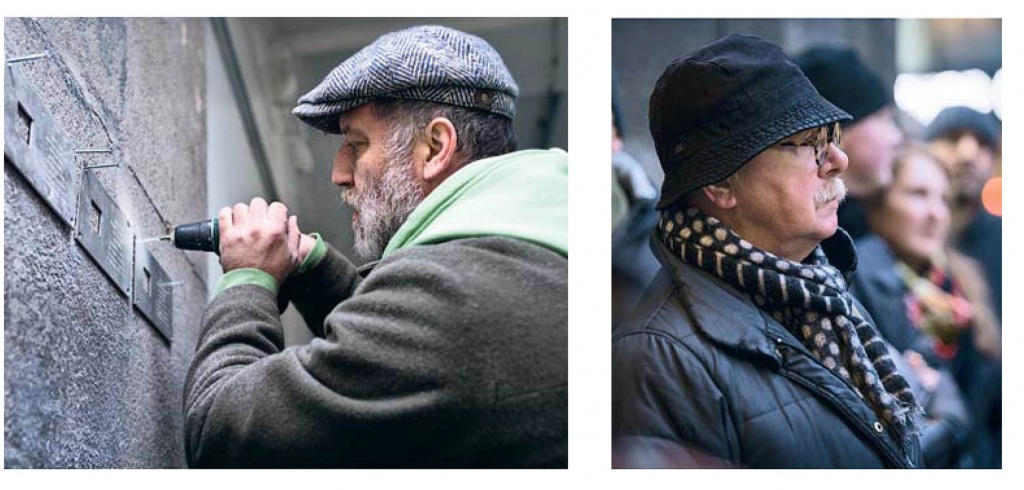
The foremen of the “Last Address”: the historian, member of the free historical society, in the past, the editor -in -chief of “Domestic notes” Nikita Sokolov (stands on the step -up) and a journalist, in the past, the chief editor of “The Curities” Sergey Parkhomenko drill holes for commemorative signs, which will be installed the next day when Parkhomenko, under the leadership of the famous architect Evgeny Assa (photo below), will drive Shurupi in the right of the right) Stone wall (photo below on the left). Moscow, Slavyanskaya Square, 4, and Myasnitskaya, December 15, 5-6, 2015
A steel plate the size of a postcard (11 by 19 cm), the window on the left - behind it is nothing but the wall and infinity; Name, patronymic, surname, profession, date of birth and final dates: execution and rehabilitation - on the right. Alexander Brodsky came up with a tablet, although there were other options at the competition, which was held by the famous Russian architect Evgeny Ass.
A year ago, in December, the first nine signs appeared on different houses of Moscow: when this number will go out of the press, there will be 195 of them, and not only in Moscow and St. Petersburg, but also in Tver, Maloyaroslavts, Perm, Taganrog, in the city of Buymsk region, in the village of Kupros of the Komi-Permyatsky District and in the village of Pozdnyakovo Nizhny Novgorod province. The poet, lawyer, director of the chemical plant, teacher, peasant, director of the artel, engineer, actor, priest - father Alexander from the church of the Protection of the Blessed Virgin Mary in the village of Pozdnyakovo, was installed in the church (“served here ...”) - his house was not preserved. All possible professions, different ages, biographies, classes are an innocently killed country listed in the registration lists of the Memorial.
Over the past year, only in one city - Taganrog - the installed plate (on the Central, Petrovskaya, city street - Mikhail Markovich Bondarenko, shot in 1938) was “stolen” - filmed by the local policeman (see photo on page 63): the Taganrog city administration announced a survey of the population, and the city spoke out for the departure of the memory of the victims of politicians repression (the same decision was made by the Buysk Legislative Assembly).
Arseniy Roginsky, chairman of the board of Memorial, was the first to whom Parkhomenko came with his idea of the Last Address. On December 6, 2015, Roginsky came to install the tablets on 15 Myasnitskaya,-before the revolution, the house of the merchant Ivan Kuznetsov: here are commemorative signs to six residents of this house (all were shot in 1937-1938).
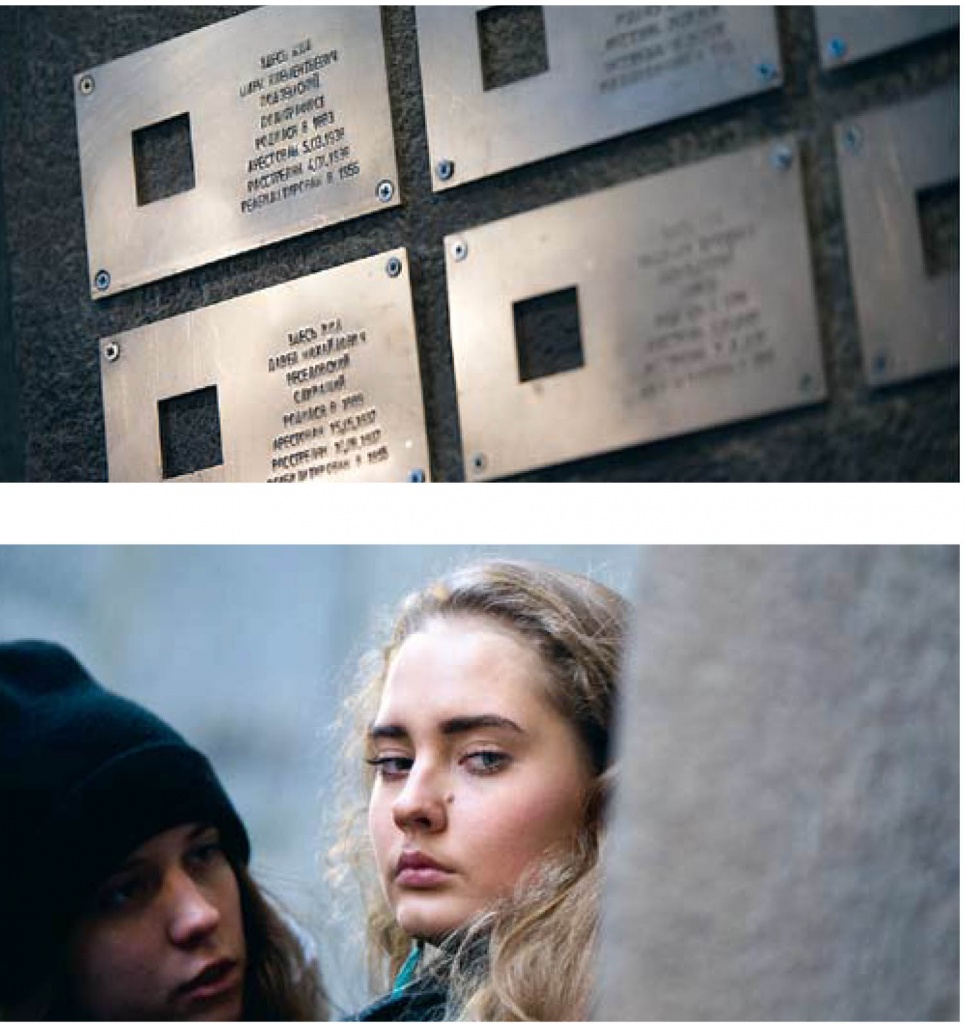
To date, the “Last Address” has received 1000 applications for the installation of information tablets - as they are officially called: unlike memorial plaques, their installation does not require the permission of the authorities - only the inhabitants of the house.
A similar German project - Stolpersteine (“stumbling stones”), dedicated to the victims of the Holocaust, has existed for 20 years: stones with the names of the dead have been mounted into the sidewalks of 600 cities of Europe - there are more than 50,000 ...
“A day on Myasnitskaya Street or Pokrovka,” says Parkhomenko, “probably 10 thousand people pass. One, the other, the third stops, reads the name on the plate, then, maybe he will climb the Internet, maybe he will think that there is nothing more important than human life-this idea still cannot take root in any way. Hence the principle of our project: "One name, one life, one sign."
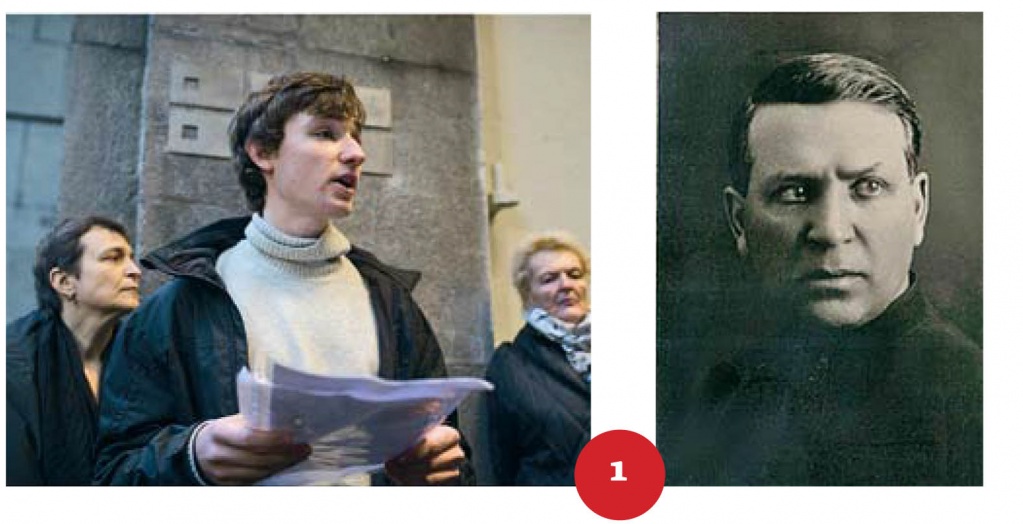
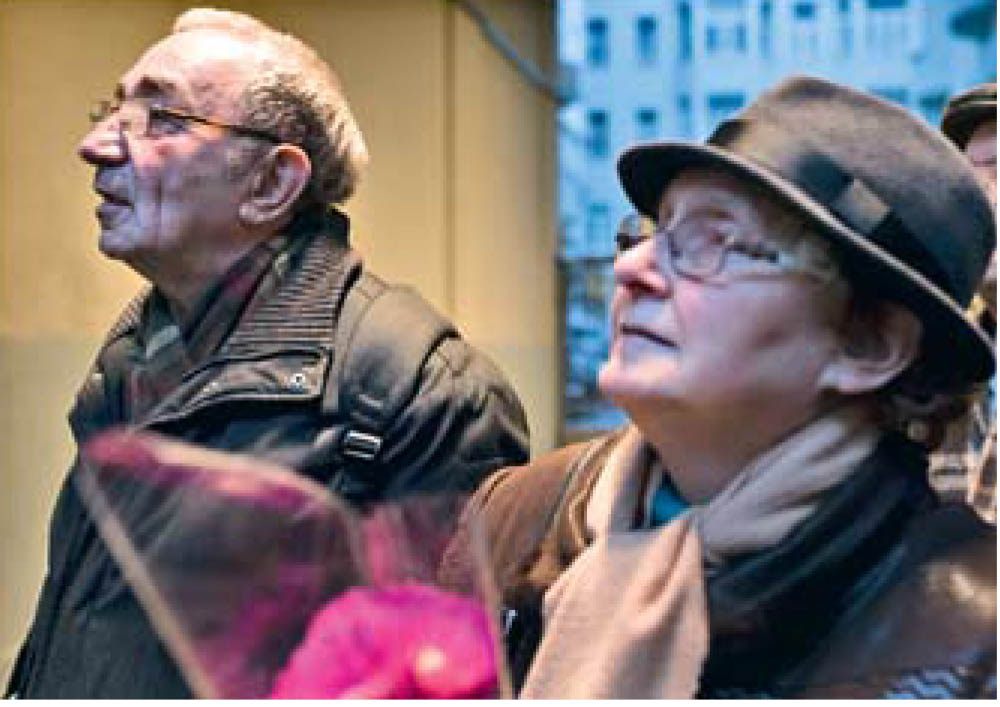
1. One of those whom the funnel took from the house on 15 Myasnitskaya was an entrepreneur (Nepman) Mark Odozemsky: in this house he bought an apartment, and nearby built a printing house that still works. Underground was shot on July 4, 1938 at the Butovo training ground. After installing the plate, his great -grandson and granddaughter read the memories of grandfather and great -grandfather, whom they had never seen. Moscow, December 6, 2015.
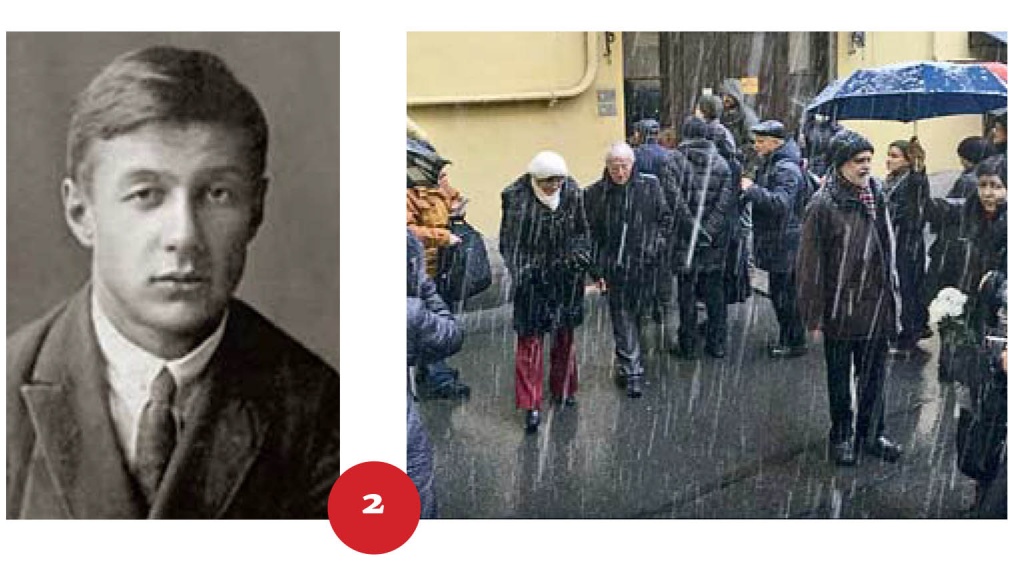
2. In St. Petersburg, in the writer's house on the Griboedov channel 9 (now the State Literary Museum “XX Century”), who just did not live (both Schwartz, Zoshchenko, Zabolotsky, etc.) and who was not taken from here to prison, and then taken to shoot. On November 22, 2015, 7 tablets appeared here at once, one of them to the poet Boris Kornilov (executed on February 21, 1938). The famous song of the Soviet era “Morning Morning with coolness” to Kornilov’s poems after his arrest turned into “Folk words”.
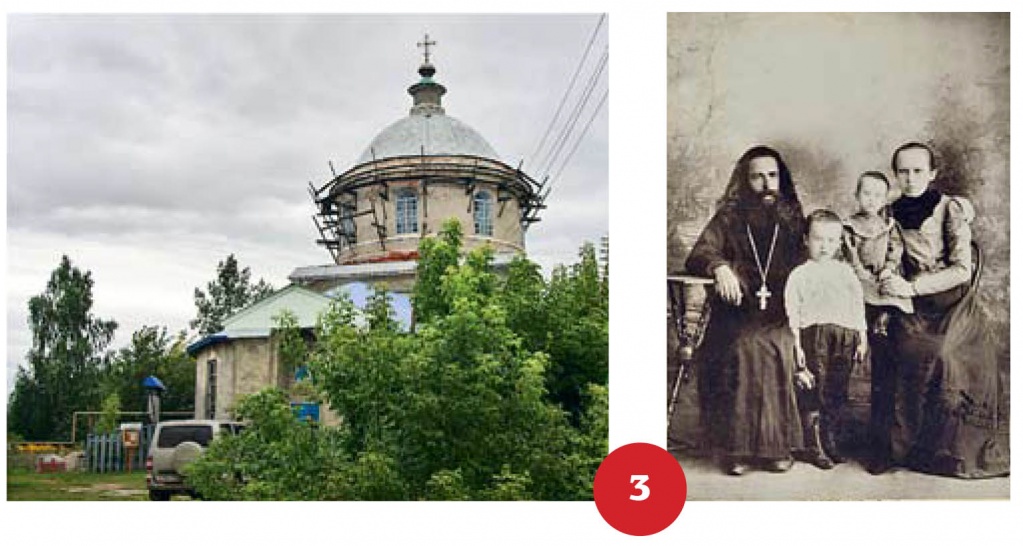
3. Priest Alexander Elpatievsky in a picture with his wife and two children, shot in November 1937. On the left is the Church of the Protection of the Blessed Virgin Mary in the village of Pozdnyakovo Nizhny Novgorod province, where a memorial sign appeared on August 19, 2015.
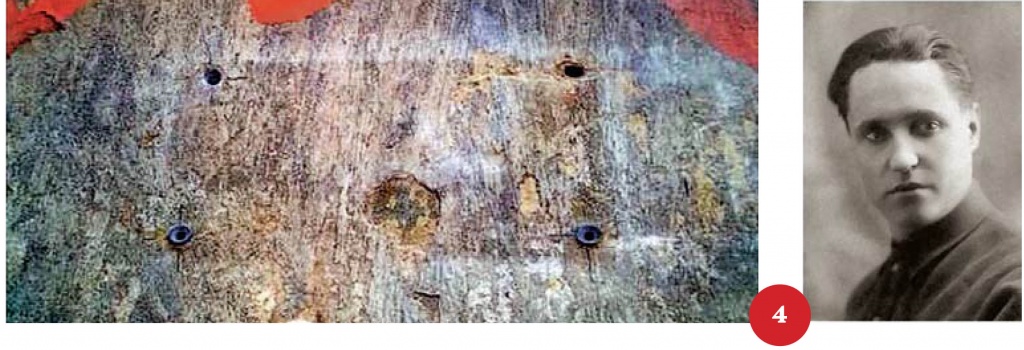
4. The place from the “stolen” memorial sign in Taganrog, on Petrovskaya Street, where the secretary of the party committee of the Krasny Kotelchik plant, Mikhail Bondarenko, shot in 1938, found his last address.
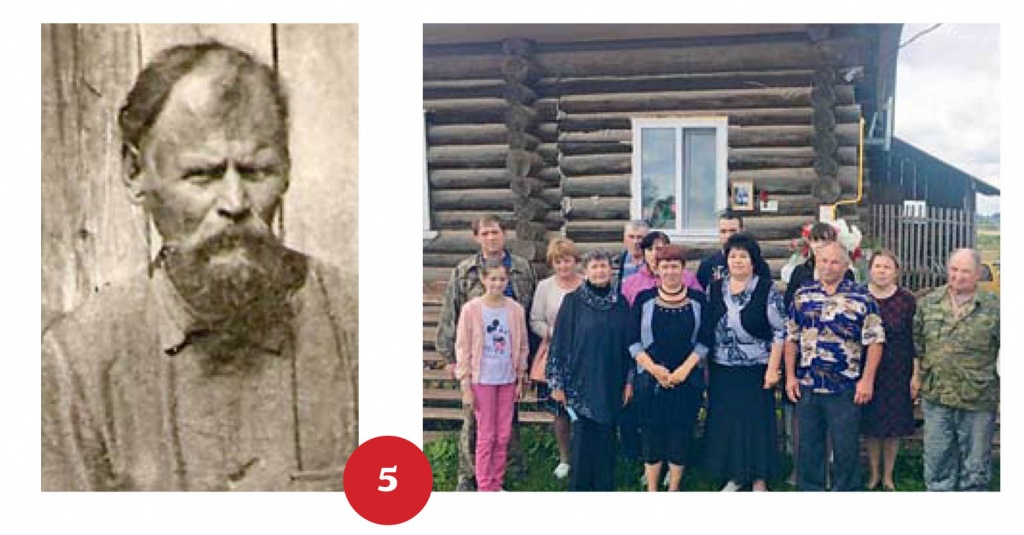
5. Installing the memorial sign to the peasant village of Kupros Perm Territory Valentin Startsev became an event for the whole village. When Startsev was arrested, he was 59 years old, he had a wife and four children. In the indictment, in particular, it is indicated "proved the unprofitability of collective farms." Shot on November 3, 1937.
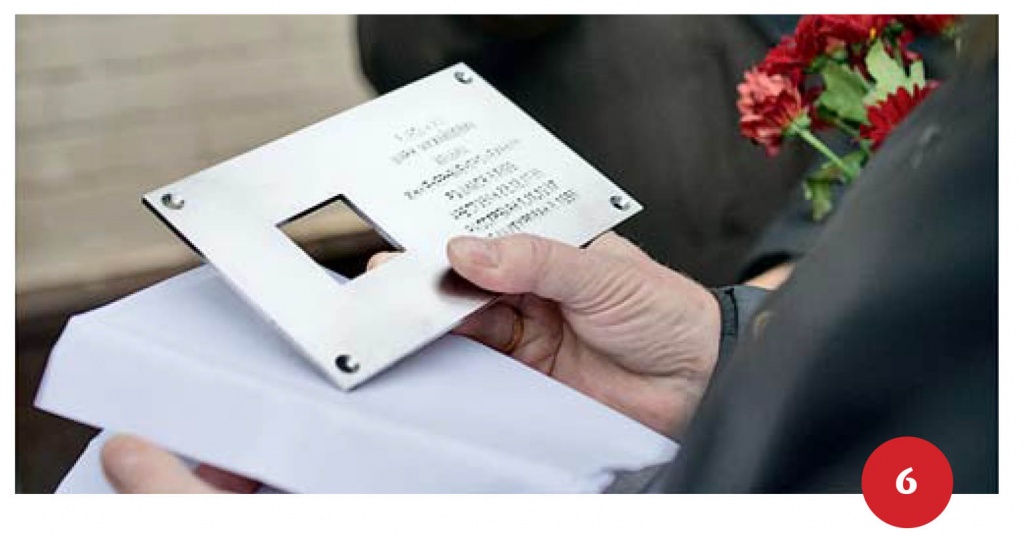
6. Mark Mikhailovich Albats found his last address in Moscow, on 11 Pokrovka Street, where in the apartment 14a lived until December 22, 1937. Shot on November 1, 1938. All the “enemies of the people” mentioned in this material were rehabilitated, the state did not bring personal apologies to none of their heirs, did not pay compensation, and did not return the confiscated property.
Photo : Pavel Bednyakov, Poslednyadres.ru