
Translated material
In words you are Leo Tolstoy
The heading "The dictator of the week" comes out of the vacation and immediately takes on heavy shells: life, beliefs and escape to the death of the great Russian writer Lev Nikolaevich Tolstoy. Obvious diaries, a estate lowered into cards, the fight against the church in the name of faith, war, murder, lies, drunkenness, anarchism, train sex and moral imperative - all this is he.
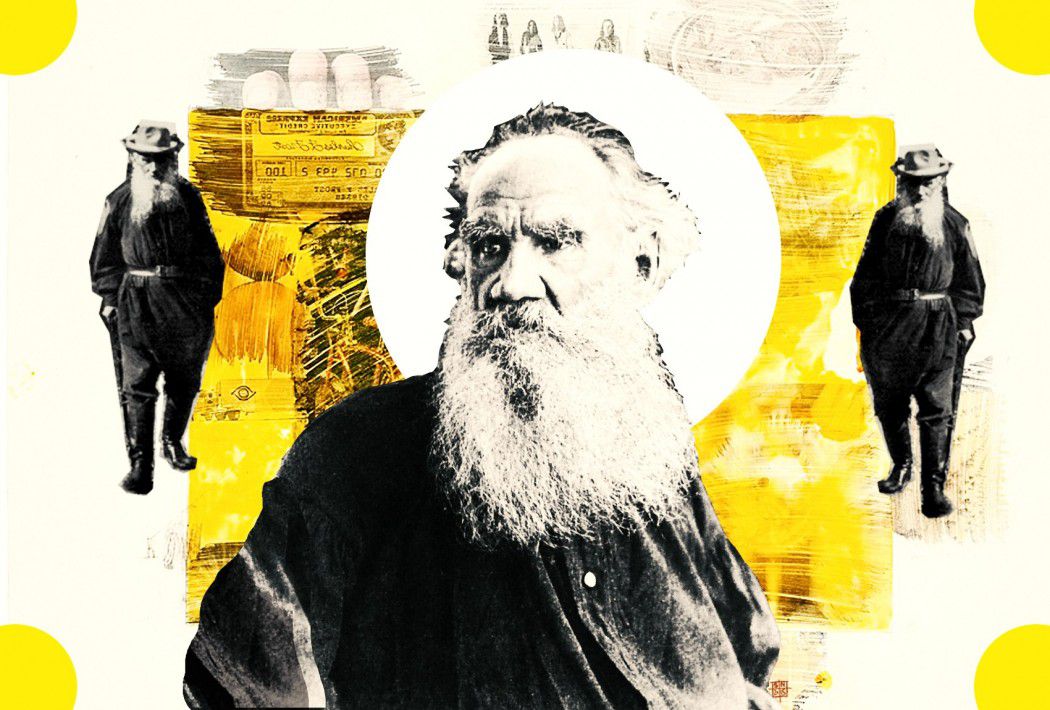
The name of the Prophet, who had recently lived in Russia, is known to every student from Krasnodar to Kamchatka, but almost none of them know what he preached about. The anarchist who threatened the authorities of the king himself, anathematically, is an anathematically religious who promoted pacifism a military man who denied the marriage, the father of thirteen children and who preached the aristocrat, the aristocrat is known to most people in Russia simply as a “great Russian writer”. With his radical glances, Leo Tolstoy was so ahead of the time that even today, more than a hundred years after his death, I would like to say: WAU, WAOU, Count, easier! But there is no more “there is no prophet in his country”, and there is no one to say.
If Lev Nikolayevich Tolstoy died at fifty years, this would not have changed his glory among people: by this age he not only made a horde of children, but also wrote two of his most famous novels that millions of schoolchildren and who read all over the world annually. However, he not only did not die after that, but also managed to abandon his achievements and develop a revolutionary concept of Christian life for our today's consciousness. Unlike many theorists, he tried to realize his ideals in life and gave rise to a wave of thickness, which reached India and turned into the non -resistance of Mahatma Gandhi. The ideas that he honed on the machine of his meticulous mind are simple, concise and - like everything that we love, are already ready to use.
Here is the life of a person who did not consider literature his main achievement.
GRAPH
When Leo Tolstoy was a year old, he lost his mother, in nine - he lost his father. Being in the care of distant relatives, Leo learned the laws of aristocratic life. During his trips to the aunts, the fourteen -year -old count first knew the charms of love: the older brothers took him to the brothel, who was across the road from the church. After the lion first coped the carnal need, he sat on the edge of the bed and cried bitterly - so postcoite depression is manifested in particularly passionate nature. His only close friend was the elder brother Nikolai, from whom he took an example, among other things, and trying to study at the university. During his studies, Tolstoy first tried himself as a writer and began to imitate Benjamin Franklin to write a diary that accompanied him until the very last days . Judging by the notes, the Woe-Student was interested in two completely opposite things: self-improvement and kuthezh. He associated improvement with the training and search for answers to eternal questions like what good and evil are. The kutzhezh looked like endless hopping adventures, as a result of which he ended up in a hospital with a sexually transmitted ailment (where he began to keep his diary). Unable to withstand the boredom of the student, Tolstoy first quit his studies at the legal, and then at the Faculty of History - and decided to go to the military, again, after his older brother. At that time, Russia, as always, worried Chechnya and Crimea, and the first thing Lev Nikolaevich fell into a hot point in the Caucasus. He served two years, participated in skirmishes with the highlanders and earned the right to the St. George Cross, which voluntarily lost to the colleague, a soldier of simple origin - Tolstoy believed that the relief of the conditions of service of the colleague is above vanity. In the army, Tolstoy was bored when it was not necessary to fight and perform partisan sorties. So he joined the soldier's life in a classic way: he began to drink and play cards.
The count played passionately in the cards and, of course, often lost. Once he wrote in a diary:
“Two days and two nights played the shtogs. The result is understandable - the loss of the entire Yasnaya Polyansky house. ”He lost his family estate, and with him everything that remains in memory of his parents and childhood. Over time, he managed to regain a clear meadow, but from the house in which he grew up, only a small memorial stone remained. After the Caucasus, Tolstoy was transferred to Crimea, where at that time another war with the Turks was raging. The Crimean war was much hotter, and he first encountered an ongoing artillery cannonade, numerous deaths and many crippled bodies. The smell of gunpowder, the type of blood and the defense of Sevastopol aroused the literary instinct in Tolstoy, and it became a kind of discoverer of the military gonzo-journalism . In his Sevastopol stories, he honestly reports from the scene, does not romantize and does not decorate anything and does it like no one before. The first story turned out to be so good and ideologically true that he earned the approval and enthusiasm of the monarch: Tolstoy immediately noticed, began to translate him into foreign languages and called for a career to St. Petersburg.
The second and third stories from the Crimean trilogy did not cause such praise of light, because in them Tolstoy is already starting to depart from patriotic pathos and is inclined to the fact that war is a terrible, meaningless and bloody mess, which no one needs at all. He is worried about what state the soldiers fall into, how much anger appears in generally good young people, how they are cannibal rejoice when their shell spreads the same, in general, normal guys in meat shreds. In Crimea, not only the literary career of Tolstoy, but also its anti -war and anti -state line began. Participating in the bloody battles side by side with other soldiers, Tolstoy survived all the horrors of the war that he described in his stories. Observing the cruelty with which people killed each other and died, and realizing how easily the command was given to orders, the young writer saw not only the inhumanity of the private situation, but also the disease of the social system, in which this whole nightmare is not only justified by the “good state”, but also blessed by the church.
In parallel with the cruelty to the “enemies of the state”, Tolstoy discovered the same inhumanity in relation to his own citizens. Participating in 1866 in the Military Field Court, he defended the company clerk, who, being drunk, violated subordination and hit the officer. Tolstoy tried to prove that the clerk was insane, but the officials put subordination and the system above human life - the clerk was sentenced and shot. The state kills enemies, devours its children and does not care about anyone in particular. Tolstoy with disgust found that he himself was part of this criminal system.
“I killed people in the war, called to a duel to kill, lost to cards, eating the works of men, executed them, fornicated, deceived. Lies, theft, anyway of all clans, drunkenness, violence, murder ... There was no crime that I would not commit, and for all this they praised me, my peers considered me a relatively moral person. ”
In November 1856, the count in the rank of lieutenant forever left military service.
Writer
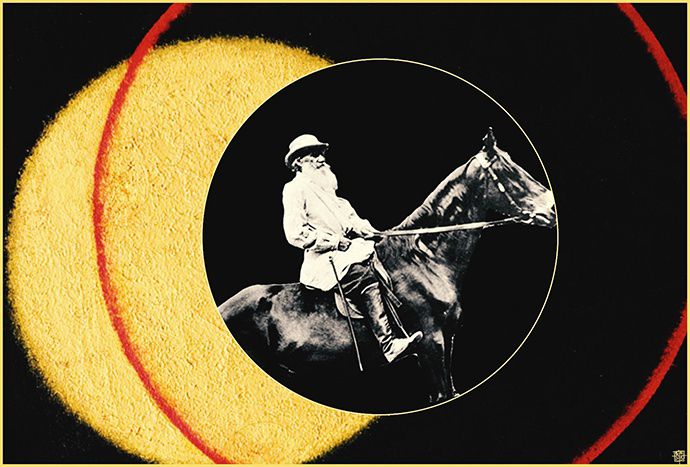
Having received the glory of the writer after his first story, who arrived in St. Petersburg Tolstoy fell into secular society. In the 19th century, the empire gained strength in the prevailing political structure: the king had too much power, and the peasants still need to be liberated and made by people. In an intellectual sense, this dissatisfaction was led by writers and poets. The criticism of the king and the policy of the state could cost freedom and life: the most famous and outstanding dissatisfied was simply sent to exile, like Pushkin and Lermontov. Tolstoy joined the Petersburg circle of writers, where Turgenev introduced it. He described the young man’s young hope: “A dear and wonderful person ... Although he received the name troglot from me for wild jealousy and perseverance.”
The writers of that time were quite wealthy people and could afford to live in a wide foot, but they all, without exception, in their social status were several goals below Count Tolstoy. At that time, the most fierce issue was land reform and the abolition of serfdom: all the liberals spoke “for” and in words attacked the ruling class and aristocrats. Tolstoy had both the earth and three hundred peasant souls, so, unlike the rest of the writers, he took everything very close to his heart, tearing between two points of view. In addition, Tolstoy belonged to the Higher Light due to origin and was even entered into the royal palace. It belonged to both intellectuals of liberals, longing for changes, and to rich aristocrats who want to leave everything as it is.
Tolstoy was already tormented by the question: why should be so unfair that somewhere people die from hunger without a piece of bread, while aristocrats feed dogs sturgeon and caviar. Why can a landowner darken his peasants, and they will only praise him for severity and economicness? Why can one person have the right to deprive the life of another? At one time, an irreconcilable position saved him from bureaucracy: when he was set by a world mediator, he made all decisions in favor of the peasants, not nobles, and obviously did not correspond to the conjunctural spirit:
“The mediation is interesting and exciting, but it is not good that the whole nobility has hated me with all the might of the soul.”He begins to write short works, charged with criticism of the life of landowners and sympathy for men.
In his own estate, Yasnaya Polyana Tolstoy put into practice some of his ideas, wanting to change the existing way of life and set an example for other aristocrats. In 1859, he opened the first school for the children of the peasants on the estate and began to develop his own pedagogical system, opposite in his principles of the German system of raising children at that time, in which the emphasis was put on discipline, submission and punishment. Tolstoy wrote a dozen articles on pedagogy , in which he insists that teaching children should be free, interesting, visual and develop not obedience, but independent thinking, individuality and interest in the world.
HUSBAND
Closer to the age of thirty, Tolstoy made a thorough and partially foot trip to Europe, which left him indifferent even made an unpleasant impression. He especially distinguished France with Napoleon’s incomprehensible and unpleasant cult and public executions for him.
“So, when my being in Paris, the appearance of the death penalty convicted me with the shattering of my superstition of progress. When I saw how my head was separated from the body, and the other and the other stood in the box, I realized - not my mind, but by the whole being - that no theories of the rationality of the existing and progress can justify this act and that if all the people in the world, for any theories, from the creation of the world, found that this is not necessary, that it was bad and that is why it was good and that is why it was good and so that it was good and that is good It is necessary, not what people say and do, and not progress, but with my heart. ”
In traveling around Europe, his brother Nikolai died in his arms from tuberculosis. Tolstoy became a round orphan and decided to create his own family and retire to the estate. All this time he writes, but the salon glory of the writer is useless to him. Also, life in St. Petersburg and Moscow, which he describes as follows:
“Stink, stones, luxury, poverty. Debauchery. The villains who robbed the people gathered, gained soldiers, judges, to protect their orgia. And feast. People have nothing more to do, as, using the passions of these people, to lure the loot back from them "
The thirty -four -year -old Tolstoy chose eighteen -year -old Sofya Bers, a pure and passionate fan from a good family in his wives. Even before the marriage, the lion forced the bride to read his diaries, which described all his sexual adventures, sexually transmitted diseases and mental throwing: so he completely revealed the girl and invited her a conscious choice - to accept or not accept a man with such gloomy torment as he had. Sophia from the eleven years old was familiar with Tolstoy, read everything that she could get from them, and was in love with him as a man and a writer. She agreed, and after an imminent wedding, the young went to Yasnaya Polyana by train, in which, at the insistence of Tolstoy, the first marital sex occurred - which set a rather strange note to their marriage taking into account the special symbols of the railway in the works of Lev Nikolayevich.
Thirteen children made Lev and Sophia and created more than six hundred characters and two of Tolstoy’s most famous novels - “War and Peace” and “Anna Karenina” in joint work. The marriage turned out to be a very fruitful time for the family: Tolstoy became the most famous and readable writer of his time. The spelling of the last book was accompanied by a personal crisis, and Anna Karenina largely reflects the mood of the author himself at that time. After writing the novel, Tolstoy found the classic “human happiness”: a large family, a lot of money, world glory. However, the same period becomes a turning point: there is nothing more to look for, everything has been found - but the taste does not like it. After twenty years of secular work and family hassle, Tolstoy began to experience the crisis, fell into depression and even hid the ropes and rifles from himself so as not to tempt and not kill himself. The same crisis then caused its revival in a new understanding of Christianity. Having come to the teachings that we now call Tolstoy, Lev Nikolaevich began to adhere to anarchist, anti -ical, ascetic views. He and Sophia began to diverge greatly in the beliefs: the thinker’s wife was very devout, did not want to leave her many children without money, property and without a father. Tolstoy invited her a “plan of life” - to give part of the income to the poor and their education, their own lifestyle, food, and greatly simplify the clothes, and “all superfluous” to sell and distribute - and crews, furniture, and piano. My wife did not suit this approach.
Neither in glory, nor in the family, nor in work, nor in the service he found the most important answer to the question: why continue his life? What is its meaning? Tolstoy at that time began to divide people into three types: those who do not understand all the difficulties of this main question and live in ignorance; Those who understand him, but can live, closing their eyes on him; and those who understand and have the strength to stop the whole nonsense along with their own life ..
Elder
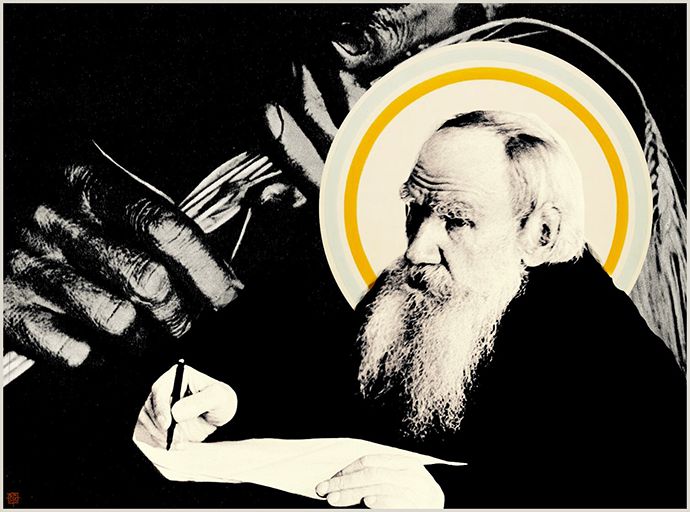
Disappointed in the idea of “achievements of civilization”, Tolstoy ceased to believe in the benefit of progress, state and science. In them, on the contrary, he saw Babal and a continuous deception. He began new grounds for life - and he began to look for them in what is customary to call them. Therefore, first of all, he turned his view of the Church, which traditionally taught that there was a life of spirit except for the life of the body. At fifty, what happened to him, which is now called the "Orthodoxy of the brain." Tolstoy regularly visited the Church for a whole year, observing all the rites. On one of the liturgy during the sacrament, he suddenly realized that all this does not work: there is neither the flesh of Christ, nor His blood, but there is only bread and kagor, which with pleasure finishes the pop (he put this feeling into the scandalous chapter from the novel “Resurrection”). Tolstoy categorically rebelled against external rituals and the Church, in principle, and not only refused to observe church formalities, but also put his much strength to fight it. He sacredly believed that the Church actually perverts and adjusts his teaching to secular needs to bear the word of Christ. She blesses wars, closes her eyes to deaths and discharges into gold and fur, while people die from hunger and rot in prisons. Tolstoy undertook to figure out what was actually written in the Gospel, and made his own translation-study under the name “Four Gospels” (which the priests still consider a terrible seducte). For a couple of years, the public criticism of the Church of Tolstoy was awarded anathema. The Synod, at the head of which stood a secular official of the Pobedonostsev, publicly disowned the “blasphemous” count and deprived him of the rights to use the Christian franchise. This excommunication did not bother the lion at all, but the people took everything to heart and began to see in the thick of the prophet trained. After the “falling away of Tolstoy from the Church”, a wave of folk protests passed.
Tolstoy was looking for universal grounds on which one could re -build your life and convey this knowledge to other people. To get some kind of permission and get out of the impasse, he went to the elder Ambrose in Optina Deserts and after returning from there began a total revision of the foundations of religious and philosophical thought of the world in the search for elusive meaning. Reflecting all the peaks of his material life, from the fees for books, from glory, from his family, he instead began to find unity with universal values that he found repeating from culture to culture, from religion to religion and from the thinker to the thinker.
These values can be reduced to a simple list.
1. Love the neighbor. Love is the work of good. Ближний — тот, кто доступен для твоего добра прямо сейчас. 2. Убивать нельзя. Убивать нельзя никого. Убивать нельзя ни ради чего. War is a murder. 3. В жизни есть смысл. Смысл жизни — всеобщие единство, доброта и любовь. 4. Способ жизни — совершенствование. Путь к совершенству — постоянное усилие. 5. То, что называется «царством Божьим», — внутри вас есть. 6. Смерть тела есть. Смерти в целом нет.Как раз в этот момент, когда Толстой открывает для себя заповеди жизни в любви и единении со всеми людьми, его человеческие связи разрушились. Усугубился разлад с Софьей, которая препятствовала воплощению его новых идеалов. Кроме того, Софья и ученик и соратник Толстого Владимир Чертков находились в непримиримом конфликте за право компостировать мозг уставшему мыслителю. Супруга считала, что Толстой загубил свой литературный талант, а сам Лев Николаевич, когда его хвалили за его романы, отвечал:
«Это всё равно, что к Эдисону кто-нибудь пришёл и сказал бы: «Я очень уважаю вас за то, что вы хорошо танцуете мазурку». Я приписываю значение совсем другим своим книгам, религиозным!»Начался разлад с церковью: жестокие споры и взаимные ожесточённые нападки. Конфликты с государством и критика его политики и войн России привели к тому, что за Толстым установили круглосуточную слежку и время от времени устраивали обыски в его доме — ищейки пытались обнаружить печатный станок, на котором граф якобы печатает свои антиправительственные брошюры.
СТРАСТИ ТОЛСТОВЫ
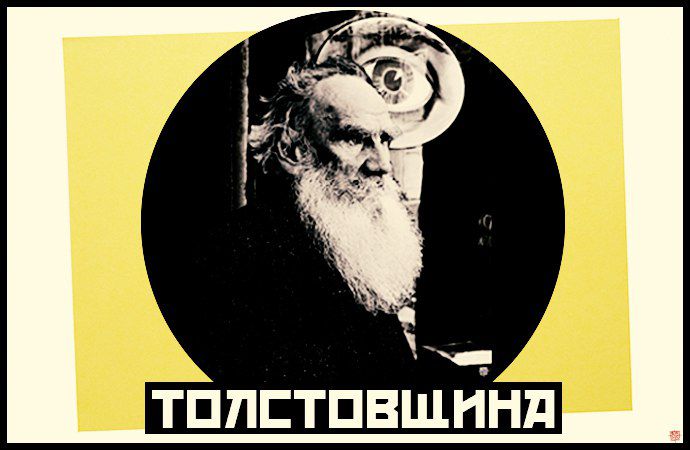
Толстой неоднократно порывался уйти из дома, раздать имущество, отлучиться не только от церкви, но и от семьи. Как раз во время такого ухода из дома и оборвалась его жизнь на восемьдесят третьем году. Многие думают, что «уход великого старца» был спонтанным решением взбалмошной и страстной натуры. На самом деле, он готовился давно, ему всё время приходили письма от последователей, которые призывали его до конца следовать своим принципам. И Толстой собирал силы. В ночь на 28 октября 1910 года Лев Николаевич тайно покинул Ясную Поляну, чтобы снова попасть в Оптину пустынь к старцам. Выезжая из дома в последний раз, он был полон планов и надежд, хотел писать продолжение «Воскресения» и наконец зажить правильной жизнью. Навещая жившую неподалеку от Оптиной пустыни в монастыре свою сестру-монахиню, Толстой говорил, что единственное, чего он хочет теперь — это жить одному. Он снова пустился в путешествие по железной дороге, где его и настигла смертельная болезнь. Обессилевший Толстой в сопровождении доктора сошёл на станции в Остапово. Скоро в домик рядом с железной дорогой стеклись паломники, единомышленники и близкие Толстому люди. Их было так много, что к нему допустили только очень узкий круг людей. Прибывшая в Остапово Софья так и не смогла попасть к умирающему супругу.
В день похорон тысячи людей объявили забастовку, на улицах проходили стихийные митинги, правительство забеспокоилось, что это могло вновь всколыхнуть революционные волнения, подавленные после 1905 года. Улицы заполнились простыми людьми, многие из которых были малограмотными. Они видели в Толстом не великого литератора, а человека, который мог их спасти: его воззрения передавались среди них из уст в уста. Хотя Толстой и не участвовал напрямую в политической жизни страны, его взгляды были антиправительственными, а слава — всенародной: многие думали, что в эти дни начнётся революция имени Толстого.
Учение, названное толстовством, окончательно сформировалось в девяностых годах XIX столетия с выходом сочинений « Исповедь », « В чём моя вера? », « О жизни » и других. С отлучением Толстого от церкви его последователи стали подвергаться гонениям и тюремному заключению, а с приходом Советской власти во время репрессий тридцатых годов были окончательно уничтожены последние поселения их на русской территории. Толстовство продолжало существовать в Англии, Западной Европе, Японии и Индии, где достигло максимального развития в движении сатьяграхи (ненасильственной борьбы за независимость Индии от Британской Империи) под предводительством Махатмы Ганди, с которым Толстой вёл переписку до самой своей смерти. Если вы вдруг хотите стать толстовцем, то это можно сделать, соблюдая простые правила.
Нужно податься в опрощение/дауншифтинг/антипотребительство, отказаться от военной службы, спиртного, табака, собственности и работы на государственную систему, деньги отдать нуждающимся, жить в простой обстановке, отрицать суды и наказания, быть вегетарианцем, жить коммуной и физическим трудом. Ирония заключается в том, что правительство напрасно опасалось революции после смерти писателя — ведь когда настоящая, Октябрьская, революция всё же случилась, Толстой как мыслитель не был принят и новым обществом: несмотря на то, что большевики относились к нему с большим трепетом, взгляды графа «антивсё» не могли — и не могут — вписаться ни в одну государственную систему.