
Translated material
Dinosaurs performed marriage dances
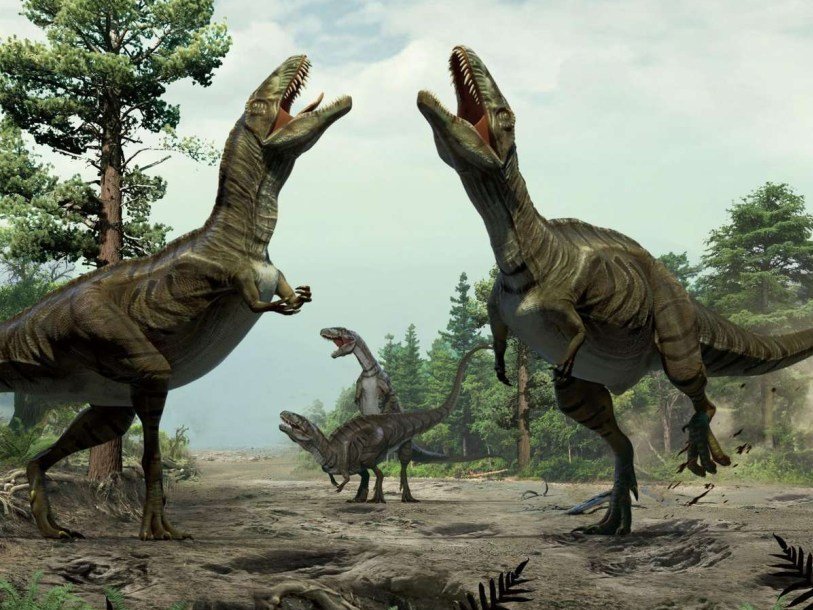
A group of paleontologists, led by Martin Lockley, from the University of Colorado , came to the conclusion that males of dinosaurs, like many modern birds, performed marriage dances to attract the attention of potential partners. Scientists nominated such a hypothesis by examining the traces of dinosaurs preserved to this day.
Martin Locles and his colleagues studied four groups of traces in Colorado. All of them are preserved in the geological formation of Dakotsky sandstones related to the Cretaceous period. The age of finds lies in the range from 145 to 66 million years. The largest investigated site has dimensions of 50 by 15 meters and contains about 60 traces. Most of the surviving traces have the form of double parallel recesses, but there are those in which a three -fingered limb of the dinosaur is clearly visible.
By the size and form of traces, paleontologists have determined that they belong to representatives of the Acrocanthosaurus genus - predatory dinosaurs who lived about 110 million years ago. Acrocantosaurs were then the largest representatives of the fauna of this region. They weighed up to six tons and were up to 11 meters long. Acroctosaurs went on a powerful pair of hind legs.
Having carefully studied the traces, scientists came to the conclusion that their location is very reminiscent of traces left during the marriage period, the Atlantic impasse ( Fratercula Arctica ), as well as some types of Zuyk and parrots. Paleontologists examined a number of other hypotheses that could explain the appearance of such traces: extracting dinosaurs of food or water, marking the territory, building nests, but only marriage behavior turned out to be an answer that explains all the features of the location of the traces.
An article with the justification of the hypothesis is published in the journal Scientific Reports.