
Translated material
Simple artist
Vasily Sychev - about the admissibility of Russia's use of cassette ammunition
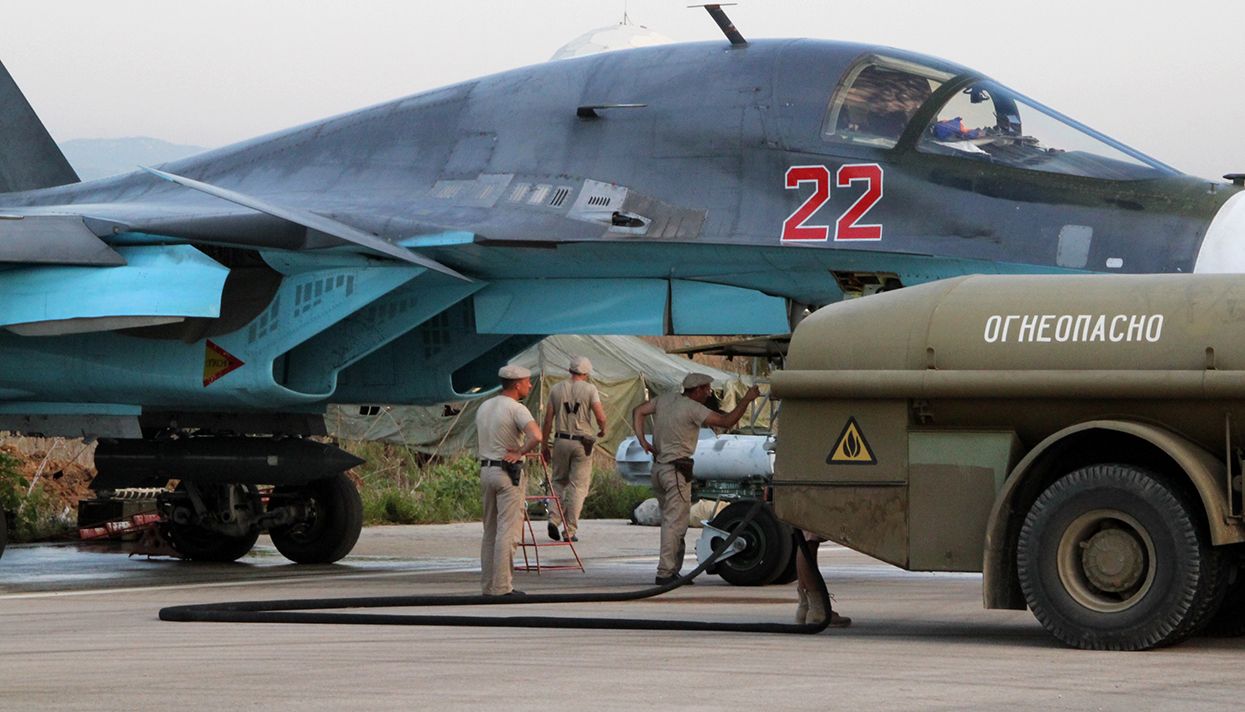
The Russian research group Conflict Intelligence Team has announced that it has evidence of the use of the Russian aerial-cosmic forces in Syria of cassette ammunition. Judging by the photographs and videos presented, the planes are really at the Khmeimim air base in Syria and carry bomb cassettes of various types. Medusa asked the military expert Vasily Sychev to analyze the data Conflict Intelligence Team, as well as talk about whether the use of cassette ammunition is violating existing international standards.
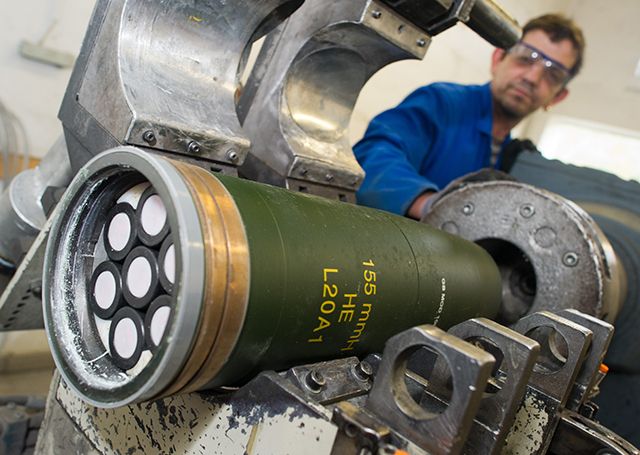
Cassette ammunition-bombs, shells or missiles, equipped with many small explosive devices-sons-are considered a negative weapon. Due to the imperfection of the fuses of the Saturdays, the first bomb cassettes did not explode, mining the area for a long time. To facilitate the search for SubbotePasis, with sappers they were covered with bright paint, which attracted children. This increased the number of victims among the civilians. Now sub-devices are equipped with self-destruction mechanisms, which is why mining the territory rarely occurs.
Nevertheless, human rights organizations advocate a unambiguous and complete ban on cassette ammunition, and reports on their use appear quite often. So it was, for example, throughout almost all American campaigns in Iraq. The last time the United States used cassette ammunition in Iraq in 1999. Now in the USA there is a program of gradual abandonment of ordinary cluster ammunition (with exploding Saturdays).
Messages about the use of bomb cassettes in Syria
The Conflict Intelligence Team report is not the first study on the possible use of cassette ammunition during the Russian operation in Syria (the campaign is carried out from September 30, 2015). In December, the Human Rights Watch has published a report on this subject. According to the organization, Russian strikes using bomb cassettes fell on the territories controlled by the opposition. A little later, another human rights organization-Amnesty International- released a study that claims that at least 200 civilians were killed from Russian bombing in September-November last year. At the same time, the bombing took the lives of only a few dozen militants.
On December 30, 2015, the US State Department announced that he did not have evidence of the use of cassette ammunition by Russian VKS.
In January 2016, the Conflict Intelligence Team group (a Russian project specializing in open sources) said that she studied video recordings and photographs of the Russian Air Force in Syria, published by Russian television channels and news agencies, including Russia Today and RIA Novosti. Judging by the photographs, they really depict Russian aircraft at the Khmeimim air base, armed with bomb cassettes.
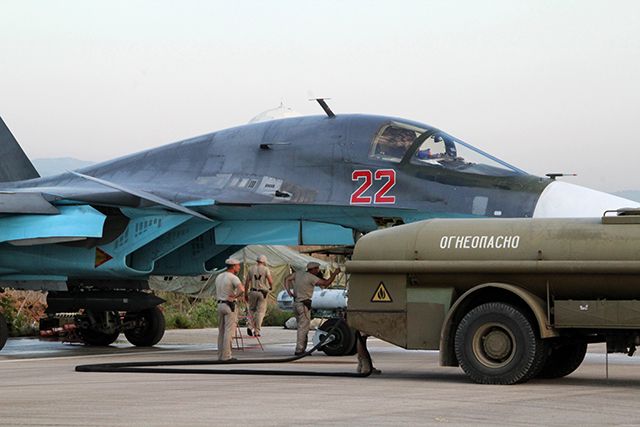
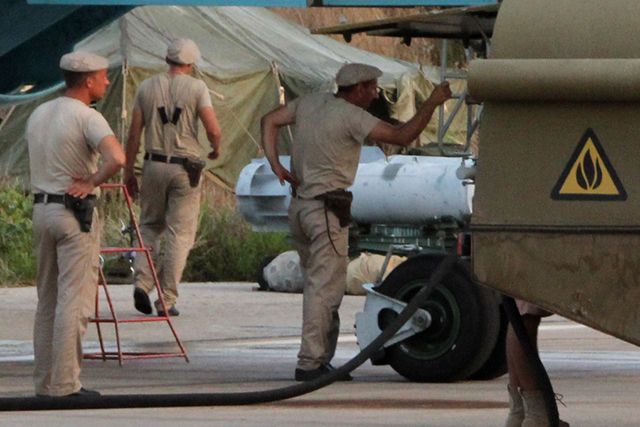
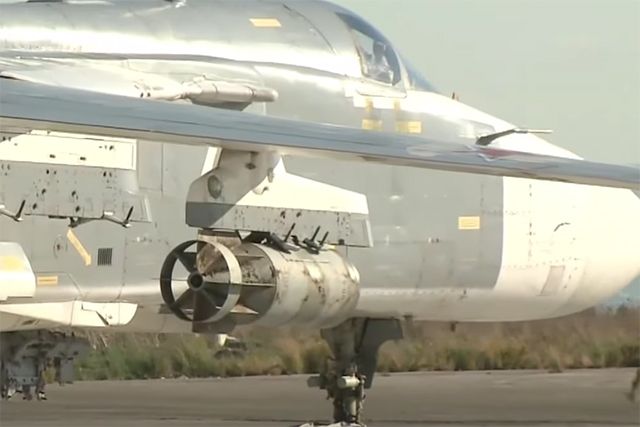
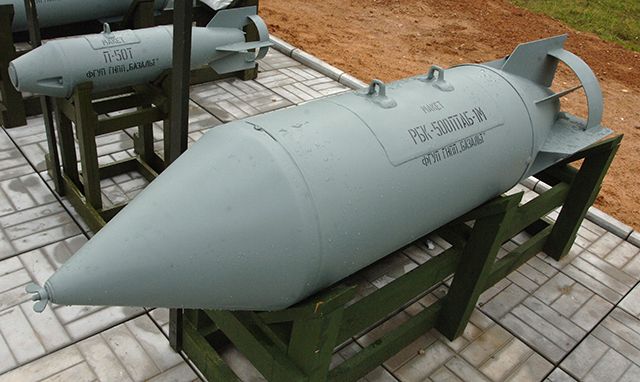
We are talking about three types of ammunition of a caliber of 500 kilograms. In particular, the aircraft are armed with RBC-500 bomb cassettes in versions of SPBE-D (designed to highly defeat several tanks and enemy armored vehicles), Shoab-0.5 (equipped with 565 Subboteenes and is designed to defeat manpower) and AO-2.5rtm (108 Sabboths designed to destroy light equipment and enemy manpower). Depending on the type, such bombs are dropped from a height of 300 to 15 thousand meters. The last two types “cover” an area with an area of 250 to 340 thousand square meters.
Is the use of cassette ammunition permissible?
Representatives of the Ministry of Defense of the Russian Federation have repeatedly denied that cassette ammunition is used in Syria. So, after the publication of the report of Human Rights Watch, the official representative of the Ministry of Defense, General Igor Konashenkov, said that the air cosmic forces of the Russian Federation are not used in Syria “Cassette Bombs”. At the same time, the Commander -in -Chief of the VKS Viktor Bondarev announced that Russian planes for the entire time of operations in Syria had never missed and had not thrown bombs on civilian objects. Earlier, the Russian military noted that Russia acts in Syria at the invitation of President Bashar al -Assad, and the choice of goals is carried out, mainly based on Syrian intelligence data.
However, even if Russia uses cassette ammunition, it does not violate any international agreements.
The international agreement on cassette ammunition has been operating since 2010, it was ratified by 77 states, including all countries of the European Union. However, Russia, the USA, China, India, Pakistan, Syria and Israel did not join the contract. Provided that the largest margin of cassette ammunition is possessed just by Russia, the USA and China, the contract in the current form makes no sense.
Moreover, non-alignment to the contract actually exempts the countries from any obligations, leaving the application of cassette ammunition in various kinds of military conflicts at their discretion. In this sense, the refutation of the Ministry of Defense of the Russian Federation look strange: the use of cassette ammunition could not be denied, because Russia is not limited by either its own strategy or international obligations.
There is another aspect: as a law enforcement officer of the USSR, Russia is a member of the Geneva Convention. Clauses IV and V of the additional protocol of the 1949 Geneva Conventions prohibit strike, as a result of which the civilian population may die. Theoretically, the use of cassette ammunition can lead to such victims, but in practice, provisions IV and V are practically not applied. The military has a concept of concomitant damage, which implies that, for example, the application of one or another blow led to the death of civilians and unplanned destruction of the infrastructure, but it was extremely necessary. The concept of concomitant damage is actively used by the United States and Israel.
In Syria, Russia has only a small set of reconnaissance tools: radar stations, a long-range radar detection and control of A-50 and small unmanned aerial vehicles. Considering that the conflict in Syria is essentially a partisan war with many disparate groups of participants without clear visual differences, these reconnaissance instruments do not allow distinguishing the civil and non -citizens of the IS (organization is prohibited in the Russian Federation) and a free Syrian army.
That is why the Russian side constantly emphasizes that the operation in Syria is carried out on the basis of Syrian intelligence. That is, by and large, responsibility for any loss lies with Syria, and not in Russia, which plays the role of a “simple performer” in this situation.
Thus, from a legal point of view, Russia acts legitimately: it can be used bomb cassettes, and blows to the enemy are at the invitation and instructions of the Syrian government forces.
Vasily Sychev
Moscow