
Translated material
Underlessness is incomprehensible
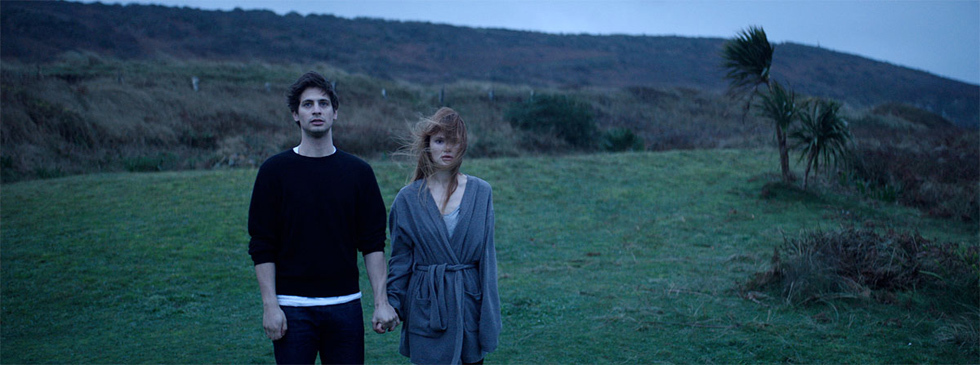
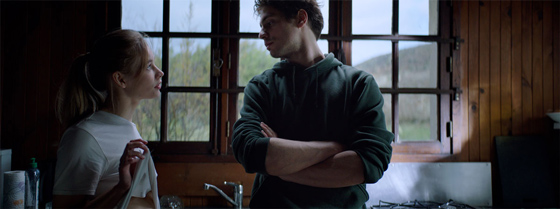
It all starts in bed. Over the bed, a window, in the window of the sea. A lonely warm tube house, around - gray curtains of grass and cold, almost Kricanovsky Ultramarine of the sky and waters. In the house (Normandy, the dead season), a tired pair (Alexander Molochnikov) and Alexander (Daria Nayshuller), sleeping in the same bed, are like to save on heating; Here he is, a typical slowly dying marriage of little feeling people. After 15 minutes, the third - Masha (Svetlana Ustinova), a friend from Moscow, who does not like loneliness, but loves hard, to bruising, sex, climbs into a fragmentary family boat. On the same day, to the shore, it takes the corpse either rotten to the recognition of the sheep, or some kind of living fossil. Tomorrow is the first of January.
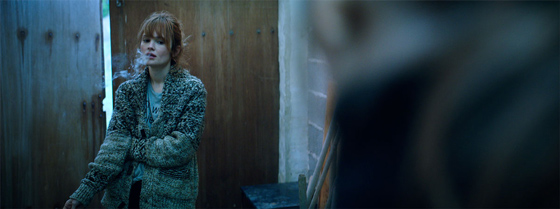
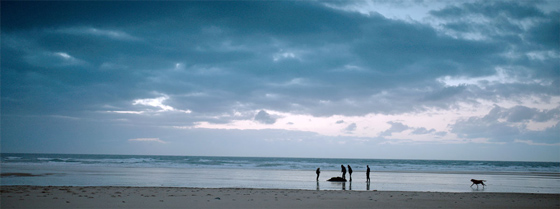
New film Zvyagintsev? No - the camera of another good operator, Mikhail Khasai, is too shaking for a parable about the fundamental foundations of being; The provenance of the film also gives out a magnet with a filif on the refrigerator. The genre is more difficult to determine. Thriller about Plaziosaurus? Also not, the carcass thrown to the shore is not interested in even the dog running there, not like the creators of the film. Drama about marriage and relationship? And there is no marriage, Sasha and Ilya together only two winter months, and all relations were taken out of the frame, as if the author tried very hard to get a rolling rating of 0+. However, sex and everything else in the film were found not only a fresh, but in a detailed worked out metaphor - smoking; Not sure if it is possible to show children a cigarette, and especially two. There is no monster, there is no Christmas tree, there is no reason, the investigation is not drawn to the finals. And yet it looks.
 © "Arena"
The Cold Front, the directorial work of the ex-Kinocritis of Roman Volobuev, simply provokes the reviewer for infanticide. And although, after the director carved himself on the pages of the central press , any inspired criticism of the film seems impossible, like poetry after the Holocaust, the Cold Front still deserves several thousand signs. At least out of respect for the mummies-trolls, which are repeatedly referred to by the authors of the film.
First of all, he is really good up to the finale. I especially want to note here the calm non-ambitiousness of the director-critic: in the desert landscapes of the Cold Front you will not find intentions to bake the anthology of world cinema or make the most important film-only a cute mupor, a pleasant chirping of one-dimensional heroes, without an inscription, but quite gracefully inscribed in the country interior. Critics have such a stamp formulation-“too vulnerable film”: so, this is not about the “cold front”. Volobuev’s film is not at all “new sincerity”. The apparent relaxation of the director turns into a complete stupor, a panic petition, creating impenetrable armor around the film. The director here does not open for a second, nor a single word gives out what is inside him, that he hurts, what he thinks about and what he is afraid (it seems that he is afraid of everything), but he deftly and vividly leads an optional resm.
 © "Arena"
Many episodes here cause distant allusions with other adults and not very, films. But this, rather, the merit (or wine) of a picturesque and recognizable landscape. Herbs, herbs, herbs. Sea, sea, sea. A lone palm trembles in the wind. Flouts with a finger drawn with a finger on the wet glass of the swastika. The doomed lobster looks with his eyes-butt. Beautiful, Che.
This beauty of nature and cold light is a terrible force, which the Russian director is often simply impossible to fight. Recall the beginning of the 2000s, all this shining with chrome and renovation of the cinema of new Russian interiors. Or the same Zvyagintsev with his living paintings and bread, sung just by critic Volobuev. Sokurova, finally, for whom cinema in general is unwashed Bastard painting. And Volobuev also does not fight. The story of a sluggish love triangle - in fact, a raw, catastrophically unfinished theatrical play - is naturally leaving the way and is lost in the hills and trees, where a couple of heroes amicably trying to examine the finale (open in the first assembly of the film and closed in the rolling version by falling by the arm). No, after all, this is really a theater-and only a clash of the eye with the hall full of dumbfounded young spectators could give a twist, epilogue and, excuse me, the catharsis of this pair of beautiful Moscow Bo-bo, with vague readiness to look at the forests, for the scene in search of the meaning of their screen existence.
 © "Arena"
A sympathetic critic will undoubtedly find how to justify the awkwardness hanging in the air from the fact that the author scored to work, barely faced with the need to formulate at least something about his heroes, stuck in a prolonged exposition. For example, the tradition of cheerful glossy film critics invented in the magazine “Poster”, where a glorious pun was often replaced by the conversation in essence, and the damned need to compose “conclusion” was easily starred with a standard stray saying “and what to do with it is resolutely incomprehensible”. Times have changed, a verbose criticism of “common sense” came to the stage (it is still unknown, by the way, which is worse), but clarity never came. And here is the director, just like trying to fit into the limit according to the signs of the film recrecer, hastily adds to the melancholy, but non-casual drama of nothing (the ability to fascinating the stupid plot, the Volobuev-criticism has never failed), an action-packed (in fact-stupid) finals. Exactly the same task - to extract morality - is now and before me; For lack of La-Channel, I’ll go to look at Kapotny’s pipes.