
Translated material
The third world will not be
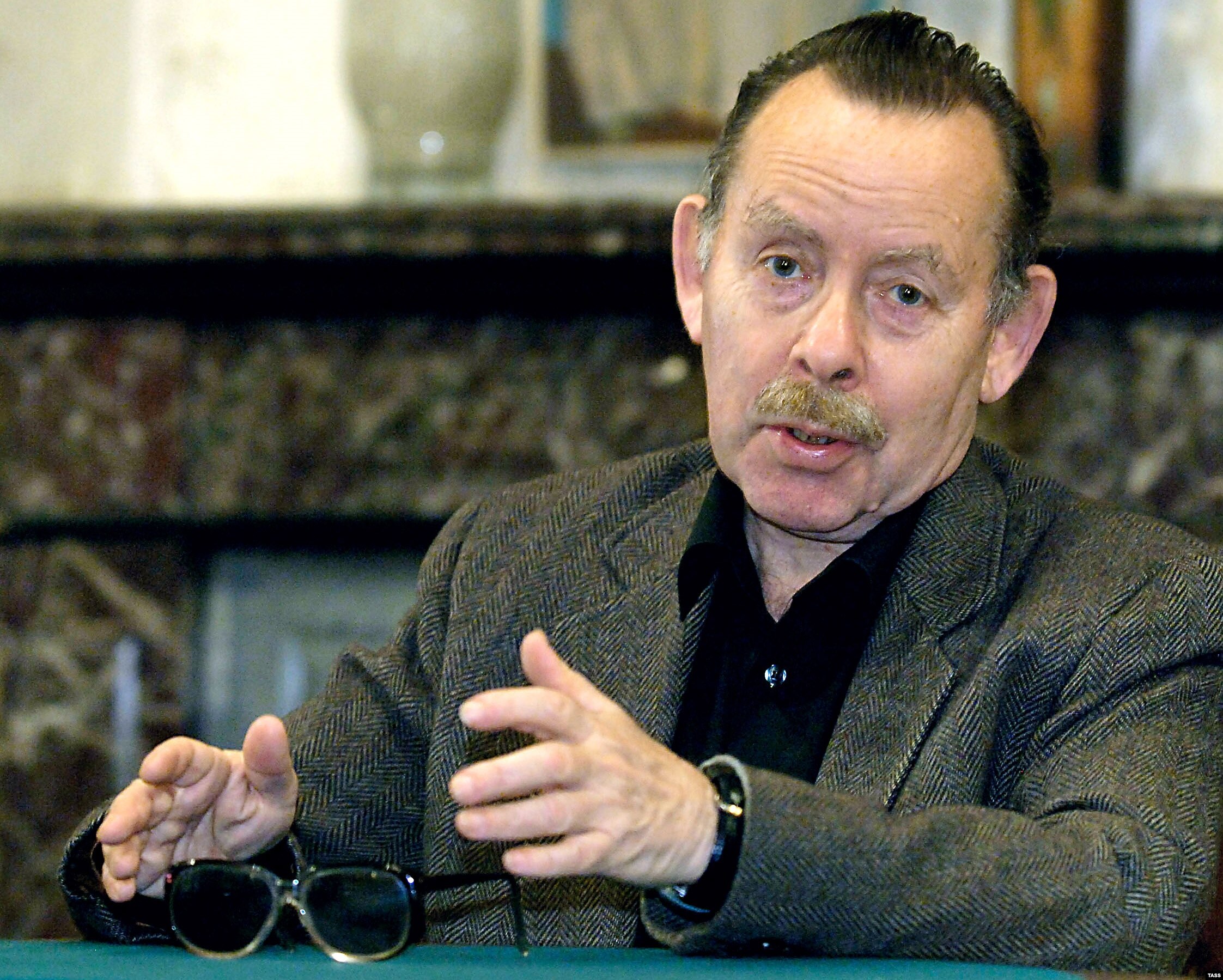
Writer Yakov Gordin - about wars and reforms
Visiting the writer Yakov Gordin, the editor -in -chief of Zvezda magazine, we summarize the results of 2015, recall the past and talk about the future.
- Yakov Arkadievich, the editor -in -chief of the New Literary Review publishing house Irina Prokhorova called the main event of the year the action "Threat" by Peter Pavlensky . For you, this action is not the main event of 2015? If not, what event can you name?
- No, this action did not make such a serious impression on me. Irina Dmitrievna is a smart person, but she lined up her own model of the situation in which this exercise fits completely. It seems to me that the psychological situation in the country is characterized by some confusion. People do not really understand what is happening, what is good, and what is not very good. And this kind of action, too, seems to me, testify to such confusion, the desire to somehow decide in this general situation.
The explosion of radical Islamism, which has long been brewing, and the symptoms have already been enough - that’s the main thing. This year was special. It was 2001 with twin towers , but then it did not seem so massive, it looked like the action of the radical minority itself. And now we are dealing with chaos in the Middle East, where everyone is fighting with everyone, and most importantly - this rejection of the Western world, Western culture, a significant part of Muslims, as we saw, even those who, it would seem, got used to French or English life. This is a completely new situation. This is a very serious, grandiose historical and psychological phenomenon.
The explosion of radical Islamism, which has long been brewing, is what the main thing
There is such a famous thing - a reconquist , a reverse conquest: the Spaniards conquered Spain from the Moors. Something similar is happening now - this is such an Islamic reconquist. If we recall the events of the last centuries, it will become obvious that the great culture of Islam, grandiose states, caliphates, Turkish and Ottoman Empires, Iran, who played a huge role a few centuries ago, then were pushed, humiliated. And the Arab world was actually colonized, its culture was largely destroyed.
We largely underestimate a phenomenon as historical resentment. This is not quite a scientific term. Now a psychological and historical reconquist is being carried out. The Islamic world, even those countries that, it would seem, are friendly to Europe, such as Saudi Arabia, are trying to return the lost positions. Others, more radial, strive to avenge centuries -old humiliation. But since there is a very difficult situation inside the Islamic world, we came to a certain chaos, which threatens a more or less normal course of humanity in general. This, it seems to me, was the main thing in 2015.
- Do you feel that Russia is at war?
Now a psychological and historical reconquist is being carried out. The Islamic world is trying to return the lost positions
- Do you mean Syria? This, of course, is a local operation. For Russians, the concept of "war" is something, one way or another, touching everyone. Even during the First World War, to which the main part of Russia, it would seem, did not feel (after all, military operations were in the West), nevertheless, sets, recruits, funerals, people returning from the front, etc. They created a very strong feeling that the country was fighting. Now, it seems to me that there is no sensation, because it is somewhere far away, and to realize the significance of this very important phenomenon, interference in Syrian affairs, it seems to me that the vast majority of our citizens cannot and do not want, perceive it as a kind of military expedition that does not concern them. I cannot say that Russia is at war. No. Russia lives a very peculiar, but, in general, peaceful life.
-As a historian, the current Russian campaign in Syria does not resemble the Russian-Japanese war of 1905?
- Certainly! Then, also, God fought where, and in St. Petersburg restaurants people had fun, as, indeed, during the First World War. But then the completely unexpected defeat of Russia from Japan overlined inner troubles. And now the situation in the country is quite stable, as its leaders like to say.
Russia is a country tired of its history. We had a very heroic, but very tragic, heavy story for society
I often have to hear conversations about the upcoming disaster from quite smart and respected people. I am extremely afraid to speak in the role of the soothsayer, but it seems to me that Russia is too tired that it has enough internal energy for a real disaster-not of all kinds of troubles, but a catastrophe of scale, for example, 1917 or even 1991. Despite the change of generations, a change in the situation, etc., Russia has long exhausted this potency of disasters and explosions. The last thing was 1989-1991, when a powerful splash of public energy arose. The then (not without reason), the general disappointment, which came, led not only to some political consequences, but also to the consequences within a person. Another attitude to the world ... In Russia, there is no energy that could move the masses now. Russia is a country tired of its history. We had a very heroic, but very tragic, heavy story for society.
- If there is no energy from below to change power, then is it not on top? As a historian, you know that conspiracies in the royal palaces in Russia were much more common than the revolution of the masses.
No one is interested in the situation to collapse
- No. It seems extremely unlikely to me, because no one is interested in the situation to collapse. Any radical measures lead to the effort of the system, and the system is not God the news as balanced. But finally, no one wants to completely unbalance it, including economically (after all, radical changes at the top will lead to a change in the economic situation). No one is interested in this.
- What was the Zvezda magazine in 2015, whose editor -in -chief, together with Andrei Aryev, are you? What discoveries were made?
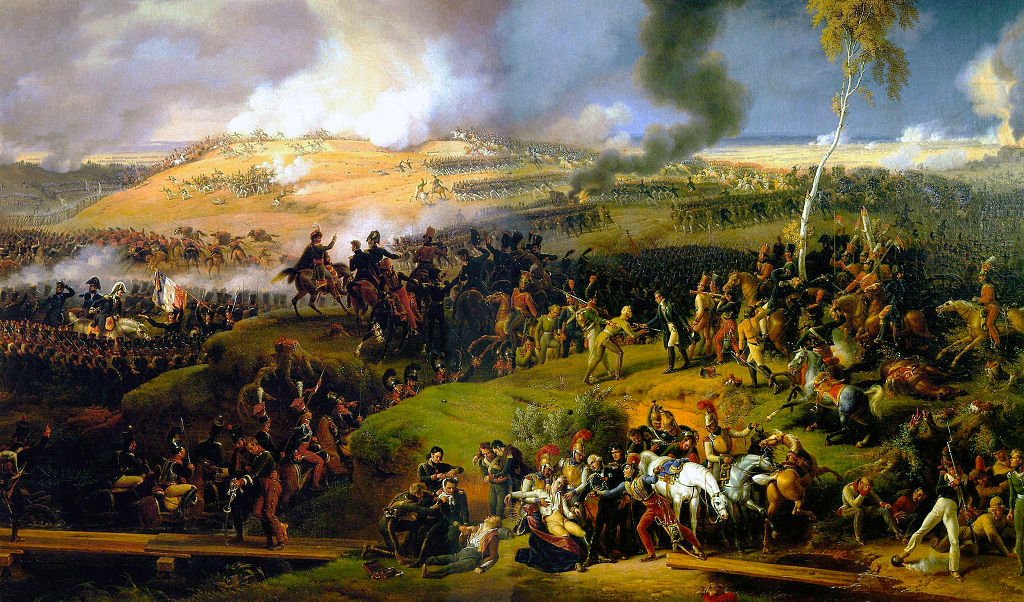
- It seems to me that the most interesting were the publications related to Russian military history. It was a jubilee year (and it is not a situation in the conjuncture, but that it really was an extremely important point in history-the anniversary of the victory of 1945), and we proposed the project “From the War of 1812 to 1945”, including the First World and Crimean War , that is, key moments of Russian military history.
For the first time in Russian, we published the diary of the secretary of Napoleon
We have published many unique and extremely interesting materials. In particular, for the first time in Russian, we published the diary of the secretary of Napoleon, who together made a campaign of 1812 with him. In the last four issues of the magazine, this large manuscript was published. In addition, a number of diaries were published, for example, diaries and letters of the First World War. This war is quite a little known in our country, and these human documents, it seems to me, give an informal idea that it was. And this was quite curious psychologically. Say, young people, students in a romantic, patriotic impulse go free, become officers, and then ... their letters in a few years testify to how they gradually begin to understand what kind of horror is war, how inhuman romance is inhumanly and how little in it is in this brave romance! These human documents are very important.
In addition, one of our friends, a permanent employee, provided us with letters from a German soldier who fought near Leningrad. Which is extremely curious: this man was religious, in his youth he was going to become a pastor, and, of course, for him the war is something alien. He died near Leningrad in 1944. This is the look “from the other side”, and the look not of some sedimentary SS, but a normal person who, by the will of fate, fell into these millstones.
I am offended that these magazines did not get to school libraries, that history teachers did not have this material
In the last numbers of the magazine, we had a three wars section, where we gave parallel materials about the war of 1812, the First World War and World War II. It seems to me that this was our main achievement. I just know the reviews of our readers who were extremely interesting.
I am only offended that these magazines did not fall into school libraries, that teachers of history who were charged with the duty in this anniversary year to conduct the appropriate work on the war and victory with the students did not have this material. This is trouble. The fact that our school libraries cannot subscribe to magazines is extremely sad, because these materials are largely designed for teachers of history.
-Is there some kind of common mechanism for all wars of their emergence and occurrence? Is it possible, looking at the current state of Russia, to talk about a possible large -scale war?
There can be no third world war
- If we talk about whether there can be a war in Europe and whether Russia can be involved in it, then I am firmly sure that no, cannot. And no war, especially the third world, which is so easily and frivolous, of course, of course, because the use of even tactical nuclear weapons is the death of not only the one against whom it is used, but also the one who uses it. These are all conversations. There can be no third world war.
And the wars arise and arise very differently. For example, the First World War: sometimes you have to hear that if Gavrilo had not shot the Principle of the Archduke Ferdinand, then maybe it would have carried it. Here, from such things, allegedly begins catastrophic events of a global scale.
But these are trifles, of course. There are very serious studies of the diplomatic materials of the great powers, from which it is clear that everyone was preparing for war and everyone (except Russia, by the way) of this war wanted: England, France, Germany. Everyone had their own interest, and everything was completely steadily, at first, with diplomatic, economic ways, they prepared for a large war, absolutely no idea what it could result in. Russia, alas, the will of circumstances was drawn into this whirlpool, which, in fact, destroyed the state. Russia then had a lot of problems, economic development went far ahead compared to political, but maybe the disaster that happened in 1917, and it would not have happened if the country had not participated in this war. And she could not participate in it either, because without Russia France would, of course, be defeated, Germany would be an absolute hegemon in Europe, and Russia could become the next victim.
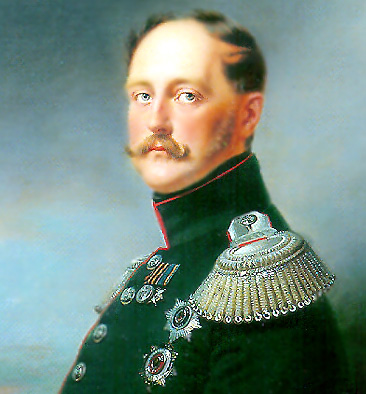
Nicholas I turned out to be an extremely short -sighted strategist in foreign policy
In this case, it was not only the logic, but the internal conviction of the leaders of the largest powers in the need and healing of war. Germany had its own interests, France and England had their own. Wars of this scale are prepared for a long time and carefully. And, say, the Crimean war, very unsuccessful for Russia, could not be. This is the fatal mistake of the foreign policy of Nicholas I, because in fact there were no prerequisites for the clash of Russia in fact with all over Europe. Nicholas I turned out to be an extremely short -sighted strategist in foreign policy.
This war might not be. There is really an element, if not an accident, then the role of a particular person, when there is an absolute monarch, the actual dictator leading the country's foreign policy as he wants, without listening to anyone's advice. In such a situation - yes, the war may not be like a naked place, but, in any case, without sufficient grounds for this. Nicholas I greatly overestimated the power of the Russian army, which was armed with guns of Napoleonic times, unlike the rate of fire rifles of the British and French. In addition, he completely incorrectly appreciated the possible behavior of Austria, a rather powerful military power. He believed that Austria would be his ally, because she owed him his salvation in 1848-1849, when the Paskevich corps suppressed the Hungarian revolution (otherwise no Austro-Hungarian empire would have been). That is, a number of personal mistakes were made. Here is another option for wars.
Although, of course, there were other prerequisites for its occurrence. This is the position of Christians in Turkey, in holy places. These are the long -standing claims of Russia to the protectorate over holy places. These are the problems of straits. This is the confidence of Nicholas I that Türkiye is a “sick person”, and in general, it is necessary to divide it and end it with the strange existence of this crumbling or not a collapsing empire. And European countries, on the contrary, believed that the existence of Turkey was necessary for the counterweight of Russia. Here is another option for wars.
Not a single state, not a single country, no people can live without reforming
Another option is religious wars. What we see now in the Middle East is, of course, to a large extent the Shiite-Sunnitsky conflict, which has been drawn from the moment of the death of the Prophet Muhammad. These conflicts have arisen more than once. Sunni Türkiye and Shiite Iran were always in opposition to each other, and there were bloody wars, which, ultimately, did not give the indifference either one or the other empire. The third force resolved the issue, namely Europeans, who suppressed both Turkey and Iran.
- Yakov Arkadievich, I recently talked with writer Andrei Stolyarov , and he spoke of the inevitability of reforms, modernization of Russia. “There will be no reforms - there will be no country,” he said. Do you agree with such a somewhat categorical statement?
Reforms sooner or later come. Better - early
- I agree with Andrei Stolyarov in regard to the role of reforms. All my conscious life I wrote more or less on one working topic: "Reform or reform? Reform or revolution?" Several of my books are devoted to this. Of course, not a single state, not a single country, no people can live without reforming. But it all depends on whether the country and the people have some potency in the people in order to endure a long period of stagnation, that is, the lack of reforms.
Reforms sooner or later come. Better - early, because when late, they are accompanied by various kinds of excesses, up to catastrophic. Let's say the great reforms of Alexander II were late for half a century, and therefore they passed so hard - with kickbacks, with restoration under Alexander III - and, in the end, did not play the role that they had to play. These were really great reforms, but belated.
I do not understand what it means "there will be no country." I can not imagine the disappearance of Russia as a subject of world history. Where will it go? Will fall apart into separate parts? This cannot be, because in our country there is no, again, that energy, energy of separatism, roughly speaking, because everything is mixed, everything is connected with each other, radical groups are marginal ...
Nobody wants to die with Russia
I do not see where this huge, huge country can go. True, such questions have already been asked. Very stupid person Konstantin Pobedonostsev , who was known, was close to Alexander III, was his mentor, told him about the possibility of a disaster. The king asked: "Where can such a huge empire disappear?" Pobedonostsev answered the king: "And not such empires disappeared!" But for this, "barbarians" or "Assyrians" should come. There can be nothing like that now. To attack Russia and divide it, to destroy it as a state no one is going to and cannot, because it will be a world disaster. No one wants to die with Russia.
We can dramatically decrease in living standing, as has already happened. I remember very well: since the 70s, living standards have declined for several years. Prices rose, the goods were washed out, and, in the end, it is known what everything came to. But the country has not gone anywhere in the end. If the authorities do not decide on reforms that have long been related, then quite difficult, but not catastrophic times can be expected.