
Translated material
Festival of popular unity
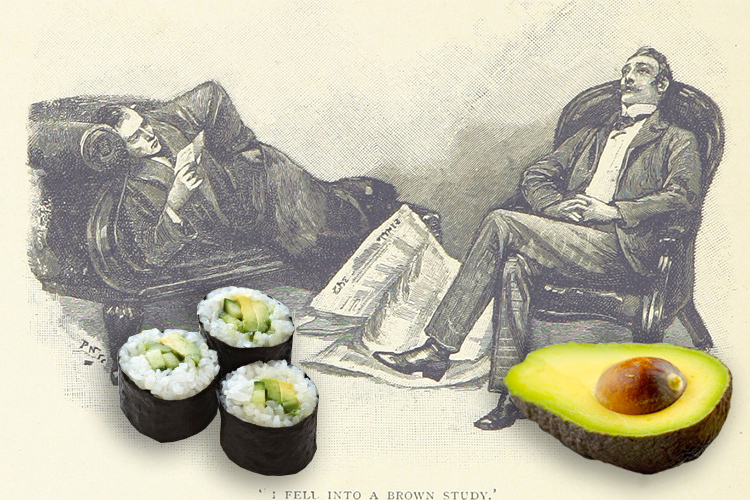
The following will be different from my usual texts for Colta - it will be partly about the author himself. However, I will try to observe a certain distance in relation to the described facts; In any case, the author is also a person, so sometimes some interesting things that are useful to think about. No self -promotion, it just happened.
I recently gave an interview about Sherlock Holmes to one Moscow publication. It was about different things that were of the reception of Holmes in the late USSR and post-Soviet Russia, about what the political views of the detective, about the cruel Victorian world-and about quite understandable aberration, because of which this world is retrospectively perceived as “cozy”, “safe” and even “cute”. At some point, the interviewer asked: who could Sherlock Holmes be today? Would he be a representative of the advanced part of the population with all its fashionable habits like vegetarianism? Such a formulation of the question was somewhat warmed by: vegetarianism certainly cannot be called a “fashionable habit” - this lifestyle for several millennia, it is due to different reasons in different cases. And in general, this is a serious matter, at least for me. In order not to mutter all this in an interview - which was supposed to be cheerful and even dashing, given the nature of the publication - I decided to damp and even trim. He said that Holmes would not even be a vegetarian today, but a vegan, explaining this as the “moral neat” of the detective (the quality noticed by Dr. Watson), and his merciless logic, thanks to which Holmes usually reached his conclusions to the end. Of course, I joked, of course, only partly - I really think so , but the ironic curtain was required so as not to chew things so obvious to me on the pages of the fashion publication. Let the readers themselves think slightly.
As soon as the interview was published online (and the words about Holmes, which would be a vegan today, were taken to the headline), I looked in the commentary on the website of this publication. Why - I don't know. Usually I do not do this, because we are familiar - like all of us - with a fierce intensity of untidy Dostois, which is supported at any forum, from political to culinary, especially if it is in Russian. But here, as if anticipating something, I decided to see it all the same. And he was rewarded. In the first remarks, a wide variety of accusations rained me from narcissism and snobbery to idiocy and ignorance (the possibility of comments on the Afisha website has since been canceled, now comments on the interview of Sherlock are not visible. - Ed. ). And all because I ventured to say this about Holmes. He took a chance to speak at all about veganism in a normal language, not apologizing in advance, not making the Knicksenov, not laughing at himself, in other words - without doing all that representatives of any of the so -called minorities were forced to do in ordinary post -Soviet life.
Veganism is a good way to show courtesy in relation to the world, animals and people. And I value courtesy almost above all.
Yes, I am a vegan - and I built my assumptions about the imaginary diet of today's experience from my own experience, which, of course, left it with him, introducing the reader only to conclusions. Yes, I really think that veganism is a good way to show courtesy in relation to the world around us, animals and people. And I value courtesy almost above all. Yes, I really believe that veganism is an obvious logical conclusion from a certain course of thought about the structure of our world - if only it is really honestly thinking up to the end . But I never announce this to others, I do not preach, but simply keep with me. This is my private business - what I eat; Moreover, this is certainly my business - what I think about the device of the world. If they ask me, I share some of the considerations, but no more. God forbid the jaws of the peoples. And all this is me - in my hypothesis - attributed to Holmes. And all this caused the wild annoyance of the public.
Irritation, like a rash, spread from the website of the publication where the interview was published on social networks. I hung a link to a conversation about Holmes on my Facebook - and received dozens of inflated comments, where Veganov (and myself) was accused of the same snobbery, “elitism”, disrespect for the poor, who supposedly have no money on a vegan diet, that I advertise veganism, in fact, that I began to graze the people of Snobskaya, red, red. A tree with a cane with an ivory knob. I tried to calm passions. He answered jokingly, politely, detached, but then I began to overcome irritation. How to explain to these idiots that they are idiots? There is no answer to a similar question, and it is a false setting itself - no one needs to explain anything. Having decided so, I calmed down and stopped monitoring the development of events in the comments in the FB; Meanwhile, in the absence of the owner, a serious war broke out there, mutual insults shook the air, people who were friendly for more than a year, cursed, torn relations, and so on. All this resembled some early story of Sorokin, where the banal party combination imperceptibly, following paranoid logic, goes into cannibalist orgy.
However, a day later I still decided to continue the topic-either from a stupid desire to tease, or really intending to find out the cause of such a violent reaction to a modest discussion about the gastronomic habits of some people. And I wrote on Facebook - where else? - The post in which he posed the following question, not even a question, no, simply expressed bewilderment:
As far as I imagine this left activist, she was not east of Nizhny Novgorod and judges the situation in the Siberian villages by children's memories of Soviet film series.
“Experienced and quite accidentally stumbled upon the main source of irritation of the post -Soviet man. This is not Putin, not Maidan, not migrants, or even gays with Jews. No. This is vegetarianism and especially veganism. It is worth accidentally mentioning them, even speaking of completely different things, the post -Soviet man immediately begins to fade nervously, as if he himself had been convicted of theft of candles in the church. He proudly tells others: “But I can’t!” (although no one asked him about it), he accuses Non -ears of snobbery, of treason, sincereness, working class, homeland, etc. He jealously hints at the social status and the geographical finding of the adversary and discusses on the topic “You all got drunk there, and we have a Tambov region from poverty on dumplings and a rotten meat sits!” There are no conservatives, liberals, fascists and communists in this matter, there is a complete uniform unity, if not views, then the reactions are for sure. I think that this unity is the mysterious “Russian world”. ”
My replica was somewhat politicized, for I addressed the Russian audience. But I did not exaggerate at all about the unity around the dislike for vegans/vegetarians - the most inflamed comments on my interview belonged to people whom I knew for a long time, friends and friends with a completely impeccable track record in the sense of ethical views, actions and political addictions. And here they are in my eyes, uniting with male chauvinists, Putinists, nationalists and other bad people, they were indignant about a fleeting mention of one - unusual way - side of the lifestyle. A certain left -wing activist was especially trying (however, I personally are unfamiliar), usually protruding for all the good and against everything bad: she appealed to my conscience, social compassion, claiming that poor residents without meat and milk would not last in the Siberian villages. And that veganism was invented by the “London snobs”, which simply have nothing to occupy themselves - usually have several vehicles, a large real estate, and bank accounts swelled from income. And so, in order to calm the unclean conscience, snobs from London refuse meat and lead an “ethical” lifestyle. As far as I imagine this left activist, she has never been to the east of Nizhny Novgorod, and she judges the situation in the Siberian villages by vague children's memories of Soviet film series from the history of the Civil War.
My new replica caused an even greater surge in emotions, behind which I, frankly, was tired of following. In general, this whole story is extremely tired of me, and I am no longer glad that I started it. In the end, Sherlock Holmes, thank God, until the time of Justin Bieber, Vladimir Putin and the new seizure of Xenophobic epilepsy in Europe, so there was nothing to speculate-would he have used to pamper himself with a cold partridge or switch to a asparagus and a Kinoa? As for my own views on the production and consumption of livestock products, they are crystal for me, for others, they are completely radical, but I repeat again - I do not intend to graze nations. Dot.
Russian ill -wishes for vegetarianism has a very definite reason - the terrible story of the famine of the late XIX - the first half of the 20th century.
However, the foregoing plot also has a different dimension if we distract from what Pyatigorsky called the “sphere of psychism” - that is, to be distracted from irritation about the imperfection of the world. Indeed, what's going on? Why does the attitude to vegetarianism/veganism unite such different people? Is there any rich life for a historian, anthropologist, sociologist? It seems to me that this plot has several levels, but among them there is no main thing. On the contrary, under certain circumstances, the plot can turn into one side or the other.
The first level is the easiest; It is located on the surface and is usually used to explain the strange, almost unanimous irritation caused by vegans/vegetarians. Usually it is defined as “the fear of someone else”, “suspicion of a stranger”, “irritation and uncertainty about the existence of another”. Everything is clear here. Anyone who eats meat is suspicious of someone who does not fundamentally eat it-because the second does something, in principle, possible for the first (and even sometimes secretly desirable), but the first does not do this. That is, he does not refuse meat. In the same way, the layman does not like the hero, an ordinary person is annoyed by the existence of ascetics and so on. Even charity - and it would seem that it is simpler than charity in our world! - meets with suspicion, envy, secret stable ill -wishes. "He is different!" - And this, at first glance, explains many, almost all, similar stories. But not everything is so simple - the universal plot breaks up into several local ones.
Here I am interested in Russian. In Russia - despite the long tradition of abandoning meat, despite the teachings of Leo Tolstoy (not to mention harsh Orthodox posts) - they are quite bad. And this ill -wishes, even fear, has a very definite reason - the terrible story of the famine of the late XIX - the first half of the 20th century. And, of course, the poor, difficult life of the overwhelming part of the country's population until relatively recently. All this raises the symbolic value of food in general - and especially oily, abundant, meat, that is, the one that has been decades and centuries is not available to many. The memory of this - I risk using a very banal and not quite understandable expression myself - exists at the genetic level. That is why the one who refuses the simple, “tasty”, nutrients that our parents, grandparents and so on were deprived of it-with all his high thoughts-something strange, enemy, disrespectful. This attitude is usually not reflected, but it makes up an emotional background on which dramas of other levels are played.
“Our” is more important than the “stranger” - for our suffering is more hindle, our life is harder. In this championship in unbearable severity of life, we are champions. That is why only we distribute the signs of authenticity.
First of all, this is the level of social envy. Veganism/vegetarianism is perceived as a bait of rich spoiled people who have nothing else to do. The disgusting Soviet and post -Soviet formula "Eh, we would have your problems!" Determines, in particular, this plot. “Us” has a hard, joyless life, the struggle for survival, labor, sweat, suffering, and so on. “Them” have far -fetched abstract problems, devoid of any connection with “life” and, accordingly, with “us”. “Our” is more important than the “stranger” - for our suffering is more hindle, our life is harder. Accordingly, in this championship for the unbearable severity of life, we are champions. That is why only we distribute the signs of authenticity. Vegans/vegetarians can not receive such signs-except that they will somehow justify (in our terms) the need, the inclusion of their quirks in our suffering. Say, if Vegan declares that he avoids animal products for medical reasons, no one will particularly swear. He suffers, respectively, he is real, respectively, he can. Of course, this is a patronizing position that puts an eccentric in the position of the “patient”, “inferior”, who must be sorry. A special case if a person abandons animal food for religious reasons. Then there are no questions for him at all - because he thus includes himself in the large collective body of believers. But the vegan-individualist is suspicious, for he acts of his own free will, does not believe in his personal motives, considering them some kind of nonsense. But if religion is involved in the matter - that is, something incomprehensible, general, but generally good - then yes. No questions.
Actually, here, in this combination of different reasons and different levels, and the answer to my question lies. Irritation in relation to Vegan/Vegetarian arises from almost all the circumstances of the life of a post-Soviet person-from vague personal memory through self-awareness as a result of a long, complete suffering and hunger of history to the current desperate social situation, envy of and those who are richer than you are near you, and those who generally live somewhere there, in the “West”. Plus, general dissatisfaction with the acts of personal choice, which, in theory, is open to the “ordinary non -heter”, but since he did not, this act becomes ethically unbearable for the ignoramian. So from the first level we reached the last, deep, which suddenly turned out to be the basis for what is happening on the surface, on the first, supposedly “universal” level.
This, of course, is only runaway sketches to a serious conversation, nothing more. But it is important to fix one thing - we are really talking about the sentiment, which unites the post -Soviet society, regardless of political views, aesthetic preferences and even social status. And this thought takes us beyond the limits of talking about food to other areas-to where you can try to understand how the world that was once called the USSR is arranged. And finally, to realize how a terrible catastrophe arranged for themselves the people who inhabited this territory.