
Translated material
Kunstkamera | Colta.ru
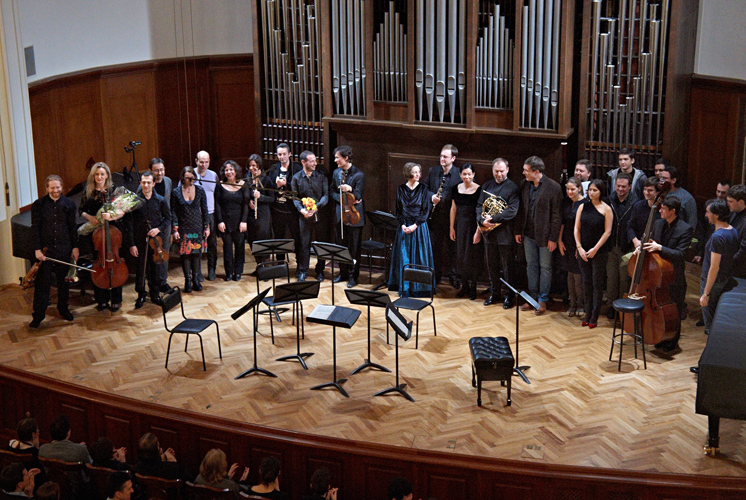
The festival, this year, returning to the renovated, no longer a creaky small hall of the conservatory, as usual, passed in the first half of January and consisted of four programs . Each of the first three is collected-sometimes very whimsical-around some topic. This time, the first evening was pushed by the genre of variations with the music of anti-articulate composers. For example, after the cellular sonata of Jean-Pierre Duper, Mozart's piano variations on the topic of Dupor were going on, and then-the caprice of Paganini for the guitar Solo on the Serenada from the Mozartovsky “Don Zhuan” and the variation of Joseph Gorovitsa for four saxophons on the Paganini theme. The second evening found out the genealogy gypsies in serious music from Haydn to Brahms. The third made up a portrait of Schubert, masterfully dispensing with the author’s music of it - only with the help of what influenced him and what he himself influenced.
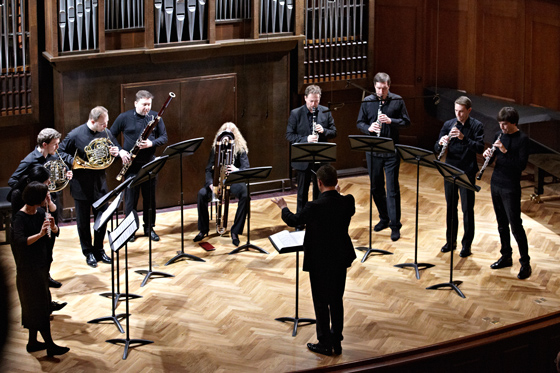
The fourth concert, from year to year, called a “concert on the request” and complies with the wishes of the participants, this time also somehow focused on the same topic-the era of the 20-30s of the last century, full of alternative paths. Important points of this program were: the suite of the Creation of the World Darius Miyo, the sonata for Valtorna, the pipes and thrombone Francis Pulenka, chamber music No. 1 Boguslav Martin (written at the end of his life, in 1959, but refers to the Paris youth of the composer), a concert for the harpsichord and the manual of Manuel de Fali and The composition of the 18-year-old student of the Royal College of Music Benjamin Britten.
 © Sergey Lutenko
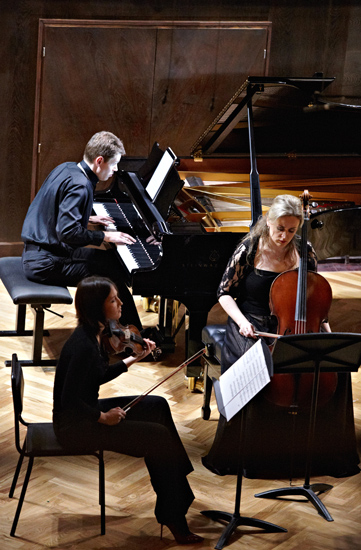
To the fact that the once youth festival “Return” collects good musicians of the new generation, we are accustomed for 19 years of its existence. They are all here again, led by unchanging leaders - violinist Roman Mintz and Goboist Dmitry Bulgakov. From the new excellent acquisitions of this year, I would single out the sensitive pianist Andrei Gugnin with a well -developing solo international career and an authoritative violinist from the Moscow ensemble of modern music Vladislav Pesin.
However, another feature of the festival, which once and for all, has been more clearly manifested that it was impossible to play what has already been played in past years. Observing this law, the “return” becomes more radical and radical in repertoire. And if earlier his main bait was high -quality, young and driving performing art, now it is rather music that you have never heard and is unlikely to hear when you still hear. It can be stupid and fairly unknown, or maybe unexpectedly fresh and fascinating. But in any case, the incredible ingenuity with which the program is compiled, extends the horizon and shows the living process instead of legalized museum monuments.
 © Sergey Lutenko
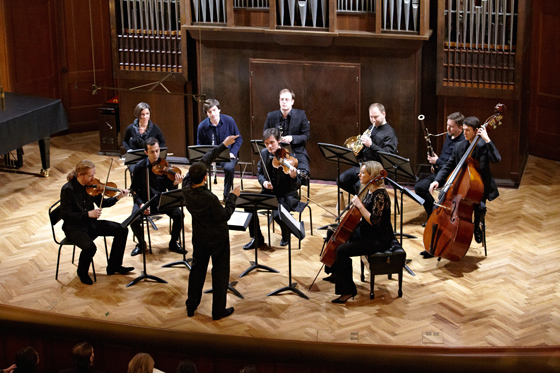
This time, for example, Ludwig Van Beethoven turned out to be an uninteresting and stupid composer with a tedious divertissive septte for wind and string. And the little -known American John Harbison with an essay called “November 19, 1828” (this is the date of Schubert’s death), which has a subtitle of “Hallucinations in four attacks”, on the contrary, incredibly subtle and touching. One of the central events of the festival-not so much musical as the theatrical sense-were the “Elephant Variations” dated to the 1977 year for the double bass and the string of the Hungarian-Gollandic author Geez Frida. Here, of course, Grigory Krotenko was not without the artistic solo. And a real revelation was the Popus Festival number one young Britten, Symphonietta for a chamber orchestra, during which Maxim Rysanov, who was more familiar to the public as an altist, found his conductor.
The festival is a wonderful collection of rarities and oddities, primarily from the near past and present. In the old days, excursions are also, but cautious. This time, Maestro, Philip Chizhevsky, was responsible for the main baroque accent, under which the team of historically informed instrumentalists and Mezzo-soprano Daria Telyatnikova stormed Handel (Rinaldo Aria from the opera of the same name).
 © Sergey Lutenko
But still, now it turns out that the most interesting at the festival is the twentieth century, seasoned with the first. This time there were two mutually exclusive opus-a performing spectacular “forest king” (2015) by Sergey Akhunov and the conceptual-smart “Shmotsart” (2006) Boris Filanovsky. The world premiere - that is, a specially ordered essay - this time, however, did not work: no one wants to order, and not who wants a fee, and the times are difficult. An independent and cheerful festival, however, for the second time launched a crowdfunding program , supported by the Musical Special Project of the Rain TV channel. The next “return” is the twentieth. The festival is suitable for adults and fashionable to this line, there are less and less time at rehearsals, which can no longer be played.