
Translated material
Verbal mud
Undeserved bestsellers: new books from the authors of Shantarama, Cloud Atlas and Elegance of the Hedgehog
A weekly literary critic Galina Yuzefovich tells at Medusa about the most important, noticeable and interesting book novelties. In this issue there are three pseudo -intelligent novels that will certainly become bestsellers, although it is not clear why: “Elf life” Muriel Barberi, “Shadow of Mountain” by Gregori David Roberts and “Easy mortals” David Mitchell.
In the book sphere, the ideas of marketing, promotion and market positioning do not particularly work, but there are exceptions - including very annoying ones. In the current review, there are three books from the very “consumer” category that, without any indication, have fallen into the section “serious”, “intellectual” and even “difficult” prose.
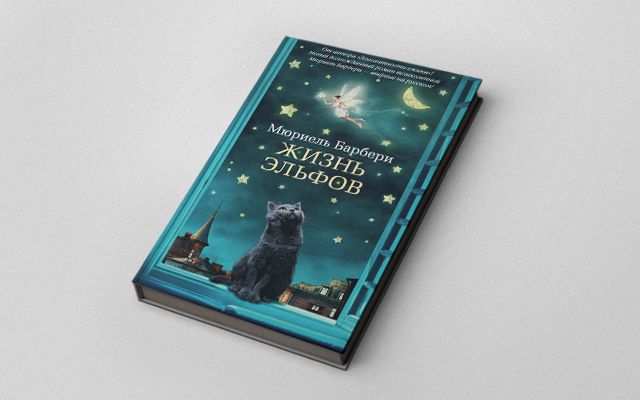
Muriel Barberi. The life of the elves. SPb.: ABC, ABC-Atticus, 2016. Translation from French A. Belyak
About what: in the past (megauspan, the novel by the Frenchwoman Muriel Barberi “Elegance of the Hedgehog”, the main character-the concierge-intellectual-secretly studied Husserl, was friends with an abnormally smart teenage and a refined Japanese aristocrat, and at the end in the very absurd way fell under the car; After that, everyone cried and experienced catharsis. In his new book, the life of the elves (if I am not mistaken, such a genre is customary to call the “lyrical fairy tale”) the writer firmly refuses any - even the most timid - claims about credibility, lets go of fantasy for will and, it seems, burns out the rest of the time the remaining credit of reader trust from the last time.
The name of the novel is not a metaphor at all: it really will be about the magical world of elves and their heroic attempts to prevent a catastrophe threatening to erupt in the world of people. Two beautiful dog girls, for some unclear goal in infancy, thrown by the elves into human families, grow, not knowing about each other: one among the picturesque hills of Burgundy, the other in the no less picturesque corner of the Italian Alps. Maria (Frenchwoman) knows how to read the secret -painting of nature and easily talks with hares and flowers of hawthorn, Clara (Italian) masterfully plays the piano and with the help of music hesitates other worlds. However, the haze is thickening over Europe, so that both girls will have to find each other and - with the active participation of good people and positive elves (negative ones are also available) - enter into a struggle with everything bad in the name of all the best. What is the essence of the struggle, what the forces of the darkness exactly want, and the elves and how it ended at all, the reader will hardly understand, drowning in the dark whirlpool of poetisms, half -tones, whisper, rustles, epithets, shades and other verbal turbidity.
How it works: the key technique of “elegance of the hedgehog” was shameless flattering the reader: by default, he included him in the club of fellow intellectuals, who knew the smart word “phenomenology”, talked with him as equal, and then, picked up on this hook, told an ingenuous fairy tale in the best traditions of “pink” female prose. This time, probably, Barberi planned to play on a deceptive stylistic difficulty - she seemed to whisper the reader in the ear: “Look, you are a real intellectual, you can read an opaque, difficult to arrange, oversaturated text and even a surprise! “Enjoy him.” However, if the “intellectual” bait was good in its own way, then the “stylistic”, I'm afraid, will not work. VAPP, for some reason pacing on soft paws, the black arrows of the fog and other fragrant rulads-by the end of the fifty page, all this cannot be perceived otherwise than a parody. The main thing is not to try to visualize anything, otherwise it is very difficult.
As it is written: “In its current existence of past hobbies, only trills of birds at dawn or giant strokes of clouds resembled. And therefore, the pain that he felt when the baby began to play, aroused some kind of sadness, long lurking inside the soul, a vague reminder of the cruelty of pleasure ... "

Gregory David Roberts. Shadow of the mountain. SPb.: ABC: ABC-Atticus, 2016. Translation by V. Dorogokupli, A. Pitcher and L. Vysotsky
About what: the previous novel of the former Australian criminal, and the now respected Indian philanthropist and public figure Gregory David Roberts, Shantara, became the amazing example of the bestseller out of the blue: the unknown author of the dubious moral dignity, 800 pages of the text, the unpronounceable name - and 900 thousand copies sold in Russia alone. The new Roberts novel is sewn exactly on the same patterns, so he has every chance to repeat the happy fate of his predecessor.
If anyone was worried, then the main character and the author’s alter of the Ego of Shantarama Lin (he, in fact, the Shantharam-“peaceful man”) is alive and well and continues to work for the benefit of the Mumbay mafia, and in their free time to help the inhabitants of the urban slums. He makes fake documents (of course, mainly for unfortunate refugees and fighters with a variety of bloody regimes), leaves for arrows, grieves about the death of his named father - the main mafia boss Kaderbhai, lives with a good girl Lisa, but continues to love the bad girl Karl. The infinite number of plot streams - from farcers to tragic - merge into one leisurely and almost endless river, guaranteeing a couple of happy weeks to a devoted fan of Robertsov. And, apparently, this is not the limit: the author’s biography suggests that sooner or later the hero is a fugitive prisoner - must still fall into the hands of the authorities, and Lin, and at the end of the “shadow of the mountain”, walks at large. So you can safely hope for a sequel.
How it works: the simple mechanism of Roberts prose is assembled from three details: pathos masculinity (the main character with his scorched soul, exquisite vocabular and fists constantly broken into the blood, literally bursts from testosterone), prohibitive sentimentality and exotic color (colorful, detailed and reliable). Each element in itself (minus, perhaps the last) is inexpensive, but everything works perfectly in the kit - and, as practice shows, you can reproduce this technique to infinity and without special losses in quality. In essence, the same Indian cinema, only adapted to European needs.
As it is written: “Rearing on a motorcycle is a speed poetry. Balancing on the verge between the elegant speed of maneuver and a disastrous disaster is akin to a meeting with the truth, and each such meeting accelerates the heartbeat to the limits of the possible. Infinitely consuming moments of the race break out of the sluggish stream of time; They are not limited by space and ultimate goal. Squeezing the handle of the gas and dissecting the tight air, you leave all the affection and all fears, as well as joy, hatred, love and anger - perhaps for hardened people like me, this is the best way to get closer to enlightenment. ”
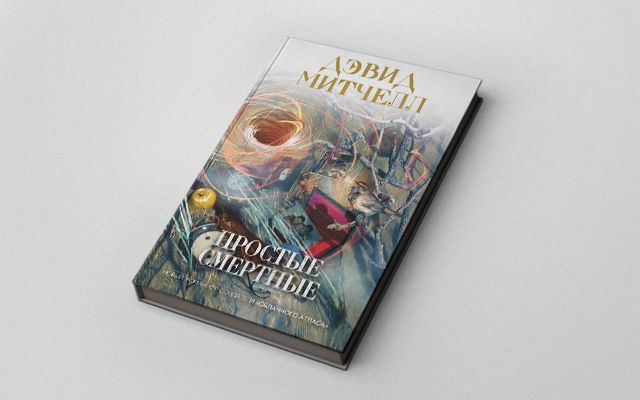
David Mitchell. Simple mortal. M.: Exmo, 2016. Translation from English by I. Tomoevo
About what: those who were rocked from the “cloud atlas”, infinitely broken into separate motives and not gathered in any stable novel structure, David Mitchell’s new novel promises considerable relief: not without difficulty, but still by the last third of the book, the spinning novels will be lined up in one semantic line and are quite well-cooked to the final. Until then, the only unifying entity will remain a heroine named Holly Sykes: in some short stories, finding herself in the center, in others on the periphery, she nevertheless concentrates all the other heroes around her - her lovers, a daughter, her husband, as well as their distant and close acquaintances. In fact, the biography of Holly from early youth in the 1980s and until old age in the 2040s, reflected in the fate of other people, forms the semantic backbone of the novel. And this is no coincidence: it is Holly, an ordinary girl from the English province, the daughter of a local innkeeper and visiting Irish, who turns out to be a key figure in the eternal confrontation between two mysterious types of transcendental creatures - pea (good) and anachoretes (bad).
In general, if you try to describe Mitchell's prose in one word, then, probably, the word “richly” will probably turn out to be more appropriate: the writer is really not trifled - from the snowy French Alps, he throws his many heroes into the Baghdad covered by the war, and after that - Canada, post -apocalyptic Ireland ... The situation with stylistics is even richer - for the novel there is a place for the novel and for the novel Parodies, for mysticism, and for the detective, and for social drama, and even for religious philosophy (however, simple and unobtrusive). In a word, large -budget entertainment is unconditionally. “Complex reading for smart ones,” as publishers position it, is certainly not. And as a bonus for fans - several unexpected and pleasant greetings from the Cloud Atlas.
How it works: it was hardly part of David Mitchell's plans, however, after the famous movie of the Vachovski brothers and Tom Teom, the writer's work came to the view of many thousands of people, for whom any letters on paper are just by definition. What can we say about the book with such a complex and painful plot whistle, like Mitchell's. Probably, in this way, the prose of the “English pinchon” (yes, and so is called it too) for no reason was on the shelf of intellectual bestseller, where she had passed. In a word, the same mechanism as in the case of Barberi is an illusion of fraughting thought at a similar price.
As it is written: “I entered the tunnel and took a few steps, not immediately noticing that the closer to the center, the lighter, and not darker, and instead of a booming echo, almost complete silence reigned around. I told myself: nonsense, it just seemed to you, did not worry, but after a few steps it became completely clear to me-the passage under the highway completely changed its shape, became much wider and higher and turned into a strange, some kind of rhombic form of the room ... Moreover, this room was clearly not in England, in some other, distant place. ”
Galina Yuzefovich
Moscow