
Translated material
Venezuela President introduced an extraordinary economic situation in the country
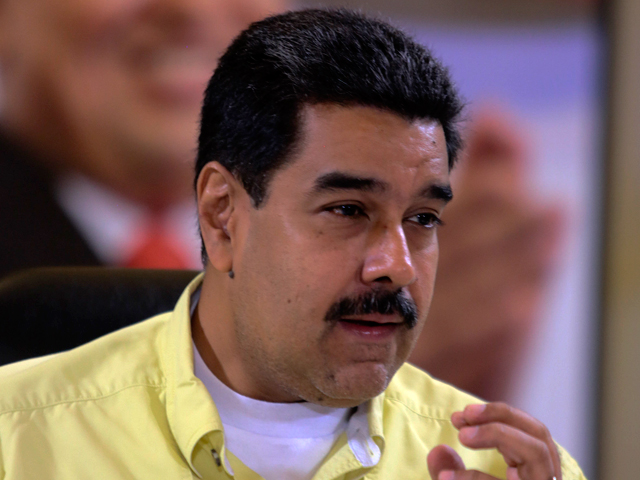
Venezuela President Nicholas Maduro shortly before he should report to the parliament of his work, announced an extraordinary economic situation throughout the country for a period of 60 days. The decree was read out on the air of Venezuelan television and published on the official website of the head of state.
As noted, this measure is adopted within the framework of the current constitution. The decree is aimed at protecting social rights in the field of education, health, housing and sports for all residents of the republic.
Under Venezuela’s legislation, a state of emergency is announced at the moment when ordinary measures do not help solve the crisis situation. An announcement of this provision makes it possible to expand the powers of the president and limit constitutional guarantees.
As the new Minister of Economy Luis Salas later explained, the presidential decree was published in the form of Decree N2184. It is based on Article 338 of the Venezuela Constitution, which states that an extraordinary economic situation will last 60 days with the possibility of extending for another 60 days.
According to the decree, the government, in particular, will be able to facilitate the currency exchange procedure in order to speed up the import of the necessary products, as well as allocate additional funds from the budget for health and education needs, as well as other social spheres. In addition, the authorities may "demand from private and state companies to increase production volumes to supply certain goods."
Maduro warned about intention to take emergency measures in the economy earlier. On January 5, the President of the Bolivar Republic deprived the national assembly of the right to control the nomination and resignation of the chairman of the Central Bank of the country. He also promised to take emergency measures aimed at exiting a serious economic crisis.
In a television speech, Maduro said that he could turn to the National Assembly with a request to approve emergency economic measures. Meanwhile, one of the opposition’s goals was to obtain control over the Central Bank against the background of three -digit inflation, recession and large -scale deficit. The members of the parliament, elected from opposition parties, promised to force the Central Bank to disclose data on the level of inflation and GDP, which have not been published openly for more than a year.
Now the situation in Venezuela has become critical against the backdrop of a deficit of goods galloping inflation and falling of the state’s income due to a decrease in oil prices, as well as the institutional crisis between the executive and legislative branches of the authorities after the start of the opposition parliament.
Last week, Maduro announced the composition of the new government. In addition, speaking on the air of national television, he announced the creation of five new ministries: production economy, agricultural production and land use, fish industry, urban agriculture, as well as foreign trade and foreign investment.
The main task of the new government, according to Maduro, will be the opposition of the economic war, unleashed by the "right -handed forces and their allies in business circles." "Each of them (new ministers - approx. Newsru.com ) has a very clear vision of what the development of powerful national productive power should be," Maduro emphasized.
Earlier, he stated that the difficulties faced by the country were the result of the "economic war, the fall of oil prices and war, unleashed by US imperialism against the national economy."
In the updated government, the heads of key departments retained their posts. The position of Minister of Defense remained with Vladimir Padrino Lopez, Minister of Oil and Mining Industry - for Eulochio del Pino. The Foreign Ministry will continue to be headed by the Rodriguez, and the Ministry of the Interior, Justice and on the world - Gustavo Gonzalez Lopez.
Other departments received new leaders, the post of executive vice president of Horge Arreas was taken by Aristobulo Idomturis, which was part of the government under Hugo Chavez from 2001 to 2007.
On December 6, the Venezuela was held parliamentary elections. As a result, the Venezuelan opposition for the first time in 17 years achieved control over the parliament, having received a total of two -thirds of the deputy mandates, while only 55 seats got pro -government socialists. Nicholas Maduro, shortly after the announcement of the official results, stated that "bad guys" - "with the help of lies, deceit, fraud" won the elections to the national assembly.