
Translated material
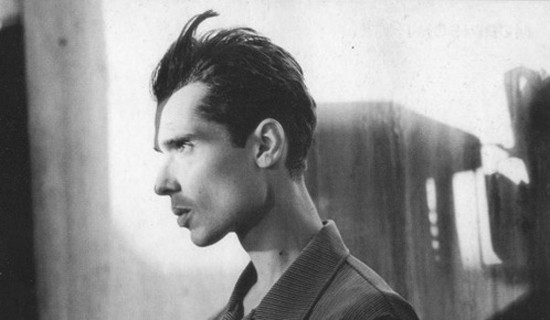
Madteo at the research institute
On the eve of Madteo's first performance in Moscow, Ildar Low808 talked with the musician about the modern Italian scene, the formation of his own style and the real art of DJing.
— What do you think about such a phenomenon as the “sound of the stage”? Like a Detroit, Chicago, Berlin or Parisian sound. I personally see that, for example, there is an Italian scene - I mean musicians like you, The Analogue Cops, Marcello Napoletano, Robert Crash. These people are truly inspiring. Do you think there is something that unites all these musicians in terms of sound? And is this possible in principle today, or is it now not a matter of sound, but rather a matter of context?
“What is happening now in Italy is the first fruits of what has been happening in different parts of the country over the past ten years. Guys who were too young to catch the first underground wave of the late 80s and early 90s have been digging, mixing and writing tracks for years, and many have a killer level, be it production, DJing or all three. As for sound and context, they cannot be considered separately.
In fact, this “new underground” Italian wave is inspired by a very specific, but also varied set of references, considering all the music released since the 90s. What I noticed about the Italian sound is that it goes back to the roots, the fundamentals, and so on. I see a lot coming from the Northeast, but that's mostly because it's the region where I spent most of my life and grew up. In Veneto and Emilia-Romagna in the 90s, the concentration of house and techno clubs was one of the highest in the world. Most international DJs have been coming to play every week since the early 90s. They still come, although in much smaller numbers, since many of those clubs either closed or could not stand up to the more commercial music. When the 90s ended, I felt that both in New York and again in Italy - just because I know these two places very well - the club scene had become very inflated. The big business of DJing and club hits began to interfere with a healthy focus on music. There are too many reserved tables and champagne in buckets, and not enough vinyl connoisseurs on stage.
The new Italian scene is diverse depending on the region, teams and so on. One thing I've noticed among the Veneto musicians I know, like The Analogue Cops, Lucretio, Marieu, S. Murphy, DJ Octopus and others: they mix old school vocal house aesthetics with a dense and overdriven hybrid of garage and techno. So it’s really about both the sound and the context!
That is, even when the “sound” is designated by a city or locality, it does not follow that it will be specific. This may be the case, but not always. For example, New York hip-hop as a “sound” - is there one or many of them? In other cases, like with the Miami sound—not the bass sound, but the house sound—there are key artists with a sound so iconic that they have become known as “that sound” from the city. In the 90s, geographic location mattered more and could mean a certain sound or a variation of it, like the Italian house sound with piano and so on.
When I mention key Miami musicians called the "Miami Sound", I'm talking about MURK.
— There are a lot of discussions here about the search for a unique Russian sound. Do you hear anything special in the works of Flaty or maybe some other musicians you know? Do you think there is something specifically Russian about them?
— Of course, I hear something special in the works of Flaty and Ola! Very impressive, sounds great. You can recognize some of the references - what they might have listened to, what influenced them, etc. But as for whether I hear Russian sounds, I don’t know, I don’t think so. And I also don't think there should be anything like a recognizable sound at all. In most cases, or in most cases today, musicians anywhere in the world can absorb the same influences from previous eras just by digging around on the internet, which is, of course, a great thing. Yes, there have been situations before where “sound” simply meant that enough material was being released in a particular area for it to get noticed sooner or later. When people talk about, for example, the New York sound in hip-hop, the understanding can only be vague, since we are talking about a hundred groups from the 90s. There are a huge variety of different sounds.
— What is important in shaping your own taste? You mentioned "a complex mix of influences, including things that happened to you when you were 6 years old." Can you remember anything specific that shaped your taste as a child, before digging into the archives?
- At the age of 6 - Ennio Morricone's soundtrack to Sergio Leone's trilogy of westerns. Another important development was the discovery of Jamaican dub through reggae albums rather than dub albums proper. It was my first trip to the States, I was 15 and I heard dub on Alpha Blondy's album "Jerusalem" with the rhythm section of The Upsetters, with rhythms that gave me a deeper feel for the bass, after which I got hooked, started heavily digging dub music and never looked back.
— You mentioned Kim Rapatti's advice: just make your own style. Since you have a very distinctive style, can you tell us what is important in its formation?
It is very important to always remain dissatisfied with most of your crap and be completely obsessed with it.
— If you could choose one, what is your most important release?
- NOI NO LP.
— What is really important to be a real DJ?
— Know as much music as possible and constantly expand your horizons to solve various problems set before you on the dance floor. As a musician and DJ - and DJing is the basis for me - I see it this way: in my opinion, a DJ should pump up the crowd and be a musical educator; that is, I write music without thinking about the dance floor, but when I mix it, I want to be able to surpass even the one who writes dance music, the producer-DJ. I want to have dynamic skills, work with underground, even experimental styles, and then deliver on all counts as a DJ, so I strive to cover all facets, be a master of everything, with significant musical baggage, and so on. From the point of view of success in the world of DJing, my approach, if you think about it, is quite stupid, since the average promoter may not understand “what type of music” I play. Here it is worth talking more about a long, gradual immersion than about the ability to quickly unravel my style. Music is by nature limitless, even if it is implicitly finite. We don't know where the limit is! Exactly like in Einstein’s description of the universe.
— Can you remember any really cool parties or places you played recently? Name some live shows or DJ sets that have impressed you recently?
— Places like Spazio Aereo in Venice are fantastic: I was there for a Christian Vogel live, which lasted more than six hours, and I had never heard anything like it before. Amazing!
— You said that you never considered creating your own label: “Maybe when I was about 15, I could dream about it, but never in the last 20 years.” However, you told me you were going to do it, right?
— I never wanted my own label, because I don’t like constant decision-making, but I like to listen, play and write music for my own pleasure. But everything is changing so much that it looks like it will have to.
— In one interview, you discussed your biggest fear about the music business: that it’s “not yours.” Do you still think so?
- Yes, I’m not sure if it’s mine. Or maybe I'm mostly not sure I want it. What exhausts me most is the squabbling over success.
The event will take place today at the research institute at Nastavnichesky per-k, 13-15, building 3.
Translation from English - Egor Nemtsov.
Newspaper "Zarya" Madteo Research Institute