
Translated material
Walls
Do you see these walls?
We all live behind them,
And if we don't destroy them,
We'll rot here alive.[1]
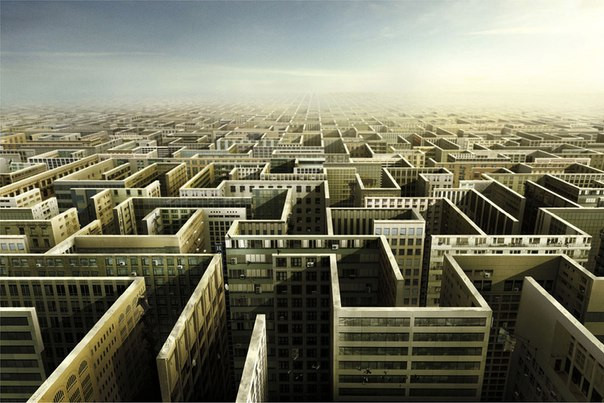
LiveJournal has one interesting opportunity. Namely, by going to the page of this or that blogger, you can see his friend feed. It seems like nothing special, on social networks we also see how people repost from groups, public pages, and other pages. But in this case, we see only what the user himself specifically noted. And in someone else’s friend feed, we see someone else’s world in full. That same segmented little world, consisting of a limited number of people and interests. The very thing that users nicknamed “manamiroks”. It is clear that a blogger may not be very scrupulous in choosing friends or monitoring the publications of his opponents. But this also says a lot about a person. Not even about himself, but about the world to which he belongs. Having gone through these records, you can understand what worries not an individual person, but the egregor to whom he belongs. It was not by chance that I mentioned this magical term. The Internet is very similar to how esotericists describe the astral plane. And egregors, accordingly, are astral maniacs. Or Vonnegut's karras. Or rather pseudocarassas. They're granfallons.
Hazel's obsessive search for the Hooshers is a classic example of false karras, the apparent unity of a group of people, meaningless in its very essence, from the point of view of God's providence, a classic example of what Bokonon called granfallon. Other examples of Granfallon are all the parties and daughters of the American Revolution, the General Electric Company and the International Order of Bachelors - and any nation, anywhere, at any time. [2]
The Internet is not our future yet, as many people think. This is a virtual prototype of our future reality. It would seem that he should unite people into one common nation, create a common cultural space. But a common cultural space appeared long before the Internet on the basis of European culture. And when the Internet appeared, this single space was already on the verge of collapse. The Internet has only helped to define this great split into many fragments, many islands. The symbol of worldwide globalization is in fact a prototype of a future fragmented world. We rushed there... and erected many walls, reliably fenced off from each other. Some thinkers often talk about the advent of the New Middle Ages. But it has already arrived in the virtual world. All these segments of the World Wide Web are feuds, free cities, bishoprics and lands of one or another order. This is the same systemic anarchy. Everyone is locked in their little kingdoms, and only something completely extreme can force them to leave their homeland. We are not interested in what happens outside our little worlds. We are disgusted by any point of view that is even remotely alien. We often like to say that our opponents are sectarians. But have we gone so far from them? Therefore, many of us will willingly believe that the Earth is flat, St. Augustine’s tooth works miracles, and on the other end of the earth live the Dog-headed people. And we will never believe a refutation from the lips of someone we consider an enemy. Scientific approach? He became scholastic a long time ago. The current discussions between clerics and scientists have long been reminiscent of the dispute described by Rabelais. This is a dispute between the scientist Thaumaste and Panurge. When those arguing communicated with each other only with gestures, which those gathered interpreted as they pleased.
The obscurantism of biologizers in some aspects is not inferior to the obscurantism of priests. This is manifested, first of all, in attacks on entire branches of science. Thus, biologizers declare scientific philosophy and sociology unnecessary (and some add political economy to this list). But without social sciences (however, scientific philosophy - dialectical materialism - is both a “humanitarian” and a “natural” science, because all types of matter develop according to the laws of dialectics: from physical to social), it is impossible to acquire a scientific worldview, as exemplified by the biologizers themselves, who are unable, due to their adherence to obscurantist nihilism in relation to the sciences that study the social form of matter, to take a scientific look at the structure of society. Also, the examples of many outstanding physicists, chemists, etc., who, despite their knowledge of the “natural” sciences, believed in God, show that limiting mental development only to the physical sciences does not allow us to develop a truly scientific view of the world. [3]
We all live and think in the Middle Ages. And only the discrepancy between the virtual and real worlds makes us frustrated. But this can be fixed. The ideal scheme that we worked out on the network is gradually filling in with reality. What is irreparable is that we are losing contact with the past, we are losing the commonality of culture. Perhaps rightly so. For this community was paid for in blood. It was a community created by the European empire. And any empire is evil. Let it crumble, that's where it goes. But by destroying the empire, we lose many important developments. An empire is always a request of people for some kind of stability. It appears when we are tired of our fragmentation, our isolation. And therefore, willy-nilly, any empire fulfills the request for integration. So that within Rome there would be a place for both Greeks and Jews. And this cannot be lost. What was special about medieval Europe? It was anarchy, many little worlds, fragments. But there was one common core, a common backbone left by the Empire. This is a Christian church. It still had the same hierarchical appearance, as if the Roman Empire had not disappeared anywhere. She was a kind of skeleton of the deceased Leviathan, on which all these feudal-anarchist islands were strung. He was the basis of the European world. The Roman Empire in relation to feudal Europe was the giant Ymir or King Yima from the Iranian epic. He was killed and cut into many pieces. Blood became the seas, bones became stones, the skull became the firmament of our world. But for the new world not to be something amorphous, it needs a border, it needs a form. You need a core. And ancient culture, preserved and supplemented by the clergy, was the core of a fragmented Europe. The basis of its existence and its revival.
Now we need such a rod.
What is needed for this? Stop being medieval philistines. Remember that we are the heirs of a great single culture, a single world. What is needed for this? Just go beyond your little worlds. Don't limit your horizons. Don't get stuck on one thing. Constantly study reality in its entirety. Try to understand your opponents. Do not be afraid to revise your knowledge and beliefs. It's easy to give up on everything that prevents us from moving forward.
It was not for nothing that I said that all these little worlds are pseudo-karras. In them people unite along formal and stupid grounds. Left, right, liberals, monarchists, nationalists. True karras, according to Vonnegut and Bokkonon, is a network of random people.
If you find your life intertwined with the life of a stranger for no particular reason, that person is most likely a member of your karras. [2]
What is important here is the karras rod, its axis around which the karras rotates. It's called a vampire.
Anything can serve as a vampire - a tree, a stone, an animal, an idea, a book, a melody, the Holy Grail. But whatever this vampeter serves, the members of one karras revolve around it in the majestic chaos of a spiral cloud. [2]
Our vampire is a humanitarian culture. This is knowledge that is maximally holistic and unfragmented, undivided by the walls of specializations. Our vampire is a true change in the world. Our vampire is a single world without walls and partitions, beautiful in its integrity. Most of those who hid in their little worlds are superfluous people. But not all superfluous people are revolutionaries. They unite in false karras, in cozy arks, in parties on the Internet not at all to change reality, but in order to escape from it. It would seem that this is the basis of the foundations, the same revolutionary circle from which the Narodnaya Volya or Bolsheviks were born. But a circle is not a sect. Those who really want to understand the world around them come to the circle. And change it. And with sects, the situation is approximately as Insarov writes:
A sect that is focused on itself, and not on action in the outside world, spoils people. They lose their understanding of the real situation, are weaned from seeing the vast world around them, and are capable of enthusiastically developing organizational schemes for their group when a revolutionary situation is brewing.
Therefore, there is no warmth in the sects; the atmosphere of revolutionary brotherhood is very rarely felt in them. But sects are always stuffy. Close comradeship - in fact, a plus of any sect - is present quite rarely, but there is usually more than enough discord and bullying. Therefore, there is usually no talk of any new healthy “we”, of any revolutionary brotherhood, or of any comradely and loving interpersonal relationships in sects. [4]
Even if we are not formally members of any sectarian organization, we still belong to some online party. I somehow decided to see who Kontaktik offered me as friends. He usually runs through friends of existing friends. And I really knew them all. Moreover, as representatives of the most irreconcilable opposing positions. Stalinists, Trotskyists, National Bolsheviks, anarchs... All this is one party, one granfallon. By the way, it's not that big. It didn't take me long to look through almost all of them.
We ourselves have built many barriers, many walls around ourselves. Walls in “contact”, walls on “Facebook”, walls in the form of friend feeds on blogs. How often do you push your limits? How often do you leave this cozy little world where everyone writes and thinks exactly what you think? How often do you look for answers to complex questions on your own? Sometimes, of course, political enemies come into your cozy rooms, but look at your argument from the outside. This is Bender's dispute with the priest. Just a ritual war between two tribes until first blood. Volodarsky recently burst out with a good text on this subject:
There are many cards that tell you how to react to something. When some event occurs in the world around you, you perceive it and comment on it in accordance with the instructions. Capitalists oppress workers, all cops are bastards, there are no nations, no borders, the state is the main enemy, elections are a fraud and change nothing. And so on. There is also a “dialectic” card, like a joker, it can mean anything, you should resort to it when you are confused in the instructions and don’t understand anything.
...The problem is that most of the people who operate them have no brains. And instructions for any occasion in life exist only in the thought experiment mentioned above; in practice, instructions are imperfect; it is impossible to predict any challenge that reality throws at us. In order to interact with it effectively, you need to think. We need to analyze. Abstract slogans and demands can, at best, provide guidance, but to answer specific questions, specific answers must be given.
...But the inhabitants of the “anarchist room” and especially the “left room” for the most part do not try to do this. They are content with ready-made answers, even if they poorly approach the questions. [5]
This passage captures the very essence of what is happening. Most of the members of these granfallons simply replace the lack of stability in reality with their own stable and predictable world. A true revolutionary always acts in conditions of instability, in conditions of chaos. He glides through its dark waves like a surfer. And he searches and searches. Human. Just like him, free from all these conventions, independent of his little worlds. A person who knows how to think independently, without resorting to ready-made templates. This means free from conventions, stereotypes and seeing much further than the walls that surround us. And ultimately, true revolutionaries create global stability, common to all. Marx understood this perfectly well. “To be radical means to understand a thing at its root,” he once wrote.
Action in the outside world does not mean stupid and meaningless activism. It involves looking at the world with eyes wide open, learning to wait, and learning to make the most of a situation when that situation arises. After all, it is precisely for such action that a revolutionary organization exists...
writes Insarov. -
Those who are able to act in these conditions will fulfill their historical mission. Whoever fails and becomes a sect, engaged only in self-education or meaningless activism - who will need them then? [4]
Our mission is to change the world, to make it better. Well, or at least not let him die. As Benjamin said there: “Revolution is the stop tap of history, the grasp of which must put an end to the long-term state of catastrophe.” In any case, this cannot be done by sitting behind walls. Yes, taking shelter temporarily is a sacred thing. But don’t sit and wait for a revolution to ripen on the street and free us all from captivity in our own heads. . We are pirates, we are partisans, we should not rot in forts. Our element is the sea, or the desert, or the jungle and no bases, only temporary shelters. This is how Lawrence of Arabia defeated the Ottomans, Che and Fidel Batista, and King Philip's Drake. We will go out, hermits overgrown with beards, and will not understand anything about what is happening. And those around us will not understand, they will pass by into the future, pushing us with their elbows, while we blindly squint at the sun, which we have not seen for a long time. They will move on, and we will remain on the sidelines of history.
Therefore - no sects, no feuds, no comfort zones. No walls. This is the only way to change the world.
Let's destroy this prison
These walls shouldn't be here.
So let them crash, crash, crash
Dilapidated for a long time.
And if you press with your shoulder
And if we both push
Then the walls will collapse, collapse, collapse
And we will breathe freely.[1]
1. Song “Walls” (L'Estaca freely translated by Kirill Medvedev)
2. K. Vonnegut “Cat’s Cradle”
3. Taken from the public Sedition. Author unknown
4. M. Insarov “On the psychology and sociology of left-wing sects”