
Translated material
The head of the Ministry of Emergencies demanded to ensure the safety of ice crossings in conditions of global warming
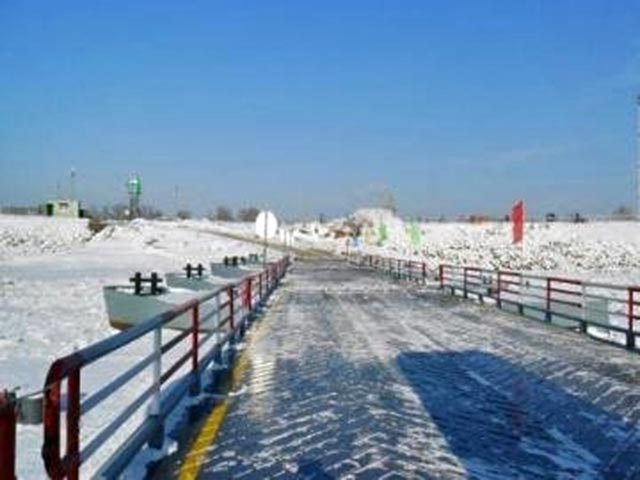
Vladimir Puchkov demanded to tightly control the work of crossings and close them when changing weather conditions. "In the context of climate change", the use time has decreased - in some cases by more than two months.
The head of the Russian Ministry of Emergencies Vladimir Puchkov demanded to tightly control the work of crossings and close them when changing weather conditions. Their work time was reduced in conditions of global warming, he pointed out.
There are a lot of settlements in Russia, which are located on the opposite banks of the rivers, and people begin to use unorganized crossings. “The main task is to ensure safety and such places. It makes no sense to prohibit them,” Puchkov explained.
“Since the crossings and winter roads are very important for a number of regions in winter, since only cargo and people are delivered to them, it is very important to monitor their condition, weather conditions and make decisions on temporary closing of crossings taking into account the forecast of weather in the event of the slightest danger,” the head of the Ministry of Emergencies TASS quoted.
He noted that tight control over the thickness of the ice, the temperature of air and water should be organized. “This is especially true in the conditions of climate change that have been observed in recent years,” said the head of the Ministry of Emergencies. “In Russia, the time of using ice crossings for 10 years has decreased - from two weeks to 2.5 months.”
The head of the Ministry of Emergencies is on a visit in the Yaroslavl region, where he checked how the longest ice crossing in Russia was organized - at the Rybinsk reservoir. It reduces the road by travel by 200 km. “Now there are problems here - the water has gone beyond the ice, so the crossing work is temporarily suspended,” Puchkov said.