
Translated material
Memory. Vikenty Veresaev
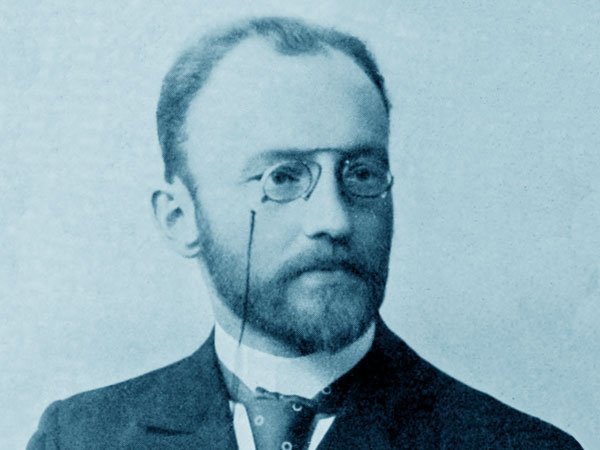
On January 16, 1867, the writer and translator Vikenty Veresaev was born.
Personal business
Vikenty Vikentievich Veresaev (the real surname - Smidovich, 1867 - 1945) was born in Tula in the family of a doctor. I became interested in literature while studying at the Tula classical gymnasium. In 1884 he graduated from a gymnasium with a silver medal and entered the historical and philological faculty of St. Petersburg University. He participated with enthusiasm in different student circles, "living in the tense atmosphere of the most acute social, economic and ethical issues." In his student years, he wrote the first stories that were published. As a result, Vikenty Veresaev decided to become a writer, and in order to better know his life, after the end of the Faculty of Historical and Philology (1888) he entered the medical faculty of Derpt University, believing that the profession of a doctor will help the writer to deeply penetrate into human nature and introduce him to the fate of many people.
Having received a doctor’s diploma in 1894, Veresaev began practice. At first he worked in Tula under the leadership of his father, then went to St. Petersburg and got a super -standard resident in the “City Baracnaya in memory of S.P. Botkin Hospital” (now this is a clinical infectious hospital named after S. P. Botkin). In the fall of 1894, Veresaev ended the large story “Without a Road”, printed in the journal “Russian Wealth”.
Veresaev joined the mug of the Marxists, maintained close relations with workers and revolutionary youth. In 1901, the book “Notes of a doctor” brought him fame. In the same year, Veresaev was dismissed from the hospital by order of the mayor and expelled from St. Petersburg. A formal reason for expulsion was his participation in protest against the suppression of the student demonstration by the authorities. He lived in Tula for two years under police supervision. When the expulsion period was over, he moved to Moscow.
In 1904, during the Russo-Japanese War, Veresaev called for military service as a military doctor. The essays and stories written by him in Manchuria compiled the book “In the Japanese War” (was completely published only in 1928).
After the revolution of 1905 - 1907, Veresaev came to the conclusion that violence could not be the method of social progress, and was disappointed in the idea of the revolution. He created a large philosophical and critical study “Living Life”, in the first part of which he investigated the work of Tolstoy and Dostoevsky, and in the second-“Apollo and Dionysus”-analyzed the ideas of Nietzsche.
When the First World War began, Vikenty Veresaev was again mobilized, for some time he stayed with a regimental doctor in Kolomna, then he was heading in Moscow a military sanitary detachment on the railway. In 1917, he became the chairman of the artistic and educational commission at the Moscow Council of Workers' Deputies. In September 1918, he went to Crimea for three months, to Koktebel, and forced to live there for three years. “I had to survive a lot of hard,” recalled Veresaev, “was robbed six times; A sick Spanish, with a temperature of 40 degrees, lay for half an hour under the revolver of a drunken Red Army soldier, two days later shot; Arrested by white; He was sick with scurvy. " In 1921 he returned to Moscow. In the post -revolutionary years, he wrote novels “At the Deadlock” (1924), “Sisters” (1933), the documentary studies “Pushkin in Life” (1926), Gogol in Life (1933) and “Pushkin satellites” (1937) were created, and the memoirs “In the Young years”, “In the Student years” were written.
Vikenty Veresaev died in Moscow on June 3, 1945.
What is famous
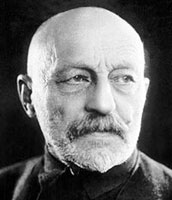 Vikenty Veresaev
Fame for Veresaev came after the publication of “Notes of a doctor”, combining both fiction and a documentary story, where the author discussed the limits of medicine, its role in society, and the problems of medical ethics. The critic Alexander Izmailov recalled : "The human anthill stirred up and was worried before the confession of a young doctor, who <...> changed his professional secret and brought into the light of God and the instruments of the struggle, and the psyche of the doctor, and all the contradictions to which he himself exhausted." The release of the book caused numerous critical reviews in the press. In response to accusations of the inequality of the adoption of professional medical problems to the Public Court, the writer published the article “On the“ Notes of the Doctor ”. The answer to my critics ”(1902).
What you need to know about
Even in the gymnasium, Veresaev especially managed in ancient languages. After a trip to Greece in 1910, his interest in antiquity was revived, which led to the beginning of work on the translations of ancient authors. He translated the verses of the Greek poets (Sappho, Feognida, Alke, Anacreon and others). In 1929, “Homerov Hims” were published in his translation. Since 1937, he began work on the translation of the Iliad and the Odyssey Homer. They were published after the death of the writer: “Iliad” - in 1949, and “Odyssey” - in 1953. He also translated the “work and days” and “theogony” of Hesiod.
Direct speech
“I am the most ordinary average doctor, with an average mind and average knowledge; I myself am confused in contradictions, I strongly unable to resolve many of those difficult, strongly requiring resolving issues that arise before me at every step. My only advantage is that I have not yet managed to become a person of the profession and that the impressions that you involuntarily get used to you are still bright and strong for me. I will write about what I experienced, getting acquainted with medicine, what I expected from her, and what she gave me, I will write about my first independent steps in the medical field and about the impressions I made from my practice. I’ll try to write everything without hiding anything, and I will try to write sincerely. ”
From the author's preface to the book "Notes of a doctor"
“In 1888, I graduated from a course as a candidate of historical sciences. Candidate dissertation: "Izvestia of Tatishchev dating back to the XIV century." In the same 1888, in the fall he entered the Derpt at the medical faculty. Why medical? The main reason: already at that time it was my dream to become a writer, and for this it seemed necessary to know the biological side of a person, his physiology and pathology; In addition, the specialty of the doctor made it possible to close closely with people of a wide variety of layers and ways; It was especially necessary for me, since my character is closed, I am difficult with people. I accidentally got into Derpt: for some reason I was not accepted into the St. Petersburg Medical Academy; When I learned about the refusal, at Moscow University, admission to the medical faculty was already terminated; And in Derpt, the university at that time was still German and shone with large scientific names. ”
From the autobiography of Veresaev
“The last desire of Anaxagoras was that on the day of his death, children's games would be arranged annually. I have no right to do so, because I did nothing for children. But I would like to have a child’s laugh at my death, so that everyone smiles around, so that there is no funeral mood, people would not go with hanged noses, would not breathe mournful. Let me not be worth a shubertovsky Wilder Knochenmann - “Wild Bone Man” with a scythe. Let it run a blessed tohanatos, the twin brother. ”
From the diaries of Veresaev
10 facts about Vikntia Veresaev
- Father Vikenty Veresaev - doctor V. I. Smidovich, son of the Polish landowner, participant in the uprising of 1830–1831, was the founder of the Tula city hospital and the sanitary commission, one of the creators of the Society of Tula doctors, the vowel of the City Duma.
- Mother, Elizaveta Pavlovna, opened in her house the first kindergarten in Tula.
- Veresaev’s father enjoyed such respect in Tula that once, when he returned at night from the patient, the robbers attacked him, having learned “Dr. Smidovich”, apologized and spent him home.
- Veresaev put forward the version that in the “Examiner” Gogol describes the Kursk and the Kursk tavern, justifying this by the fact that in the draft version Khlestakov went to the Yekaterinoslav province, to which a third of the path remained. In addition, in 1832, Gogol himself lived in Kursk for a week, waiting for the repair of a broken crew.
- Sometimes Veresaev called himself the “king-doctor”, as he stopped engaged in medical practice and did not treat the sick, like the “king-gap” who does not call, and the “king-gun”, who does not shoot.
- In the Moscow Association of Wednesday writers, in which Veresaev was part of in the 1900s, toponymic nicknames gave all writers. Veresaev received the nickname Stone Bridge.
- In the early 1930s, at the suggestion of Mikhail Bulgakov, Veresaev began working together on the play about Pushkin, but later the work ceased due to the creative disagreements of the two writers. “Veresaev dreamed of a purely historical play, demanded that all the dates, facts, events have been precisely observed,” wrote E. S. Bulgakova. - Bulgakov was, of course, I agreed. But, in his opinion, this was not enough. ”
- Veresaev was distinguished by modesty in everyday life. Once, a peasant woman from a neighboring village came to his housekeepers from a neighboring village, but, entering the house and meticulously examining him, she immediately abandoned the place, scornfully with her hand and said: “The poor!”.
- In Moscow in 1921 - 1945, Veresaev lived in one of the apartments of the house 2/3 on Shubinsky Lane.
- In Tula there is a house-museum of Veresaev , the Veresaev public museum is located in the country house belonging to him on Nikolina Gora.
- Criticizing the poet V. Ivanov, who, in the translations of Sappho, arbitrarily composed “poems” of fragments that reached us, Veresaev composed Centon in a review - as an example of a poem that could be compiled from fragments of Pushkin’s works “I visited again”, “mermaid” and “Poltava”:
I visited again
The corner of the land where I spent
The hermit for two years is inconspicuous.
Here is the mill, - she already fell apart;
Interrupted their hungry roar [wheels?] ...
Materials about Vicentia Veresaev
Article about Vicentia Veresaev on Russian Wikipedia
Works by Vikenty Veresaev in the Library of Moshkov
Veresaev on the website of the Tula regional universal scientific library
Veresaev in the project "Chronos"
Vicenty Veresaev's voicerecord