
Translated material
A rough song
125 years ago Osip Mandelstam was born
Oleg Lexmanov is a specialist in Russian poetry of the twentieth century, author of the book “Osip Mandelstam: Statred Air” (M.
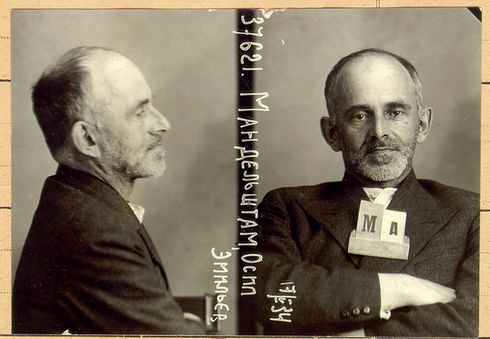
First arrest, May 17, 1934, NKVD archive
Today's celebration of the anniversary of Osip Mandelstam is celebrated "at a high state level", sorry for the bureaucratic New Maid. Talking about renaming streets and Squares in his honor, Minister Medinsky sends an official greeting to the organizers of the wonderful Mandelstam exhibition at the State Literary Museum, a magnificent festival is arranged in Voronezh in honor of the poet.
In the very Voronezh where Mandelstam languished in exile and in which (about which!) Wrote, perhaps, one of the worst lines in world poetry:
And in the pit, in the warty theme
I glue to icy water pump
And stumbling, I eat dead air,
And the rooks are scattered in a fever ...
The poet is correct and wrong
Probably, there is nothing particularly terrible in the canonization of a great artist. The process is inevitable, no one has exclusive rights to Mandelstam and can not possess. And in general, a lot of good things are being done under this anniversary: the poet’s books are published and reprinted about the poet, exhibitions are arranged, that’s the film Liberov, very good, shot about Mandelstam. Only the farther, the more it seems that we are all honored by another poet, not the one who wrote about “Vodokka” and “warty theme”, but some “right” Mandelstam, highly-eagle, neat, clean.
"And could live the life with a starling, // Zaky with a nutty pie ..."
But the author of the Fourth Prose and “Poems about an unknown soldier” was completely unknown to a wide range of readers in his life and was completely forgotten by almost all readers after his tragic death in 1938. Even attempts to be popularly adored in the 1980s of Alla Pugacheva to put to music uncontrolled Mandelstam poems (“Leningrad”, “Alexander Hertsevich lived ...”) The situation did not change the situation in any way-the Kabatskihihors existed on their own, and the poet itself. For a rather long time, the verses and prose of Mandelstam were indeed a stolen air of the era for a relatively small group of people who spoke Russian. Mandelstam's lines breathed: their knowledge or ignorance served as an unmistakable password to separate their owners from strangers, they organically interspersed into endless kitchen conversations, in disputes they were used as unquestioned, recent arguments ...
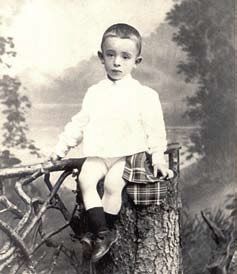
Osip Mandelstam in 1895
The whole beginning to slowly change in 1991, when the poet's centenary was celebrated. I well remember how still a student with a battle broke into the evening of Mandelstam's memory in the Moscow Column Hall of the House of Unions. The audience was mainly its own, but mostly the authorities sat on the stage. The huge portrait of the culprit of the triumph, clearly made by those masters of fine art, who filled their hand on the picturesque embodiment of the images of high -standing party comrades, also decorated this scene. And where did the other masters come from in the house of unions? Mandelstam in the portrait pulled, if not for a young candidate for members of the Politburo, then certainly for the leader of some small, but quite autonomous republic. Then this portrait laughed and remembered. Would his anniversary are celebrated now?
Outside the canon
Few of the great Russian poets are so resisted by entering the “correct” canon as Osip Emilievich Mandelstam. Well, unless Pushkin Alexander Sergeevich, about the late Soviet version of the canonization of which Timur Kibirov very accurately wrote in due time:
There, under the spirituality of Pudova
Sounded forever a swirling Pushkin,
He drooped the head of the garden -
No sea, no steppes, no mugs.
He is in place in the epigraph,
scored, gathered, fried,
Not a cross between a monkey with a tiger,
And the mixture of Samoilov with Rubtsov.
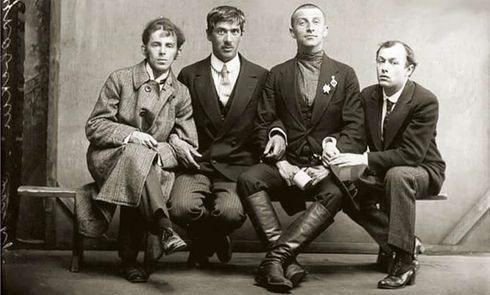
From left to right: Osip Mandelstam, Korney Chukovsky, Benedict Livshits and Yuri Annenkov, Petersburg, 1914
Mandelstam passionately hated all kinds of anniversaries and, in the “noise of time” (1923), devoted to them the poisonous, mocking passage: “The literary fund was by its nature a memorial institution: it honored. He had an accurately developed annual calendar, something like the saints, the days of death and birthdays were celebrated, if I am not mistaken: Nekrasov, Nadson, Pleshcheev, Garshin, Turgenev, Gogol, Pushkin, Apukhtin, Nikitin and others. All these literary requiem were similar, and in the choice of readable works they were considered little with the authorship of the deceased. ”
More importantly, the author of the “noise of time”, as if anticipating the “anniversary” dangers that would posthumously threaten him, wrote many times not only about his inability, but also about his unwillingness to comply with the ideas of contemporaries and descendants about the great impeccable personality. “The fact that for us an impeccable hood and the so-called eagle profile were painfully overcome by awkwardness, a purely Pushkin chamber-junker struggle for the social dignity and social situation of the poet.” This is not only about his beloved Dante to Mandelstam, but also about himself!
And the same topic - its own clumsiness and obstinacy - repeatedly arises in Mandelstam verses. From “See how a jacket is puffing on me” in the 1931 poem “It was not a linear in it, // Liley was not a lily” in the 1935 poem. Yes, and the “spellwood”, who “sings a rough song” in the poet of the poet “Chop eyelashes. A tears got in the chest ... ”(1931) - this, of course, is a self -portrait (whoever wants, will say - visionary).
Congenital rhythm
Mandelstam and in life did not always behave like Painka. His words and actions not only admired, but also mixed, offended, annoyed. Osip Emilievich could, for example, harshly and unfairly cut off a friend who, in tears, told him that her friend was arrested for reading and storing the late poems of Maximilian Voloshin: “So your friend needs! Max is a bad poet! " Or screaming from the window of his apartment passing by and personally nothing bad to him to the writer: "Here is the scoundrel NN!" “Looking at Emilievich’s Osip,” comments Emma Gershtein*Mandelstam's behavior, “I noticed what his sticking ears he had and how he looks like a“ ugly boy ”at such moments.
The episode, which very expressively illustrating the observation of Gershtein about Mandelstam - “The Boy’s Owl”, is found in the book of Emilia Mindlin's memoirs “Extraordinary Interlocutors”. “At one meeting of the“ literary mansion ”, when everyone was sitting at a huge, blue cloth,” says Mindlin, “Mindelstam was bored, listening to the verses of some very uninteresting poet. He had a cigarette in his hands. He did not so much smoke as he turned the cigarette. I sat opposite him. Our views met. Mandelstam showed me his eyes at his neighbor. It was George Schengeli **. He held a pink balloon on a rope - these children's balls only appeared then in Moscow after a long break. I did not immediately understand what I wanted to tell me Mandelstam with my gaze. His face at that moment was full of solemn peace, as if he was about to make a sacred. He slowly brought a lighted cigarette to a children's air ball in the hands of Shengeli. There was an explosion, an instant commotion. Schengeli jumped in horror. The poet, who read poetry, did not finish them, was offended, the academically serious Shengeli was very angry with Mandelstam. The word was given to another poet. Mandelstam began to listen to him with the most attention. " After laughing, we ask ourselves: would we like to be in the place of the Shengeli? And in the place of the "uninteresting" poet?
Mandelstam passionately hated all kinds of anniversaries and devoted to them the poisonous, mocking passage: “The literary fund by its nature was a memorial institution: it checked”
I think it will be completely unnecessary here that Mandelstam has committed very, very many other acts for his non-so long life: bold, noble, touching and exalted ... Yes, and we are talking about, for that, it’s not about Mandelstam, or, in any case, not only about Mandelstam. He wrote his ingenious poems for a long time and lived his life as brightly as almost none of us dreamed (“And he could whistle the life with a starling, // Eat with a walnut pie ...”).
We are talking about us and, in particular, that it would not have been good in anyone who had not died a living feeling for the poet, who portrayed himself in the years of his youth in the poem “Self -portrait” (1914):
In lifting and winged heads
A hint - but a frock coat is composed;
In the closure of the eye, in the rest of the hands -
The hiding place of the movement is not superior.
So who to fly and sing
And the words fiery venue -
So that a born awkwardness
Congenital rhythm to overcome!
* Emma Gershtein (1903–2002), literary critic, writer, all her life was engaged in the work of M.Yu. Lermontov, the author of Memoirs published in 1998, in which she spoke about her meetings and conversations with Akhmatova, Gumilev, Mandelstam, Pasternak. ** George Shengeli (1894–1956), a poet, translator, critic, was close to futurists and symbolists, was friends with Igor Seversynin, the author of the study “Treatise on the Russian Littleness” (1923) and the Pampfle “Mayakovsky in full growth” (1927).
Photo: imdb.com, club.berkovich-zametki.com, togdazine.ru