
Translated material
Swan transformation
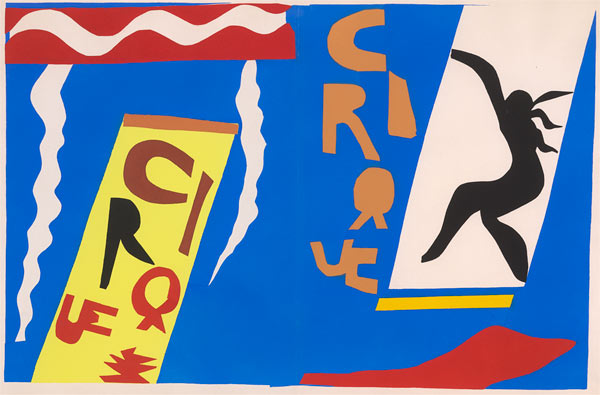
Book graphics by Henri Matisse
Henri Matisse for more than forty years, until his death in 1954, worked with books. This winter, the New York library Morgan first collected the artist’s book graphics, putting down 30 out of 50 of his projects.
The book for Matisse was primarily a decorative object. Following the Renaissance masters, he interpreted it as a precious relic, a collection rarity, a generous gift or an honorary award. Therefore, the artist believed, illustrations, of course, should not illustrate anything. They accompany the text, walking in parallel paths - in the same direction, but not intersecting with it.
So 1935 drawings were made to the first American publication “Ulysses”. Matisse immediately admitted to the author that he did not read his book, but Joyce still was delighted with the drawings. And it’s clear why. Looking at the “sirens” from the most confusing head of the novel, the viewer involuntarily recognizes foggy, but seductive figures, woven by the author from dreams in half with lust.
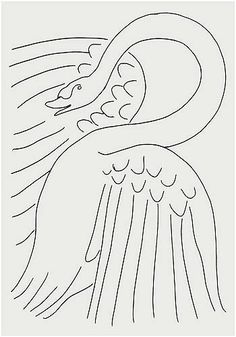
Another achievement of the artist was the book of the verses of Stefan Mallarme. Illustrating the poetry, which, according to the Goncurs, cannot be translated into any language, including French, Matisse considered the text as a graphic component. The curators presented the whole process of working on the book, so I, as an old metranpage, was able to evaluate the subtleties of the layout. Working with each turn, Matisse sought to find such a black balance with white, which created balance, but also destroyed it, giving the dynamism of the composition.
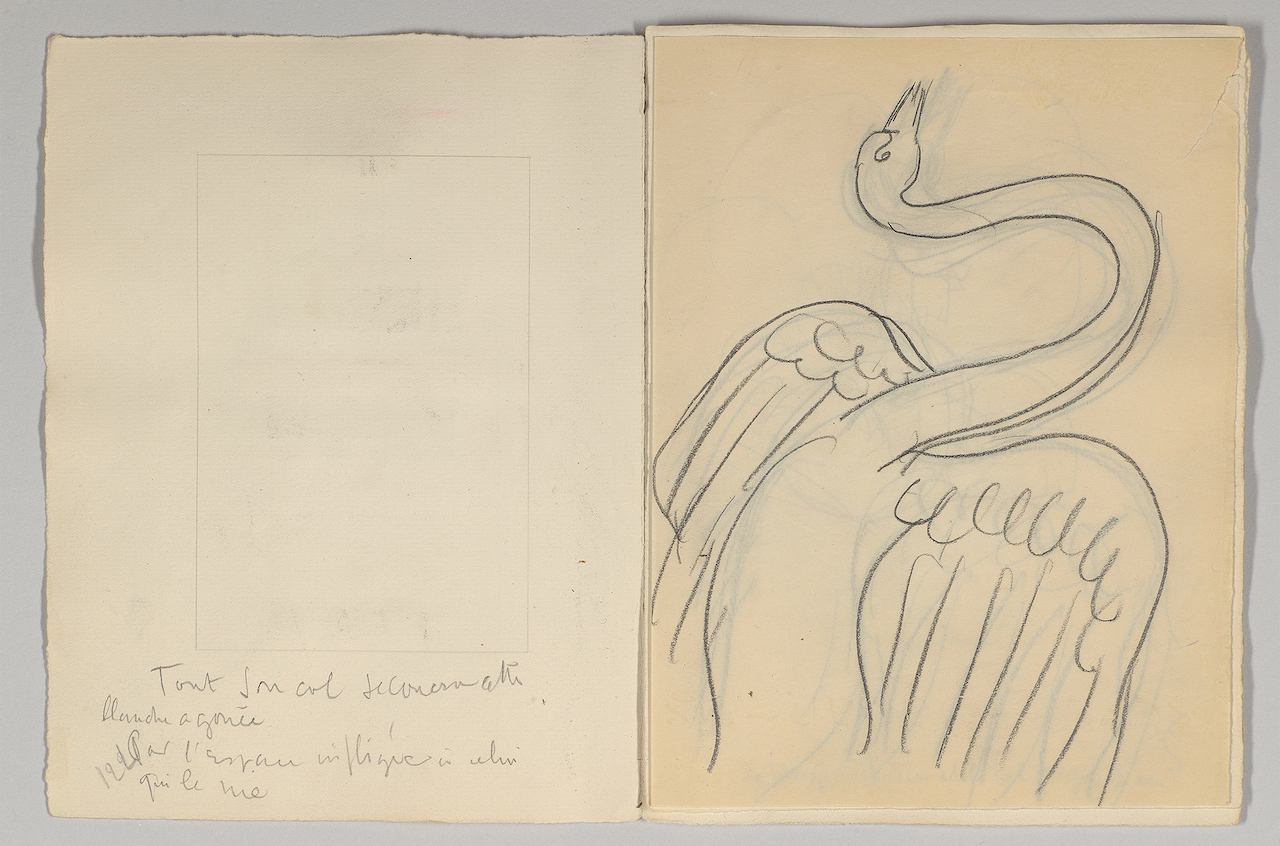
Moreover, the exposition lets the viewer into the creative workshop of Matisse. On the example of a swan adorning the book of Mallarm, we see that the finished drawing was preceded by tedious, in a scientifically diligent work. First, the swan was drawn by all academic rules, with barbell, shading and numerous amendments. One dead sketch replaced the other until the author’s eye found the lines in the chaos of the forms he needed. Then Matisse circled the swan album with coal and transferred it to the book. The result seems to be a fruit of a spontaneous game, but not it. It seems blasphemy to monitor the draft work of genius - how to look at the manuscripts of Mozart or Pushkin's manuscripts fucked. Nevertheless, this is exactly how - from craft labor - the soaring, then the dancing line of Matisse, reviving everything that his hand touched.
Working on the book of 10 months and taking out a typograph as a typograph, the artist ultimately created an object unique in harmony, insolence and completeness, designed for admiring, not reading. The utilitarian (if this happens) the benefits of the book are inferior to its purely artistic value, which is also indicated by the price. The Mallarme collection was published in 145 copies. Each cost 16 thousand francs, at today's rate it was 12 thousand dollars. At first, due to the great depression, the book diverged poorly, but only 16 years later its price increased four times. Today, these books are not sold, but are stored by museums, like the Morgan library.
In essence, Matisse returned the book to its source, canceling the main advantage of printing - circulation. From a penny product of mass production, he again turned it into invaluable rarity. There can not be many such books, but this is not necessary, because each is worthy of a unique place in the collection of the most expensive things for the owner of things.
Oddly enough, in such a treatment with the book you can see not only its past, but also the future. Today, the book loses its material shell. She became a set of words that arise on the screens of all types and sizes. Having stumbled on the e -book, reading lose his usual everyday life. I am sure that we are the last generation surrounding ourselves with thousands of books. In the near future, a personal library will seem as absurd as a personal grocery warehouse next to the supermarket.
In this situation, only art can save the book. Having become precious, it will turn into a favorite exhibit and will play in our housing the same role as the paintings. Instead of cabinets and shelves - several books, each of which requires love contemplation and white gloves.
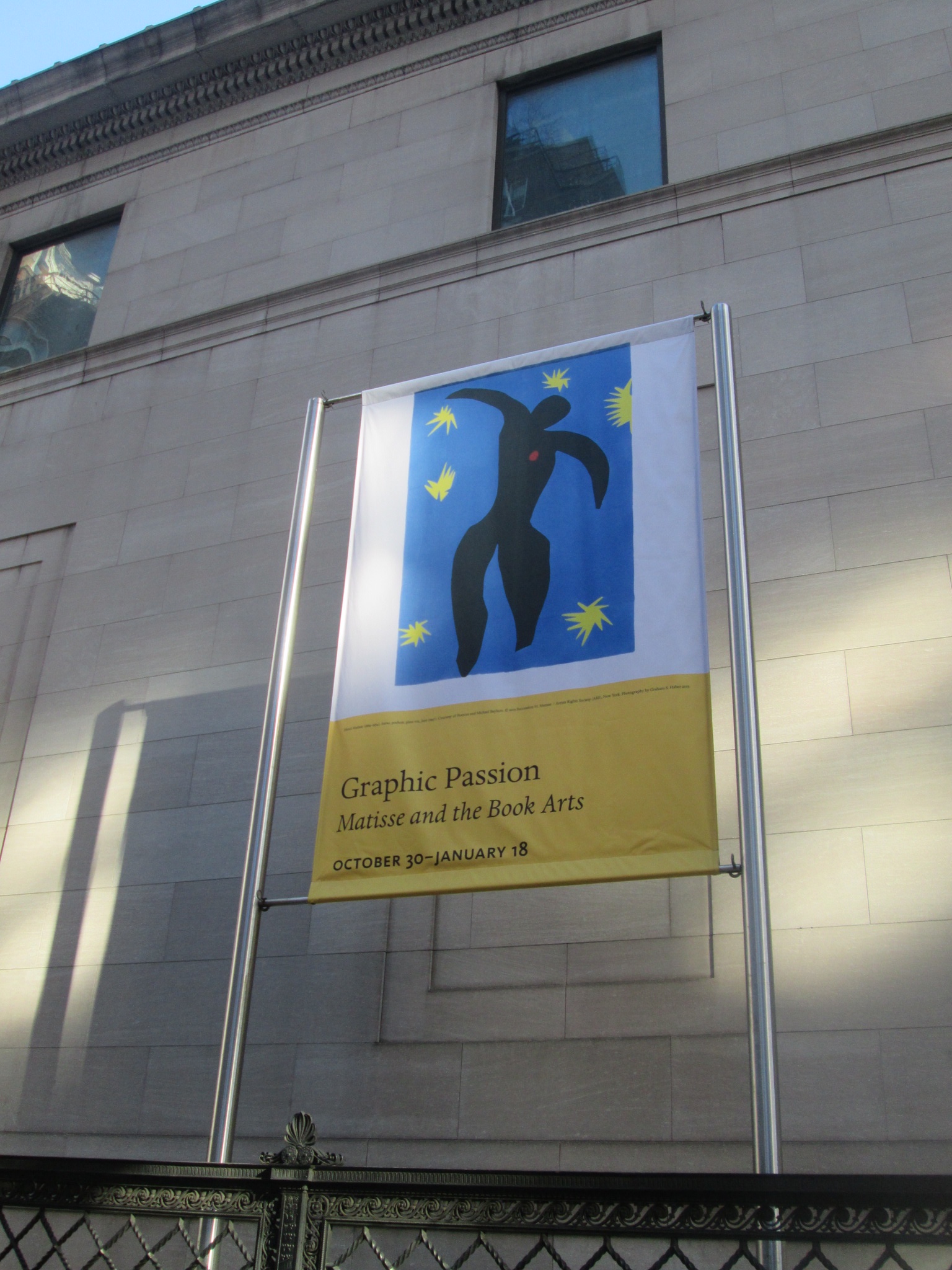
It is such a book that is crowned by the Matisse exhibition. This is the famous folio of 1947 “Jazz”. The aging artist in these years turned to applications, having learned, according to him, “to draw with scissors”. “Jazz” (initially he wanted to call this book “Circus”) is free color fantasies. The most famous of them, the one that the exhibition poster, depicts a black figure with a red heart. Around the man is an uncompromisingly blue sky with shamelessly gold stars. Putting his hands, bowing his head, limping, in a laziness with a syncopted gait, he goes towards us to share his joy.