
Translated material
1916 - A hundred years later
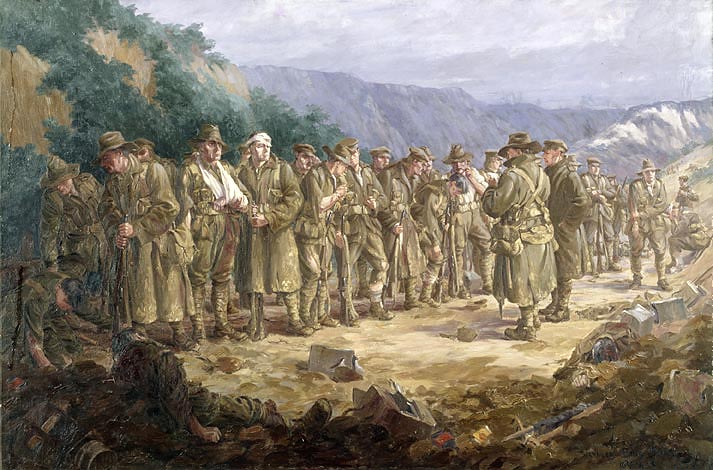
Gallipoli. Romain Rollan
Alexander Genis: Today, Ach will open the first release of our cultural and historical section this year: “1916 - a hundred years later: paradoxes and parallels”.
Faulkner said: "The past is never dead. It has not even passed."
Having taken the famous aphorism into the epigraphs of the cycle, we plunge in the eternally living time of the past, which has reached us in the form of historical events, artistic movements, musical directions, fateful books and an important part of each transmission, which, perhaps, are best able to convey the spirit of time.
Looking into the past, we are not looking for escapism, allowing us to relax in the long -past, but lessons that allow you to better understand the present and look into the future.
The traditional questions that these transfers ask the past sound like this:
What happened?
What happened?
What could be?
(Music)
Alexander Genis: Our traditional cycle dedicated to the centenary of 1916 opens with the topic of war. 1916 was a year of disappointment. By this time, all the warring countries realized that the war was a mistake. It became clear that all the plans that different countries had failed.
Solomon Volkov: But at the same time, each side firmly counted on victory. In my opinion, this is an unprecedented case, because in the Second World War from a certain moment, suppose, since 1943, closer to 1944, it became clear to everyone and it was clear that Germany is losing. Maybe Hitler was incomprehensible, but everyone else was clear, including his generals. But in the case of the First World War in 1916, all sides, and in Russia, where things were the most unfavorable way for the Russian army, already anti -war strikes went with might and main in Russia itself, fraternity was observed at the front with the Germans. If I were sitting upstairs in Russia at this time, then I would be scary ...
Alexander Genis: The fact is that it was impossible to get out of the situation that had developed by 1916. The tragedy was that the war claimed so many lives that someone was supposed to be responsible for this. It was no longer possible to stop the war, it was only possible to defeat and thereby justify all the monstrous sacrifices - they thought in every capital from the warring countries.
Solomon Volkov: Therefore, they threw more and more victims into the vent of war. It's horrible.
Alexander Genis: No one knew how to turn the course of the war, no one was preparing for an endless trench warfare, everyone was preparing for a quickly victory. The French, for example, did not even consider the option of defense war, they counted on the Napoleonic spirit. They only had a rapid attack.
Solomon Volkov: And they received a battle of Verden.
Alexander Genis: Absolutely. It was terrible, we will return to this battle. But the tragedy was that all plans were unjustified. The British thought that they would send a small expeditionary corps to Europe, which would help the French defend themselves, and as a result they dragged millions into this war. The Austrians, who thought that they would quickly punish the Serbs, found that their empire collapses in front of their eyes. The same thing with Italy, who entered the war on the side of the Entente in 1915, believed that she was waiting for light victories over Austria - after all, the Italians now had such strong allies. Instead, a terrible, bloody war in the Alps on the Austrian Front began, which made unthinkable sacrifices. And so it was everywhere. Therefore, Churchill, who sought in some way to turn the course of the war, came up with a new operation: to hack the defense of enemies, penetrating the center of Europe through the south. So the Dardanel operation was born, which is often called "Gallipoli." In early 1916 - January 8 - this operation was completed. The defeat in Gallipoli was one of the worst and most sad in the history of allies.
Solomon Volkov: Moreover, they lost, as we recall, the Turks. It was a defeat at the hands of the Turks, whom none of the allies as military power did not seriously perceive.
Alexander Genis: “Patient man in Europe” - the so -called Ottoman Empire.
Solomon Volkov: Remember, the Crimean War, which was lost by Nicholas the Great. To whom did he lose her? The Union of England, France and Turkey. It would seem that the British and French had to have an idea of the fighting spirit and ability of the Turkish troops, but apparently, it was not so high if by 2016 they believed that it would be, as the Americans love to say, a piece of pie.
Alexander Genis: Yes, it was a terrible story. After all, all the warring countries by that time were depleted, there was not enough everything. For example, ammunition. It is known that every month of the Russian army required 200 thousand rifles to provide a new set of recruits, and only 50 thousand rifles were produced in Russia. And here is what John Kigan writes, one of the best historians of the First World War (his book is also in Russian): “Stories about the naked Russian infantrymen who are waiting for the opportunity to inherit the rifle of their murdered or wounded comrade, were not leisure tanks - it was true.” It is terrible to imagine that people were driven to war without weapons.
Solomon Volkov: It was also necessary to wait for the death of a comrade to get this weapon.
Alexander Genis: Gallipoli turned out to be a particularly tragic battle for soldiers from New Zealand and Australia. This is the so-called Anzak, the Australian-Nosodeland Military Corps, which was exported from the southern colonies of England. These soldiers courageously fought, they considered it necessary to come to the aid of their native empire. New Zealanders, for example, took them mainly from rural areas, were considered the best soldiers of that time, because they were the most healthy and bold.
Solomon Volkov: And the arrows were good.
Alexander Genis: Absolutely. And they all died in vain.
Solomon Volkov: Thousands.
Alexander Genis: It was after Gallipoli that the Australians and New Zealanders felt like separate independent peoples. Gallipoli is still a date for the Australians and New Zealanders when these two independent nations arose, which are still such.
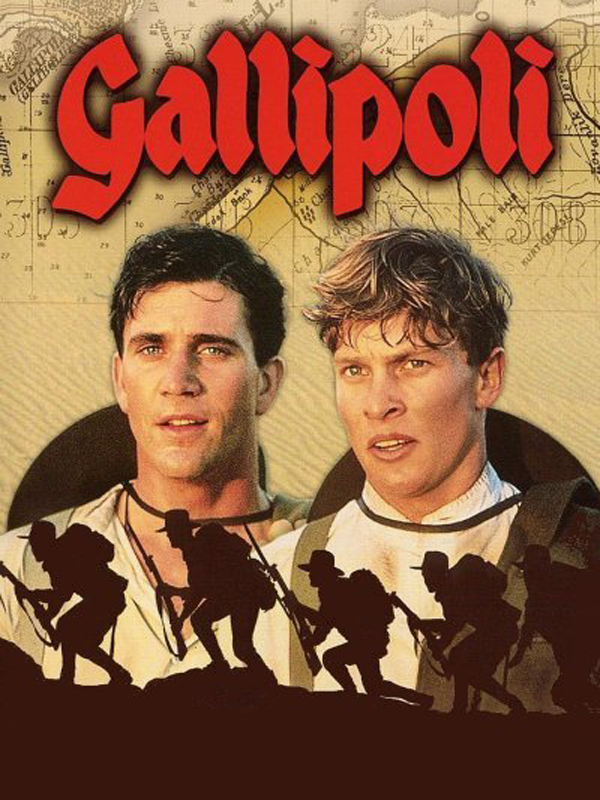
Solomon Volkov: This spirit is reflected in the wonderful film by Peter Wira "Gallipoli".
Alexander Genis: This is a 1983 film, which remarkably accurately reproduced these events.
Solomon Volkov: He made a very strong impression on me in due time. It shows how this spirit of national self -awareness arises in the crucible of war.
Alexander Genis: It is interesting that when it was all over, the English officers, many of them were with an excellent classic education from Oxford and Cambridge, said this: Troy and the Gallipoli Peninsula are located nearby. Here is the birthplace of two heroic battles, and it is not known which one would have sung by Homer if he knew about both.
Solomon Volkov: So they would have waited for this film by Wir. Cinema is the epic of the New Age.
(Music)
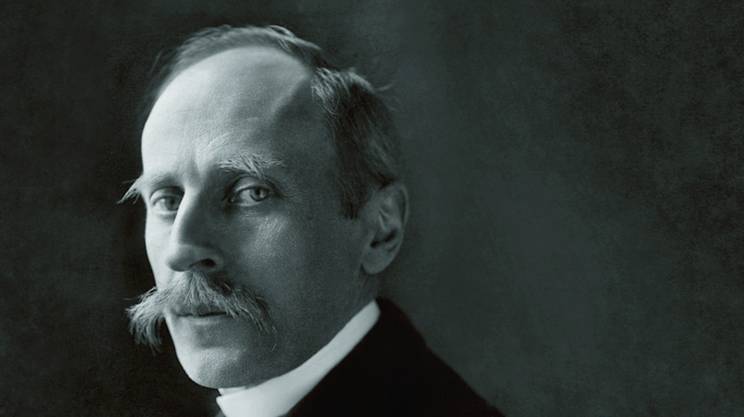
Alexander Genis: Now let's move from war to peace - from war to art. I propose to talk today about a man who then in 1916 was a conscience of Europe. These days we celebrate the 150th anniversary of the French writer Romain Rollan. In our 1916, he was very famous: shortly before the end of 1915, he became the Nobel laureate in literature.
Rollan played an extremely important role at that time, also because he was a consistent pacifist, he was against the war. And now I begin to think about it completely differently than a year or two ago. I have a good idea of how difficult it was to be a pacifist in France in 1916. You just think: the Germans captured part of France, until recently the Germans were very close to Paris. What can be pacifism?
Now, when Putin's aggression against Ukraine has led to the fact that the anti -war position is equated with betrayal and becomes very dangerous in Russia. But no one attacked Russia. And in France, the Germans stood next to Paris. What courage did the pacifist position of Romain Rollan and his very few supporters required!
Solomon Volkov: Here, it seems to me, the question is more difficult. Because the position of Rollan was not such a fundamentally consistent pacifist all the time. Yes, there is his famous article “Above the Fight” with an expression of pacifist views, which caused a grand scandal. But he was preparing a book that was supposed to become an indictment at the address of German barbarism.
And there is a very curious story connected with this, because the great Russian composer Igor Fedorovich Stravinsky took part in it. He recalled in his declining years about how Rollan turned to him, so that Stravinsky (which, by the way, was also interesting: Rollan addresses Stravinsky in these years, by no means universally recognized composer the avant-garde) with a call to take part in such an important enterprise that was very important for the rolling of the enterprise. That's what Stravinsky answered, I give the text of Stravinsky’s answer, it is very indicative, because it clarifies a lot. For me, Stravinsky’s position is very interesting in this matter. This letter also helps to understand the emotions that owned artists, artists, musicians at that time - a hundred years ago. Here's what Stravinsky Rollan wrote:
“Dear colleague! I hasten to respond to your call for protest against the barbarism of the German armies. But is it true to call it “barbarism”? What is a barbarian? It seems to me that this kind of definition implies one who belongs to the concept of culture of a new or differing from our own culture; And although this culture can be radically different from our culture, or to be its opposite, we do not deny on this basis neither its value nor that in terms of value, it can surpass our culture. ”
Alexander Genis: An extremely curious letter. It is interesting that Stravinsky, in essence, protects the barbarians, because he was already the author of the pagan "Spring Spring".
Solomon Volkov: Yes, he is the author of this barbaric work. Stravinsky’s thinking here is extremely curious.
Alexander Genis: It is paradoxical. Because the word "barbarians" in the dictionary of that time meant simply the enemy. So called the Germans-Gunnes. But at the same time, German scientists, writers, musicians, the color of the German intelligentsia wrote the appeal in defense of the German army, saying that barbarians are, of course, the French. Stravinsky tried to get away from this dispute.
Solomon Volkov: But he did not leave. At first he defended the term “barbarism”, which in itself is very curious, indicative, by the way, suggests that he reflected a lot on these aesthetic problems, about his outstanding intelligence. Further Stravinsky continues as follows:
“But today's Germany cannot be considered a representative of the“ new culture ”. Germany, as a country, belongs to the old world, and its culture is as old as the culture of other nations of Western Europe. However, a nation, which in peacetime erects monuments of this kind as monuments on the Victory Alley in Berlin, and during the war sends its troops to destroy such a city as Luven and a cathedral similar to the Reima, is neither barbaric in the present sense, nor civilized in any other sense. If Germany really sought to “update”, it would erect other monuments in her Berlin. The highest universal aspiration of all the peoples who still feel the need to breathe the air of their old culture is the desire to take the side of the enemies of today's Germany and forever free from the unbearable spirit of this colossal, fat and moral rotting country of Teutons. ”
See what kind of intellectual zigzag is the Stravinsky in this interesting letter.
Alexander Genis: Yes, it is difficult to call this letter anti -war.
Romain Rollan was an extremely influential person at that time. Not only because he received the Nobel Prize - but this is also characteristic: during the war there were enough lovers of pure art. The point is that Romain Rollan was a poet of music. After the war, he himself described how he became famous thanks to the German composer Beethoven. Rollan wrote a book about Beethoven, which became extremely popular and opened his path to great glory. In old age, he remembered this:
“At that time, and this was the period of the war, millions of people in France, entire generations of dreamers, yearning for the ideal world, painfully longed for some liberation word. They found him in Beethoven's music and rushed to him. ”
I understand what is at stake: this is a universal prewar languor in a new culture, in renewal of the world.
Solomon Volkov: That, by the way, what Stravinsky is talking about.
Alexander Genis: Absolutely, it was consonant with every country, consonant with the spirit of that time.
Solomon Volkov: The most advanced and avant -garde aspirated people.
Alexander Genis: For Romain Rollan, the name of these changes was Beethoven, he wrote about Beethoven all his life. I just re -read Romain Rollan to understand how he describes the music. It was not the biography that was not interested in me, but the shift of musical impressions into words. For example, how Rollan describes the beginning of 9 symphony:
“A thunderstorm is as far as the evening is nearing. And now the heavy clouds, crossed by lightning, black, however, night, so storms, it was ninth. Extractly in the current razgar URAGAN, the MRAK ries, the night is swept away from the sky - and a clear day is lifted to its will ... ”.
What, Solomon, looks like?
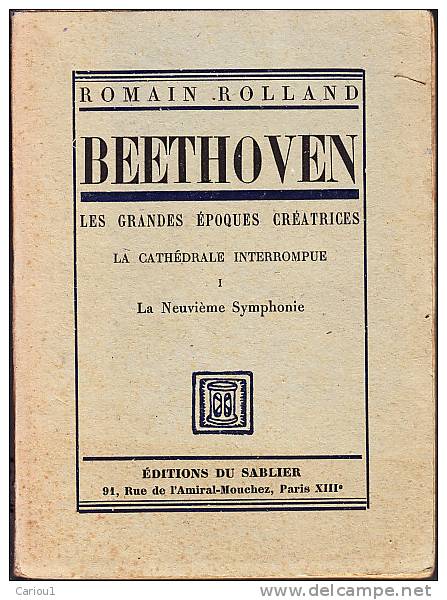
Solomon Volkov: I can answer this with the words of Stravinsky again, who, in the memoirs of his meetings with Romain Rollan, said this: “Rollan immediately conquered me with his charm and intelligence, but his book Beethoven was and remains for which I was the greatest disgust for.”
Stravinsky did not tolerate such a language in the description of music. “Disgust” is the word that he used in relation to a person whom he deeply respected, to whom he sympathized, they were friends. Rollan deeply understood the music of Stravinsky, apparently that, of course, it was very important for Igor Fedorovich, but Stravinsky could not overcome his aversion to such prose. I must say that it is very difficult to read in our time.
Alexander Genis: Alas, I completely agree with you, because it reminds me of the worst places in Belinsky’s articles, which adorned poetry with its elegant metaphors: Lermontov’s “thought brings out, like light in a faceted crystal”. As Shklovsky said, gold cannot be painted in gold. But it was the language of old criticism. That is why the changes that occurred in Russian criticism with the advent of formalists were so important - they found another language to describe the aesthetic phenomena.
As for Romain Rollan, he belongs to a whole galaxy of French writers who were extremely popular in our previous generation. My parents, for example, with them with great difficulty, living in the post -war Ryazan, gathered all French classics. My father’s favorite writer was Anatole France, whom I honestly can’t read, it seems to me that his prose is terrible, all this is very verbose, sentimentally and implausible.
What Rollan wrote about Beethoven, you can write about anything, you can write about a picture of some, you can write about any music, there is nothing specific.
Solomon Volkov: This is such a fog.
Alexander Genis: True, the fog, who spread over the criticism of that time. Romain Rollan, like all that French literature for our generation, disappeared, unlike Proust, which found another way to talk about art.
But tell me, since we started talking on this topic, how do you feel about the description of music from writers?
Solomon Volkov: I, like Stravinsky, experience for the most part disgust when I attacked such things. Because for the most part, writers write about music tastelessly, sentimentally. By the way, I have a letter to me by Maria Veniaminovna Yudina, a wonderful pianist, she responded to my article sent to her anniversary, where I quoted different people, including Romain Rollan. She wrote that yes, all his excellent degrees, all his high parties, they, of course, are sentimental and insanely in our time are outdated. She completely agrees in this sense with Stravinsky. But she appreciated the greatness of Rollan, purity, the nobility of his thoughts.
Alexander Genis: One cannot disagree with this, but this does not help prose. Tell me, but what about the Thomas Mann, for example, a person who dreamed of making literature music. He wrote a lot about music on purpose. In Dr. Faustus, for example, there is a detailed analysis of Beethoven's last sonata.
Solomon Volkov: You know, I cannot read this novel. I know that you are his fan. I know many people who are extremely respected by me who like this novel, but for me this is a completely impossible thing. Something in these scriptures deeply contradicts my ideas about the essence of music, about how the composer composes, about how to perceive it, how to listen. These two things are Thomas Mann and Music, are incompatible for me.
Alexander Genis: But there is no law that would forbid to speak with words about music. Because Beethoven himself wrote in words the music, that is, he wrote down in letters what he wanted to say notes. Yes, and Mahler explained to his wife, however, demanding from her secrecy what exactly he said in this symphony.
Solomon Volkov: I also have a radical opinion on this score, which also causes incredible objections. In particular, in one of our past programs, we talked about Robert Kraft, the literary secretary, friend of Stravinsky. Their aesthetics at some point completely merged, it became symbiosis. Kraft ironized precisely about my introductory article to Shostakovich’s memoirs, in his review of this book, where I talked about what impression was 11 Shostakovich symphony on me, when I first heard, namely, what I heard the shooting of defenseless people. Это - программная музыка, 11 симфония, да, она описывает расстрел, удивляться тут нечему. Не программная музыка тоже имеет всегда обязательно скрытую программу, понятную и внятную только творцу.
Александр Генис: Стравинский бы с вами не согласился.
Соломон Волков: В том-то и дело, что я считаю, что это все-таки некоторого рода снобизм. Стравинский очень далеко зашел в своем отрицании того, что в музыке кроется какой-то эмоциональный смысл, кроме движения форм. Но ведь это ерунда, мы слушаем музыку не для того, чтобы оценить “движение форм”, мы слушаем для того, чтобы оценить эмоциональный отклик, наши эмоции должны встретиться с эмоциями автора и тогда происходит этот катарсис. Isn't it?
Alexander Genis: I don't know. Я не знаю, зачем мы слушаем музыку. Я думаю, что этого не знает никто, потому что музыка загадочна по самой природе своей, именно поэтому разные люди слушают музыку с разными целями. Я далеко не уверен, что ищу в музыке эмоционального разрешения. Например, в музыке Баха меня больше всего интересует не эмоции, а именно формальная ее сторона. Я пытаюсь услышать, как происходит эволюция звуков. И эта красота формы, мне кажется, действует сильнее всего. С другой стороны есть “Битлс”. И я их люблю не меньше именно за спонтанный эмоциональный отклик - до слез. Музыка всегда была и есть загадочна. Она так привлекает писателей и поэтов, ибо музыка является вершиной любого искусства. Как говорил Пушкин, “одной любви музы́ка уступает. Но и любовь — мелодия”.
Соломон, и все же, кто из писателей для вас ближе всего подошел к тому, чтобы описать музыку словами?
Соломон Волков: На меня в свое время сильное впечатление произвела «Крейцерова соната» Толстого. Это не «Крейцерова соната» Бетховена, но это очень сильное описание эмоционального воздействия некоей музыки, о которой мы можем догадываться по этому описанию. Эту музыку как бы сочинил Толстой, она не существует — это не «Крейцерова соната» Бетховена никоим образом, ее нельзя использовать как описание «Крейцеровой сонаты» Бетховена. Он мог поставить на место «Крейцеровой сонаты» любое другое произведение, вообще выдумать его, как это сделал Томас Манн в «Докторе Фаустусе», просто придумать сочинение. Но по силе выражения, по мастерству владения словом в передаче впечатлений от какой-то неведомой нам музыки — это очень сильное произведение. А у вас как, Саша?
Александр Генис: Поразительно, но я приготовил точно такой же ответ: Лев Толстой, но не «Крейцерова соната», а тот эпизод из «Войны и мира», где Пете снится музыка. Мы понимаем, что в Пете Ростове умер великий композитор. Толстой показывает нам, как музыка проникает в его душу, в его мозг. Мы слышим и понимаем самое устройство музыки. Я сравнительно недавно перечитывал «Войну и мир», чему рад, это вообще-то для взрослого человека чтение, и подумал о том, как Толстой хорошо и глубоко понимал музыку, какой это для него был соблазн и какое мучение, потому что музыку он переживал гораздо сильнее, чем любой другой писатель, которого я знаю.
Соломон Волков: Он плакал, когда слушал музыку, именно поэтому он ее...
Александр Генис: ... боялся.
Соломон Волков: Вот правильное слово, а я сперва хотел сказать — не любил. Нет, он ее любил очень, страстно, но он ее боялся. И в этом смысле я проведу параллель может быть неожиданную для вас, два очень похожих человека по реакции на музыку — это Лев Толстой и Ленин. Ленин точно так же, как Толстой, боялся музыки. И боялся он ее именно потому, он об этом сказал откровенно Горькому, Горький запечатлел — это хрестоматийный очерк Горького о Ленине.
Александр Генис: Как же: «Ленин в словах, как рыба в чешуе».
Соломон Волков: Кроме того, там есть кусок о «Аппассионате», который висел на всех лозунгах во всех музыкальных школах, слова Ленина об «Аппассионате». Но по сути это - замечательное наблюдение Горького. Я вообще считаю его очерк о Ленине шедевром. У Горького два литературных шедевра: очерк о Толстом и очерк о Ленине, два высших достижения Горького как писателя. Понятно, почему о Толстом, но о Ленине — это беспрецедентный по выразительности, точности анализа портрет политического деятеля. Я не знаю другой такой сильной зарисовки политического деятеля. Там совершенно ясно из этого горьковского очерка, что Ленин боялся музыки, он признается в том, что, слушая музыку, размякает, а нужно людей не гладить по головкам, а бить по головам. Вот в этом высказывании весь Ленин, ничего другого нам не нужно знать о Ленине. Но это был человек, остро чувствовавший музыку с такой же остротой, с какой ее воспринимал Лев Толстой.
Александр Генис: Но вернемся к Ромену Роллану, и завершая наш разговор, я хочу спросить вас: почему именно Бетховен для французского писателя во время Первой мировой войны, в то время, когда немцы для его соотечественников были варварами, тевтонами, почему именно Бетховен стал знаком культуры того времени?
Соломон Волков: Потому что для Роллана, как мы недавно говорили о дирижере Курте Мазуре, на первом месте была моральная сила музыки. Для Роллана, музыка была высшим выражением человеческой морали, такой, какой она должна быть. Два имени можно назвать, которые в одинаковой степени (для меня, во всяком случае) выражают сущность музыки как высокоморальной идеи, какой-то субстанции, которая нас побуждает становиться лучше — это Бах и это Бетховен.
А сейчас, чтобы проиллюстрировать вашу цитату из Ромена Роллана о 9 симфонии Бетховена, мы поставим именно это самое начало 9 симфонии. Пускай наши слушатели сами для себя решат, правильно описывает Роллан эту музыку или можно было найти какие-то другие слова.
(Music)