
Translated material
So said Castaneda
The first more or less reliable facts about the biography of the writer, mysticism, ethnographer and thinker Carlos Castaneda relate to the time when he writes and publishes his first book. Before that, a complete fog. Who is he, where, how old is he and what is his name actually - all this is under a big question. There are many options for his biography, none of which can claim absolute reliability. The Dictator of the Week studies the main outlines of this myth.
Carlos
Here is the version of Castaneda himself about the origin of Castaneda. Little Carlos was born on Christmas in 1935 in the Brazilian city of San Paulo. His father was seventeen years old, and his mother was fifteen, so that he was immediately given to his grandfather and grandmother who lived on the farm. At the age of six he was again taken by the grown parents, but a year later his mother died of pneumonia, and relatives again took the boy. He was educated at a good school in Buenos Aires, and in adolescence, his uncle was sent to a foster family in Los Angeles for a bad temper, where he successfully graduated from school. Then he tried to become a sculptor at the Milan Academy of Fine Arts, but, realizing that he would never be a great artist, fell into depression, returned to Los Angeles and entered the Faculty of Social Psychology in UCLA there in 1953, he changed his name to Castaneda, and then moved to the anthropology and so carried away that it was so carried away that it was that it The thesis, printed in the printing house of the University of California, has become one of the most popular books of the early seventies.
Another version, based on documents, says that Castaneda really came to America in 1951, but at twenty -six, and not at sixteen, as he himself claims. Immigration records show that Carlos Cesar Aran Castaneda is actually a Peruvian and was born in the ancient Incae City of Kahamarka. His mother actually died when Carlos was twenty -four years old, not six. He studied the sculpture not in Milan, but at the National School of Fine Arts Peru. His classmates describe him as a witty imagination, a master of gambling, a large liability and a good friend. Among the documentary evidence of his life, there are, for example, letters to a cousin, from which it follows that he served in the American army, but was forced to leave the service either because of the injury or due to a nervous breakdown. It is difficult not to recall the comedy “The person who was staring at the goats”, in which the hero of George Clooney teaches American military psychic abilities , and the character of Kevin Spacey adds LSD to the whole platoon.
The first book of Castaneda “The Teaching of Don Juan: the Way of Knowledge of the Yaki Indians” was published in 1968 and on the move became a bestseller. The end of the 60s and the beginning of the 70s were a time of the development of psychedelic culture: chemists tested drugs on hippies, and scientists conducted experiments with the psyche of the military who returned from Vietnam. The tripports-descriptions of visions, hallucinations and sensations accompanying them-met at every step and most often were a private incoherent porridge from the head of the next hippie. Why is the “teaching of Don Juan”, to a large extent, reporting trips experienced by Castaneda suddenly got out of the total mass and became a Bible for hundreds of thousands of young people? The answer is contained in the name itself: psychedelic experiments were part of the system into which Carlos was initiated by a step by step by a dedicated Indian, Don Juan, who not only invented a fairy tale, but outlined a harmonious system that goes deep into the roots deep into the times. Castaneda’s books occupied the niche of the lost esoteric knowledge of the Indians, whom white rationalists with guns and muskets dragged them under the base.
The second book, “separate reality”, was published in 1971, and a year later the third part followed, “Journey to Icstlan”. In addition to commercial success and almost folk glory, “Journey to Ikstlan” brought Castanede the degree of candidate of sciences that senior colleagues from Ucla from UCLA prevented Castanede from engaging in teaching, because, according to him, the audience was stuffed with tin and the audience expected only one thing from him-that he would now crack and give out a revelation (or at least, it should have been shifted. everyone is an assembly point). In addition to everything, one of his colleagues got several pieces from the text of Ikstlan, supplemented them with voice -aheads of his lectures - and sold all this in the Penthouse magazine . Hollywood producers began to actively besiege the Castaneda to film books, but each time he refused and said that he did not want Don Juan to play some Anthony Quinn. In 1973, Castaneda appeared on the cover of Time magazine and gave it to the correspondent the only public interview , after which he disappeared from the public radar and lived a recluse, releasing nine more books. In public, he reappeared only at the end of his life - and then quite a while. The core of his philosophical system is the third and fourth books, “Journey to Icstlan” and “Tales of the Force” - the rest of the books only complement and expand what is said in them.
The biography of Castaneda is fog, since he himself made all conceivable efforts in order to remain a mystery to us. We can judge his life and discoveries only from his books that claim documentary reliability. This very reliability has fallen crazy of a crowd of scientists and exposure lovers: is Don Juan Real, does Castaneda really set out the teachings of the Indians, or is it all synthetic philosophy from everything that he read and heard, and the shamanistic entourage is just an artistic trick? His colleagues from UCLA certainly believed that the books of the mysterious anthropologist describe real and even scientific experiments worthy of their author to be awarded the title of professor. Castaneda explains the documentary and accurate reproduction of the details of Castaneda by all the time he wrote what was happening to the notebook, wrote even during conversations with Don Huan and then carefully processed the notes. While working on the first book, “The teachings of the Don Juan”, Castaneda consulted with his supervisor, and he three times forced him to almost completely rewrite the book. The first time the book was corresponded due to the fact that Castaneda dwelled on his visions that would not be interesting to anyone. For the second time, the professor ridiculed Carlos for attempts to philosophically realize and explain Don Juan and called for impartiality. As a result, the books of Castaneda look like an impartial gonzo report from parallel worlds.
If his books are really documentary, it means that Castaneda is a brilliant anthropologist who excavated and shared an absolutely whole scientific system of the past culture. If this is an artistic fiction - before us is a brilliant writer and an outstanding philosopher, who created an extremely fascinating world and a practical philosophical system.
Don Juan
The acquaintance of Carlos Castaneda with Huan Matus took place in 1960 at a bus stop in Arizona near the Mexican border. The young anthropologist who writes the thesis, came there in search of folk Indian healers who could tell him about the magical properties of plants. The acquaintance of Carlos led him to the old Indian, who had the popular reputation of Bruchu - a local sorcerer, healer and shaman with eccentric behavior and a strange sense of humor. Their acquaintance led to the fact that Castaneda became a student and even a successor to a magical tradition, for thirteen years consciously and unconsciously absorbed knowledge, passed through extremely intense psycho -training, performed many exercises and tasks, reorganized his life, erased his personal history and jumped into the abyss. “Before I met Don Juan, I sharpened pencils for years and experienced a terrible headache every time I was sitting to write something. Don Juan brought to me the realization of how stupid it is. If you want to do something-do it flawlessly, only this is important. ”
In the books of Castaneda, one of the most interesting examples of the “Teacher -Student” relationship in world literature is described. Don Juan is never content with an explanation of words, a simple demonstration is also not enough for him - the lesson is completed only when the student went through the test and received the experience transforming him. The methods of the Indian guru have many similar to Zen masters from Japan: the teacher encounters a student with experience in direct experience. Instead of convincing the student in words, the teacher beats him with a stick on the head, interrupting the infertile thoughts of the student with a clash with pure reality. The authority of Don Juan in the eyes of Carlos, as in the eyes of millions of readers, rests on the fact that the old Indian impeccably owns his body, his emotions, his attention and, on the whole, the whole situation in which he is located. It cannot be taken by surprise or drive into a corner with a question. In almost all disputes, he comes out the winner - and it turns out easily, first of all, because he argues impartially, does not protect anything and owns every topic that is discussed. Castaneda himself against his background seems to be a hot boy. He is offended for every reason, for which Don Juan without fail raises him to laugh, from which he is even more angry. The training took place session: Castaneda came to Sonor's desert to his hermit teacher for several weeks, and then returned to Los Angeles and for months digested the experienced, trying to follow the instructions and live like a warrior.
In the dialogues of the Western materialist and Indian mysticism, two systems of views on the world collided. At the beginning of their acquaintance, Castaneda looks down at the old Indian, intending to be a shock of the foundation of his worldview. He is a young and enlightened scientist, a skeptic and rationalist to the bone brain, faces an uneducated villager, whom he was going to study almost as an experimental rabbit. However, over time, Carlos realizes that his new friend seems to understand more of himself, and, although he does not know anything about Hollywood stars and the latest scientific classifications, can easily manipulate them as he pleases. Don Juan’s teacher is largely reminiscent of the films “Game” by David Fincher or “Revolver” Guy Richie. In all three cases, the main characters are placed in a pre -built labyrinth and forced to go through a series of painful tests so that they can eventually completely renovate their life and get out of all this with a new person.
In the first two books, Carlos does not want to part with his university habits to think rationally and with his swollen praise of ChSV and cannot perceive the teachings of Don Juan. As the last measure, Don Juan gives the student psychedelics in order to cause a crash (or at least staggering) of the established picture of the world in such a changed state of consciousness. From here it took an erroneous opinion that the books of Castanedes were built on a solid foundation of narcotic parishes. Indeed, many fans of quick decisions fell on the battlefield for awareness after reading the first two volumes that made the Castaneda famous. However, as soon as Carlos begins to enter a new military path, the use of psychedelics stops and the hard practice and breaking of the head begins over all the new and new wisdoms of the old Indian. It is also incorrect to compare Castaneda with Timothy Liri, because the Warrior’s path lies in a particularly sober attitude to the world, and not in observing the effects of hallucinogens. By the way, the review of Castaneda, who not only did not complain to drugs, but did not drink (strong) and did not smoke, puts these people on opposite sides of the psychedelic barrier: “These were children who indulgage in incoherent revelations. The magician uses hallucinogens for other reasons than the cakes. And when he gets what he wanted, he stops taking them, ”Carlos said about a meeting with the party of lyrics. There is also a version that Castaneda used a psychedelic lure to make his spiritual teaching a bestseller. One way or another, the first two volumes can be called “protecting against fools”: superficial consciousness, greedy to tangible results without effort, clings to “drug promotion”, like a panacea, while a thoughtful reader, having learned the Don Juan system, will see that this is not at all decisive.
At the peak of the popularity of Kastaneda’s books, residents of Mexico took up active search for the “real Don Juan”. On this wave, American tourists fell into the country, a lot of charlatans appeared who pretend to be the legendary Indian Yaki, the young Mexicans began to organize the congresses of the Don Juan seekers, and local entrepreneurs - rename their eatery and motels into all sorts of Bruho Barbeku and Motel Meskalito. Attempts to find Don Juan suffered a complete failure, which could talk about one of two: or this Indian never existed - or he is a damn tricky old magician.
Since Castaneda himself at the peak of popularity has become a recluse, we are practically unknown about his real life. So it is difficult to judge how well he followed the instructions given to him by his teacher. Unable to judge the teaching of the person who professed him, we, curious and desperate natural scientists, can only check the postulates of Don Juan on himself and share impressions.
WARRIOR
Despite the fact that the teachings of Don Juan can hardly be called an independent philosophical concept in the scientific sense, and to understand it, it is not enough to read a dry vocabulary - nevertheless, it can be generalized by reducing to practical rules and techniques, which, ultimately, have one goal. Awareness. The level of awareness of a person is the amount of information from the external and inner world that can process consciousness at a given particular moment. David Lynch, agitating for expanding consciousness with the help of meditation, leads a wonderful comparison of consciousness with a ball for a sports game. If your consciousness is the size of a golf ball, then your world is the size of a golf ball. When you expand consciousness to the size of a volleyball ball, the world grows with it. And so on. Don Juan's exercises help to gain control of himself and his life, as well as open his eyes, to see many opportunities in the world and learn to read his signs.
1. Become a warrior
A warrior is a key concept for the teachings of Don Juan, quite traditional for some other spiritual teachings. But unlike the Samurai Code, with which the Castaneda is sometimes mistakenly compared, the path of the warrior of Don Juan does not imply the murder of living beings as a way of life or a devoted service to the owner. This concept does not appeal to the usual human war, but to the struggle on the spiritual path with oneself and its internal obstacles. The state of the warrior is complete awakening and unconditional determination. The world for a warrior is a riddle that he tries to solve with interest and trepidation. The path of a warrior is the whole system of Don Juan. In general, it boils down to ensure that at a given time you are completely given to what you are doing; do if I decided; Do not regret the past; Do not stick in the future-and every moment of his life live with the passion and detachment of a person who knows that his life may be about to end.
The teachings of Don Juan are completely tuned to evolutionary growth. The layman living as you have to, perceiving all its vices and disadvantages as a given, and his life as a sentence goes in the direction opposite to the direction chosen by a warrior. It seems to such a person that he is not in power over circumstances, but becomes their victim. Everywhere he is seen injustice, and among other things, all kinds of vicious and weak people do not allow him to live calmly. The warrior, on the contrary, takes an active position in relation to himself and to the world. Who wants to do something is a strategy. Those who do not want to do anything are looking for excuses (or even invents accusations). The Warrior himself is suggested by the way. He perceives any life circumstances, good luck and failures as challenges - that is, how to invite himself. Nobody puts him assessments, no one pays and does not praise: exclusively, on his own and conviction, he lays out one hundred hundred in all his affairs (whether they are large or small).
2. Remember the death
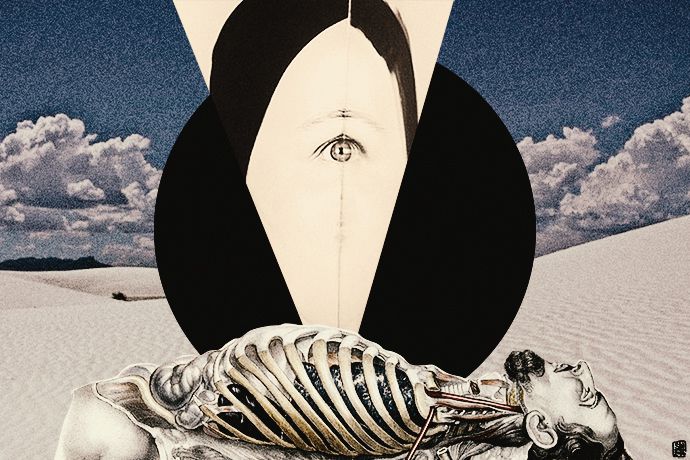
Don Juan says: It usually seems to a person that he will live forever - therefore, he seems to have an unlimited stock of time to make mistakes, change decisions, philosophize and do what, frankly, to give a damn about. However, each person can realize his mortality, understand that everything ends sooner or later, and the time - in the tip, so that you need to do only the most important thing. Awareness of the impossibility of having time plunges you into despair? Do not rush to lower your hands and hang them from the armrests of a cozy sofa. Дон Хуан объясняет, что настоящее утешение смертного не в том, сколько всего он успеет, а в том, насколько безупречно он идёт к своим целям, и в том, какой из этих целей выстраивается путь. Доволен ли ты тем, что делаешь то, что делаешь? Уверен ли ты, что тебе нужно быть именно в этом месте в данный момент? Стоит задуматься, как бы ты жил, если бы тебе осталось жить, например, только три года. Стал бы ты жить так, как живёшь? Стал бы переживать о том, каким покажешься другим? Не сделал бы того, о чём мечтал — но не делал, боясь неудачи?
3. Откажись от чувства собственной важности
Ощущение собственной исключительности заставляет тебя считать, что испытания, выпавшие на твою долю, — сплошные муки; твои грехи достойны особо страшных наказаний в аду; и если уж ты плохой — то уж хуже не бывает. Минимальные достижения тут же раздуваются: кажется, ещё чуть-чуть — и можно уже причисляться к святым (или к не распознанным вовремя гениям). Когда на твою долю выпадают испытания — первым делом начинаешь стенать: «Почему я?» — вместо того, чтобы воспринять их как очередной вызов и не придавать ему особого значения.
Человек, который не знает, что он — всего лишь песчинка в этом мире, ничем не лучше и не хуже других органических и неорганических песчинок (чья жизнь к тому же пройдёт так же быстро, как и любая другая), считает себя очень важной персоной. Вернее, очень уникальной песчинкой! Если я неповторим, то всё, что со мной происходит, — чрезвычайно важно. Все мои переживания и ощущения заслуживают самого пристального внимания, все мои мысли имеют очень большое значение. Чувство собственной важности присутствует во всех нас как детский эгоизм или некое подобие вульгарного солипсизма, составляя то, что можно назвать «эго». Кажется, что от него нельзя избавиться, потому что это и есть — я сам. Но на самом деле это не я — а моё больное место: именно из-за чувства собственной важности меня можно обидеть или оскорбить, а значит, сделать слабым.
4. Избавься от личной истории
«Твой отец знает о тебе всё. Поэтому ты для него — как раскрытая книга. Он знает, кто ты такой, что собой представляешь и чего стоишь. И нет на земле силы, которая смогла бы заставить его изменить своё отношение к тебе. Личная история постоянно нуждается в том, чтобы её сохраняли и обновляли. Поэтому ты рассказываешь своим друзьям и родственникам обо всём, что делаешь. Для воина, у которого нет личной истории, нет необходимости в объяснениях. Его действия не могут никого рассердить или разочаровать, а самое главное — он не связан ничьими мыслями и ожиданиями».
Личная история — это комплекс представлений о себе, своей личности и жизни, который во многом определяет будущие поступки. Личная история — не только твои собственные знания о себе, но и знания других людей. Иногда ожидания окружающих даже в большей степени определяют тебя, чем ты сам. А иногда твои поступки начинает определять вымышленный образ, который ты придумал себе для защиты — но что-то пошло не так. Для того чтобы избавиться от личной истории, человек должен проанализировать её, пересмотрев заново все важные и определяющие его события и развязаться со своими травмами и всем остальным. Воину нечего защищать, потому что он знает, что ничто в жизни ему на самом деле не принадлежит, — поэтому воин никогда не бывает осаждённым и загнанным в угол.
5. Очисть свой остров
Человеческая личность состоит из убеждений, привычек, сильных и слабых сторон, опыта и воспоминаний, из тела и сознания. Дон Хуан призывает провести тотальную инвентаризацию своей личности, до мельчайших деталей проанализировать, из чего ты состоишь, осознать каждую деталь своего быта, своих настроений и своих желаний. Разделив себя на составные элементы, необходимо отбросить всё лишнее, заново собраться и сделать акцент на своих сильных сторонах.
Тонус тела, эмоциональное устройство, уровень энергичности, скорость и живость ума — всё это части личного уравнения, которое в системе Кастанеды называется «тоналем». Работа над тоналем похожа по принципу на работу с телом, но не ограничивается ею. Как бёдра можно накачать приседаниями, так тональ можно развить, выполняя повседневные дела в безупречном состоянии духа, отвечая на вызовы мира, следуя знакам, а также ставя себе цели и неумолимо двигаясь к ним. Тренировка тоналя напоминает закалку воли — а также всё, что мы видели в фильмах про шаолиньских монахов.
6. Останови внутренний диалог
Внутренний диалог — это буквально все мысли, которые ты проговариваешь у себя в голове. Часть внутреннего диалога становится словами, которые ты произносишь вслух. В этой «беседе» происходит расщепление: вместо того чтобы знать, чего хочешь — начинаешь разговаривать (и даже спорить) с самим собой и выяснять, чего же на самом деле хочется. В такой системе избыток мыслей или их ложная направленность не дают уму работать как надо. Большую часть времени ум ходит по проторённым дорожкам и повторяет одни и те же выборы и схемы. А отключение внутреннего диалога позволяет остановиться, оглядеться и точно определить, куда же тебе идти.
Чтобы понять, что такое внутренний диалог, достаточно сконцентрироваться на секундной стрелке часов и постараться ни о чём, кроме стрелки, не думать. Через тридцать секунд может обнаружиться, что мысль ускакала далеко: как я выгляжу со стороны, что думает мой сосед, какие дела нужно сделать, что нужно было «тогда ответить» и так далее. Чтобы эффективно думать, необходимо научаться выключать мыслешум, очищать голову и следить исключительно за тем, на чём концентрируешься.
7. Будь сталкером

Сталкинг — это система управления собой, основанная на предыдущих правилах. Если я трезво понимаю уровень своего ЧСВ, не держусь за свою личную историю и не обременён лишними для моей цели вещами, если я способен находиться в настоящем моменте со всей осознанностью — значит, я могу с полным пониманием своих целей использовать все доступные мне средства — мой ум, моё тело, мои чувства, чтобы выполнять свои задачи с максимальной эффективностью. Легко догадаться, что иногда нужно быть медленным, а иногда тихим и быстрым, иногда стоит быть громким, а иногда стать невидимкой. Сталкер — это человек, который сам способен выбирать, как ему реагировать на внешний мир. А поскольку он изучил себя и знает, чего хочет, никто не может его спровоцировать делать то, чего он делать не собирался. И никаких вот этих «меня заставили», «меня обидели» и прочего индульгирования. Сталкинг — это искусство быть самим собой не в том смысле, в каком популярная психология призывает гордиться всеми своими недостатками и особенностями. Быть собой для воина — означает в данный конкретный момент времени быть в гармонии с миром и своими целями, быть «текучим».
8. Накапливай Силу
Сила — универсальная валюта мира дона Хуана. Она пронизывает весь мир и связывает все вещи. Безупречные поступки прибавляют силы, а неряшливая невоинская жизнь — убавляет. Это не физическая сила (хотя и она тоже), а ощущение возможностей и некоего согласия мира, который будто бы направляет и помогает тебе — а не встречает в штыки. Воин — человек, который понимает силовые особенности мира и умеет обращаться с Силой правильно: он знает, какие поступки и состояния наполнены Силой, — а потому может накапливать её. Джедаи говорят примерно об этой же силе , кстати. Ежедневная жизнь наполнена для воина вызовами. Вызов — это потенциальная возможность увеличить свою силу безупречным поступком. Вокруг очень много возможностей: любое действие, выполненное безупречно, с воинской отрешенностью, не привязанностью к результату и осознанием близкой смерти — это безупречное действие, которое повышает уровень личной силы.
9. Иди путём с сердцем
Дон Хуан говорил, что все наши усилия направлены никуда — потому что мы рано или поздно все умрём. Но у нас есть жизнь, которую нужно прожить. И лучше прожить её безупречно, в ощущении удовлетворенности от того, что ты приложил к этому делу все свои силы и сделал всё, что мог. Жизнь наполнена выборами, они очень разные — но все неизменно приведут к смерти. Поэтому, в сущности, они все одинаковы. За одним исключением: у каждого воина есть свой путь с сердцем — то есть со смыслом. Идти путём с сердцем радостно и легко, даже если он полон трудностей и ведёт никуда. Поэтому воин доверяет сердцу выбирать свой путь — и, сделав выбор, не сходит с него.