
Translated material
"Factory" will show an ecological video exhibition
"Factory" will show an ecological video exhibition
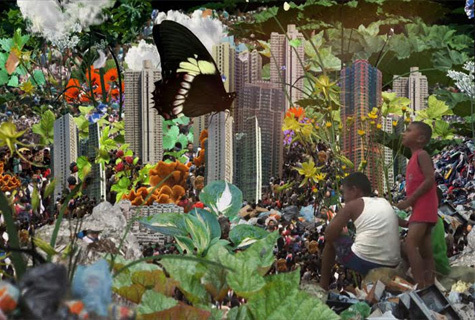 © Gianluca Abbate / Tsti "Factory" Dzhanluka Abbate. Panorama. 2014
From February 15 to March 12 at the Center for Creative Industry “Factory” in Moscow, the Center for Media Art “Now & Then” will hold an exhibition of video artists from Sweden, Russia, Italy, Great Britain and Spain “Ecoscope/Ecoscope”, dedicated to the problems of ecology and the relations of man and nature.
“Ecoscope is an“ tool ”observation of environmental processes, uniting a video camera and the eyes of an artist. - report the organizers of the exhibition. - We live in the same ecosystem, but each artist sets up an “ecoscope” for his art optics, identifying both symptoms of the disease and health indicators. In the focus of the attention of participants in the exhibition, the self -sufficient life of nature and the anthropogenic impact on it, poetic reflection and environmental pollution. ”
Anna-Karin Bruce creates the sound world of forest inhabitants. In the audiovisual work “Jungle, Part II”, relying on the ability to identify herself with various living creatures, the artist combines a collage from natural sounds with onomatopoeic poetic video text, giving the audience the opportunity to create in her imagination the images of animals whose voices they hear.
Alexandra Mitlyanskaya in the video “Babylon 2” shows life in captivity, or, according to the artist, “a chicken female prison of a strict regime”.
Natasha Dunberg in the work of Herbarium dissects a flower, clearly demonstrating how a person in his desire to transform nature can irreparably destroy it.
Lizi Prada removes the waters washing her native country, Spain: the Atlantic Ocean, Biscay Gulf and the Mediterranean Sea. Driveled with electromagnetic waves and music, water remains both the source of inspiration for artists, and one of the main components of our lives (“electronic water”).
Marina Fomenko in the video “Source”, on the example of the construction of a big city, turns to the topic of using water, which we consume so carelessly and uncontrollably.
Dzhanluka Abbate invites a visitor to a policy, an infinitely growing global city-state, which has absorbed the overpopulation of megacities, and their garbage, and the remnants of wildlife (“panorama”).
Lucy Khott scrupulously delves into the essence of urban dust, classifies it by type and habitats, while revealing how unexpectedly the dust can become when gazed in it (“essence of dust 1”).
The curator of the exhibition: Marina Fomenko.
Exhibition participants:
- Dzhanluka Abbate (Italy) - “Panorama” (2014);
- Anna-Karin Bruce (Sweden)-“Jungle, part II” (2011);
- Natasha Dunberg (Sweden) - “Herbarium” (2015);
- Lucy Khiott (Great Britain) - “The essence of dust 1” (2013);
- Alexandra Mitlyanskaya (Russia) - “Babylon 2” (2014);
- Lizi Prada (Spain) - “Electronic Water” (2013);
- Marina Fomenko (Russia) - “Source” (2016).