
Translated material
So that the enemy feels pain
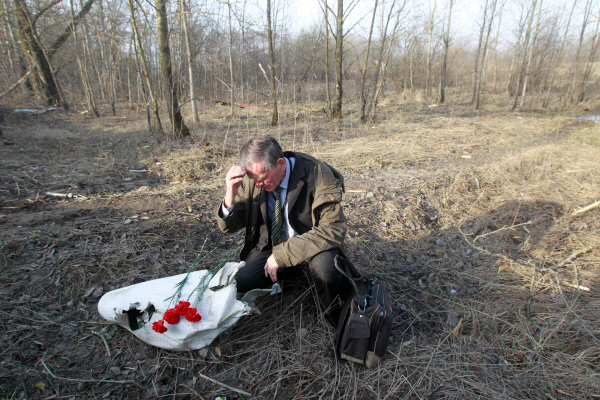
Colta.ru, in collaboration with the journalistic Union N-SST and the Telekritika.ua site, continues the new project “Stereoscope” , the task of which is to give the floor to journalists from Russia, Ukraine and the countries of the European Union, people of different views and representatives of different camps. The Polish journalist Peter Skvochinsky reflects on the issues of handshake and conversation in application to his own country.

I want to talk about a phenomenon that is called “Dziennikarstwo tożsamościoowe” in Polish. There is no such concept in Russian. This can literally be translated as "journalism of identity." We are talking about journalism, about the media that build their identity in coincidence with the identity of large social and political groups, even layers of society. Moreover, such media to a large extent determine this identity.
However, this phenomenon is not limited by the limits of Poland. Today it is characteristic of different Western countries in which political divisions have aggravated to a state of complete gap. In addition to Poland, this happens, for example, in the USA. Political disagreements, the enmity of the Republicans and Democrats reached a degree that was previously unthinkable. As the American David Frum wrote - "We do not argue anymore how to interpret the facts, since we already know largely different facts." The fact is that even the American media - both on the right and the left side - more and more often offer their readers not different comments on the same facts, but simply different facts. The other side does not know them at all, considers them a lie or crazy crazy.
As for Poland - as you know, this country was almost completely divided into two camps, whose representatives experience acute dislike of each other, turning into hatred and contempt. We can call them right and left, or conservatives and liberals, although in Poland these concepts do not mean quite what in other countries.
Since the beginning of the 90s, the division has existed constantly, and it always concerned the media. But for quite some time the situation was softened by the fact that people, the environment and, so to speak, the parties tried not to "burn bridges." Do not insult, do not defy the other side. Here, however, I exaggerated - not the other side as such, but specific people. Just acquaintances.
A certain role was played by the factor of the existence of the BBC journalism model, the idea that journalism should theoretically be neutral, separate the facts from analytics, and the analyst from comments. Of course, everything happened very differently. But the model existed, and for the most part journalists tried to at least pretend that they follow it.
Everything changed in 2007, and finally-in 2010, after the collapse of the aircraft of President Lech Kachinsky in Smolensk. Then the conflict escalated so much that he led to qualitative changes. The situation was incredibly encouraged, and many, including old friends, stopped relationships. This happened even inside the families. The latest presidential and parliamentary campaigns brought a new wave of hostility.
This was especially strongly affected by the media. One friend of mine, a very famous journalist, said about the emerging changes accurately and harshly: "Once we wrote an article with the intention of someone to convince someone, now we write that the enemy would feel pain."
Changes are manifested in different ways.
For example - earlier an intellectual, as a rule, read more than one newspaper. He sought to have several sources of information, including opposite ones, and to draw conclusions on his own.
Now such people are rare. And among journalists too.
To some extent, this is due to the fact that people have much less money. But those who receive information not from traditional media, but only from the Internet are mainly limited to sites that share their political views.
In general, people no longer want to read or watch the media representing opinions with which they do not agree.
But they not only do not want to turn to the media opposing their beliefs. The process goes on. They begin to reject most of the media, adhering to a balanced position, representing, so to speak, a balanced vision of reality.
People want their newspaper to share their emotions. Moreover, so that she actively feeds these emotions.
In the past few years, all attempts to create in Poland media that would seek to find a balance have ended in failure. It turned out that they have nothing to do with anyone, that they have a very small number of potential buyers.
On the contrary, projects are successfully implemented, focused on strictly defined target groups that can express and strengthen the emotions of these groups. Moreover, it is not only about new projects: the media that has existed for a long time have also changed.
There are situations that would be very difficult to imagine a few years ago. For example, if a large intellectual newspaper considers itself obligated to write about any accusations against a politician close to her, she calls these accusations “false”-and does not even try to explain what their falsity is.
Polish intellectual exchange no longer exists. Instead, we observe two intellectual exchange. For example, two years ago in Poland two large intellectual discussions were held, each of them is important for the whole nation. These were historical discussions. One is about how Poland was the country of the gentry, landlords, and how the Polish national character defined, how the Poles felt and felt, whose ancestors did not belong to the gentry. The second discussion - whether the Polish government was correctly received in 1939, perhaps it was better to follow Hitler, since the Western allies did not help Poland, betrayed and sold it. Only the most important articles dedicated to each of these topics were published, in my opinion, more than thirty.
As you guess, the first discussion was conducted in the left -time, and the second in the right newspapers. But this is not the point - it is natural that certain topics captivate people of a certain type. The fact is that even journalists, even intellectuals working in the press, did not know - yes, they simply did not know! - That in the media of the opposite side there is such a grandiose discussion.
We are all more and more existed not in one, but in two Polands. And we understand each other less and less. How can this end - I, of course, do not know. But this certainly does not promise anything good.
Now, after the parliamentary elections, the situation has aggravated even more. And it should be noted that the media related to opposite political camps within their camps, as a rule, occupy the most radical position. Some journalists - however, so far not in the traditional press, but on Facebook and Twitter - they began to use abnormitative vocabulary in relation to each other - which, of course, did not exist before.
It is very difficult to answer the question where in today's Poland you can find some foci, centers of the state, and not obviously and frankly party thought. But in any case, they, unfortunately, are last to look for them among the media.
Other materials of the project can be read here .