
Translated material
The end of the era of composers
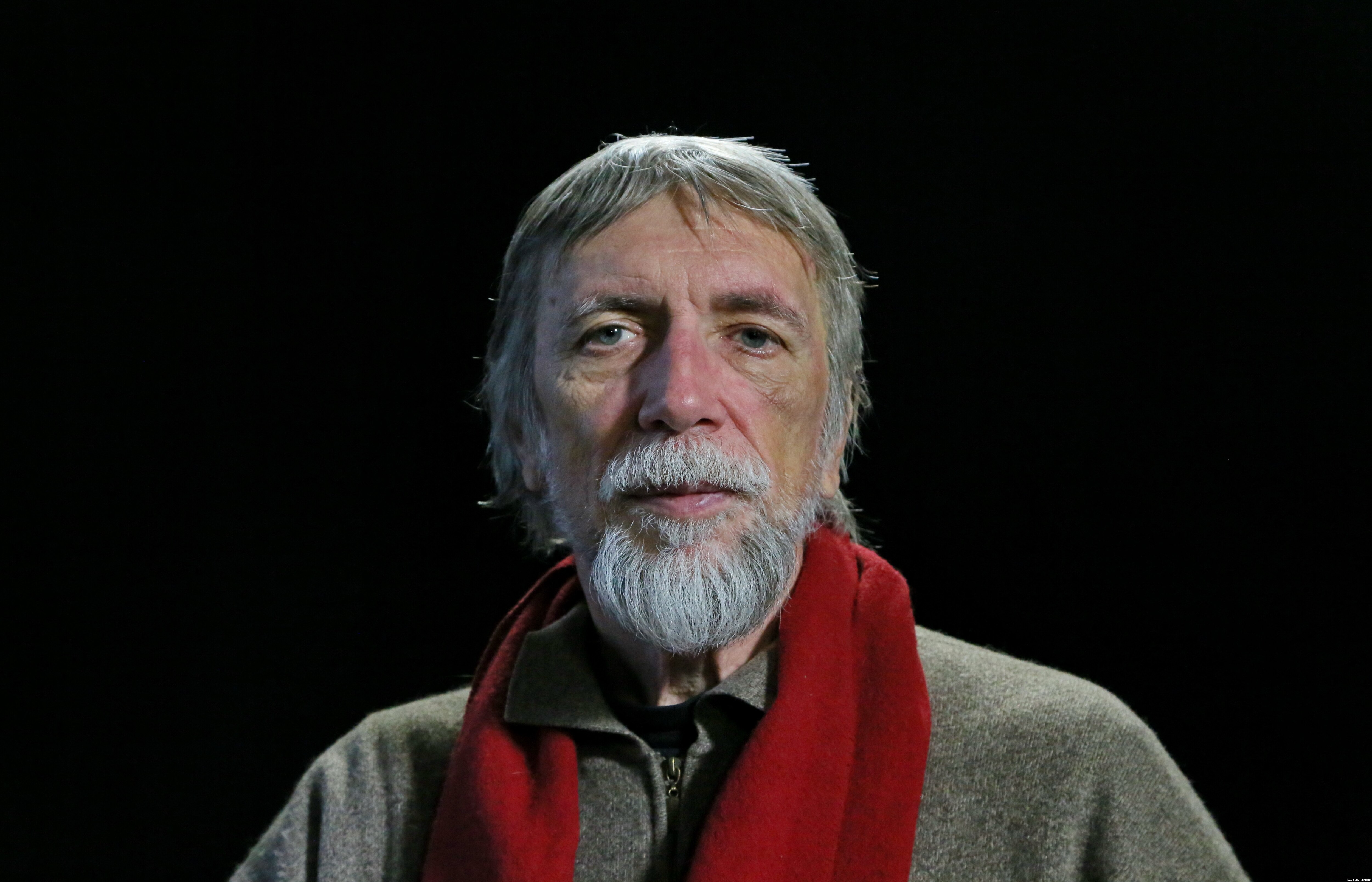
Guest Radio Liberty - composer Vladimir Martynov
Sergey Medvedev: Today, perhaps, we have not so much a topic as a person who thinks and reflects on the future. There is such a category of people called visionaries. It seems to me that one of these visioners is a person who has been reflecting on culture for not the first decade, about the human civilization of the future. This is composer Vladimir Martynov .
I want to start with your book, which is almost 15 years old - "The end of the time of composers." She went out in 2002. Since then, the composers who were considered the pillars of modern music have gone. The last literally a couple of weeks ago, Pierre Boulez died, a man who actually personified the twentieth century in music. Your prophecy comes true - do not come to their place by personalities of the same scale?
Vladimir Martynov: This is not a prophecy, but simply a statement. Here you just need to look impartially at things. This idea is very well illustrated by Boulez himself, who ceased to be a composer, became a performer. His ally in the workshop, by the greatness of Dierrd Ligeti, spoke back in the early 80s, that he feels how this crisis was selected to their generation, and in the 80s he erupted.
These are not my thoughts, not my prophecy-this is said by all people who want to look in the eyes of the truth in more or less. There are admiring people who are engaged in their business, they like to write music, like to earn money - so far all this is, this flywheel is spinning. There are festivals, publishers, there is such a party-it creates the impression of a life, but this life-as in childhood, a spider-mosino, which had their legs, and these legs, torn from the spider, twitched.
VTsIOM recognized the largest musicians of Russia in 2015 by Philip Kirkorov and Stas Mikhailov
Sergey Medvedev: There is no spider in a sense? There is no music, maybe wider-culture as some large centralized narrative?
Vladimir Martynov: Do not just talk about music. When I'm talking about the end of the composers, I am talking about academic composer music. But the music does not come down only to this: there is rock, there is a pop - a lot of everything.
Sergey Medvedev: VTsIOM recognized the largest musicians of Russia in 2015 by Philip Kirkorov and Stas Mikhailov.
Vladimir Martynov: But this is also music. Let us leave our sad deeds-the same thing happens in pop music. Music King Michael Jackson - Who is equal to him now? Or the same Madonna - at least by the number of disks sold ...
Sergey Medvedev: literally on the same days, David Bowie died with Boulez. In fact, the era ends. It is not clear who to close these gaps and is it necessary to close them at all?
Vladimir Martynov: If life continues, then there will be some new currents. Now there are whole new digital directions, things that seem extremely marginal, not going into any comparison ... But if it is strictly sorted out, it was time (for example, XIV-XV centuries), when composer music was also quite marginal because there was a Gregorian chorary , there was a Byzantine osmoting .
Sergey Medvedev: You are talking about the beginnings of modern composer music as the era of our time, the New Age. Who was the first composer in its purest form?
Vladimir Martynov: It is very simple to call the first composer - this is the person from whom reliable composer texts remained.
Sergey Medvedev: Guido from Scar ?
The first composer is very simple - this is the person from whom reliable composer texts remained
Vladimir Martynov: Guido from Scar - rather, theorist, he invented a musical record. And the person who left accurate composer texts is Purotin the Great , this is a nototre dame school. Perotin is the first composer in world history.
Sergey Medvedev: Then a 700-year period of musical notation and the cult of the composer as a creator of his own universe appear.
Vladimir Martynov: Not everything is so simple here too. The 700th anniversary at first was accompanied, first of all, by the struggle against oral tradition. There was a very strong oral tradition: minstrels, trumpeters. By the XVII century, when the notes was introduced, this tradition was almost completely depressed, and it was manifested by great composers, such as Mozart and Beethoven, only in cadents when they improvised. It should be noted that Mozart and Beethoven not only played some works, they were still improvised. It was a mandatory program-not only to fulfill something, but also to improvise. But still, it was somewhat pushed into the background.
In the twentieth century, an inevitable thing happened - the invention of recording. She is the level of a person who writes the text with a person who does not write the text. Suppose some kind of illiterate jazzman from New Orleans-he does not even know what a musical letter is, and the record is already coming out.
Ultimately, the person who was closer to the microphone received more rights and opportunities. At the end of the twentieth century, the composer was pushed into the background by the performer. Suppose if you take the Grammy Award, then the academic composer in itself can never get it - only if his things are performed by a wonderful, "cool" performer. That is, in any case, the composer was already pushed back by these jazz-rock people, and, on the other hand, by the performers of classical academic music.
Sergey Medvedev: What is then the fate of academic music, serious composer music in this new universe? Is it generally about the death of serious music in connection with the appearance of recording?
In the twentieth century, an inevitable thing happened - the invention of recording. She is the level of a person writing a text with a person who does not write text
Vladimir Martynov: The created great music will not go anywhere. The new one exists in some ghetto: there are festivals, there are publishers who publish this, there is some small layer of the public that is engaged in this.
Sergey Medvedev: It was not before. Beethoven’s new things, Brahms discussed the whole Vienna. Even in the USSR - Richter's concerts ...
Vladimir Martynov: Not just Richter’s concerts ... I remember the collection of dissident doctors of the physical and mathematical sciences, when everyone with shaking hands read the “chronicles”, and then Symphonies of Shostakovich were placed with the same shaking hands. These symphonies, especially the 13th, 14th, were an event! There are no musical works that would give rise to such events.
Sergey Medvedev: In fact, the music turns out to be driven into the ghetto. Can it develop further in this ghetto? Previously, she was not the main thing, but still a branch on a living culture tree. Let us recall the same queues for the Tchaikovsky contest, the horse police ... By the way, interest was more at the last competition of Tchaikovsky at the expense of television, "Medici TV", many watched it. Can academic music continue to develop in this ghetthoid state?

Vladimir Martynov: What does it mean - to "develop", what exactly can develop there? If we are talking about classical music, then, again, I must say about performing. Here, the performance in some areas has grown in an amazing way-for example, in the field of baroque music. We can say that now a new discovery of Handel, which is becoming almost more than Bach, has already occurred. When I studied, no one could sing like that, there were no soloists.
Sergey Medvedev: That is, there was a revolution of authenticism .
Vladimir Martynov: The revolution of authenticism brought such fruits that with its help an amazing layer of baroque music has opened.
Sergey Medvedev: Maybe classical, academic music in this sense takes a completely special trajectory from other types of culture, and such an autistic, sealed body of texts is created, where we constantly and again perform again, improve our performance, reading the same texts?
Ultimately, the person who turned out to be closer to the microphone received more rights and opportunities
Vladimir Martynov: Yes, you are absolutely right. But still, in the end, this is a museum fate. As we come to the National Gallery of London, just the same communication with the great classical music - Schubert, Wagner and so on. As for modern music, it seems to me that, rather, the figure of a postjazy or built -in person is important here, electronics, something associated with these things and necessarily with a performance , probably. After all, now, the further, the more music requires additional visual actions.
Sergey Medvedev: Probably, this is a postmodern in its purest form. A year or two ago, music on the water was performed on the patriarchal ponds. The composer Pavel Karmanov has a “trout” essay, where the cellist catches trout from the patriarchal pond and fries it during execution.
Vladimir Martynov: Even during the most academic concerts in the Great Hall of the Conservatory, just the most ordinary stencil concerts and the body is highlighted by the red-blue. This is not bad and not good, we don’t blame now, you just need to state that the visual moment requires more and more space for yourself.
Sergey Medvedev: How do you consider yourself to be this department? Are you more than a composer too?
Jury, normal composers no longer consider me for a person
Vladimir Martynov: Here you can’t say more or less. Jurisdiction, normal composers no longer consider me for a person. Indeed, this is no longer composer music, the fucking one and the same. Indeed, it turns out that for me any composer equipment seems to be falsity. You can’t do something artificial, you need to do something so primitive, archaic that artificiality is allowed there only in the most minimal quantities.
My favorite composers are the most skillful, say, Weberne , the same bang - who did completely fantastic things. Now, it seems to me, the time of these things has passed, they do not read, do not carry the meaning that they carried before. Those people who use these things enjoy this needlework. It seems to me that the time is such that this needlework does not give rise to those meanings that have generated earlier.
Sergey Medvedev: I am now thinking about those of your works over the past 20 years that are familiar to the wide listener: say, music for the movie "Island" by Pavel Lungin. What you do in the field of minimalism is a possible direction for the evolution of modern academic music? Does it correspond to the modern concept of time more?
Vladimir Martynov: We must clarify that there are two minimalism. On the one hand, minimalism is the direction of modern musical art. You can even say where it originated - in America the first minimalistic work was created in 1964. In the 1970s, this began to extend to Europe.
But there is a different, sown minimalism, minimalism as a natural state of music. After all, the whole musical archaic is actually minimalism, all archaic folklore is minimalism. Mantras of Buddhist monks are minimalism. Grigian is minimalism. Minimalism is a natural state of music. We can say that all the composer music, then emerging from it, is a painful deviation, such a growth.
Sergey Medvedev: Such an imposed event in music.
It is necessary to do something so primitive, archaic that artificiality there is allowed only in the most minimal quantities
Vladimir Martynov: By the way, it is interesting that all the American fathers-hostiles: Steve Reich and Philip Glass , studied with traditional people. Steve Reich generally studied at Indonesia, and studied a drum game in Nigeria. My ideas of minimalism also came from communication with archaic folklore of the Smolensk, Bryansk regions. Minimalism, if we take it in a broader sense, is a return to the natural state, which the music was devoid of thanks to Western European expansion.
Sergey Medvedev: Naturally-if you take primitive song syncretism as the reproduction of some ritual.
Vladimir Martynov: In fact, everything somehow strives for this. Who just does not sing in world music - and Cubans, and Berbers, and Evenki, and Latino American. This layer of archaic folklore is raised. Many sensitive composers strive for some ritual. Any minimalism in its purest is not so much a concert as a ritual one. Of course, there can be no talk of a purely ritual thing, because it is a concert, but the desire for rituality is laid in almost all minimalists, and not only in people as Pyart . He probably shows his minimalism, however, he has this rituality, this minimalistic simplicity.
Sergey Medvedev: And where is the line between the rituality of high minimalist music and commercial music, which sounds in elevators, on escalators? This is also a kind of rituals of modern society, shopping rituals.
Vladimir Martynov: Everything can sound in such places. There sounds a little redone Beethoven, and Mozart - everything that is not very annoying.
Sergey Medvedev: How do you feel about the fact that music from the event turns into a background, into the wallpaper of human life?
Who just does not sing in world music - and Cubans, and Berbers, and Evenki, and Latino American
Vladimir Martynov: We must state that this has already happened: the music has turned into wallpaper. Those people who go in headphones - in fact, this turns out the same. There is no concentrated, targeted listening, when a person sits in a hall where he cannot rustle a program, God forbid, cough. This attitude to music is also quite young, it is 200-300 years old, this is a concert practice.
In general, if we take a folklore or wider baroque practice, then we lived to the music, it is not necessary to listen carefully in the concert hall. Handel's water music is just a walking. If we take all the great religious polyphonic music, then this should never be performed in concerts, this is music purely for worship. That is, this is all, from our point of view, applied music.
So to some extent, now before our eyes there is a change in the function of music. A concentrated concert hearing, not even a concert, but what Glenn Guld dreamed of (he believed that the recording should be listened) is something celled, rare now, but it is. Of course, now the music is going like a background, like wallpaper. You do not have to be horrified: there is some kind of functional restructuring.
Sergey Medvedev: The return of music to its primary state, in which it existed for millennia before the era of the Great Modern. If you try to project it into the future, what script can be here? On the one hand, we have Shakespeare's “further - silence”, on the other, there is a well -known book by Norman Lebrecht “Further - noise”. What awaits us if you try to look at the XXI century - how will music exist?
This has already happened: the music has turned into wallpaper
Vladimir Martynov: This is a strange question for me. I had a last book called "2013". It says that the end of the world has already occurred, there is no talk of any person now. If we are talking about music, we must talk about a person. There is practically no person in the form in which he existed and produced such music.
Sergey Medvedev: In what sense?
Vladimir Martynov: In the direct. It seems to me that there is a transition to the next evolutionary step: there was a homo sapiens, a person speaking, and now a new retreat of the evolutionary step is taking place, and a person switches to a completely different form. In this book I write: what is the interest of the legitimization of same -sex marriages? The fact that the monopoly of a man and a woman stops, a person can reproduce the family not in such sexually, but in some completely different. Please - this is really very serious. This is not quite the person who was half a century ago. These are so fundamental changes that, as they say, having removed their heads, they do not cry through the hair. The person will be different. What he will be in this case, such a music will be.
Sergey Medvedev: New Anthropology - a person goes into virtual reality of existence. Then the music also goes into some kind of cloudy state.
The person will be different. How he will be in this case, such will be the music
Vladimir Martynov: That's right, she is already moving into this area. Music carriers are indicative. CDs are not relevant now. The music carrier itself is all the time: before there were vinyl records, then - tape tape. It is naive to think that this does not affect the nature of the music itself. Here, too, digital refinement occurs.
Sergey Medvedev: Reinforcement of what is sound, meaning?
Vladimir Martynov: Reinforcement of this substance. Everything becomes more discharged, discharges. Now scattering is clearly taking place. Will there be those areas of gravitation or areas of new condensation, around which these new semantic clouds will begin to formulate and form? Now it is very difficult to say.
Sergey Medvedev: Do you have the intention to write pure music in your plans, like music?
Владимир Мартынов: Да, потому что это связано с определенными заказами. Меня сейчас все-таки больше интересует писание книг, чем музыки.
Сергей Медведев: Словокомпозиция, словосочинение – это, в конце концов, в современном, постсовременном, поставангардистском состоянии – не только сочинение музыки, но и сочинение смыслов, сочинение текстов. Там что в этом плане вы подтверждаете ваше звание композитора как человека, сочиняющего смыслы.