
Translated material
"Love painting, poets"
The main art exhibitions of 2016
By the coming year, most of the exhibition sites were prepared very thoroughly. But all museums have different opportunities, like different ambitions. We selected those expositions that sorry to miss - because such an exhibition with such a meeting will never be repeated
Fedor Rokotov: faces of the Catherine era
February 19 - April 24
The Tretyakovka is pleasing: it is here that the most important exhibitions of the season will be held. Important in the sense that they are long-awaited and able to give rise to the same enthusiastic excitement that Valentin Serov’s exhibition, which broke all the records of attendance in 2015. The exhibition year begins in the Tretyakov Gallery with Fedor Rokotov (1735–1808), one of the great Russian portraitists of the era of Catherine II. Having achieved great glory already in his youth, he was then forgotten, supplanted from the consciousness of contemporaries by portraiters of subsequent generations, for example, Borovikovsky. The famous poem of Zabolotsky “Love painting, poets ...” is dedicated to Rokotov, his portrait of Alexandra Petrovna Struiskaya, the smartest socialite of those years, who came to marry the Penza landowner at the age of 14.
You remember how from the former darkness,
Barely wrapped in atlas,
From the portrait of Rokotov again
Was the jet at us?
Her eyes are like two fogs,
Half -smile, half -warden,
Her eyes are like two deceptions
Close -covered failures.
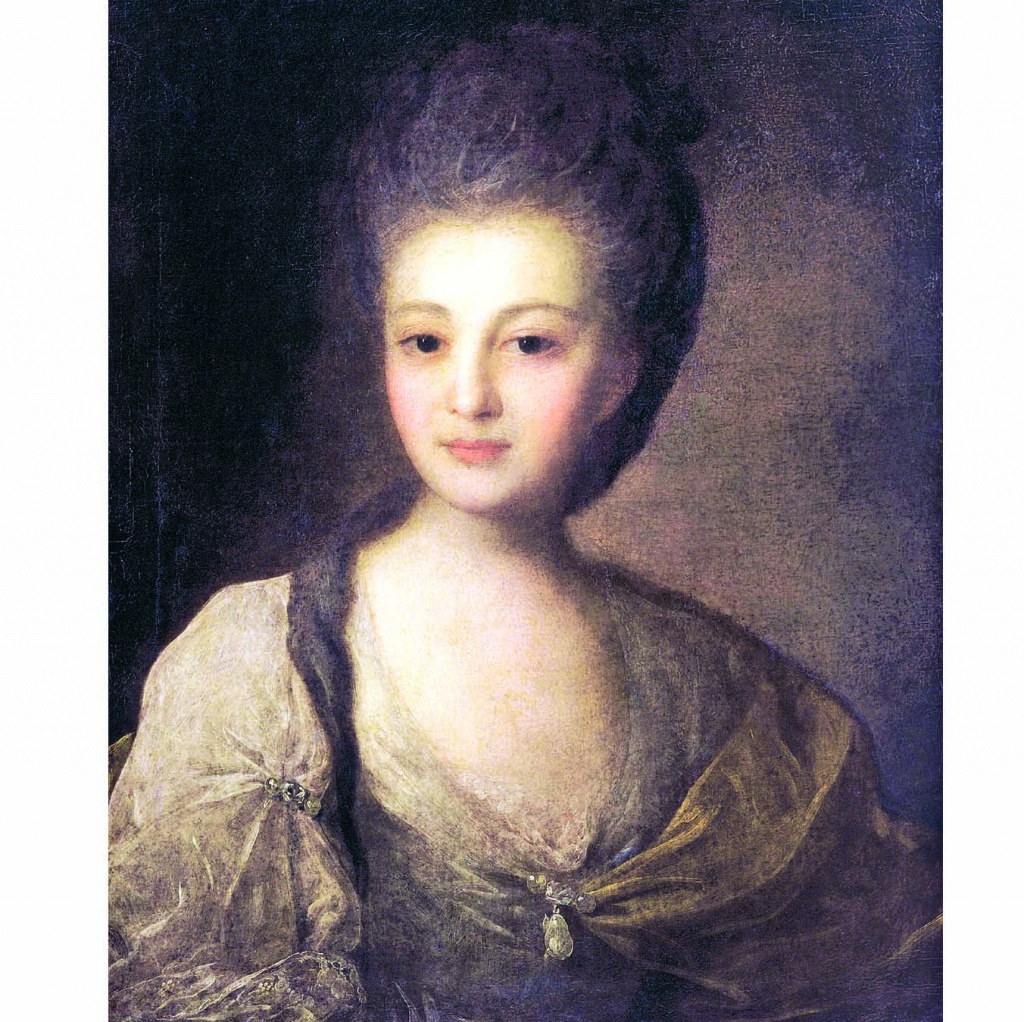
F. Rokotov, Portrait of A.P. Zruyskaya, State Tretyakov Gallery
These lines, written in 1953, pulled out Rokotov from the captivity of oblivion and introduced the “celestials” into the pantheon. Born within the boundaries of present -day Moscow in a peasant family, the artist, as his current biographers found out, was an illegitimate son of one of the nobles, due to which he received good education and patronage of important persons of the state. Suffice it to say that at the age of 28 he draws a coronation portrait of the Empress, who was so liked by Catherine that she ordered her face from the originals Rokotov. The portrait gallery created by the artist covers almost all the significant faces of the era. Later, Rokotov becomes Masons, moves to Moscow and ... dies almost in obscurity. Even his grave was not preserved, but the artist’s house on the old Basmann Street was preserved. In the Tretyakov Gallery, portraits of Rokotov will be shown surrounded by species of the capital and noble estates.
Secrets of old paintings
May 27 - August 21
A completely unique exhibition will open in the Tretyakov Gallery in the summer. This is a story about 16 picturesque masterpieces from the collection of the museum. For the first time, visitors to the museum will go beyond the exposition and get acquainted with the museum process itself - the preservation and restoration of painting. Some paintings can be seen from both the front and on the back. The gallery will present materials united around a particular canvas: sketches and sketches, information about prototypes and heroes of the work. The restoration process was meticulously filmed, and the audience today will be able to follow how the plot of the picture sometimes even changed during the work of experts. Films and macro photography, radiography of work will be shown. According to the curator of the exhibition Svetlana Usacheva, the museum employees worked on the attribution of many paintings for decades, hoaxes have been exposed repeatedly, and unknown masterpieces were discovered under some canvases. Among the paintings presented at the exhibition will be the works of Kiprensky, Pukirev, Perova, Repin, Korovin, Brodsky.
Ninth shaft
July 29 - November 20
This year, the Tretyakov Gallery turns 160 years old. By the anniversary date, the museum makes an exhibition of photographs of the creator of the collection of Pavel Tretyakov (he bought the first picture at 24 years old), which captures his trips to the countries of the Middle East and Europe: in total, he visited 20 countries and 250 cities with his family. Well, the main anniversary exhibition of the gallery this year will be the retrospective of Ivan Aivazovsky, dedicated to the 200th anniversary of the artist's birth. Tretyakov was not a big fan of Aivazovsky, so he especially meticulously selected his paintings for his gallery, stopping at rare non -banal plots. The exhibition will take the whole space on the Crimean shaft. In total, 100 paintings by Aivazovsky and 50 graphic works will be presented. It is believed that in his life Aivazovsky wrote six thousand paintings, although there are almost an order of magnitude more in the collections: after all, under the leadership of the master, a whole artel worked, replicated his works, which he then masterfully corrected several quick and accurate strokes and decorated with his signature.
Dreams of Leon Bakst
June - September
He was called “magical” and “fabulous”, he conquered Paris with his theatrical costumes, forced women to sensively sigh and jealous of men. The exhibition of Leo (Leon) Bakst in honor of his 150th anniversary in the Plane named after A.S. Pushkin is one of the most important museum projects for 2016. Already one of its name invites us to the world of fairy tales - “Leo Bakst. Creator of dreams. Visions of the emerald, dreams of silver. " “We make an exhibition, showing the best that Bakst did,” said the director of the museum Marina Loshak. Probably the best of Bakst is primarily the period of his work in the association and the magazine “The World of Arts”, the initiator of the creation of which he was. Bakst brought almost eastern addiction to the pattern and bright colors, sang unusual architectural prospects and sensual drapery, hiding swiftly, volost women. Bakst becomes a leading artist of “Russian seasons” and “Russian ballet” by Sergei Diaghilev, creates the scenery and costumes for Cleopatra (1909), Scheheerezade and Carnaval (1910), Narcissus (1911), Daphnis and Chloe (1912) and other stories that struck the audience of fairy tale luxury, “1912). sophistication of costumes, bold combinations of colors.
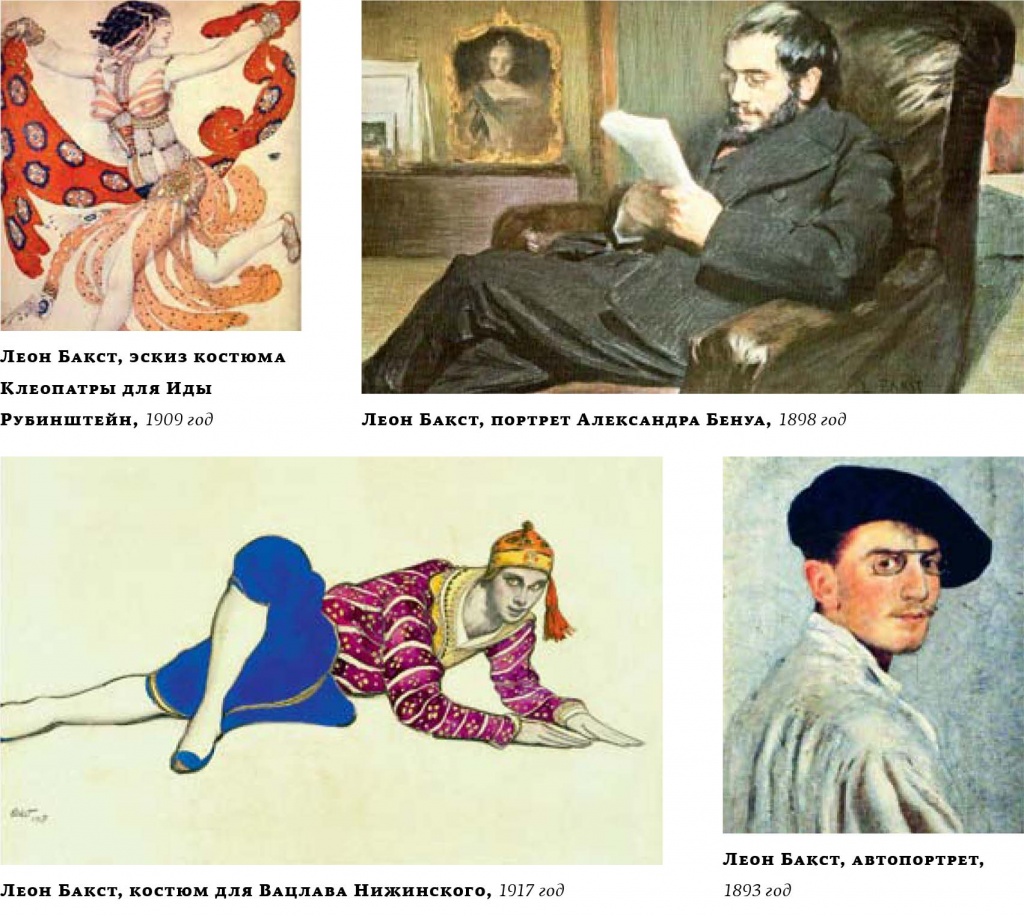
In 1910, the artist settled in Paris. Since then, he only came to St. Petersburg a few times: in 1909, the government was denied a residence, and as a Jew, he had to observe a feature of sedentary. Only an academician of the Imperial Academy of Arts in May 1914 gave him the right to freely move around the country, but the artist did not use this right, remaining in France. There he worked with Diaghilev for four more years, after which he left for America, where he became very popular. At the peak of Glory, Bakst returns to Paris, but while working on the scenery for the ballet troupe of Ida Rubinstein, a nervous seizure occurred with him, as a result of which the edema of the lungs began. Bakst died three days before the new 1925.
Vatican masterpieces
October 31, 2016 - January 15, 2017
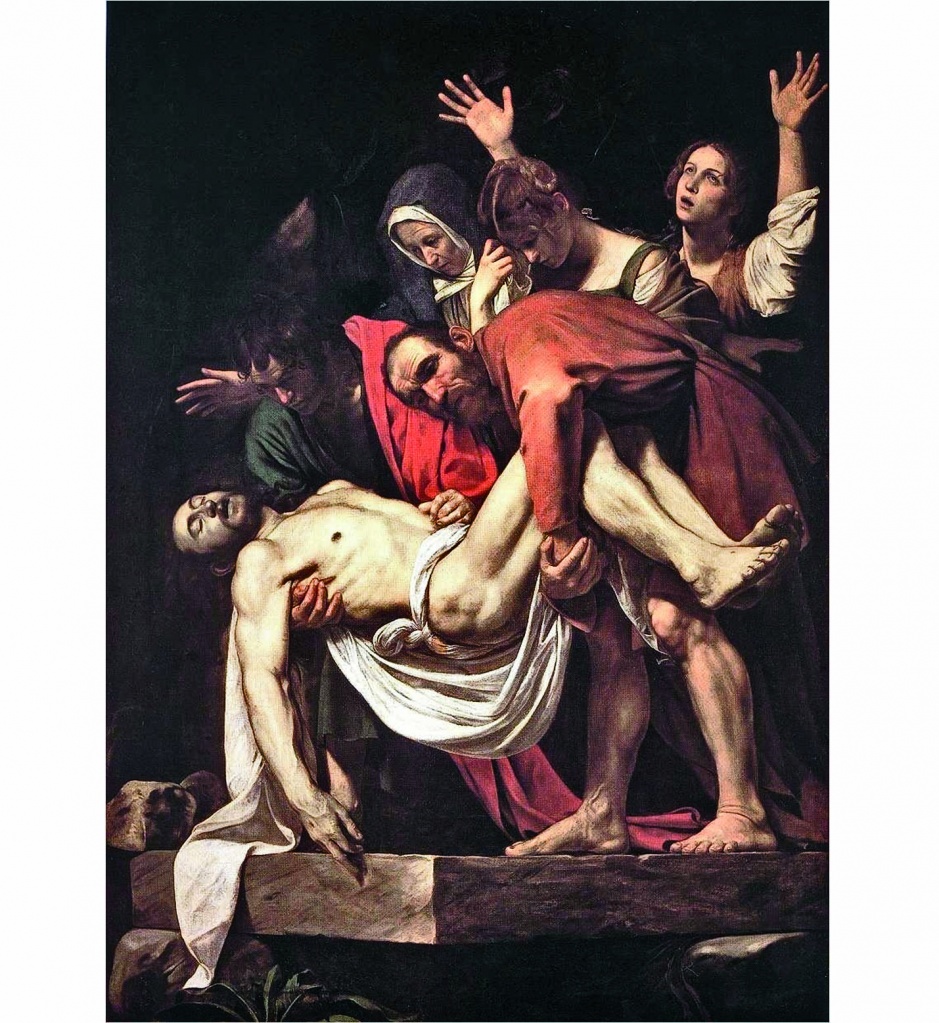
Caravaggio, position in the coffin, 1602-1604
And another exhibition that will become an event not only for Russia, but also for Europe. At the initiative of the Pope Francis and Vladimir Putin, the Vatican museums and the Tretyakov Gallery will be exchanged by two exhibitions. For the first time in Russia, the masterpieces of the Vatican will be shown, which are extremely rarely left by the country and are stored in the building of the Vatican Pinakotek specially built for them. Actually, in such an amount they left the Vatican only once, when in 1797 Napoleon ordered the Vatican’s treasures to Paris to transport all the treasures of the Vatican. One of those who began to collect this picturesque collection was Pope Pius, he was so excited that he died two years after the “robbery”, and only in 1815 it was decided to return the picture to the place at the Vienna Congress. In the Tretyakov Gallery, the masterpieces of Rafael, Caravaggio, Giovanni Bellinini, Gverchino, Pietro Perugino, Guido Reni, Nicolas Poussen will show. For the “transformation” of Raphael, a separate hall will be allocated. In turn, the Vatican will show paintings by Russian artists dedicated to gospel and biblical plots: Kramskoy, Perov, Vrubel, Goncharova.
Eisenstein from close range
November 14, 2016 - February 5, 2017
Finally, in Moscow this year there will be a large exhibition dedicated to Sergey Eisenstein. One of the unconditional Russian geniuses remained for a long time on the periphery of the exhibition space. So the multimedia art museum was able to become the first to represent the director in full. This exhibition was postponed for 2016, although it was planned in 2015-the organizers did not meet the deadlines. The entire space of the museum will be given to Eisenstein’s drawings, graphic teditions of films, photographs, including those taken in Mexico during the filming of the picture “Long live Mexico!” (1932). This is a tragic story: due to a lack of funding and the requirements of the Soviet government, to urgently return home (feared that Eisenstein could forever stay in Hollywood) The film was not completed. The captured material remained for the manure in Hollywood, but was not returned, although the contract provided for the free transfer of the film for rental in the USSR. At different times, out of 80 thousand meters shot by Eisenstein of the material, two full -length tapes were mounted - “Storm over Mexico” and “Time in the Sun”. Grigory Aleksandrov was already finishing the tape in 1979, making another version of the purchased material from the purchased material. There are still talking about the degree of frankness that the director suggested in his revolutionary tape at that time. The exhibition will present not only the frames of this and other tapes, but also the works of world art, which, according to Eisenstein, influenced his work. There is one nuance: Eisenstein is the author of rather frank erotic cartoons, which have already repeatedly and successfully reproduced and showed abroad. Whether they will enter the exposition of mamm is unknown.
Close Africa
May - September
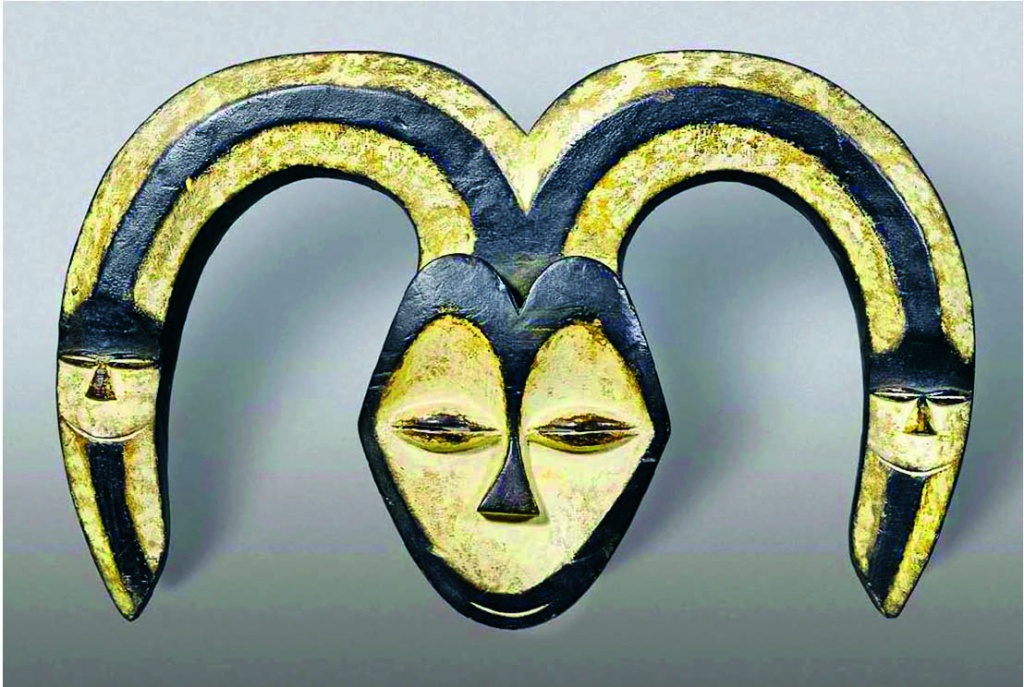
Mask Antelope or Baran Ekuk for initiations and ceremonies of the end of mourning, Kwel, Gabon, Congo. Tree. XX century.
The exhibition "Congo River"-in cooperation with the Paris Museum on the embankment of Branly Pushkin Museum puts 140 works of African decorative art, pre-Columbian America and Oceania. It was this art that inhaled the new energy into the work of Pablo Picasso, Andre Dern, Henri Matisse. Picasso said: “I experienced the most powerful artistic experiences when I suddenly revealed the amazing beauty of sculptures created by the nameless artists of Africa ...” At the beginning of the twentieth century, the Fovists - Vamink, Deren, Matisse - began to collect African sculpture, Picasso and Picassoon soon joined them. His famous "Avignonian girls" are written under the influence of these works. It was Tribal Art (the term that determines this art) that influenced the emergence of protocubism and cubism. Thanks to the glow, we will be able to combine in a single visual series masterpieces of painting of the twentieth century and what inspired artists to create them. By the way, one of the first books on this subject was the study of “The Art of Negroes”, written by Russian artist V. Matvey (Vladimir Markov) in 1914 and released posthumously in 1919. Under the influence of Markov, Sergei Schukin bought those African sculptures, as well as Picasso and Matisse paintings, which will be shown in the Plane.
Photo: TretyakovGallery.ru, Relygo.ru, Artchive.ru, Wikiart.org, Buro247.ru, Wikipedia.org, Muzei-mira.com