
Translated material
Alternative era
The oil market is in a coma: exporting countries and investors carry multimillion-dollar losses. But those who have invested in pure energy, on the contrary, feel excellent. Who and how shares the energy market - versed The New Times
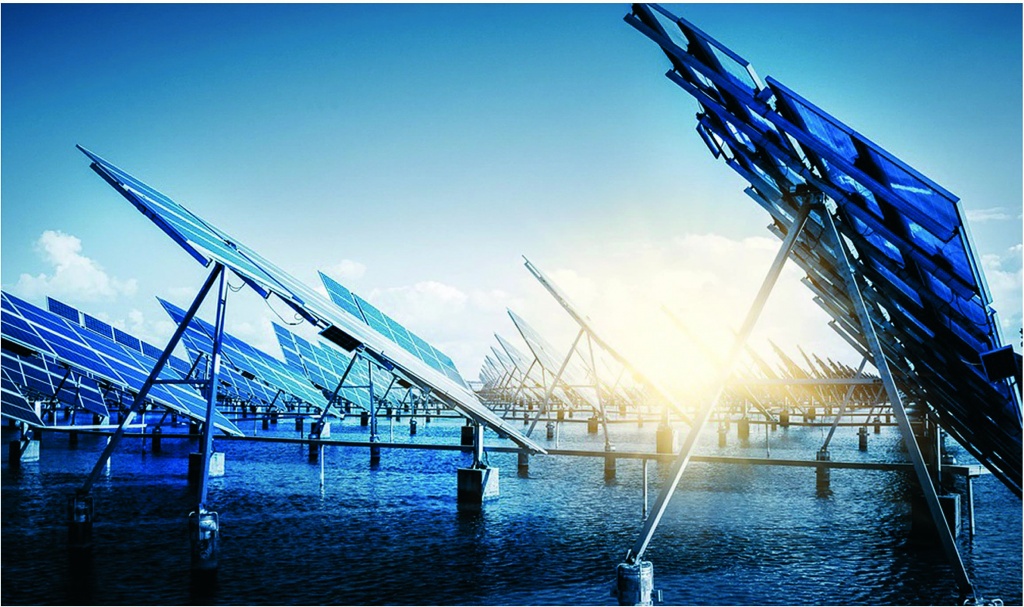
*China masters alternative energy *. Solar power station, * Shanghai, 2015 * 2016 began for global markets with oddities. Economists have no plausible explanation of why the American stock market and oil price are falling, Oliver Blanchard, economist PIIE, and until recently, the chief economist of the IMF. Brent barrels of Brent, when closing the auction on January 20, cost $ 27.88 - about a quarter less than a month earlier, and 43% cheaper than a year ago. The American stock index S&P 500 has fallen from the beginning of the year by 10.5%. Why? The smooth and gradual slowdown of the Chinese economy, the Blanchard states, should not lead to this: US macro are very good.
The last time the price of oil and stock markets were so rapidly reduced in late August 2015. But even then, there was no clear explanation of what was happening: China also slowed down (its stock market fell by 16%), the US Federal Reserve (FRS) was preparing to increase interest rates. But the markets and oil flew down. Now the situation is similar.
Ahead of the signal
The oil markets and shares probably know about the economy that the economists do not know, Blanchard concludes. Quite often, the fall of markets is a leading signal that the growth of the world economy will slow down in the future. Despite the fact that the economic indicators themselves do not yet portend this - on average, the world's growth is expected to be 3-3.5% this year, and this is very good. The reason for the sale was the growing political and geopolitical uncertainty - in the USA and in Europe, and, of course, in the Middle East. The presidential race in America, a difficult situation with refugees in Europe, terrorist risks (Ibid.) And those who are “somewhat out of themselves”, behaving unpredictably Iraq, Syria, Iran, Saudi Arabia, Russia, Turkey and other countries are quite enough for investors to worry. Uncertainty depresses them much more than even poor certainty. However, now the uncertainty index in the US economic policy is much lower than in 2008-2013. And in Europe the situation is worse, but not critical.
Account fee
It’s time to recall that over the past 7 years (since the spring of 2009), stock markets have received a tremendous dividend from the super-mileage policy pursued by the National Bank of the United States and Europe. From March 2009, until recently, the Maximums (July 2015) S&P 500 has grown 3.1 times. These years have been a time of fantastic rally for shares of American companies. The protracting market ending before our eyes in its steepness and duration markedly exceeds the rally that preceded the “crisis of dotcom” in 2000, and take -off before the global crisis of 2008-2009. That crisis of the money authorities of the United States and Europe actually flooded with money. FRS balance-the cost of securities purchased from the market-from 2007 to the end of December 2015 grew in
5.3 times, up to $ 4.54 trillion. Contrary to fears, this did not lead to an increase in inflation.
Monetary injections of the Fed and Eurocent-Robank (ECB) were reflected in an increase in prices for raw materials, an unprecedented rise in the stock markets of developed and developing countries, which have recovered after the last recession much faster than national economies. Quickly recovered after that crisis and real estate prices. Since 2009, cheap money raised all the markets and dispersed investments, including new oil and gas technologies and alternative energy. Now it's time to pay on the bills: central banks can no longer keep interest rates at the zero level. And global investment demand, pumped up by these super-deed money, began to stretch out in the summer of 2014. And the first thing this was reflected in the price of oil. But why did she fall so much?
Redistribution of the market
In the summer of 2014, oil cost over $ 100, in June 2015-about $ 60, and in December 2015-only $ 37. Problems - all oil producing countries. Even the Canadian dollar has fallen against the American by 19% over the past 8 months. If the price of oil remains at a low level for a long time, oil production will cease to be so attractive, many companies will go bankrupt. The current situation for Saudi Arabia, Russia and Venezuela is especially uncomfortable-due to the high dependence on the price of oil not only oil producers, but also the state budget. Saudi Arivia has better the situation than Russia: oil production is profitable there and at $ 10/bar, and accumulated reserves in relation to the needs of the budget are higher than that of Russia.
Excess oil was created by the United States, back in 2014, for the first time since 1975, the world oil production leaders who have been borne by the world championship have been kept since 2010)
The main reasons for the reduction in oil prices were the expectations of a slowdown in Chinese and global economies, but the main thing is a giant oil “canopy” (advanced demand over demand), which arose thanks to new oil and gas technologies. The canopy is estimated at 2.5 million bar per day, said Mikhail Krutikhin, partner of Rusenergy, - this is about 2.8% of the global oil production (or a little less than a quarter of Russian). Excess oil was created by the United States, back in 2014, for the first time since 1975, the world oil production leaders have been borne (USA championship has been holding global gas championship since 2010).
But the point, of course, is not in the conditional world championship "who will get more oil." And the fact that the United States has become not just a global oil leader, but also its supplier, whose behavior has stronger than others affects its price (“stabilizing manufacturer” - Swing Produceer). Such manufacturers (or their cartels) can increase or reduce the supply of the product to the market with less (than others) costs. In the previous 40 years, Saudi Arabia and its OPEC partners played this role in the oil market. New technologies that made the “light” production of shale oil in the United States allowed the States to intercept this role. In Western Siberia, drilling new wells in old giant deposits during low prices becomes unprofitable, explains Peter Koznacheev, director of the RAMS RAMS ECONOMICE Center. But in the United States, the wells are small and therefore not too capital -intensive: when the price of oil is falling, you can safely develop the available wells, and invest new drilling only when prices rise.
"Oil Zen"
That is why an excess of oil does not disappear from the market, despite the low price of oil. That is why the world is not scared by daily news about the bankruptcy of numerous (small) American oil companies. By the way, the rest of the oil producers also hold: according to the calculations of the energy analytical company Wood Mackenzie, which estimated the conditions of production in deposits, where 84% of global oil is mined, only 2% of them become unprofitable at a price of below $ 40/bar. Prices fell already below this mark, but production does not decrease, and intelligence for the shale industry is not as critical as for traditional. Now it is already clear: the medium -term decrease in the price, manufacturers of New Oil will withstand.
The share of renewable energy in the global production of electricity, according to the forecast of IEA, will grow in 2013–2020 from 13% to 22%
The take -off of oil prices in 2001-2015 was largely due to the accelerated growth of global oil demand - an average of 2.2% per year. In the next 20 years, demand will grow, according to Wood Mackenzie, by only 1.4%. In addition to China, a large contribution to the reduction in oil demand will be made by suppliers of energy obtained from
renewable sources, and transition to electric cars.
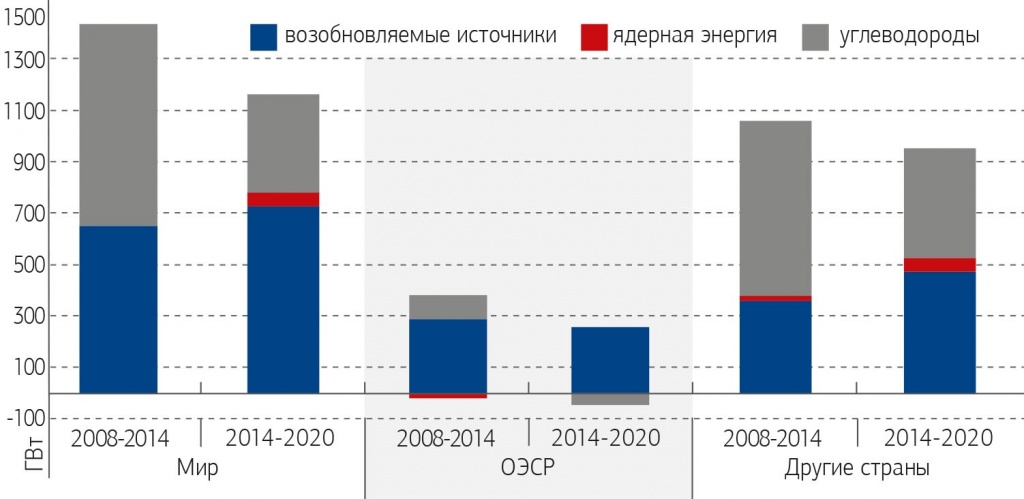
An increase in electricity production from various sources, Source: IEA, 2015

If the armed confrontation in the Middle East reached the current level of intensity in previous years, when OPEC still had the role of a stabilizing supplier, the price of oil would have taken off to heaven. The share of the political “risk prize” in the price of oil in the last 15 years is very high, Pyotr Koznacheev proved at the recent Gaidar forum.
Now this ligament is torn - the "oil Zen" has come, in the words of Kaznacheev. ISIS, which is banned in Russia, controls the territories in oil producing Iraq, Nigeria and Libya, several more countries are in a fever, the situation in them can easily be destabilized, and oil does not react - “in the disconnection”.
"Clean" trend
In 1980–2000, there was obvious feedback between the price of oil and the speed of developing alternative energy: the more expensive it was, the more profitable it became to engage in the sun, wind, biofuel, electric accumulators and other innovations. Now, it seems, this connection begins to collapse: according to Bloomberg New Energy Finance, in 2015 the renewable energy attracted the record $ 329 billion investments, built (also a record) capacity of 121 GW. But most importantly, alternative energy continues to be cheaper: an increase in investment in the extraction of energy from the sun and wind by 4% compared to 2014 gave a leap in a power increase of 30%.
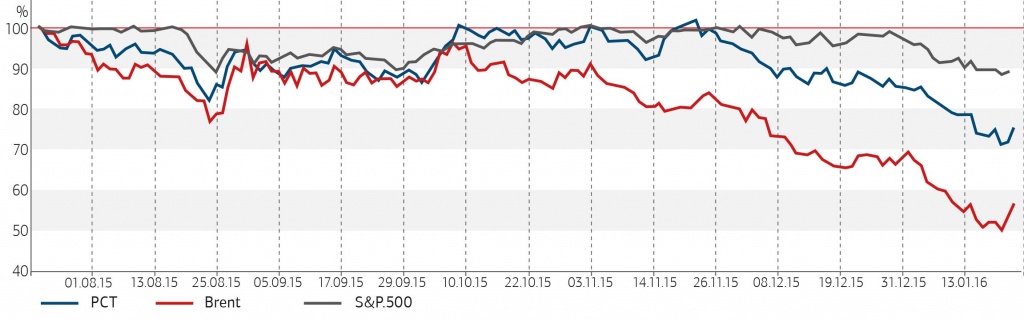
Brent oil price dynamics and RTS (Russia) and S&P.500 (USA) in % over the past 6 months, Source: Finams, 2016

Of course, state considy helps a lot of energy. Only with their taking into account the chickenpox became the cheapest source of electricity in the USA and some European countries. But state considies are gradually reduced, manufacturers reduce costs and prices.
What is even more interesting - exactly a third of global investment in alternative energy falls on China (twice as much as in the USA). Residents of large Chinese cities suffer from smog, suffocate-primarily due to the active use of coal for heat production. Since 2020, Beijing, where only in December 2015, an increased level of environmental safety was announced twice due to air pollution, plans to stop using coal for heating. In recent years, China has been making serious efforts to become a global leader in the production of equipment for pure energy - both for export and for himself. The share of renewable energy in the world production of electricity, according to the forecast of IEA, will increase in 2013–2020 from 13% to 22%. However, before the realization of the dream of ecologists - the final displacement of coal from energy - is still very far away.
Perhaps, however, that investments in net energy grow largely due to the soft monetary policy mentioned above, and in less comfortable conditions the growth rate will slow down. Many modern energy projects, which easily attract tens of millions of dollars of investments, will not be too successful-like the pioneers of the Internet economics of the late 1990s. But they will lay the road more economical projects, such as Yahoo or Google. Not specific good luck and failures are important, but a common trend: already now an increase in capacities for generating pure energy is higher than for the extraction of coal, gas and oil combined. Of course, all this will not lead to immediate or soon exhaustion of the need for oil. But her golden age is behind.