
Translated material
"Let me try to be scientists"
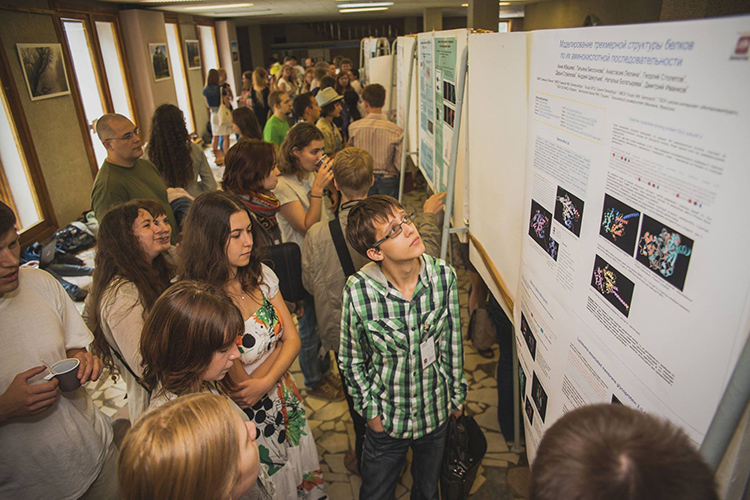
The idea that biology in the ninth grade is given by a variety of residents that Google discovers dozens. The lessons answer test questions (what self -regulation is, what homeostasis is) and sign a person’s muscles in diagrams.
And nine -graders can experience experiments on cancer cells, rule DNA in bacteria, work with plasmids and carry out a free -cake synthesis of protein. It’s just not done at school and not in Russia. The school of molecular and theoretical biology (SMTB) for high school students this year is held in Barcelona from August 2 to 16. High school students will be practiced in laboratories of several Spanish universities and research institutes. And to explain to them how to handle plasmids and cancer cells, there will be several professors of biology from Europe and Russia.
For participants, the school is free. Since 2012, when it was first held in the suburbs, SMTB supported the Dmitry Zimin Foundation “Dynastia”, which in 2015 was declared a foreign agent and closed. Now the school is supported by Zimin Foundation.
Until February 1, inclusive, the school accepts applications from high school students.
Colta.ru talked with the supervisor of SMTB - professor Fedor Kondrashov, a molecular biologist who leads the laboratory of the Genomal Regulation Center in Barcelona.
- How does nine -graders do with your “adult science?
- The science that children do with their own hands - it is in terms of difficulty for advanced students or even novice graduate students. When we invite scientists to lead the laboratory in the summer school, our main criterion is that this project was interesting from a scientific point of view. In order for what the children do to have some kind of scientific meaning for them. This distinguishes us from almost all other schools around the world. We try not to chase the colorful experiment. Even in order for it to be done.
Volodya Katanaev from the institute protein experienced different plant extracts with children - measured the power of inhibiting with these extracts of cancer cell growth. It was such a preparatory work in order to understand with which extracts it is worth working further, and then begin to distinguish from them substances that have anti -cancer activity.
Lena Alkalaeva, working at the Institute of Molecular Biology in Moscow, set us an experiment on a scoundrel of protein. This bloodstream synthesis is an advanced technique that is literally in a few laboratories in the world.
A schoolboy who sits in the ninth grade and thinks: “I want to become a biologist,” will be able to do what a real researcher does, at best after eight years. We want to give them the opportunity to try themselves as a scientist now.
-And with some completely fresh discoveries and methods-such as the method of point edit of the CRISPR genome , declared by Science last year “breakthrough of the year”, are the students work?
- Crispr has not yet been used yet, but this is a fairly simple technique. Therefore, as soon as someone needs him-he, I think, will have it.
- Why did you decide to organize a summer school?
-Because in a sense she models how I myself came to science. I was not particularly interesting to biology at school. She was relatively easy for me, but I did not feel much interest. And I became scientists, because it was quite early - thanks to my parents and Evgeny Kunin (the most cited biologist from Russia, since 1991, working in the USA. - Ed. ) - I got into a real research atmosphere, which I myself, in fact, liked it. At the University of Cornell, in the laboratory of my father (Professor Alexei Kondrashov. - Ed. ), They gave me a simple genetics of Drusophila. It was the ninth to twentieth grade.
The best way to help children understand whether they like to engage in science or not, is just to give a try. A schoolboy who sits in the ninth grade and thinks: “I want to become a biologist,” will do what a real researcher does, at best in the magistracy. This is only eight years later.
We make this project for schoolchildren, and not for students, so that children who are really interested in the scientist’s career give an opportunity to try themselves in this role for five, six, seven years before they have such an opportunity within the existing education system.
Children lose their prejudices: that all scientists are men, or that all scientists are poor, or that all scientists are some kind of sniffed or tortured people.
-As an entrance exam, do you arrange something like the All-Russian Biology Olympiad?
- The student answers a couple of questions. The first question is what is interesting to him in science. The second - why does he want to get to school. Our adoptive commission honestly reads all the answers and letters of recommendation. We are interested in making children from the periphery to our school, and we do not want to arrange a formal biology exam. Because it is clear that then children who study in specialized schools in Moscow will be much easier to get to us.
- Is it true that for SMTB scientists is such a way to look at future graduate students and postdles?
- Rather, this is a way for children to look at scientists. Children lose their prejudices that they could form about scientists before. That all scientists are men. Or that all scientists are poor. Or that all scientists are some kind of sniffed or tortured people. In contact with living people who guide laboratories, a much more reasonable and more believable view of things develops. And children get a model for imitation.
- Does the summer school help to pass the exam in biology and enter the biofac of Moscow State University?
- We are formally - and informally - we do not interact with any universities and are not going to do it. Our project is completely independent of all this. From revenues, from exams, from the exam, from the Olympiads. Many of our graduates go to good universities, but we do not know, because this is that they are so wonderful and would have acted without us, or whether participation in our school somehow helps them.