
Translated material
Go-Pro
Artificial intelligence first defeated a professional player in Go: WireD
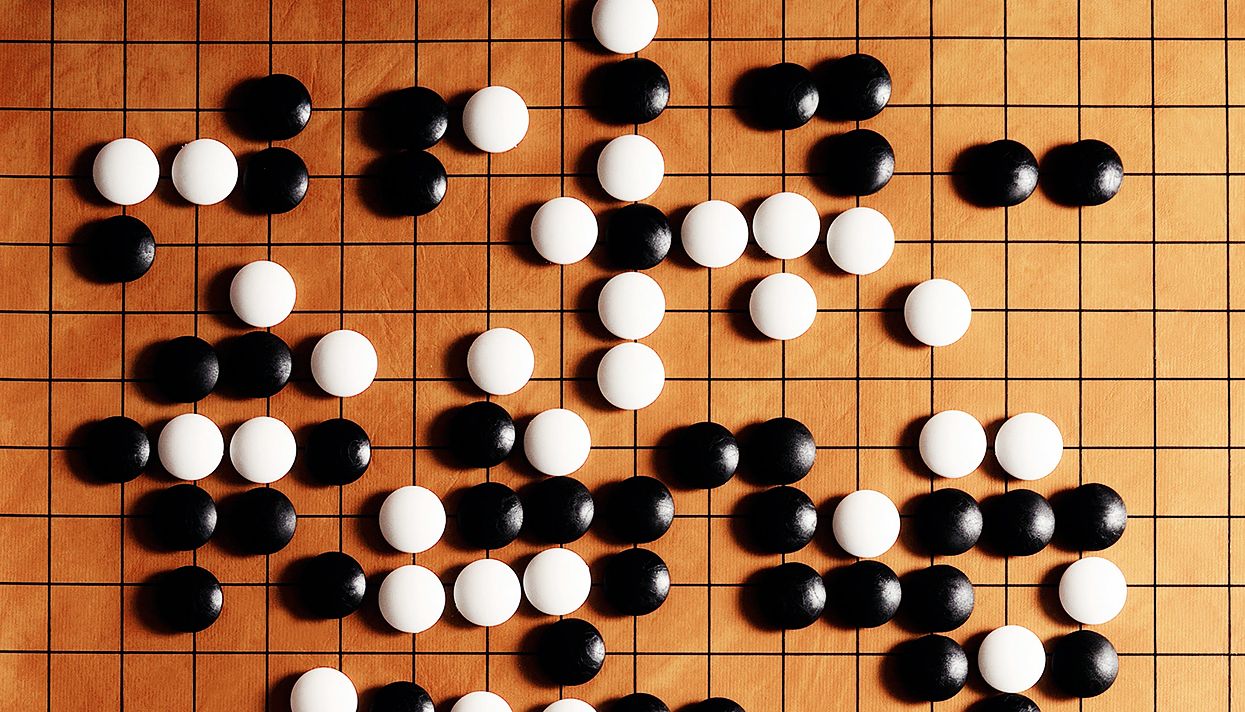
The computer program first defeated a professional player in the GO - a game with a thousand -year history, in which people were considered stronger than computers. The Alphago program, which won the European champion in Go, was created in Google Deepmind . The Wired publication talks about the first case in history when artificial intelligence was stronger than a professional.
The game was invented more than two and a half thousand years ago and is still one of the most popular games in the world - championships are regularly held on it. At first glance, it is very simple: there is a field of cells and stones - black and white. Players should capture with their stones as large as possible on the board. Nevertheless, it was this game that for many years was not subject to the computer. Until recently, artificial intelligence could not beat high -level players - Masters.
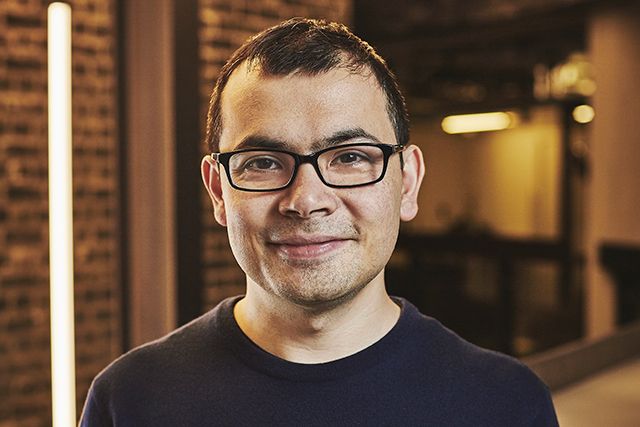
The difficulty with Go is that 250 moves can be made on a standard board of 19 × 19 cells. Each move gives rise to another 250 possible moves and so on. As a result, a computer simply cannot calculate the combinations for many moves in a simple bust. When the Deep Bluedefeated Harry Kasparov in 1997 , he actually acted over the batch - this approach does not pass. The number of possible positions in the GO more than atoms in the universe (this number consists of 171 digits). As Demis Khassabis from Google Deepmind explains, good positions in th simply look good. That is, the player does not necessarily calculate all possible combinations, but acts more intuitively.
Programs working with the help of a bust are able to defeat a mid -level player, but they cannot cope with professionals. In 2014, the Crazystone computer program, developed by the Frenchman Remya Kulom, defeated Japanese Norimoto Yodu, a player of the highest level. But the computer played with a handicap in four strokes - this is a very great advantage. Then Kulom said that 10 years would pass before artificial intelligence could defeat the master's master.
Deepmind managed to make a breakthrough much sooner. In October 2015, a duel took place: Alphago and the European Champion on Go Fan Hui became opponents. The program won five out of five parties. The meeting passed behind closed doors at the DeepMind office in London. It was attended by a correspondent for the scientific journal Nature and a representative of the British Federation of the GO. Nature on January 27 published an article about that match , after which it became widely known about the victory of the computer.
Alphago is built on the principle of deep learning, which, in turn, includes the use of neural networks - a certain similarity of the computer model of the human brain (of course, not an exact copy). Such networks do not work by sprout, instead they analyze the data and “learn” to fulfill a certain task, for example, to find a face in photographs (this is implemented on Facebook). That is, if you show the neural network enough photos with faces, she will learn to find them. The same approach was used to go.
The developers first “scraped” the neural network of 30 million moves of professional players. Even theoretically, this could teach the program to play only as they, but not better. To teach the program to defeat people, she was forced to play with themselves (in fact, neural networks played with a slightly altered copy of themselves). Millions of parties were played: as a result, Alphago learned to evaluate which position of the stones on the board is more profitable for her.
According to Demis Hassabis from Deepmind, Alphago can even work on the same computer with a sufficient number of graphic processors. For a duel with Fan Hue, a network of computers with 170 graphic processors and 1200 was used by conventional. Graphic processors are better suited for deep learning.
In mid -March, Alphago will first play with the GO star in public. The fight will take place in South Korea. The opponent of artificial intelligence will be Korean Lee Sedol, who won more than 800 tournaments during his career. He has second place in terms of the number of titles won in international tournaments. Demis Hassabis from Deepmind says that Lee Sedol is Roger Federer in the GO world. For the sake of this tournament, DeepMind will pave its own cable so that the Internet speed is sufficient for the program.
If the artificial intelligence DeepMind can understand how to play in the th, then why can't he figure out something more complex? “What if the whole universe is just a gigantic game in the th,” the professor of law from the University of Washington Ryan Kalo asks a question.