
Translated material
Yeltsin
People who have reached the top of the authorities seem special to us. To a certain extent, this is so. For example, we still do not know very well and do not understand the first president of Russia
People who have reached the top of the authorities seem special to us. To a certain extent, this is so. For example, we still do not know very well and do not understand the first president of Russia
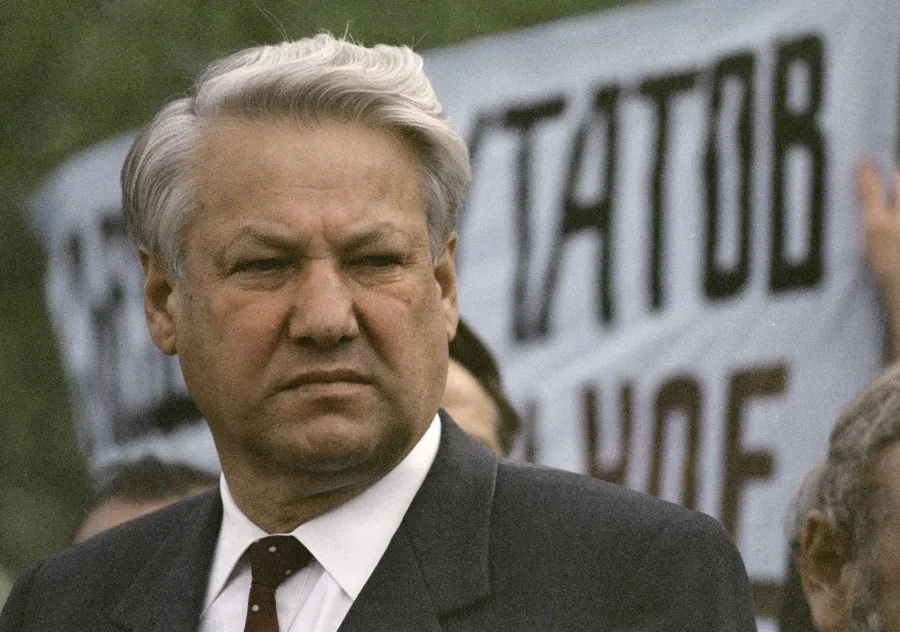
The high and laconic Yeltsin most of all corresponded to the idea of the master, leader, father, even the king entering our flesh and blood. And our passionate desire to see the miracle of creation of a new, better life, which should be done not by our grave efforts, but by the wave of someone's hand. As one historian put it, in the most remote corner of the religious country itself on our planet, you will not meet such hope for a miracle that exists in Russia, where atheism for many decades was the support of the state worldview.
Ural nature
The future head of state grew up in the hut. Switching in one cage. We slept on the floor. In winter, they warmed up near the goat, she saved in the hungry war years - gave a liter of milk on a day. They say that Boris Yeltsin firmly decided to get out of the bosses in order to part with this poor and hungry life.
From his youth, the leadership beginning, stubborn character and the ability to achieve his, despite any obstacles, were manifested. He loved to fight. Once he was cut into the head. If Boris Nikolayevich had not been so strong, the history of Russia would have gone in a different way. Yeltsin’s fighting character has been preserved for life. He was no longer beaten by the shafts, but he got pretty - perhaps more than any policy of this generation.
Work at a construction site after the institute was supposed to accustom to alcohol and to the habit of explaining exclusively obscenities. But Yeltsin, perhaps, is the only one in the entire highest nomenclature, did not tolerate their swords. To everyone except the closest, I turned to "you." In the presidential club in a mansion on the Lenin Mountains, where the country's top leadership was going to play sports or dinner - Yeltsin introduced a fine for each obscene word. Those who wanted to tell a scabrand joke immediately laid out the money.
He did not refuse strong drinks. The first secretary of the Dnipropetrovsk regional committee Yevgeny Kachalovsky, who visited the first secretary of the Sverdlovsk regional committee Yeltsin, admiredly said:
- Boris Nikolaevich could drink a liter in the evening. In the morning, everything is disassembled, barely turning his tongue, and he is already at a construction site at six in the morning, he gives “pumping”. Ural nature.
He loved the feast. When he began to hurt, the gatherings with a drink and a snack stopped. The change of lifestyle is useful for the liver. But his assistants regretfully said that thereby Boris Nikolayevich lost communication: the circle of people who spoke at the very least about what was happening around.
Highway lessons
The former owner of the Sverdlovsk region, Yakov Ryabov, to whom Yeltsin owes his career, told me how Boris Nikolaevich raised:
- I explained: I can warn those who do not fulfill my tasks once, a second time. And there will be no third warning. Either you have to leave, or me. But better, I'll take you away. I will not wait until they make a decision about me.
A marvelous principle: die first, and then I! So careers were made. They walked up on the heads of less clever and skillful. Was it worth it later that Yeltsin, having become the first secretary in Moscow, broke the fate of subordinates who could not ensure success? He rushed up, and only those who could help climb another step survived next to him, and without regret parted with those who did not need.
Caution, tenacious and cunning went uphill, those who did not make mistakes and did not quarrel with the authorities. But they plowed, faced with a strong character, with a born leader. Another thing is that bright people usually could not break through the quagmire of hardware life. But if this happened, as in the case of Yeltsin, such a person was out of competition.
In the subcover struggle, the hardware personnel came out by winners. And in a fight with people born to rule, they lost.
Yeltsin felt best in the role of the first person. Subordinates of people like him, Nevazhnets. He is by the nature of the master who organically needs complete, unlimited power. Born so. And since the moment he became the first secretary in Sverdlovsk, he believed in what he could and should lead everyone and everyone.
Andropovsky nominee
Yeltsin noted Yuri Andropov when he was the Secretary General of the CPSU Central Committee. He noticed, perhaps, from the submission of local Chekists. Perhaps other reasons forced him to pay attention to the Sverdlovsk citizen. And Andropov decided to nominate it. But soon he died, the renewal of personnel has stopped and resumed already under Gorbachev.
Secretary of the Central Committee Egor Ligachev, who was in charge of personnel, went to Sverdlovsk, from where he called Mikhail Sergeyevich:
- I talked here, talked to people. Yeltsin is the person we need. Everything is - knowledge, character. A large -scale worker will be able to lead the case.
What qualities did Yegor Kuzmich appreciated? I asked Ligachev about this.
- Case! - Ligachev answered with conviction. - Respect for ordinary people, empathy, compassion, caring for them. The main thing is deeds, not words. If a person is not capable of business, he did not represent much interest for me from the point of view of the nomination ...
Muscovites, and then the whole country learned about Yeltsin when he became the first secretary of the capital's city committee. He spent the first month of work on trips around the city. Something unprecedented: I went on the subway and on the bus to see how the townspeople feel. Interested in salary, housing, kindergartens. The requests that could be fulfilled fulfilled. If I promised to open a store in the new district or let an additional bus, then the word did not disperse.
He looked into the shops, in the dining rooms, trying to find sellers and cooks by surprise, checked whether the products were hiding. Neither he nor we yet knew that the shelves were filled with the power of economic need, and not by the decision of the first secretary.
Instincts and calculations
The country longed for purification and updates, and Yeltsin became the personification of changes. Immediately revealed his political style - sharp unexpected steps, unwillingness to compromise, willingness to take risks and put everything on a card, so as not to limit yourself to individual winnings, but to remove the whole bank.
Neither Yeltsin himself nor anyone else managed to explain, which is why in the fall of 1987 he rebelled against the General Secretary and generally against the party leadership. We already know that this riot made him a popular favorite and the first president of Russia. But then no one, including himself, and could imagine such a fantastic turn of events. He dared to everyone - both a career and health. And lost almost everything! He was considered a finished man who destroyed himself. They had no doubt: he could no longer rise.
So, Yeltsin’s rebellion was a mistake of a short -sighted man, who was then accidentally picked up by a wave of folk sympathy and made her leader?
There is a temptation to speak on such a strange topic as a political instinct. When Yeltsin becomes the president and the views of millions will be addressed to him, people close to him will tell him that instincts are guided by them. Not an arithmetic calculation, not thoroughly weighing the pluses and minuses, which is available to many, but an intuitive understanding of how to do it.
Yeltsin was undoubtedly guided by a certain logic. But in it, paradoxically, more intuition than logic itself. In any case, this is a completely different, non -standard, unusual logic that has repeatedly led him to very unexpected decisions, but, as a rule, victorious.
Suffering is ennobled
Thrown from a high position, trampled and rejected, Boris Nikolaevich looked at life with other eyes. Woe teaches. When you fall out of the stream, you find yourself on the shore or even at the bottom, a lot opens up, personal experiences are pushing to critical analysis. And Yeltsin pronounced the words that at that moment probably corresponded to the mood of the disgraced politician:
- While we live so poorly and wretched, I can’t eat sturgeon and jam it with black caviar, I can’t rush by car, bypassing traffic lights and shoking cars, I can’t swallow imported superki -electrocks, knowing that the neighbor has no aspirin for the child. Because it's a shame.
Neither before nor after Yeltsin refused the privileges associated with the high post, he took them for granted and generously put them on their close associates. But he was revealed to the injustice of the Soviet system, when everything is laid in a high position, and a person without a position - nothing. And when fate does not depend on knowledge, skill, experience and talent, but only on the will of the Supreme Leader. From now on, two feelings began to lead Yeltsin - the desire to diverge with the offenders, that is, to return the lost power and position, and the desire to change the unfair system.
The fewer people knew him, the more confidently they painted a fighter for popular happiness in their imagination, who rebelled against the inhabited power. He had not acted anywhere, but was invisibly present in all the hot discussions about how to live. Moreover, in response to the question of who would pull the country out of the pit, the name of Boris Yeltsin was called.
Thanks to the Gaidar reform for the first time after 1917, the economy earned. But the coup, which laid the beginning of a new life, was not appreciated. The adaptation to the new rules turned out to be incredibly complicated. The most painful was not even the loss of savings as such, but the missing sense of reliability of being. The state no longer guaranteed work and salary, obtaining education and free housing. And how to reconcile with the loss of the usual social status? What was recently considered honorable has ceased to be so.
The illusory expectations of a quick and easy transformation of life were replaced by bitter disappointment. The euphoria was so strong that when it disappeared, the country was seized by real depression - from the consciousness of its own powerlessness. Money and power again went to someone else. And there is no strength to change.
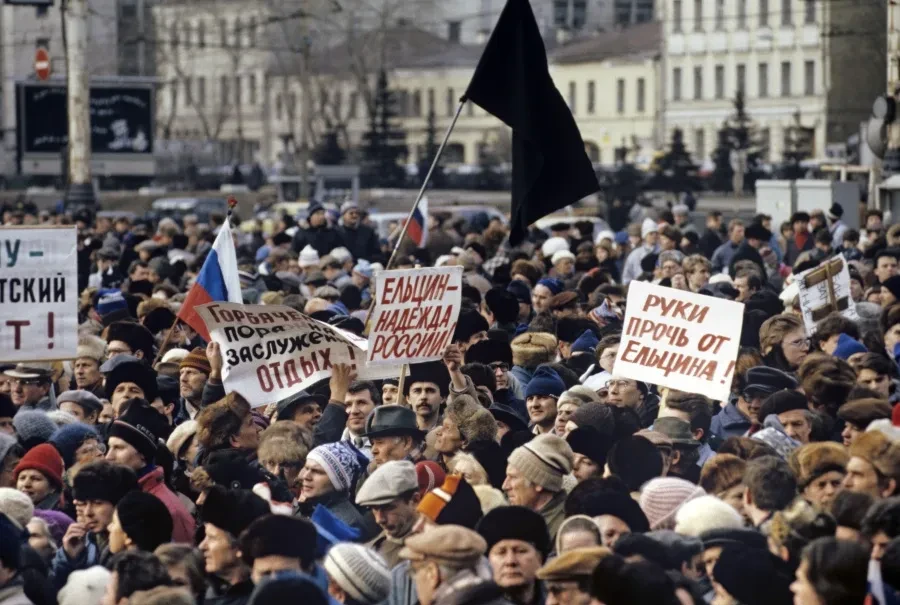
Euphoria and disappointment
The era of Yeltsin is called a decade of lost opportunities, the time of great hopes and disappointments. Is Yeltsin to blame for the fact that our aspirations have not come true? We hoped that everything would happen somehow by itself. Without our participation. That he will do everything for us alone. It didn’t work out, and Yeltsin began to stomp with his feet with the same passion with which they had recently shocked his portraits at rallies and demonstrations.
Kemerovo governor Aman Tuleyev once threw Yeltsin:
- You deceived the Russians. All that can be destroyed, you have already destroyed, there is nothing more to destroy.
Boris Nemtsov, the then governor of the Nizhny Novgorod region, told how Yeltsin arrived, talked with people who were indignant, and did not say doomedly: "Lord, what I had done."
The loss of folk love is unbearable. He was advised to abandon the market economy. Remember people with military confrontation with the West. One of the participants in the meeting in the Kremlin, where they tried and rowed than to answer the expansion of NATO, said:
- What options were discussed there! Mobilization of the economy! Print money and give it to the military-industrial complex, strengthen the Federal Security Service and other special services ...
Yeltsin did not go to this. He felt that he could destroy the country.
Of course, he made mistakes. Sometimes irreparable. With what amazing ease of Russia was drawn into the Chechen conflict, although it was repeated for years: if only there was no war. How simple, it turns out, start it!
Yeltsin opponents treated him with contempt. But in this case, how are they all insignificant, because they constantly lost to him! And they were afraid of him! On the rostrum they swore, and when they got into his office, they packed their tail. As his former referent noted, Boris Nikolaevich did not shout, but he knew how to make the opponent feel complete insignificance. It looks like the truth: they are deadly afraid of chiefs in Russia.
Elected monarch
On December 12, 1993, simultaneously with the election of deputies of the First State Duma, the country voted for a new constitution that changed the position of the president. Previously, the parliament could limit his powers and generally cause him a lot of troubles. Now the president practically did not depend on the will of the deputies. The parliament also lost the opportunity to participate in the formation of the government.
Yeltsin began to be called king. Who's joke, who is seriously. Boris Nikolaevich really changed. The collapse of Soviet power did not cancel the Marx formula about being determining consciousness. And being became royal. One of the then leaders of the presidential administration told me:
- There are no ideal schemes. As soon as the institution of the elected monarch is introduced, it is necessary to put up with the fact that the yard will appear, their own Kamaril will arise, there will be those who are closer to the monarch, and those who are next.
The Kremlin has formed a hierarchical system of power. Say, the presidential assistants, as in Soviet times, had lunch in a special dining room. It was important who was refilling with whom at the same table. The proximity to the president opened incredible opportunities. The "neighbor" unprecedentedly rich.
Once upon a time, the first secretary of the Moscow City Committee of the Party of Boris Yeltsin was asked why the head of the Oktyabrsky district of the capital was relieved of his post?
“The apartment was banging a lordly, with a personal fireplace and a personal chimney that penetrated the whole house,” Boris Nikolaevich explained. - Such princes have no place in the party! We need crystal pure people ...
It’s funny to re -read these words now, when the new nomenclature has built up palaces. Yeltsin, becoming the president, did nothing to prevent the decomposition of his officials. His environment has mastered a system of privileges on the move. Only the dining room of therapeutic nutrition was canceled. The need disappeared in it - with the beginning of the Gaidar reforms, the food returned to the shops. In addition, the joys were revealed, about which Soviet officials in a closed country could not dream. The position has turned into a tool for making very big money. And it also became clear that democratic electoral mechanisms and professionally working media only interfere.
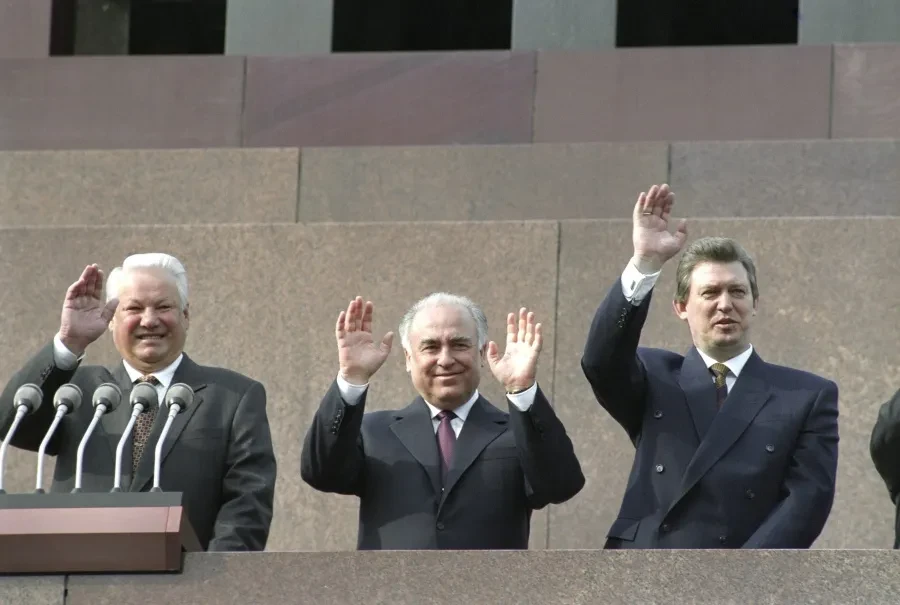
Operation "Heir"
In recent years, Yeltsin had been overcome by ailments. Society was indignant at the sick president, as a harsh employer was dissatisfied with the frail and negligent subordinates. He was demanded to resign or, at worst, to transfer the powers to the Prime Minister. The last months of 1998 and the beginning of 1999 were a time of despair for the inhabitants of the Kremlin. The frightening thought, who will come after and how he will behave, did not leave Boris Nikolaevich himself and his environment.
Yeltsin promised to judge for the collapse of the country. The "family" was accused of corruption. One of the politicians reminded of the fate of the family of the Romanian leader Nikolai Chayescu, swept away by a wave of popular anger. The words sounded ominously, because Nicholas and Elena Chausko were shot without trial, they were imprisoned.
What to do? Find your successor to yourself. It is not difficult to sketch the sketch portrait of the heir: young, energetic, preferably from the military, of those who recently had not yet managed to become familiar in politics. Qualities such as fidelity and reliability are required.
Yeltsin left when he was convinced that there was nothing to be afraid: those who want to make reprisal against him would not come to power. If he knew that after the resignation he was not threatened, and he would not engage in the operation “heir”, the country, perhaps, would have gone in a different way ...
December 31, 1999 he left the Kremlin. He was found good words for a farewell speech. He asked the country for forgiveness for not justifying the hopes that many dreams did not come true and could not be transferred to a happy future in one fell swoop.
“I myself believed in it,” said Yeltsin. - It seemed that one jerk - and we would all overcome everything.
Not cunning. Really believed.
Putin signed a decree “On guarantees to the President of the Russian Federation, which has terminated the execution of his powers, and members of his family.” The decree provided Yeltsin with a full immunity from criminal prosecution: the former president "could not be brought to criminal or administrative responsibility, detained, arrested, subjected to search, interrogation or personal inspection."
In 1991, Yeltsin, having conquered the Kremlin, categorically refused to endow the same inviolability of Mikhail Sergeyevich Gorbachev, who left the post of President of the USSR. On the contrary, he advised to repent of all his sins - it is not too late ...
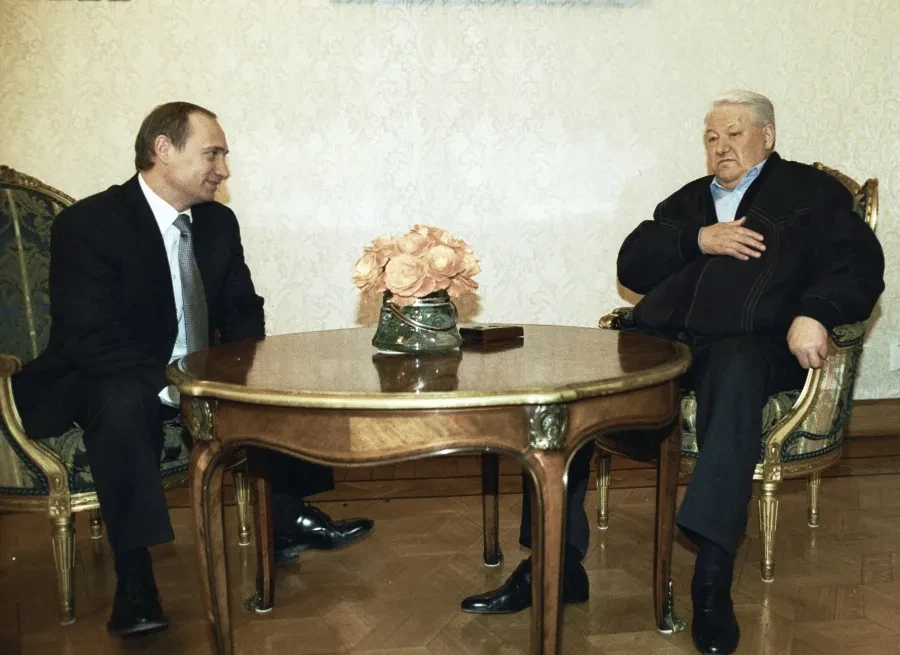
Parting
Yeltsin heard a lot of disgusting insults during his lifetime. He was doused with slopes. And he did not forbid anyone to blame and insult. I decided that freedom of speech is more important, and not a single journalist was afraid of him. Drawing the president was safer than any official.
He suffered many minor defeats. But in the struggle for power, he won all the battles - and all the elections! Whenever he turned to the people, the people supported him. He made significantly more for Russia than Russia told him thanking words ...
On February 1, 2006, the 75th anniversary of Yeltsin was celebrated in the Kremlin. In the St. George Hall, a reception was arranged for the political elite. One of the guests told me: “Mostly the people who hated him gathered. How did they drink for him? "
The next year, Yeltsin passed away.
He belonged to those who make history. Он из породы людей, которые неостановимо идут к власти. Для них власть — это, пожалуй, единственное, что приносит удовольствие всегда. Все остальное доставляет лишь кратковременную радость.
На наше счастье, Ельцин пришел к власти и оставался у власти с помощью демократических механизмов. Сокрушив всех противников, не пожелал стать диктатором, даже не пытался. Нарушив историческую традицию, перестал давить подданных. Нельзя сказать, что народ ему за это сильно благодарен.