
Translated material
Illness and sin
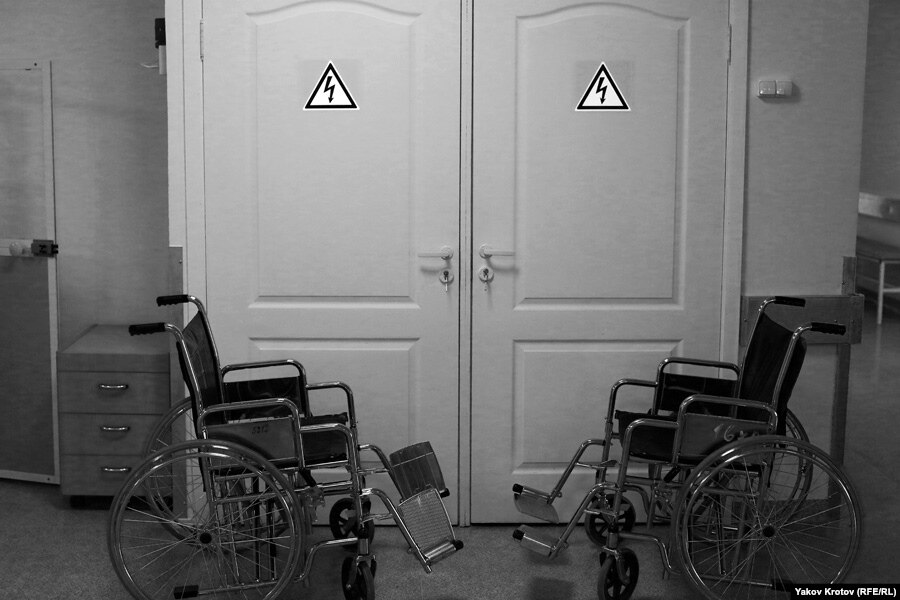
Does faith help to cope with diseases?
Yakov Krotov: Today we have an interfaith meeting: there is Romo-Catholic Inna Karezina , there is Protestant Iona Krupnova and two Orthodox- Tatyana Gavrilova and Vladimir Berkhin .
But the differences on our topic - "sin and illness" - not between faiths, but inside any denomination. When we open the synodal translation of the Gospel, stories about healings are going on immediately. If we open the Greek original, then there is no word "healing", but there is only the word "therapist". The Lord is a therapist. And this is interpreted as healing, then as treatment, because sometimes we are talking about sin, and sometimes about the disease. The leprosy was considered, rather, as a sin of impurity than as a disease.
Two thousand years have passed. The ideas about what the disease and sin are, the boundaries have developed. And, it seems to me that today there is something to talk about, if only because many people, like two thousand years ago, are looking for healing in the church, but not from sin, but from the disease, they see something like a spiritual hospital in the church, but the most ordinary hospital. "Here we will come to the temple, and we will recover there." Alcoholism - no “10 steps” programs, we will come to the Serpukhov Vysotsky Monastery, pray - alcoholism will pass. Moreover, the mother of the alcoholic will come, and not himself. And the question arises: alcoholism is a disease or a sin? Looking at a woman with lust - disease, norm or sin?
Leprosy was considered, rather, as a sin of impurity than as a disease
Most of the audience are psychologists or psychotherapists, but at the same time - believers people. And my first question: how do you draw a border between sin and illness for yourself? For contemporaries of the gospel it was like this: sin entails a disease. The Savior argued with this, but hardly changed. How today?
Tatyana Gavrilova: What do I see in people around me? Russian people, I'm afraid, have no health value, especially men. Here the flu epidemic is approaching, and instead of conducting prevention, people say: as the Lord ... that is, the work of treatment, the work of understanding of oneself - it is for sins, for the wrong life - it is somehow not in demand. In a little quoted book of Jesus, the son of Sirakhov , who is only a very big Bible, there is a chapter where it says: "Sick, be treated! God sends you a doctor." And the first question for me as a psychologist, Christian, a person who works with believers: what do you actually want? Do you go to invest in recovering? Or do you leave everything to God without making your own efforts?
I know how sin turns into a disease. I am dealing with the problem of experiences of believers, the way it is born, in particular, now I wrote a book about anger. In this book there is the chapter "Anger and Health". Doctors, clinical psychologists know that a person’s commitment to anger, all sorts of malice is destructive. Moreover, the doctors showed that the crowded out, suppressed anger generates ischemia. There were research, and it turns out that hostility enhances the ischemia of the heart. It is known that among those suffering from cardiovascular diseases there are much more people with manifestations of hostility than some others.
Russian people have no health value, especially in men
As for psychosomatic diseases (suppose, hypertension, ulcers), psychologists are clear that this is a consequence of problems that we did not survive, did not realize, did not treat. These are all sins: hostility, anger, ambition, pride. When they are not realized, they are not processed by a person, they eat us! And I, as a psychologist, are very worried about the ignorance of believers around me that health is also what is earned. I do not know at all, a disease - is it punishment, is it a test? But we carry it in ourselves, we ourselves generate our diseases.
Vladimir Berkhin: I see a lot of sick people, sick children, including those who were born sick. And to declare any disease by the consequence of sin is some kind of very simple way out. Of course, I read theological books, but to reason as contemporaries of the Savior, that “it was he is sick because he sinned or his parents,” this is a very simple way out. And when a very simple exit is offered from a difficult problem, it means that almost certainly did not take into account something important.
We do not know exactly where the border between the human soul and the human body passes. For example, if a person is very angry, then it is not always possible to say that it is because he is corrupted or because it allows himself to be angry, or because he considers himself above others. Or maybe just the internal chemistry of his body, some adrenal glands just work? I saw a person who has changed greatly in emotionally after a head injury. He became not angry, but very plaxyv, began to whine a lot.
Когда из сложной проблемы предлагается очень простой выход, значит, почти наверняка не учли что-то важное
The brain is a mysterious thing, it is difficult to say how it works. Sin and disease are somehow connected, because in the world there are causal relationships. The tram cut off the leg-there is a causal relationship. But God sometimes intervenes in this connection. The disease as healing is a way of its intervention. For some reason, he needs it, he has a reason to work with this person ... Like in the Gospel: he got sick to be the power of God on him. Here a person was born blind - God needed such ... rather sadistic, I must say, a procedure, but it was needed. We cannot say what God has done to you-you got sick, or you had a sick child, or something else. On the other hand, we cannot say: eat well, sleep more, take the right pills - and you will always be healthy. This is also not always the case.
Tatyana Gavrilova: But there is still some element of truth here! Life also affects.
Vladimir Berkhin: Not one hundred percent. Recently, we collected money to three women with the same vice of the intrauterine development of the fetus, and these are three different women, they probably have different fate, different stories, they have everything different, and why do all three have such a vice in the development of the fetus? It is incomprehensible. No, you can find a connection between, say, folic acid and this matter, but someone with the same content of folic acid will not manifest itself.
Do not reduce everything to physiology alone
Do not reduce everything to physiology alone. And if you reduce everything only to sin, consider diseases only the consequences of sin, then at the end of this logical path there is the theology of prosperity: be pious - and you will have everything in your life “trim”! And so it is also impossible to reason.
Yakov Krotov: Prosperity Theology is half a bastard, and there can also be just commerce, because "health can be bought." And the great sinner can buy so much health that life will live better than any righteous.
Vladimir Berkhin: Yes, now much is possible. Not all, but much.
A great sinner can buy so much health that life will live better than any righteous
Yakov Krotov: Almost everything. And it is well known that people who spend more money on medicine live longer and better, regardless of whether they are righteous or sinners. It turns out that the advice “distribute your estate and follow me” is the advice to be sick, which corresponds to the real history of Christianity, because they were often not treated for fundamental reasons. But the person visited the psychotherapist - and all the problems were removed. You, Jonah, are one of those who sell happiness. Or is that the function of a psychotherapist?
Iona Krupnova: I am a psychologist, not a psychotherapist. And I do not trade happiness.
Vladimir Berkhin: Give it out for nothing! (laugh)
Iona Krupnova: I received it for nothing - I give it for nothing. I am a Christian psychologist, and I try to work with people in a biblical manner. My function is to show them how, from a biblical point of view, it is worth looking at their problems, that God speaks about this in Scripture.
Yakov Krotov: And the biblical point of view means the linking of the disease with some sin?
Iona Krupnova: Sometimes - yes, sometimes - no, differently. Only God knows.
Yakov Krotov: Do our ideas coincide about what the disease is, with the ideas of biblical, gospel time? Let's say masturbation. In ancient Israel, as, in general, in modern, it was not considered a sin. There were generally very free ideas about a premarital life. The Gospel does not say anything about him at all, the story of Onan has no closest relationship to this. In the XIX century, this vice was terribly afraid and in every possible way erased the children so that this was not what neurosis and all kinds of problems were sown. Today's society is very tolerant. Where would you put this? Is this the norm, illness or different for different people?
Iona Krupnova: I attribute this, rather, to the sinful manifestation of the desire that is inherent in us. The apostle Paul wrote that it was better to get married than to get fat. It is precisely this "to make up" is interpreted as satisfaction of oneself through masturbation.
Yakov Krotov: There is children's masturbation, the child is nervous and thus, as it were, sends himself positive impulses, and this has nothing to do with reproduction. Is this sinful behavior?
Iona Krupnova: For a child, this is a way to calm down, the same as swaying ... I would not take it to sin. Rather, this is a consequence of adult sins in relation to this child - adults do not pay enough attention to the child, do not create the necessary conditions for him, and the child comforts himself in this way.
Yakov Krotov: That is, that which is not sinful for a person at the same age, then it can become a sin and a disease?
Iona Krupnova: Yes, perhaps it is.
Yakov Krotov: How to correlate the problem of recovery and repentance? Can repentance lead to recovery?
The fact that the modern church links sin and illness is in us in the sacrament of oil -power, which is associated with both physical and spiritual healing
Inna Karezina: I will not directly assert about repentance ... But the fact that the modern church links sin and illness is in the sacrament of oil -power, which is associated with both physical and spiritual healing. This sacrament involves the forgiveness of sins that a person has not received in the sacrament of confession, not because sin is so heavy that he was not released, but these are the so -called unconscious sins, forgotten and so on. It is believed that some diseases can be associated with damage to such a sin. And the Sacrament of Eleperation eliminates this kind of sins and diseases that can be caused by them.
If we talk about the causes of damage to us with diseases, then, first of all, this is due to the defeat of our nature by the original sin. And if we talk about specific people and concrete diseases, classify that this disease is given to a person for that sin, but this one is for this ... if we reason so, then we draw God with some too petty creature that does not let us go any thought. And here a person who builds such a causal relationship falls into an even more serious sin-he creates God in his image and likeness, presents God with a rather harmful being.
Even in the scripture, there are different answers to the question of whether the disease is punishment or blessing. Suppose, the famous "sting in the flesh" of the Apostle Paul, which is given to him not in punishment and not in healing, but for humility. That is how this explains the apostle Pavel in the second message to the Corinthians .
Of course, the disease, like any evil, is a secret for us. For us, the secret, why babies die, why innocent, and unrighteous people are sick. The existence of evil in this world is a secret for us, we cannot completely explain this. But what can we do, faced with evil? Human will already come into effect. The disease, like any manifestation of mysterious and divine, requires a person his own answer. And, based on a person’s answer to these events, healing or death can occur.
Even in the Holy Scriptures there are different answers to the question of whether the disease is punishment or a blessing
The most famous disease in the history of the Catholic Church is the wound of officer Ignatius Loyola , which led to the fact that he almost died. When he was a secular officer and a red tape, he had no time to think about divine things, but, finding himself in a hopeless situation, chained to bed and almost dying (the doctors desperately heal him), he accepts the sacrament of exclamations, begins to confession and heals the same night. But then there was not enough divine providence, and a new complication occurs, as a result of which the bored knight asks him to bring him knightly novels, but only the life of Jesus Christ and the Life of the saints are in his pious house of his mother. Reading these books, he is imbued with their spirit and notices the double action of his own conscience - he is performed by pious thoughts, reading this literature, then he indulges in the dreams of a certain lady. And he notes that pious thoughts fill his soul with peace and high spiritual pleasure, while thoughts about a beautiful lady plunge him into remorse and a bad mood. From this situation, the practice of distinguishing between spirits and in the future spiritual exercises are born, which will enrich the entire church, and not just the Order of the Jesuits .
Yakov Krotov: This even enriched Orthodoxy with the expression "Jesuitism" because we are talking about the founder of the Jesuits Order Ignatius Loyola.
Vladimir Borisovich, you collect money for the treatment of people. And I suspect that on the Internet you often encounter a reaction of this kind: so they need ...
Vladimir Berkhin: This happens, and I'm used to it - this is the landscape in which we live. There is a belief that sick children are born only among alcoholics and drug addicts, those who sinned a lot in their youth ... In general, there are many strange points of view, and you can’t get a lot of sneezes.
Here he got to the hospital - and at all a religious person buys images, he has a baptismal water
Yakov Krotov: There is a certain sequence of human experiences on whom the disease fell ill with a child, I came across her: rejection, indignation, acceptance ... But the stage of trade with fate very often goes into the stage of religiosity. Here he got to the hospital-and not a believer at all buys imagery, he has a baptismal water ... And somewhere in a month it disappears, a person has any desire for hope for God.
Vladimir Berkhin: A person’s desire to heal is a completely normal desire. When it hurts, I want it not to hurt. And when the child hurts, I want him to hurt, so that he would be healthy, develop according to norm, walked, said, grew up ... This is a normal parental desire. There are various kinds of complex neurological syndromes associated with children's cerebral paralysis, with brain damage. And even if it is somehow treated and compensated, it is still a very long and slowly, you need a lot of work. And in such a situation, an absolutely natural human desire is to use some kind of miracle, perhaps even magic. Parents turn to magicians, fortune -tellers, and priests - to anyone. A person at least awakens interest in something except the material side of life. This is a sound reaction - you want health and rush with all the power of maternal love to fight for him in the ways that a person knows. So she heard that Srafim Sarovsky should pray, and this unfortunate woman rushes to pray to Seraphim of Sarov so that he helps.
Yakov Krotov: Why then to go to the Gas Star, to take a prayer through a bracket is a sin, and it is not a sin to pray to Sarovsky?
A person’s desire to heal is a completely normal desire. When it hurts you, I want it not to hurt
Vladimir Berkhin: For a very long time I had one case. I then worked - I insured the cars. And once I came to insure the car with one very secured person, judging by the car - it was a huge jeep, and insurance costs crazy money. At the same time, the person was younger than me, about 19 years old, and he was a somewhat demonstrative warehouse. He decided to talk to me while we filled the papers, began to ask how I live. I told him about my charity foundation "Tradition.ru", which then was just beginning. He says: "Well, how does it help? Given luck?" That is, a person sincerely believed that good deeds should somehow work in life. I later told this to the person with whom we worked then, and he says: "Well, yes, part of the temples built in recent years, these are such stationary amulets for their owners."
And if a woman runs to the icon to pray so that her child is healed, I don’t know if a sin is committed here or not, but I definitely will not conduct definitions at that moment. I have a different job in general.
Yakov Krotov: From the Monk Cyril Belozersky (this is the beginning of the 15th century), for example, an epitimenic remained. He, apparently, was translated from Latin. And there, among sins - a French kiss, set out by a heavy old -church style. Many Christians believe that we live in a more immoral era. What does Protestantism think?
There are only two types of relations between a man and a woman - fraternal and marital
Iona Krupnova: I believe that there are only two types of relations between a man and a woman - fraternal and marital. Before you married, you must behave like a brother and sister. Если вы можете взять свою сестру за руку, точно с такими же мотивами возьмите за руку и свою девушку. Если мотивы иные, воздержитесь от этого. Все определяется мотивами.
Яков Кротов: А глядеть с вожделением на женщину – это нормально для мужчины, или это грех, или болезнь? Господь шутил, Господь лечил, или Господь призывал к покаянию?
Татьяна Гаврилова: Нам же неведомо - это сложный вопрос. Если вы исходите из того, что плоть греховна по определению, тогда вообще все греховно: хотеть выпить, хотеть съесть сладенького… А если вы считаете, что плоть, пока вы спасаетесь, одухотворяется и становится телом, то это жаждущее одухотворения тело может быть соблазном, с которым вы будете бороться, или чем-то таким, чем вы будете наслаждаться в себе минутно. Может быть, в этом есть какой-то момент эстетического. Мужчина говорит: "Она прекрасна!"
Яков Кротов: В вожделении нет ничего эстетического.
Меня пугает страх Церкви перед психическими заболеваниями
Татьяна Гаврилова: Я не согласна! Вожделение может быть разным. Все зависит от того, что я несу в себе, в какой степени я в плену у своей телесности или у своей плотскости. Другое дело, что меня, например, пугает страх Церкви перед психическими заболеваниями. Боятся идти к психиатру, видят в этом одержимость бесом… Все зависит от того, насколько люди сами нормальны. Вот нормальна ли та часть церковного народа, которая во всем видит бесовские происки, или это проекция, они это приписывают? Человека со странностями психики надо немедленно отчитывать…
Яков Кротов: Это к римо-католикам, экзорцизм – это у них!
Инна Карезина: Практика экзорцизма существует в современной Церкви, в нашей епархии, в том числе. Но благословение можно получить только на уровне епархиального начальства, и надо пройти довольно тщательную психиатрическую экспертизу, чтобы исключить психиатрию - это очень важно.
Татьяна Гаврилова: А у нас – приехал, встал в очередь, и все дела!
Яков Кротов: Иона, а в современной протестантской практике есть возложение рук, молитва о том, чтобы человеку стал легче, чтобы бес его покинул?
Иона Крупнова: Да, экзорцизм есть. Есть отдельная молитва об изгнании бесов из человека. И есть молитва с возложением рук об исцелении. Но возложение рук как таковое не исцеляет, это просто люди хотят усиленно помолиться о том, чтобы Господь, если есть на то Его воля, исцелил человека.
Яков Кротов: Насколько я знаю, большинство православных священников (подозреваю, что и католических - тоже) не то что не одобряют экзорцизм, но стараются держаться в стороне от всей этой сферы. В православной традиции на первом месте все-таки стоит такая штука, как трезвение. Вот ради некоторой трезвости можно даже на что-то закрыть глаза. А то, что противоположно трезвению, у атеистов сейчас называется "православие головного мозга", а по науке это, видимо, звучит как "невротизация личности". Это то, о чем говорила Татьяна Павловна: человек начинает всюду видеть грех, даже там, где речь идет о несомненной болезни. Отсюда обычай – перекреститься, если зевнул, чтобы бес в тебя не вошел. И ведь это в Римской церкви дольше, чем в православии, сохранялся обычай оглашения соединенного с экзорцизмом, когда всем, кто готовится к крещению, в течение 2-3 лет специальный экзорцист клал на кончик языка щепотку соли, по Евангелию – "всякая жертва солью осолится". И это вошло в обряд: когда мы крестимся, соль не сыплют, но велят повернуться, выдохнуть из себя эту нечистую силу… Это же невроз! Какое отношение это имеет к бытию Божию?
Если обряд наполнен глубоким смыслом и сопровождает внутренние деяния человека, то в этом нет ничего страшного
Инна Карезина: Это не невроз, а всего-навсего древний обряд. Если обряд наполнен глубоким смыслом и сопровождает внутренние деяния человека, то в этом нет ничего страшного. Страшнее другое - современная тенденция лечиться не аспирином, а священным елеем, отчитываться, и когда каждый святой расписан - за какую болезнь он отвечает. Сама тенденция излечения таким церковным магизмом, наверное, все-таки является выхолащиванием обряда. Это существует во всех религиях: некий ритуал, который в древности был наполнен богатым смыслом, и ритуальные формулы, хоть словесные, хоть выражающиеся действиями, сопровождались человеческим переживанием, - выхолащивается и застывает в форме только внешних действий и магических слов, особенно если это еще священный язык.
Этому был подвержен джайнизм , и как ответ появился буддизм в качестве обновления религиозной жизни. Даосизм так и не дал ответа, и остался этот ритуал, который непонятен уже сами жрецам. Что касается православия западной или восточной традиции, я думаю, это проистекает, прежде всего, из древних обрядов, которые сопровождались человеческим переживанием, а потом по принципу упрощения свелись просто к "помазаться - и до свидания". Если говорить об отказе от медицины, от лечения, то вполне возможно, что здесь корни уходят в монашескую традицию. Ведь отказ монаха от лечения – это было не презрение к чину естества, а это была готовность монаха (именно монаха, мирянину не предъявлялись такие жесткие требования) принять Божью волю о себе. То есть, если послана болезнь, то "Господи, я в твоем полном распоряжении, и либо ты хочешь, чтобы на мне явилась твоя слава, и я исцелюсь, либо мне уже пришел срок. В любом случае я полностью в твоей власти".
Во исполнение обета она заболела туберкулезом и через полгода умерла. Здесь как раз такая психология, что болезнь – это добродетель, знак святости, а вовсе не грех
Яков Кротов: Мне кажется, это вы точно описываете именно православную традицию, а мне вспомнилась римо-католическая, дособорная. Вот была святая Мария Габриэла, такая сицилианка, которая году в 35-м была в монастыре в Центральной Италии, и к ним приехал один французский католический священник и стал рассказывать про гонения на православных в России. Она была настолько поражена картиной этого истребления Церкви… Ну, тогда православные считались еретиками…
Инна Карезина: Раскольниками. Еретиками – никогда.
Яков Кротов: Виноват, схизматиками . И она дала обет, помолилась Богу, чтобы он принял ее как жертву ради единства христиан. И во исполнение этого обета она заболела туберкулезом и через полгода умерла. Здесь как раз такая психология, что болезнь – это добродетель, знак святости, а вовсе не грех.
Владимир Берхин: Мне некогда писал один человек: "С одной стороны, у вас есть фонд, вы стараетесь сделать людей здоровее, а с другой, вы почитаете аскетов, которые себя мучили, мучили и мучили, и мучеников, которые позволили себя мучить и убивать. Вы не видите в этом противоречия?" Да, есть такое представление. Вот есть слова, что Царствие Божие силой берется, что надо прикладывать некие усилия, а труд – это страдание. Это достаточно очевидно.
Максимилиан Кольбе говорил, что те, кто лежит в больнице и болеет, делают самую главную работу
Яков Кротов: В небольшом монастыре, который создал святой Максимилиан Кольбе , поляк, погибший в Освенциме, была больничка - не только для монахов. И он имел обыкновение говорить, что те, кто лежит в больнице и болеет, делают здесь самую главную работу.
Инна Карезина: Действительно, понимание болезни - двоякое. И может быть, не Максимилиан Кольбе здесь является показательным примером. Я бы привела как раз православного святого – это отрок Боголеп Черноярский . Это вторая половина XVII века, разгул в тех местах эпидемий. Будучи совсем маленьким, он переживает язву, после чего остается без ножки, и вслед за этим переживет черную оспу. И во время болезни черной оспой он встречает зашедшего к ним (это был боярский сын) на постой странствующего монаха. Увидев его, отрок сразу начинает умолять родителей, чтобы они его постригли, при этом говоря: "Вот увидите, как только я приму постриг, я исцелюсь". Врачи уже объявляют, что мальчик не жилец, родители дают согласие, и он сразу принимает схиму. В ту же ночь он исцеляется, но буквально через три дня заболевает новой болезнью, которая уносит его в мир иной. Ребенок, святой пережил две болезни. Одна болезнь, видимо, прочитывается как грех, коль скорого она исцеляется в результате принятия схимы, а вторая болезнь - уже как Божья милость, которая забирает очистившегося на небеса.
Алкоголизм не проходит сам по себе - это надо либо каяться, либо лечиться, но что-то делать надо
Яков Кротов: А вот алкоголизм – я считаю, что это, скорее, грех, чем болезнь… Алкоголизм не проходит сам по себе - это надо либо каяться, либо лечиться, но что-то делать надо. А вот глядеть на женщину с вожделением… Допустим, ко мне придет молодой человек и попросит обвенчать, я его спрошу: "Ты невесту любишь?". И если он ответит: "Я ее люблю, я не смотрю на нее с вожделением…", то я не буду его венчать. Что это будет за брак? Как это он не смотрит на жену с вожделением? Это же патология! Это физиология – так глядеть на женщину. Разве это грех? Это просто рефлекс…
Иона Крупнова: Ну, мы же повреждены грехом, это наша часть, и мы воспринимаем это как норму. Христос говорил, что "если вы смотрите так на женщину, то вы уже с ней согрешаете". Это не значит, что мы не можем этого делать, это значит, что мы можем попытаться останавливать себя, когда замечаем, что смотрим с вожделением.
Яков Кротов: Господь не сказал "согрешаете", он сказал: "Тот, кто так поглядел, уже переспал". Смысл был такой.
Господь говорит: не утешайте себя тем, что вы хорошо себя ведете, вы от этого не становитесь святыми, остаетесь такими же грешниками, просто у вас весь грех сидит внутри
Владимир Берхин: Это о соотношении, грубо говоря, норм поведения и того, что человек из себя представляет внутри, у себя в сердце. Господь говорит: не утешайте себя тем, что вы хорошо себя ведете, вы от этого не становитесь святыми, вы остаетесь такими же грешниками, просто у вас весь грех сидит внутри. В зарегулированном правилами иудейском обществе, к которому Он обращался, это звучало достаточно революционно.
Яков Кротов: Я боюсь, что российское православное общество зарегулировано намного больше.
Владимир Берхин: Возможно.
Яков Кротов: С моей точки зрения, это острота, которая идет сразу же за остротой про дурака: кто сказал ближнему "дурак", тот должен идти в Геенну огненную, тот уже убил. Причем слово "дурак" там не самое обидное, это такое оскорбление средней тяжести.
Татьяна Гаврилова: Я вот все думаю: а почему это вас так беспокоит?.. (смеются)
Яков Кротов: Мужчину, как известно, беспокоят два явления – когда он глядит на женщину с вожделением и когда он уже не глядит на женщину с вожделением. Оба случая – повод для беспокойства. Но сейчас меня беспокоит, что мы под видом проповеди Евангелия и святости невротизируем людей.
Татьяна Гаврилова: Ну, это очень серьезный вопрос!
Яков Кротов: Вот приходит человек в храм, а ему – Евангелие и брошюру "В чем каяться?". И там длинный список!
Татьяна Гаврилова: Меня пугает абсолютная покорность, о которой говорил Бердяев : верить всему, не сомневаясь… Например, "православное мировоззрение" - это что? Я туда вхожу, и оттуда уже нет выхода, там нельзя занять позицию?
Яков Кротов: Так это то же самое! Человек пришел и с вожделением глядит на Церковь, на духовника - сейчас им овладеют, сейчас ему будет хорошо жить, все его запросы удовлетворят! Вот это и есть невротизация.
Церковь категорически не права в лице священников, которые говорят: "У вас проблема от греха"
Татьяна Гаврилова: Невротической религиозности полно. Есть еще замечательный рассказ про отца Георгия Чистякова . Он говорил: "Все мы больные, а некоторые из нас - очень больные". Это не ирония, а ощущение глубокой раненности и пребывания там. Я уже совсем не понимаю, что такое свободная воля. И Церковь категорически не права в лице священников, которые говорят: "У вас проблема от греха". Вот у невротика, этого раненого человека, наоборот – грех от проблемы. Гнев, обида и так далее – это его защита, его кожа, он не может жить по-другому. Надо понимать, что, если это меня спасало в моем бытии до принятия меня в лоно Церкви, то это мой образ жизни, моя кожа, и я не могу от этого избавиться. Там, где есть защита, свободная воля не работает. Он поэтому и болен, что не может покаяться. Это стало его природой, он так спасался от своих детских травм, унижений и так далее.
Яков Кротов: А что актуальнее для современного христианина в России – наладить лечение или наладить покаяние?
Инна Карезина: Для здоровья или для духовной жизни? Для духовной жизни – конечно же, покаяние. А если хочешь быть здоров, то все-таки занимайся гимнастикой и не пренебрегай профилактикой.
Яков Кротов: А что важнее?
Инна Карезина: Важнее, конечно же, духовное.
Надо больше заниматься духовным здоровьем, не пренебрегая физическим
Иона Крупнова: Я считаю, что надо больше заниматься духовным здоровьем, не пренебрегая физическим.
Владимир Берхин: Лучше не выбирать. Я не уверен, что проблема в жизни стоит именно так – непременно или лечиться, или каяться. Что, если я буду каяться, то мне уже нельзя лечиться? Или, если я пошел лечиться, то при входе в больницу берут подписку о непокаянии?
Яков Кротов: Человек, который ругает тех, кто собирает деньги для больных детей, болен или греховен?
Владимир Берхин: Он дурак! (laugh)
-
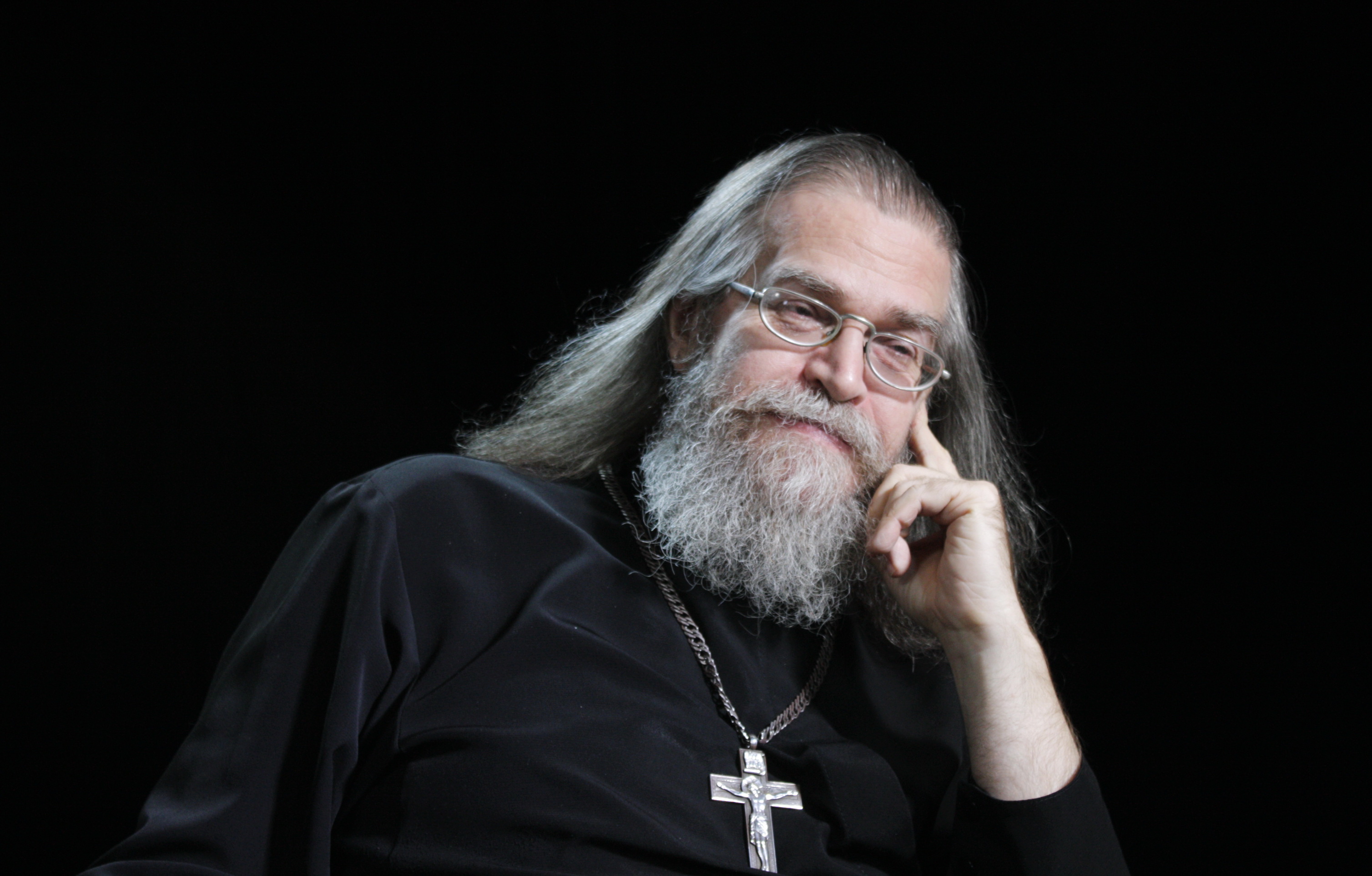

Yakov Krotov
Historian and priest, leading Radio Freedom Radio "Between Vera and Belief"
ykrotov@yahoo.com