
Translated material
The second shock of the Russian economy
Chairman of the Board of Directors of the Bank MDM, ex-head of the Federal Financial Market Service Oleg Vyugin told The New Times, what could be the consequences of the next wave of the crisis that has been experiencing the Russian economy for the past two years
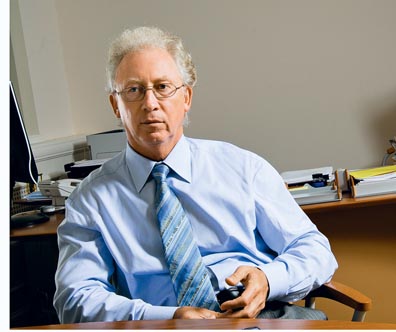
Oleg Vyacheslavovich, oil moved away from its minimums, the dollar sank below 80 rubles, and the mood ceased to be completely panic. Nevertheless, the oil reserves are still injected with records, and the forecast of experts interviewed by Bloomberg, which at $ 20 for the barrel, the Russian banking system will collapse, still on the table. How fair are this kind of predictions?
- Banks collapse, although they collapse according to a certain schedule, and not all banks collapse. Everything could have been much worse if it were not for the infusion of capital from the Bank of Russia. Last year, the state poured almost a trillion rubles. And according to the latest statistics, another 140 billion was invested by private shareholders. This made it possible to maintain a backbone in the banking system, which remains workable. As for the forecast of Bloomberg experts, we have not yet seen $ 20 per barrel, but the ruble has once again collapsed. And this, of course, is a serious blow to the capital of banks. I think that this year, if the Central Bank continues the course, new infusion will be required.
If we are talking about the Central Bank, recently his policy, which the regulator calls moderately strict, is criticized from all sides, but the Bank of Russia is still holding the defense. How strong is this defense and will the authorities resort to the printed machine if the situation begins to deteriorate again? Many consider devaluation the only means of filling the budget.
- The devaluation has already occurred, where else.
Where to get money
But at the current prices for oil and a dollar rate, there is no money for the execution of the budget. Where will the government get them from?
- In the current circumstances, the devaluation would mean that the Central Bank will begin to buy currency in order to throw additional rubles into the market. The Central Bank will hardly go for this, since the current course that has developed as a result of current oil prices is destructive for the real sector. The ability to buy technologies, import components, invest in equipment - all this is due to the course. Nails can probably be done without any components or complex equipment, and something is a little more complicated-it is unrealistic. So it is economically inappropriate. I think this question is not worth it. If you act by reducing bets, there will be high inflation, and the inflation scenario is not mentally accepted by the authorities. There are proposals to devalue the obligations of the state by increasing prices, but it is rejected, I know this for sure.
The search for a decision is on the path of reducing obligations. It’s hard to say how far they will go along this path. The minimum application is a 10 percent sequestration of the budget, with the exception of “protected” articles-the Ministry of Finance was made. Now the question has been raised that it is necessary to act more energetically and reduce the costs more strongly. Since in principle, based on the scenario of the average annual oil price at $ 30 per barrel, this and this year, there are not enough about 3 trillion rubles out of 16 trillion recorded in the budget law. And the Ministry of Finance estimates this amount even more. So the reduction is really required at the level of 20 %, and in all respects, including “protected”.
How real is it?
- It is clear that 3 trillion will not be able to subtract and no one will subtract them now. This is a question of a three -year perspective. In addition, there is hope that the price of oil will still increase. Therefore, most likely, this year there will be a certain reduction in obligations. They will certainly use the reserve fund, and even without announcing this in advance. The point here is that we have two elected years-this and 2018. It is clear that money will hold money to the Duma elections, and for 2018 everything will be allowed if oil prices do not rise. But this scenario implies the need for annual reduction of obligations.
“If we proceed from the scenario of the average annual oil price at $ 30 per barrel, this and this year, there are not enough about 3 trillion rubles out of 16 trillion recorded in the budget law”
Another opportunity, which is not yet officially considered and is not contained in the anti -crisis program, but is on the agenda is the issue of increasing taxes. Even some liberal economists - not openly, however, recommend increasing VAT and income tax - personal income tax. Personally, I believe that this is not necessary: the economy is on the decline, and the increase in taxes will only aggravate the situation. In addition, the question always arises: what are these taxes for? When they tried to introduce the Plato system, people directly said: the money goes into the pockets of specific people, and these people were called. So there may be unpleasant questions regarding individual unproductive expenses.
True, there is another reserve - defense expenses that increased from 900 billion per year to 3 more trillion in a very short period. It is clear that they are directed for specific goals - rearmament, foreign policy projects. But stretch your legs on the clothes. If there are no resources, and there is a correction there.
But Deputy Prime Minister Dmitry Rogozin claims that this is our locomotive ...
-He, of course, is a locomotive. But these are unproductive costs, costs that do not create tuning for the future. This is actually consumption. If you made 500 tanks and put them in the field, you actually buried this money into the ground. Therefore, I believe that a big trouble will not happen if any atomic cruiser is built not now, but in five years. We are not going to fight with anyone?
We are constantly spinning around the lack of money in the budget, and meanwhile the government recently announced the anti -crisis program worth 750 billion rubles. Is this the next reincarnation of “manual control”?
- This has already become a standard government reaction to the deterioration of economic conditions. So it was in the crisis of 2008-2009: the government pours funds into specific industries and enterprises, and some of the money is directed to social support for citizens. There was the same anti -crisis plan after the first stage of devaluation, a plan that was canceled because they “reached the bottom”. When it turned out that the bottom did not reach, the government developed another. True, there is one feature in it: about half is addressed to small and medium -sized businesses. This is done in order to once again reduce administrative pressure.

** Without hope for oil **Now oil is growing at rumors that Russia can agree with OPEC to reduce production. If this does not happen and the oil collapses again, how likely the introduction of hard currency control in Russia, a fixed course or a 20 percent tax on the transfer of currency abroad, as did, in Azerbaijan, and how are some economists propose to do in Russia?
- In Russia now, financiers and economists related to decision -making - it is clear that the president is making decisions, but nevertheless there is the management of the Central Bank, there is the leadership of the Ministry of Finance, whose opinion they are being listened to - they perfectly understand that such measures are ineffective. All loud statements are aimed at bringing the political effect. Say, we are not sitting back, we take measures: the two have already arrested, the third ran away. In reality, while these people hold their posts, nothing like that should be expected. Capital has stopped running and just nothing to run. At such prices for raw materials, some companies even sell assets abroad, since they need cache in Russia so as not to ruin the business. In addition, Russian depositors are now simply expelled from Western banks and there is only one path to them - to Russia. So the money necessary for servicing external debts leave the country, and the other capital even comes an influx. And in these circumstances, some restrictions are meaningless.
“If you made 500 tanks and put them in the field, you actually buried this money into the ground. Therefore, I believe that a big trouble will not happen if any atomic cruiser is built not now, but in five years. We are not going to fight with anyone? "
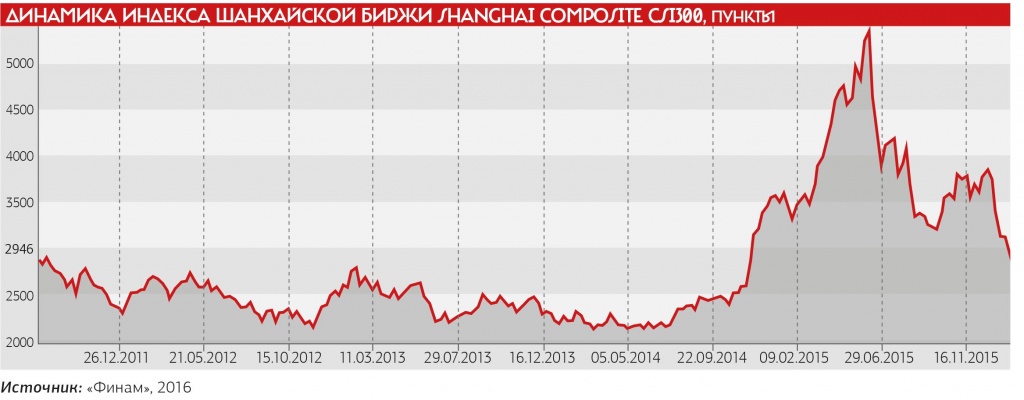
As for hopes for the growth of oil prices, 2.5 million barrels in the market are unnecessary, and in order to grow oil, they must leave the market. The possibility of agreement between Russia, Iran and Saudi Arabia is very doubtful. No one wants to give your share of the market. In addition, Iran and Saudi Arabia are almost at war. What can they agree on? So excess should go naturally - through the bankruptcy of oil companies. And this process is long - at least a year. In addition, the growth rate of oil consumption by China falls, and soon growth can be completely replaced by a fall. Now there is just a discussion, whether the Chinese economy is “soft” or “hard” landing. Soros, for example, believes that "tough." So here, too, no positive factors are visible to us. And China is not only oil, but also metals, coal.
Many connect China’s problems and turbulence in world financial markets with the beginning of the cycle of raising rates in the United States. Can the situation in the financial markets affect the Fed’s policy?
- I think that in itself an increase in the rate in December last year did not play a significant role. This was a long -awaited decision for which they were preparing. The Fed really sent a signal that she was ready to slow down with a increase in bets. And here is the main reason - China. The dollar is a world currency, and the American Central Bank controls interest rates in the world. Therefore, they, of course, feel their responsibility. The state of affairs in the Chinese economy affects the United States. Bad China - worse than America. And the American stock market demonstrates this very clearly.
Bad scenario
Can all this result in a global crisis, as in 2007-2009?
- The crisis always occurs unexpectedly, and this is what differs. Everything that is happening now was expected earlier. Everyone understands that the main players of the world economy are overloaded with debts. And if you recall that the crisis of 2008-2009 was debt, today little has changed. Then everything managed to extinguish with the help of the supreme policy of the American, European, Japanese Central Banks. They threw the last Joker on the table. The Joker worked, but there is nothing to throw further.
And what is the bad script?
- I would put China in the first place. Things in the economy will go there worse and worse, trust in the authorities will fall. Until recently, investors believed that the Chinese are very skillfully coping with financial and economic challenges. But recently they have not been coping. Moreover, they take steps that harm more than correct the situation. The outflow of capital and the fall in investment will continue. The state of affairs in China will inevitably affect the entire world economy. For stock markets, this will be a terrible blow.
In case of a “tough” landing of the Chinese economy, how likely the qualitative changes in Russia are, similar to those in the late 80s-early 90s of the last century?
- These questions, of course, are on the agenda. The answer to shock-and Russia consistently experienced two shocks, first in 2014, and then at the beginning of 2016-there can only be an attempt to more actively use the market forces of the device. The only reserve of the government - and they understand this - liberalization. Creating conditions under which there is an opportunity to survive. The lack of administrative barriers, control, as was the case in the 90s, when everyone was saved by himself. And the state did not particularly climb into these affairs. You can do something-do. In principle, and now this is happening. Therefore, the government puts on small and medium -sized businesses.
Photo: Roman Goncharov