
Translated material
Blood boy William
The historian of the Middle Ages managed to discover the source of the most important anti -Semitic myth
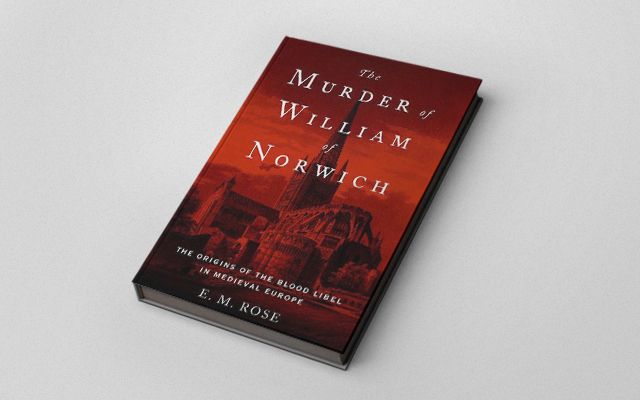
Bloody vet - the accusation of Jews of murdering Christians for ritual purposes - appeared in Europe in the Middle Ages. The American researcher Emily Rose published a monograph in which she described the primary source of this gloomy anti -Semitic myth, which centuries entrenched in the mass consciousness. According to Rose, it all began in England in the middle of the XII century amid the failures of the second crusade and the exhausting civil war. The study of Rose will surely become a classic of microhistory in the coming years. At the request of Medusa, journalist Julia Stutotina talks about the opening of Rose and her book, which brilliantly shows why historical science turns to the most painful problems of the past and what it means for the present - both time and society.
The work of Rose ( EM Rose ) is called “The Murder of William Noriga: the origin of the bloody slander in medieval Europe” (“The Murder of William of Norwich: The Origins of the Blood Libel in Medieval Europe”). A small book - 240 pages of text plus 160 pages of comments and bibliography - was published in the publishing house Oxford University Press. It is necessary to make a reservation that Emily Rose is not the first to suggest that the crime committed in 1144 in the city of Norida became a cornerstone in the myth of the murder of Christian children by Jews; However, it was Rose who found documents that find prosaic motives to create such a plot.
The researcher managed to convincingly answer the question “who is profitable?”: It turns out that this story helped to justify the Baron, guilty of the murder of a rich Jew, and significantly strengthened the authority of the local church. But the main thing is that of the practical steps taken to achieve short -term goals in a particular area, there was a universal mechanism of slander and manipulation, which was used not only in Western Europe, but in Central and Eastern, including Russia, but at the same time in front Asia and the Middle East. The story of William Noridge (Williama Norvichi) has become one of the main sources of pan -European anti -Semitism.
* * *
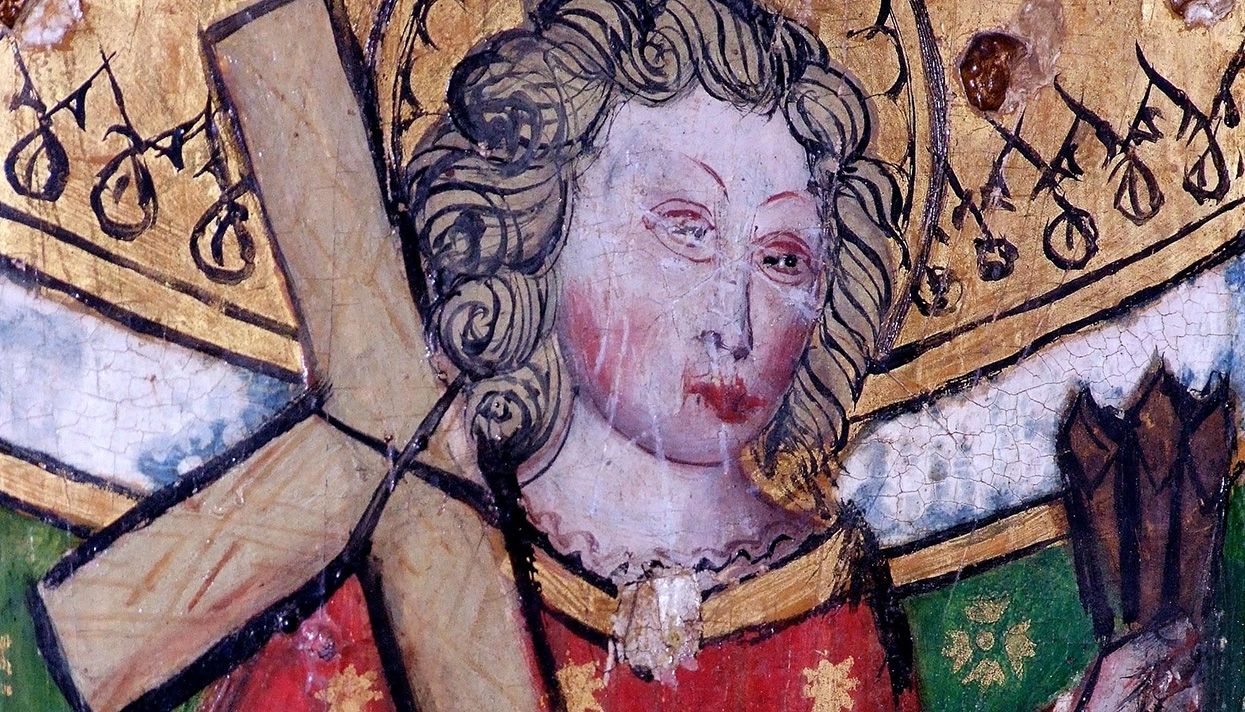
In March 1144, in the forest near Noridge (150 km northeast of London), the body of a teenager was found. The forester discovered the corpse on Easter Eve, the boy was stabbed, his hands were tied. The deceased was soon recognized-they turned out to be William, the 12-year-old apprentice of the Kozhevnik, a boy from a wealthy family. There was no investigation, the teenager was buried without special ceremonies and, apparently, forgot about the incident. Six years later, in 1150, the Benedictine monk Thomas from Monmouth, who had just arrived in Noride, began to investigate the death of William - over the next 25 years, he sought the canonization of the teenager as a martyr for faith - and achieved her. The text of the life became widely known, and a few years after the emergence of the "life and passions of William Noridzhsky", the news of the exactly the same murders began to come from England and France. The atmosphere in society was heated, and the mass executions of Jews began. In the same Norida, all Jews were killed in 1190. Until the expulsion of the Jews from England, exactly one hundred years remained.
The genuine manuscript of Thomas Montmutsky has been preserved, it was well studied, and back in the 19th century, its first publisher suspected the author of bias. Emily Rose re -read the text again, compared it with dozens of similar stories recorded mainly in France in the XII and beginning of the XIII centuries, found all the surviving documents related to Noridge and its inhabitants in an interest in the era, and recreated the difficult picture of the life of the English city a hundred years after the Norman conquest.
The researcher asked two questions: why did the interest in William flashed in Norij with renewed vigor a few years after the death of the boy and why did Thomas Monemus need a local saint? To answer both questions, you need to recall some dates:
- 1096: The building of the Cathedral in Norida is laid. Noride turns into a large trading knot connecting Eastern England and Normandy.
- 1135: the English king Henry I, the son of Wilhelm Conqueror, died. The barons did not recognize the daughter of Heinrich Matilda Queen and swore allegiance to Stefan Bloisky, Henry's nephew. In England, a civil war began, extending until 1154.
-1147-1149: a second crusade took place, which brought little results and heavy losses.
The Civil War of 1135-1154 was accompanied, of course, robberies and murders. One of the chroniclers of the middle of the XII century, describing the torture to which the soldiers subjected the inhabitants, added that in those years "Christ and the saints slept." The famous Baron-robber Joffrea de Mandeville operated near Noridge just in 1144, in the year of the death of William. Violence, who was repaired by barons, hit not only peasants and artisans, but also by the clergy, from whom the lands were selected, and by merchants from whom money and goods were selected. So the death of the Noriga apprentice against the backdrop of such atrocities could hardly arouse long -term interest. And when the knights and their detachments returned to England after an unsuccessful crusade, no one was dealing with a child-just not to fall under a hot hand for another ruined baron. Nevertheless, some crimes of the feudal lords nevertheless reached the trial. One of them, according to Emily Rose, served as a catalyst for the canonization of the boy William.
In 1149, the knight Simon de Novers, the offspring of an impoverished Norman family, hired killers for reprisal with his Jewish creditor named Deleso. Deleso was the most prominent representative of the Noridge Jewish community. He was also associated with the bankers of London and other large cities of England. The crime committed in Norida was disclosed without difficulty: the caught killers immediately indicated to the customer. It came to King Stefan. In London, in 1150, a court was held, on which De Novers was defended by Bishop Noridge, William de Turbeville. It should be noted that the family of de Novers was closely connected with the Nori diocese and the bishop itself.
De Turbeville chose an aggressive line of defense: he recalled the story of the undisclosed murder of the apprentice of William and accused Jews of his death. In the retelling of Thomas of the Monmut, the shock part of the bishop’s speech sounded like this: “We, Christians, will not respond to the accusation of the Jews [that Deleso was killed on the orders of de Novers], until the Jews prove that they were involved in the murder of our Christian boy.” Further, de Turbeville described the picture of the crime: supposedly representatives of the Jewish community lured William from his mother’s house with a promise of work, imprisoned him in one of the houses, was cruelly tormented for three days, and on a passionate Friday they killed and threw the body in the forest. For those who did not understand the hint, the bishop directly explained that the Jews killed an innocent child just as they killed Christ. Thanks to the judicial attack, de Turbeville turned out that Simon de Novers involuntarily avenged the boy, dealing with Deleso. The court participants suddenly discovered that from the murder of a Jew with a knight they moved to the investigation of the murder of a boy by Jews.
The testimony of three witnesses were read out at the trial: a wealthy citizen, a baptized Jew and a maid. It is noteworthy that the city dweller was dead by the time of the court, and the court presented the content of his dying confession - in violation of the secrets of confession. The name of the maid was not named at the trial, but she was attributed to a colorful story about how, through the ajar door, she saw the torment of the poor William. And the baptized Jew repeated several legends about how the Jews, having conspired, betrayed the crusaders in the hands of Saracens. As a result, the court did not find the strength to withstand the pressure of the bishop of Noridge and felt the best to postpone the hearing in the case of Simon de Novers until better times. These times, apparently, did not come, because 20 years later this worthy knight appeared in the East English chronicles as an instigator of riots.
The investigation of the killing of William also did not advance, and the accused did not appear in it, but the reputation of the Jewish community of Noridge was damaged, many of its members decided to leave the city, without waiting for the development of events. Those who remained, as mentioned above, were killed in 1190.
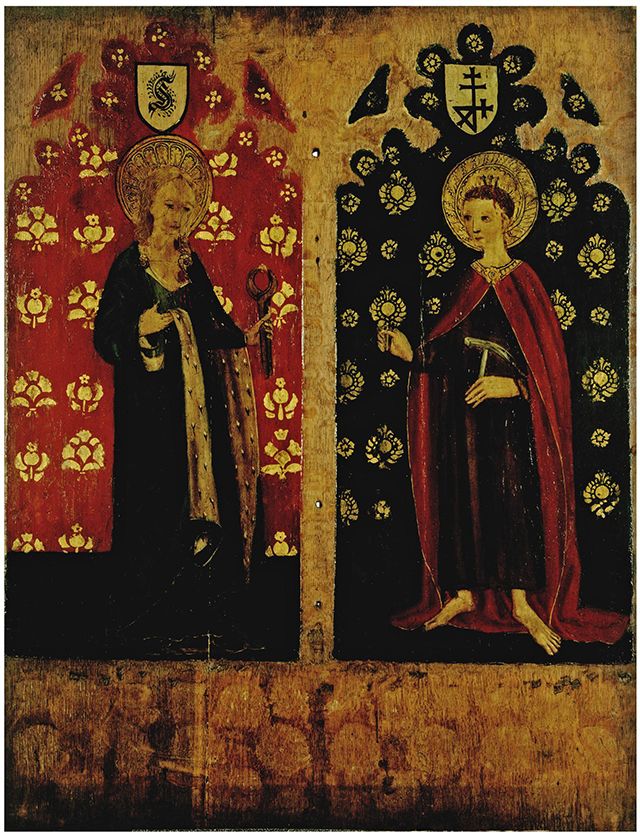
William’s body was exhumed at the insistence of the bishop and reburied near the Cathedral. The Bishop de Türbeville himself was well aware that he had the opportunity to find a holy cartridge for Noriga: a rapidly growing, wealthy city did not have his heavenly patron. The London court aroused considerable interest in the fate of the boy, it remained to put his story in a living form. This was entrusted to Thomas Monmutsky, who by 1154 wrote the first, short version of “Life and Passion of St. William Noridge, ”and in the next 20 years expanded him to five books. The repeated reburial of William's remains attracted pilgrims to the city, and the boy turned into a real local saint, which the bishop achieved. So Bishop de Türbeville, with his participation in the London process over Simon de Novers, managed to solve two tasks: he defended the knight from accusing the murder and acquired the holy martyr so necessary for his diocese.
* * *
Emily Rose in his monograph considers not only a number of similar stories in which the murder of a young Christian was attributed to the local Jewish community, but also the mechanics of spreading the plot of William. Despite all the wars, fires, destruction and other misfortunes that have occurred over the past 800 years, a large number of documents have been preserved testifying to the travels of Bishop de Turbeville and his participation in various meetings of the clergy on both sides of the La-Channel. For example, in church affairs, the bishop was in 1170 in Blois. It was in Blois in 1171 that the young man was killed, Jews were accused of crime and burned from 30 to 40 people without trial, some were preliminary cruelly tortured. It is hardly just a coincidence: most likely, the bishop shared the successful experience of the canonization of the martyr William, and the local authorities found a convenient way to reveal the crime and extract political benefits from it. Events developed in the same way in other cities.
In the book of Rose there is a place for the analysis of folk religiosity and popular superstitions of the XII century, but nowhere the author allows himself to explain the events that occurred with a collective unconscious, congenital xenophobia, mass hysteria and other stamps from the arsenal of popular magazines.
At the beginning of the book, the researcher specifically stipulates that her work is limited by the chronological framework, that she does not draw far-ending conclusions and consciously stops only at the Anglo-French materials, without delving into similar events in German lands or in eastern Europe. Despite these restrictions, Emily Rose managed to free an event from the propaganda husk, the echoes of which were heard throughout Europe and the Middle East a century later.
Speaking about the work of Rose, one cannot fail to note this: the researcher used one of the only research method - she read sources, read in good faith and unbiased. And conscientiousness and impartiality are rare virtues, and therefore it is so difficult to dissipate errors. In 1911, Vladimir Korolenko in his famous appeal “To Russian Society. Regarding the bloody slander of the Jews ”, in connection with the Bailis affair , he wrote:“ Many dads, spiritual and secular rulers stigmatized the evil superstition and once forbid the authorities to investigate the murders of religious significance. In our country, such a decree was issued on March 6, 1817 by Emperor Alexander I ... But decrees smolder in archives, and superstitions are tenacious. ” There is only one weapon against superstitions - Education, and Emily Rose's book about William Noridge is best suited to combat ignorance.
Julia Stratotina