
Original Material
The British are still asking if the Russians love their children, too
Meanwhile in Russia, on Thursday, February 4, 2016
- Another Russian soldier perished in definitely-not-combat in Syria this week.
- Russia's 2015 “banker of the year” has been nominated for a top spot in the state's gas monopoly. (His bank lost $400 million last year, but his dad heads the Security Council.)
- Lawyers for Ukrainian POW Nadezhda Savchenko say they've got new evidence from the spooks in Kiev proving that she was kidnapped and transferred against her will into Russia.
- There's a new TV show on British television. It depicts WWIII between Russia and NATO, and Russia's ambassador in Latvia is none too pleased.
- The Russian Orthodox Church has ordered its clergy to watch their damned mouths on social media.
- Russia may be the world's leading oil producer, but Moscow is poised to start buying oil from Iran, too. For reasons.
- Moscow is accusing Turkey of plotting a secret invasion of Syria.
- Russia's recession is over, according to a top government official. (But it could be back on really soon.)
Another Russian soldier dies in Syria, but don't you dare say ‘KIA’
A Russian military advisor died earlier this week in Syria. According to a spokesman for the Russian Defense Ministry, the soldier was fired upon while conducting training exercises with Syrian troops at an army base in Homs province. He was hospitalized and died a week later. Russian defense officials insist that the soldier wasn't participating in combat. (Moscow has vowed to limit its military intervention in Syria to airstrikes.)
Don't tell the Corruption Perceptions Index people about this one...
The son of Nikolai Patrushev, the secretary of Russia's Security Council, has been nominated for a seat on the board of directors at Gazprom, the state-owned gas giant. Kremlin officials told reporters that there's nothing “abnormal” about the children of senior government officials taking top posts at state-owned companies. Last year, the Association of Russian Banks named Patrushev's son “banker of the year,” though his bank, Rosselkhozbank, lost more than $400 million in the first three quarters of 2015, finishing the year as Russia's fourth-worst performing bank.
‘The Wire’—season six
A lawyer for Nadezhda Savchenko, the Ukrainian soldier now on trial in Russia for facilitating the murder of two Russian journalists in eastern Ukraine, has published audio recordings of alleged negotiations about Savchenko's capture and transfer to Russian authorities. The audiotapes supposedly capture a conversation between the former head of the breakaway Luhansk People's Republic and Pavel Karpov, a figure who's suspected of organizing rightwing movements inside Russia. Savchenko claims Karpov is the one who illegally transferred her to Russia. Her legal team says it got the recordings from Ukraine's intelligence agency.
The British are still asking if the Russians love their children, too
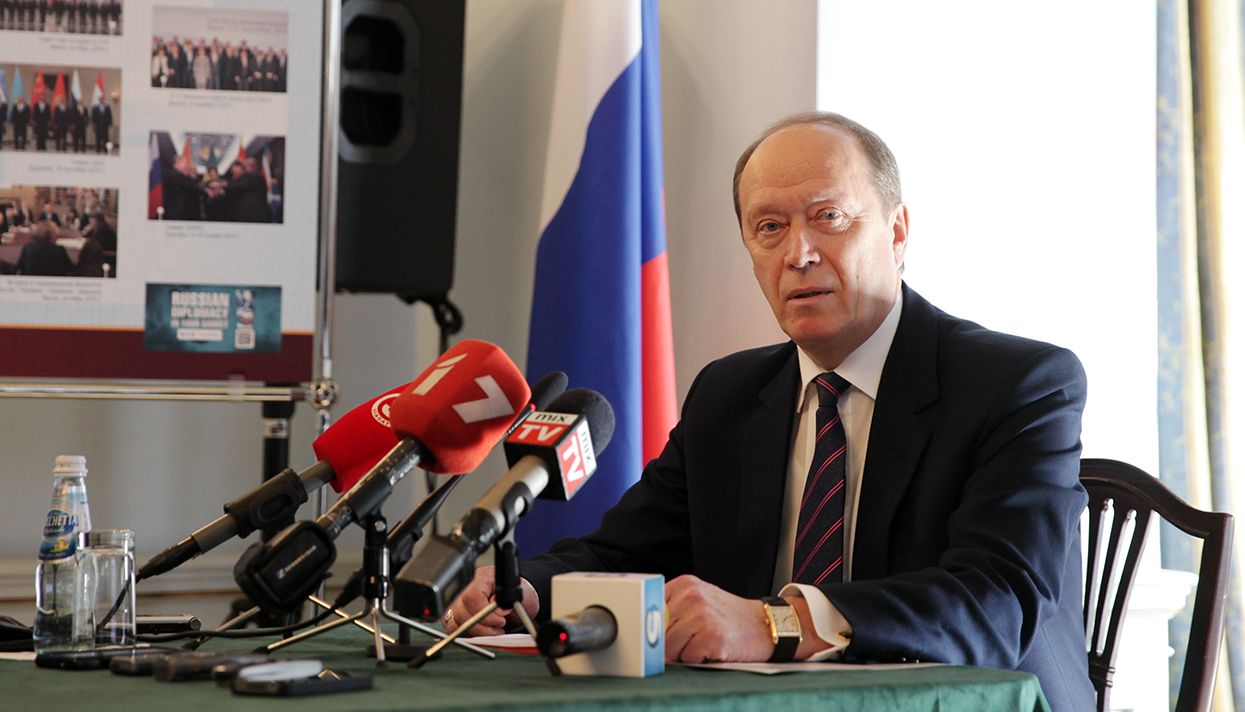
Russia's ambassador to Latvia, Alexander Veshnyakov, says a new film by the BBC, “World War Three: Inside the War Room,” is a “dangerous provocation.” The movie depicts a hypothetical armed conflict between Russia and NATO, where pro-Russian demonstrations lead to a “Russian Spring” in Latvia and Estonia, drawing in Russian and NATO intervention, which escalates to a full nuclear war.
Veshnyakov says the film tries to demonize Russia as part of the West's information war against Moscow, and to marginalize any voices in Europe that seek better relations with the Kremlin. The movie is also an attempt to justify a significant (and unnecessary) expansion of funding for NATO, the ambassador argues.
Russian Orthodox Church to Russian Orthodox priests: mind your tweets, you twits
The Russian Orthodox clergy is getting some new marching orders when it comes to using social media. Namely, priests are being told to watch their mouths better, when writing about the church's position on various social issues. In late December 2015, the church fired its long-time spokesman, Archpriest Vsevolod Chaplin, who was known for his outspoken comments online and to the media.
Russia, the world's leading oil producer, agrees to buy oil from Iran
Russia's top oil producer, Rosneft, is in talks to start buying oil from Iran, according to Ali Akbar Velayati, who assists Ayatollah Ali Khamenei on international affairs. Velayati told the Russian news agency Interfax that he discussed the deal at a recent meeting with Russian Security Council Chairman Nikolai Patrushev and Rosneft head Igor Sechin. Iran is also hoping for a new $5-billion loan from Moscow.
Moscow eyeballs Turkey on Syrian border, whispers, ‘I see you...’
A spokesman for the Russian Defense Ministry told reporters today that there are secret invasion preparations underway on the Turkish side of the Turkish-Syrian border. Moscow also accuses Turkish forces of shelling populated areas in northern Latakia, where Russia's Khmeimim airbase is located.
Top official says Russia's recession is over, technically speaking, for now
The head of the Ministry of Economic Development, Alexey Ulyukaev, has declared that Russia's recession is over, saying the economy has not declined for the past two consecutive quarters. Ulyukaev didn't specify when exactly the recession ended, though the news agency Interfax speculates that he meant Russia actually experienced economic growth in the third quarter of 2015.
The Russian economy contracted again in the fourth quarter of 2015, so the recession is back on, if the slump continues into the first quarter of 2016.