
Translated material
"He went to the ghetto of his own free will"
Interview by the director of the film "Yang Karsky" - about the man who told the world about the Holocaust
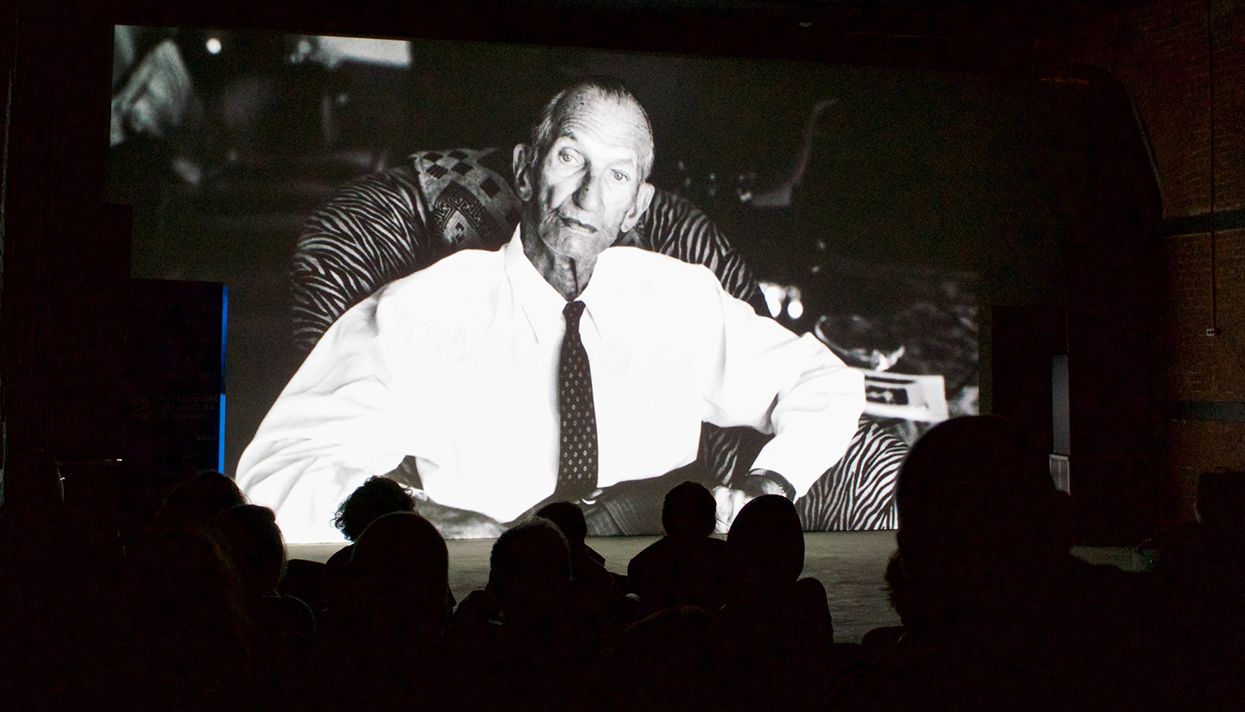
In Russian cinemas on February 4, the documentary “Yan Karsky. The righteous of the world ”of Slavomir Grunberg, laureate of the Emmy Prize. The director tells the story of a participant in the Polish resistance of Jan Karsky, the first person who visited the Warsaw Ghetto in 1942 and informed the British and the United States about the mass extermination of Jews. Especially for Medusa, with Slavomir Grunberg, the Observer of Radio Freedom, Elena Fanailova , the film, the mission of Karskoy and the Holocaust, spoke. The interview was translated from Polish Svetlana Kirillina (Polish Cultural Center).
- I want to start with a personal question: why did you devote the film to your father?
- My father Karol Grunberg was a historian, teacher, was engaged in modern history and World War II, wrote more than 20 books. Some of them were even translated into Russian, including Hitler's biography. He really wanted me to do something on this topic, and when he found out that I was working on the film, he supported me very much. Unfortunately, he died before I finished the picture, and did not have time to see it. But I decided to devote work to him.
- Your relatives survived the Second World War and the Holocaust?
- My father and his mother fled from the then Polish Drogobych deep into Russia, ended up in Armenia, survived the war there. All relatives remaining in Drogobych died. One family, as I know, committed suicide, they did not want to get to the Belzhets concentration camp, where all the Jews Dorogovych were taken away. Half a million Jews died there, I think 60-70 people from my family from my father died in Belzha. Only he and his mother survived.
Mom's family was also hidden, they accepted Catholicism, pretended to be Poles, they managed to escape in this way. My grandfather from the mother was an officer and died in Katyn. My grandmother survived the war in the village, and there she saved.
That is, Jewry and religion were important for the family of my father. Grandmother and father returned to Poland and did not leave anywhere else.
- When did they return?
-In 1945. My father studied in Moscow, then he still graduated from graduate school and sometimes came to Russia. He spoke great Russian, in German and French, he had many contacts with Soviet historians.
- When did you find out about the karsk? In Soviet times, it was impossible to mention him: he left for America, did not welcome the fact that Poland after the Second World War was under the rule of Stalin and Soviets. When did it become possible to talk about him?
- I went to America in 1981. There, of course, I had access to information to which there was no access in Poland. I heard about Kara in the late 1980s or in the early 1990s-from friends who personally knew him. I heard my last name, but I knew little about a man. I already made a documentary in which Karsky was one of the characters, shot it in the 1990s, but even then I was not very interested in them. In fact, he became interested in me. I shot a film that he chose the winner of his own award "For moral courage in choosing the subjects of a documentary." It was the American film "Prayer at School", created for television, about the separation of the state from the church. A very American topic, but at the same time universal. He then saw him, because together with some organization he awarded the named after Jan Karsky. It was 2000. As a reward, I received a statuette with his photo. Six months later, Kara was gone.
I looked at his photo for seven years. This is a very beautiful figurine, glass, and in the glass his photo is a photo of a young man. In 2007, several of my New York acquaintances came to me and said: “Listen, Slavac, you Pole, Jew, American-so much in common with Karsky, because he was an honorary citizen of Israel, the Jewish theme is so close to him!” These friends were connected with diplomacy, among them-the Polish consul in New York. They considered that this topic will interest me, that Karsky is a person who is worth making a film for spectators around the world. And that I can tell this story so that it does not become another purely Polish film that will not be beyond the boundaries of the country. The film was supposed to be universal. Of course, I was flattered that such people came to me that they trust me like that. The ambitions leaped.
But I did not know how to do this: I always made documentaries about the living, but here for the first time I had to work on a film about a departed person. The first sentences were from them - to make a film with actors, not a plot film, but to include reconstruction of some scenes in it. For example, there is a scene of a meeting with Roosevelt in which the actors who depict Roosevelt, Kara ... I, as a documentary director, never believed in this technique, he annoyed me. There is not always enough money for good actors, props - such scenes are always the weakest place in the film. I abandoned this idea. Then there was an idea to make rotoscoping - this is a technique in which the actors' game and animation are united, but I also did not really like it.
In 2009, I watched the Israeli animated film “Waltz with Bashir”. Then I decided that this is exactly what I needed to tell the history of Karsky: use animation to reproduce what we cannot reproduce, historical scenes. I tried to consult with Yoni Gudman, director of the animation of the movie “Waltz with Bashir”, we corresponded, tried to work together, but he was busy on another project, I could not find the funds that he asked for this work. As a result, we found animators in Poland, two teams under the guidance of director Tomas Nedzveda - this is a person who has developed the entire style of the film. He had an idea how to visually tell the story. I made one short film using animation, but in the essence of the experience of such work I did not have. Even when he sent me several sketches, I was not completely sure whether it would work, although I tried to prove to everyone else that this is exactly what was needed.
The idea to use animation, however, was a serious problem when finding funds. When I said what I was working on and that the film will be 15-20% of the animation, all shook my head, saying that it is impossible and pointless. At the stage of collecting funds for the film, everyone became my enemies, who thought that Greenberg was crazy, his idea was stupid. I have worked on the film for seven years, including because I just had no money. This animation, for which I kept holding so, eventually turned out to be the best idea, everyone is praised now, but then, on paper, it seemed crazy.
Tomas Nedzvedz, as it turned out later, already in the process of work, reacted to this film with a special trepidation, because his family saved the Jewish family during the war. He has a medal of the memorial complex to the poison of youth at home. We worked on Skype, phone and e -mail, I am in America, he is in Poland, and met only at the premiere. I sent him the information, as I see the scene, he sent the option, I corrected it - for example, Kara is 25 years old, and he looks 35, he corrected, then I made comments again, he corrected it again, so it all happened. But it worked. He was very patient with my ideas, I also calmly perceived his proposals, we did not conflict. Then the second group joined, because it began a new project, and everyone came to my mind, new scenes that need to be drawn. They needed to somehow adapt to what has already been created, to continue the Tomash line, it was not easy. But everything worked out.
Darius Yablononsky and the team of producers incredibly helped me at the final stage. I sent him footage, he showed them to the head of the documentary of the documentary films of the First Channel of Polish Television, Andrzej Fishik, and they both came to the conclusion that it was great. From that moment he put into business all his forces and connections, and money was found. The Minister of Culture fell in love with this film, it was shown to other organizations, and money appeared, which were not six years old. It became clear that the film can be finished.
Let us return two years ago until that moment: I realized that I would generally work on this film thanks to crowdfunding. I launched two projects on the Kickstarter website for finding funds to pay for archival materials that cost about 60 thousand dollars - the most expensive part of the film. I understood that in Poland I could not get that kind of money, but I knew that I would not save on archival materials: I wanted to find the best shots regardless of the price. There would be no more film without Karskoy in the documentary “Shoa”. I wanted to make a film in English and searched for notes on which Karsky speaks English. There were records where he was already at the age and speaks in Polish, but he mainly repeated what he had already said earlier, and it did not look as fresh as in 1978, when he interviewed Lancman, for the first time speaking everything. Then he was the most emotional, cried. In fact, at that moment he first remembered all the horrors, and these materials are more valuable than later, when he told, as the documentary say, “worse”. Maybe the viewer does not see this difference, but it is. I saw her.
- Working on the script, you carefully selected information from his autobiographical book “I testify to the world. History of the underground state ”and from the film of Lancman. You have removed from these sources only one storyline - its efforts to inform the world about the Holocaust, the Kara and Jews line, right?
- Yes, this is the theme of the film. You can make several films on various topics about Kara, and we are now working on trilogy - Kara films before the war and Kara after the war. We want to tell more about his upbringing, his wife, his life in Washington, when he taught. I needed to concentrate on one thing, and this is the history of the Holocaust and the Second World War.
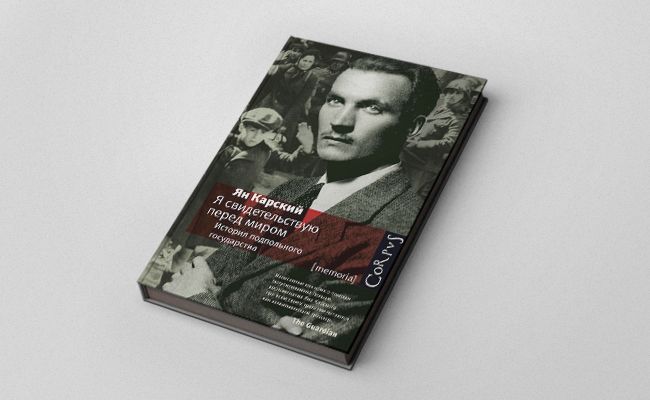
-Can you imagine that someday about Karsk, a big pink movie will be shot? His biography is a very Hollywood topic.
- Yes, they say, his life is cooler than James Bond's adventures, and she shocks more than the story of Bond. I know that now there are several groups working on such a film. This is an American group, and I heard that they think about it in Poland. The Americans were at my premiere in New York, we even drank coffee together later, they were very impressed, asked for a copy of the film, wanted me to become their consultant. They said that the money has already been collected, so there is only a matter of time - maybe the film will be released in a year, maybe in two. But he will definitely come out.
- How did you manage to agree with Tom Wood, the biographer of Karsk, his former student? And how did other students of Karskoy, now well -known political scientists appeared in the film?
- Tom Wood lives in Nashville, Tennessee, we called him, met, he is very friendly, helped us a lot: we shot until the last moment, rebuilding the whole story a little. There were no problems with other heroes either, we were looking for first of all his students. Only half of the interview, maybe even a third, entered the film, because many were repeated, or there was simply not enough time.
- Another figure that will probably excite the post -Soviet spectator - Zbignnev Brzezinsky, who was one of the ideologists of the anti -Soviet confrontation. In your film, it is quite ordinary and human.
“I shot it in Washington.” We agreed to talk only about Kara, we had only half an hour, but I did not know that he had seen Karsky when he was ten years old. I expected to hear a story from Brzezinsky - as a person associated with the American government. The story of how Karsky came to the father of Brzezinsky - he was a consul in Canada - and told him what happened in small Polish cities, where there were no Jews left, was an incredible surprise for me. This happens in life.
- There are very difficult moments in the film, but what was the most difficult in your work?
- The most emotionally complex moment was the installation of archival materials from the ghetto. Installation lasted several months. Sometimes the girl and I sat and for several days reviewed the same shots. To do this, it was just necessary to become a different person, forget about emotions, look at it as if through glass. A selection of these materials is the worst of work, I could not sleep later. It seemed in me some animal beginning awakened when I was looking for materials that would best reflect Kara emotions, his tears, his experiences would show. It was necessary to find the most cruel scenes so that they act on the viewer, as on Karsky himself. Such searches are contrary to the role of a documentary, who should make the viewer see something and made conclusions himself, and then I had to rummage in the dirtiest, the most terrible and pull it out. This is not very ethical even. I did not want to do this, I did not like it, but I felt that in the present case I had to. I seemed to put on a mask and did it.
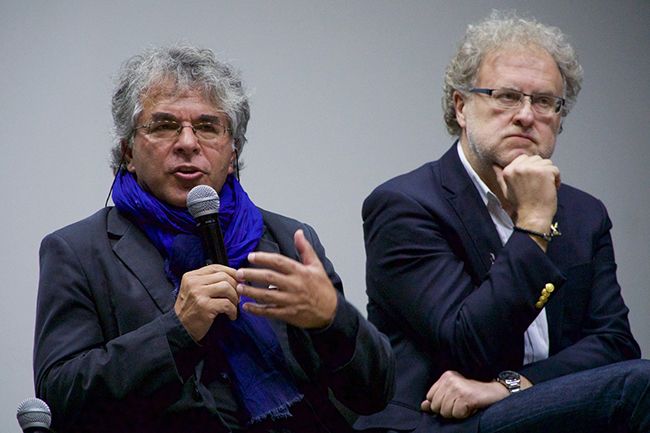
- When the film was shown in Poland, did he cause debate? Karsky is an impeccable figure, a hero for the Poles, but relations with Jews, especially among the conservative part of society, still remain a rather complicated topic.
- The premiere of the film was held at the Museum of the History of Polish Jews. Ovasions after the film lasted four minutes. I got up, then sat down, but everyone continued to applaud, I got up again ... Criticism in the press spoke very well about the film, such unity is infrequent. The reviews were from good to beautiful. There were no bad reviews. This was a real surprise for me. I shot 40 films, the reaction was different, but this one, the first, released in a wide rental, was shown in 50 cinemas throughout Poland. Something like here, in Russia - the film is shown in 40 cinemas in ten cities. The Ministry of Education of Poland took a patronage over it: according to the program, this film was supposed to show and discuss at 6,000 schools, it is recommended to teachers to teach history about the Holocaust.
Of course, there are people who want to see Kara exclusively a hero, almost a celestial, and here it turns out that he said in the first report that the Poles were anti -Semites. I included this in the film because I could not do otherwise, it is true. And then he realized that he repeated this all the time, this is the leitmotif of his interview. He talked about this openly, and I showed it in the film. Someone in the hall got up and said: how could I? The case from his student life is also important here, when Polish students beat a Jew at the university in Lviv, and he did not stand him, because he was afraid that he would be mutilated in a fight and he could not become a diplomat. Then he was ashamed of his passivity. This, of course, is very angry with the "right" Poles who divide the world only into black and white.
- What attracts you the most, amazes in Kara? What makes him an interesting hero for you? It turns out that everyone who finds out about Kara, fall in love with it and cannot forget its history.
- I was attracted by the fact that he was 25 years old, when the war began, he was very young and did not fully realize how important what he was doing. But many of us could not do this in his place. When he was offered to go to the ghetto and see him from the inside, he was on the list of sought -to -those of the Gestapo, and if they found him, they simply checked the documents on the street, he would have shot him. And he, of his own free will, goes to the ghetto and then tells the rulers of this world - Lords of Humanity, as he called them - about what he saw. Then he was offered to change into the overseer's costume to get into the concentration camp - such decisions are not given with ease. If we try to put ourselves in his place, would we do so? It was this courage that attracted me. He risked his life in the name of others. This is enough to make a film about him. Such a film can affect other young people who are now looking for landmarks and are able to change the world. Kara was just such a person, although he thought he did not do this - and he changed the world.
All his life he dreamed of being a diplomat, but after the war he worked at the university. Now, 15 years after his death, he became him. This film travels around the world, it was well accepted in Israel, Poland, America ... It turned out that Karsky became a model for people around the world.
PS See also: Transfer of Yana Kara to Radio Liberty.
Elena Fanailova