
Translated material
Food in bulk, we live well
Russian record holder for products costs: Report from the Sharai district of Chechnya
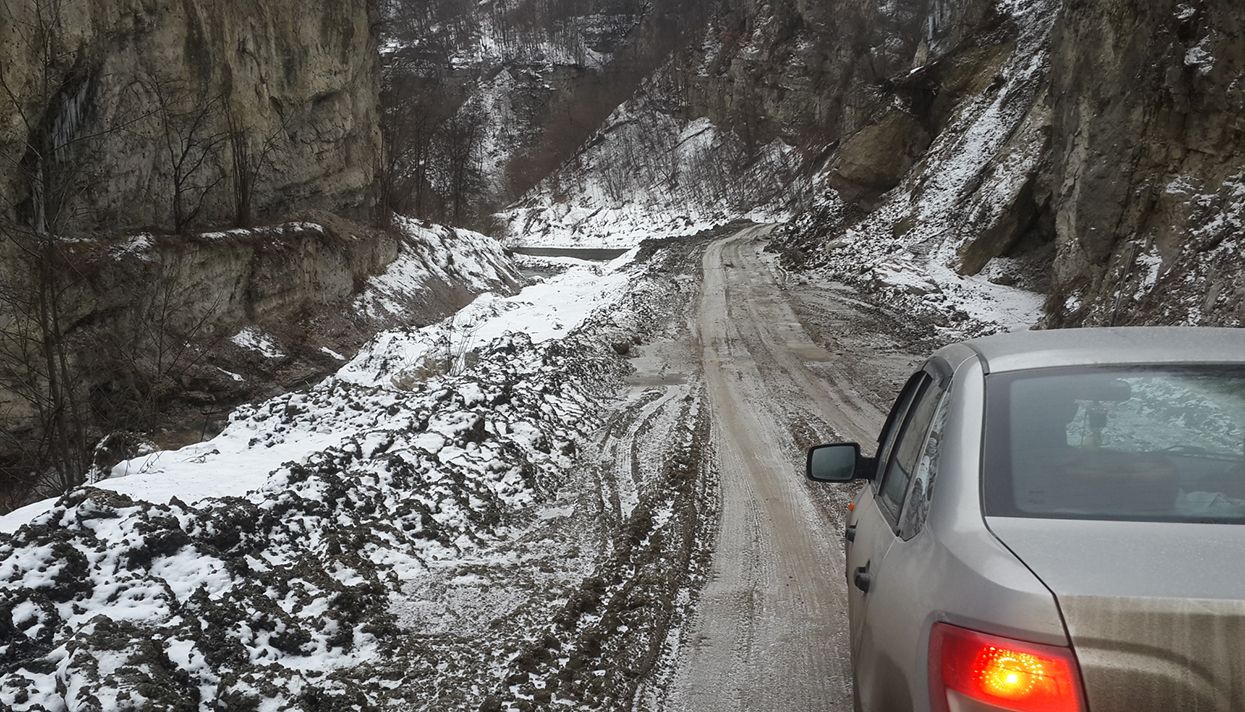
According to the official data of Rosstat, the Sharoysky district (Chechnya) is the most wealthy territory in Russia. If you believe the statistics, every resident of this mountainous, inaccessible area only spent more than 350 thousand rubles in 2014 - that is, 20 times more than in neighboring areas (there are no more fresh data yet). In the most well -fed - officially - the region of Russia, the special correspondent of "Medusa" Ilya Zhegulev went.
Even the indigenous inhabitants of Grozny are lost when you ask them how to get to the Sharoy district. “This is necessary by taxi, only there should be an SUV-something else will simply not pass there,” the local journalist Milan Mazaeva advises (which it seems that there is nothing to do there). Sharoy district - the highest and most inaccessible terrain in the Chechen Republic. It is located in the south of the region, on the border with Dagestan and Georgia. Intercity buses from Grozny do not go there; You can get to Chatea in the neighboring area, and from there - only by car.
According to official Russian statistics, the sparsely populated Sharoy district is also a completely unique place. Locals are more than anywhere else in Russia, they spend on food. For example, in 2014, each resident of the district, including the elderly and children, used food for 355,926 rubles, that is, everyone spent about 30 thousand rubles a month. In the neighboring Tsuntinsky district in Dagestan, the products spent 20 times less during the same time.
“How can they eat so much? Maybe they have better appetite? " - Abuyazid, a resident of the neighboring Shata district, who decided to give me from Grozny, is surprised. On the way, we look at his house - take a spare rubber and have a bite; The wife gives a home slurry-lumpy (national meat dish).
Abuazid works as a taxi driver. Many men in his village are the same, there is no other work in the Shata district. Every day he travels to Grozny, to which 65 kilometers. You can move to the capital of the republic, renting a one -room apartment there costs only about ten thousand rubles. But in Shaty - the house and parents. “If the apartment cost seven thousand a month, we would move,” Abuyazid admits. Its monthly income does not exceed 12 thousand after the percentage of the percentage that goes away - for gasoline and for a loan for the new Lada Granta. The wife works in the employment service, earns 15 thousand rubles. All money goes to food, plus a road for a daughter, who every day travels to Grozny College to study.
Abuyazid and it is interesting to see how people live in the Sharoy district, since they spend 30 thousand a month on food.
After the shaft, the road turns into an ice rut, but Lada Granta copes. We come to the most populated village of the district - Kenhi. We meet along the roads and offer to throw it up; A hitchhiking is the only way to move around the Sharaki district: there are no buses, for the whole area - just one taxi driver. The girl's name is Fatima, she decided to visit relatives. “It’s normal with food, if necessary, we are going to buy in bulk at Hasavyurt,” says Fatima. According to her, only school teachers have work in the village, and all men go to work outside Chechen - who is in Moscow and who in Astrakhan.
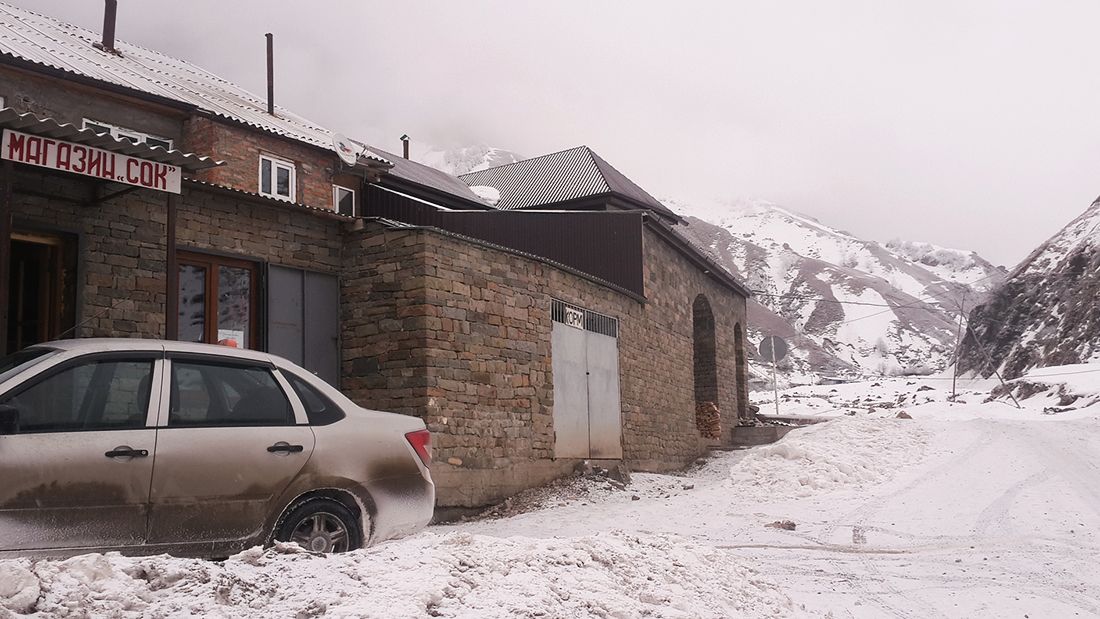
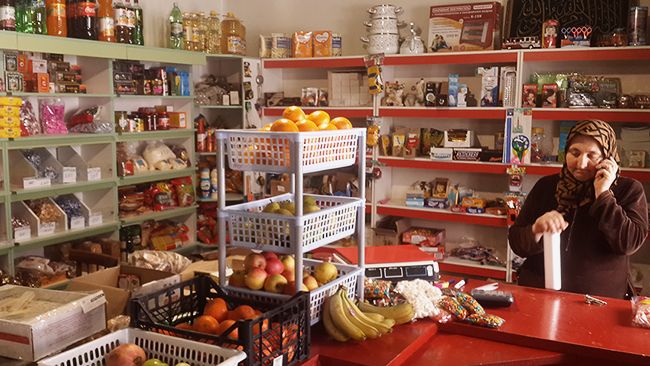
The main store of the village of Kenha is a small one -story building with the inscription "Sok". There is no abundance inside. Schirpotreb occupies half the store, the other half - products. A little fruits, cereals, canned food and confectionery are the entire assortment. The family business of entrepreneur Rasul Isaeva is cracking at the seams: no more than ten customers go to the store per day. Dairy products, meat and vegetables are not bought - each has their own. Isaev thought to sell fresh bread, bought a bread maker, but the matter did not go. Even the villagers prefer to cook bread at home. In addition, many buy in debt - the seller shows three large debt notebooks; Every Kurban-Bayram he starts a new one, although people have not paid for old debts yet.
Daily revenue is good if thousands are one and a half, says Isaev. And it happens that they come in only once a day for a notebook and a pen of schoolchildren.
We come to the village of Shara; We did not find a store here at all. Previously, a familiar taxi driver Abuazida was holding a tent here. It turned out that a year ago she closed her - after the military moved out of here, it became unprofitable to work. On the hill where the store used to be, there is an elderly man and is going to smoke. I urgently climb to him to ask where he takes the products, and in such quantities. His name is Musa. "Products? Why do you need products? Come to me, you will have lunch, ”he replies.
His wife Marika is fussing at home: “From Russia? From Moscow? Now we will feed you. We have always fed Russians. They stood here, and the husband all the time gave them something-either chicken, then cheese. I saved and scolded him for his generosity, for which he called me a crocodile. The soldiers came, and he told them: “And there my crocodile lives.” Of course, I was offended. Why am I a crocodile? "
Marika has five children. The youngest daughter is studying at the Pedagogical Institute and is already teaching at a local school in elementary grades. At the school for 30 students - four teachers: mathematics, Russian and Chechen languages, Islam. English is also taught, but on Skype. In 2006, electricity was held with the Kadyrov Foundation for the money of the Kadyrov Foundation ; The Sharoy district was the last in Chechnya, where the light appeared. Now there is even a dedicated Internet line.
The trouble is only with gas, it is not expected in the near future, therefore they are drowned in the old fashioned way - with firewood. For this, at a local school, the youngest son of Marika is just responsible - he is working as a stoker there. The eldest, Isa, worked in the police, but after he got into an accident on a police car, he was fired. “We have all our own economy - meat, cheese, cottage cheese, eggs, bread, vegetables,” says Marika. They sometimes sell home products to neighbors, but more often they live in a natural exchange with them - the heads of cheese are changed to clothes.
I am treated to potatoes with meat and tea with sweets. Sweets and sweets are perhaps the only thing that is bought at Hime - the administrative center of the Sharai district. Once a week, a family of seven people buys for all sweets-for two or three thousand rubles. It turns out that she spends a maximum of 12 thousand on food per month. The remaining ten families in the village lead a similar lifestyle. About the same - only without light - they lived here both under Johara Dudaev, and under Aslan Maskhadov. Marika discovers some difference only by comparing the current times with the Soviet ones. “Then they forbidden to have a lot of livestock, and Kadyrov, on the contrary, says - start cattle, does not prohibit anything,” she rejoices. She recalls the separatists and militants unkindly: “They came to us too, they were Hottabych with him ( the field commander Huttab - approx. Medusa ). Then the old people went out and did not let them into the area, persuaded them to get around us. ”
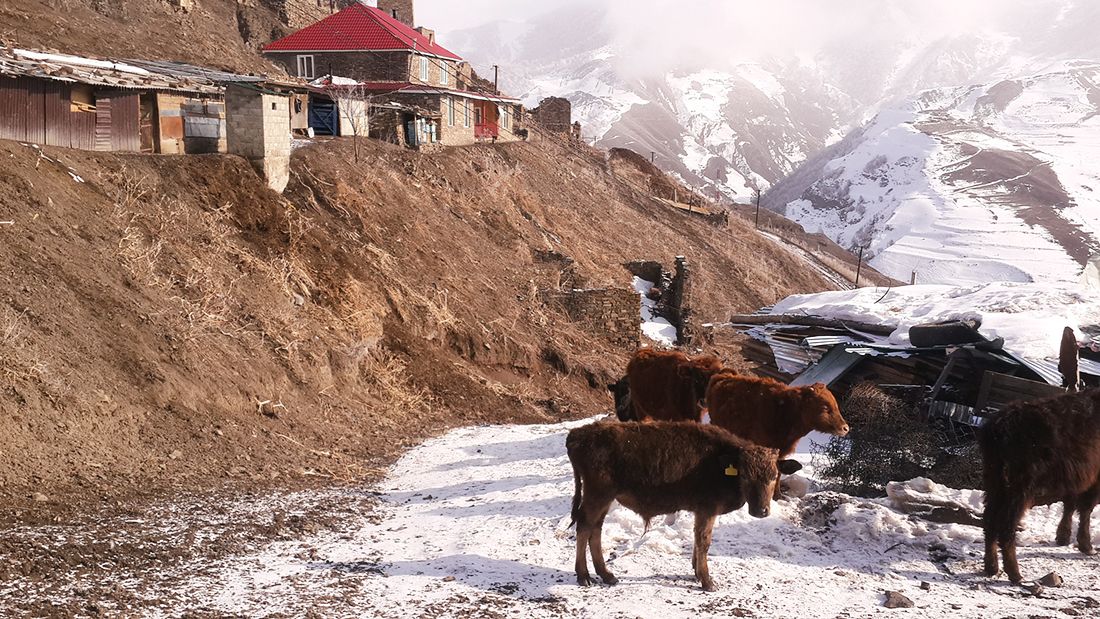
“Food in bulk, in all in bulk, live well. All cattle are in the village, no one is starving. There are those who are packed, but if they have a little hands to move, they will live, ”the woman says goodbye to me.
At Priora, the son of Marika, the former policeman Isa is taking me in the chima. The central store here is of political importance. It belongs to the head of the Sharai municipal district of Raisa Batukaeva, and for the eldest in the store - her son Magomed, the head of the labor and social development department of the region. When Magomed finds out that the inhabitants of the Sharai district are buying products the most in Russia, he is not surprised: “You know, as I go up to the mountains, such an appetite appears immediately.” However, he admits that the mountain appetite does not affect the number of buyers in the store - there are units here .
Only 400 people out of three thousand inhabitants of the Sharoy district are officially registered. However, for 15 thousand rubles in the store no one wants to work. On weekdays, revenue does not exceed seven thousand rubles a day. And now things are generally bad-Magomed opens the store only when one of the “customers” calls him. There are no checks in the store, of course, either.
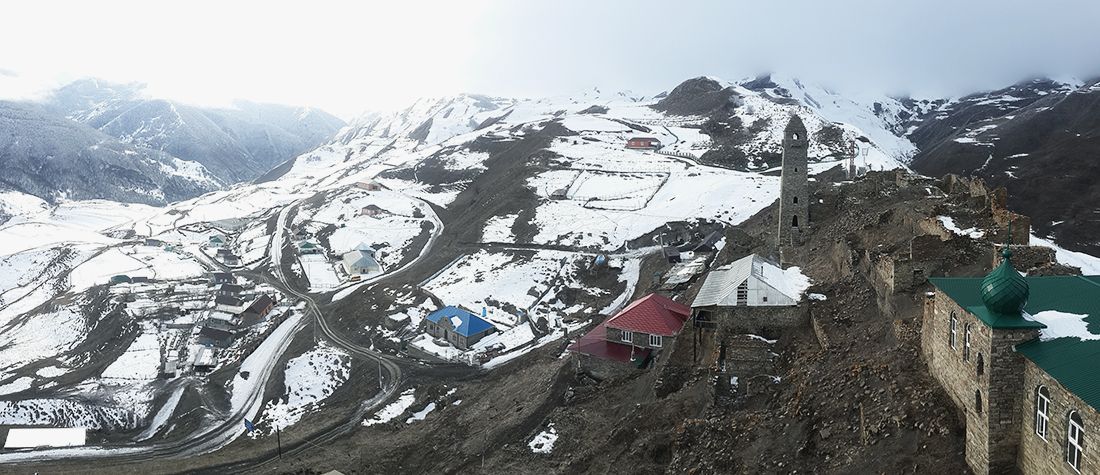
The most serious entrepreneur in the area is Lem Tagirov. He is the legend of the district and his main philanthropist. In the second half of the 1990s, between the Chechen wars, Tagirov worked as a special representative of the Ichkeria prosecutor’s office in Russia. Tagirov lives in Moscow, but does not forget about his small homeland, he built almost everything here: he built a small park with the memorial of the Great Patriotic War, restored the old fortresses, and spent water into Hime. Sometimes he even comes and gives out money to those in need. In addition, he organized a farm with six camels here. True, now only two camels remain, and they are going to get rid of these, says Ruslan Mezhidov, the nephew of Tagirov, whom the entrepreneur left on the farm. With the search for workers, the farmer Mezhidov is the same problem as the owner of the store - they are not.
The most burdensome asset of Tagirov was built in Home the first and only gas station in the Sharoysky district. The head of Chechnya Ramzan Kadyrov, the head of Chechnya, f’s solemnly opening it with Tagirov. But from the point of view of business, the investment was unsuccessful. There are so few gasoline that one brought tank is enough for about a year. “Today, three and a half thousand rubles were brought from a gas station,” Mezhidov shrugs his hands. “Every time they bring such revenue to me, I would like to leave here.” Given the investments, and this is 16 million rubles, and with a profitability of 30%, the gas station will pay off after 43 years.
* * *
At the beginning of the tenth in the morning next to the brand new building of the Sharoy district administration in Khimea, nobody except one woman. "What did you want?" She asks.
For the luck of Louise Khadzhiev, she turned out to be a representative of the Chechenstat in the Sharoy district. When she heard the amount that appears in statistics, she was no less surprised by me: “Wow! This is what rich everyone should be. Every day there is black caviar. This is unrealistic, it is a laugh to chickens, even a dumb person should understand that it is funny. ”
- In general, the same can be determined by the data of checks from grocery stores.
- Well, what checks do we have? - laughed Khadzhieva.
As it turned out, the authorities in the area are now, and indeed for a whole week the administration moved to another area, because due to the accident there was no electricity.
I met the deputy head of the administration of the district of Hussein Lurmagomedov already on the way back to Grozny - the chief on the Black "Prior" was returning from a meeting in Grozny. After hearing me, Lurmagomedov whistled: “For one person? 356 thousand? Not a damn thing for yourself! We have only eight shops there. Our turnover in the area per month does not even pull a million! ”
Finally, in Grozny, the head of the department of trade and services of Chechenstat Hava Abushev tried to give a rational explanation by the data in the Sharaky district. According to her, a study under the basis of statistical data is done by individual entrepreneurs - using a sample. It so happened that in the Sharoy district in the sample only one entrepreneur of 49 registered in the area participated; And he, according to Abusheva, "he sold a lot directly", and throughout the republic. “But since we cannot break the reporting when compiling, what and where he sells, it turned out that he sold everything in the Sharoy district,” she says.
The total volume of foods sold in the Sharoy district amounted, according to the Chechenstat, 1.1 billion rubles. The entrepreneur from the reporting had to sell products at least 22.5 million rubles. In the area they do not know about such an entrepreneur. Be that as it may, he was unlikely to earn so much. According to the same Chechenstat, 49 entrepreneurs from the Sharoy district received 100 thousand rubles for the last year - for all; In other words, each of them earned on average in 2014 two thousand rubles.
“When we collect data on general trade in the areas, the difference is not so striking,” reflects Abusheva, who has been engaged in statistics, according to its admission, for more than 20 years. “And when we are counting into the per capita, it turns out completely different.” Indeed: in terms of turnover, the Sharai district is similar to Vedensky (1.6 billion rubles) and Shatoysky (1.3 billion). Only 39 thousand people live in Vedensky, and 18 thousand in Shatoskoye. In Sharoysky, there are only three thousand.
Moscow experts do not see anything unusual in statistical data in the Sharai district. “Statistics of Chechnya are a virtual reality, do not bother about this,” said Natalia Zubarevich, director of the regional program of the independent institution of social policy.
Denis Dmitriev
Riga
Ilya Zhegulev
Sharoy district, Chechnya