
Translated material
"The next step of the progressive museum will be postcritical realism"
The artist Arseny Zhilyaev and Katerina Chuchalina, the curator and program director of the VAC Foundation , discussed the possibilities of cooperation with Russian non -artistic museums, experiments with the exposition, as well as the changed role of the museum bureaucracy. The conversation is the first in the cycle of materials prepared by Colta.ru together with the center of experimental museology. TSEM is the initiative of Arseniy Zhilyaev and the VAC Foundation, aimed at developing and supporting innovative projects addressing experiments with the form of art institutions, as well as the exhibition and the museum as a special media.
Arseny Zhilyaev: Katya, you, like me, have been engaged in projects in the non -artistic museums of Moscow for many years. Why right now a feeling of exhaustion has appeared, the impossibility of continuing cooperation? Yes, there are objective factors. The abolition of the exhibition in the Memorial Museum of Cosmonautics , tightening censorship policy - but, it seems to me, these are only superficial effects. After all, if we talk about censorship, then we should talk not only about state censorship, but also about self -censorship, about attempts by employees of museum institutions to predict, and therefore realistically present an ideologically correct interpretation of their expositions. In this sense, the story with the MMK is extremely interesting, because the Russian museum for the first time openly demonstrated that it actually does the same as artists - the development of alternative worlds that, to one degree or another, correlating with reality. “We do not like the interpretation of the future in the“ cradle of humanity ”, which Zhilyaev suggested to us, we will make our“ cradle of humanity ”and prove that the future can be different from the art.” This is very similar to how Groys described the transformation of socialist realism, which gradually from simply painting began to turn into a conceptual project, including due to the fact that the artists were forced to predict the future changes in the party’s political course. Now, if you return to the beginning of the question: maybe this factor, the museum awareness of himself as an independent art and, in this sense, his competition with the artist, makes their interaction more impossible here and now?
Katerina Chuchalina: Indeed, we have already done several projects in non -artistic museums, and I was always interested in the museum as a medium; In such cases, the thematic proximity of the art project and the museum is always only a preposition (in the good sense of the word), a password for a possible start of conversation - about the policy of representation, methodology, ideology, etc.; You never have interesting in the museum. The Museum of the Armed Forces, the Presnya Museum, the Institute of Africa, the Museum of Entrepreneurs, philanthropists and philanthropists - all these are different stories, the result of which is dramatic to varying degrees.
You say that it has become impossible to work now and a feeling of exhaustion has appeared. For me, it came last year, I rushed to enter into relations with museums in an unprepared territory and decided that I would only repeat this experience with a minimum mutual interest. In the story with MMK, it is noteworthy that the museum itself showed active interest in your project and to us (Foundation V - A - C. - Ed .). Therefore, I agreed to this.
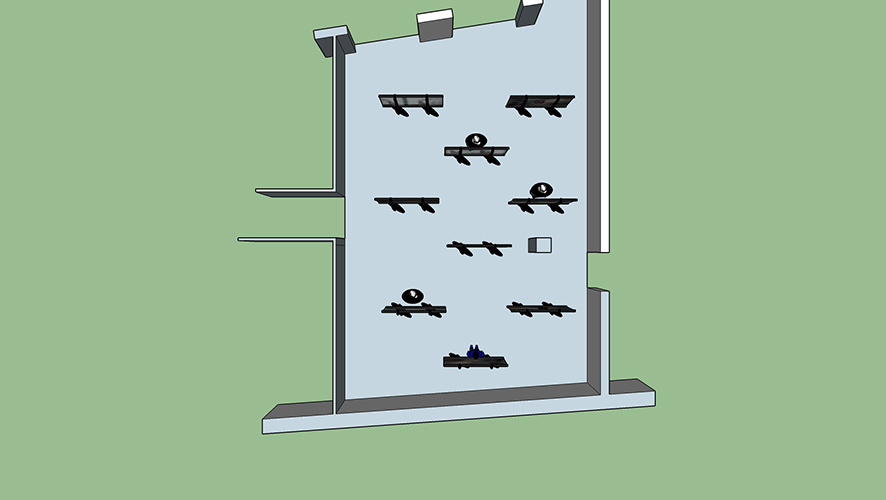
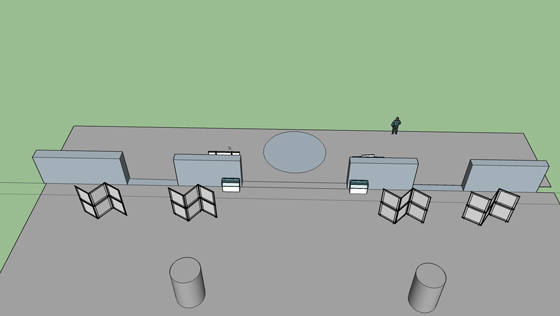 Arseny Zhilyaev. Sketches for the project "Cradle of Humanity 2" at the Memorial Museum of Cosmonautics
Of course, the state of self -censorship, in which museums are in, creates a large field for constructing reality, or rather, to construct rhetoric of doubt. In the case of MMK, it was a powerful mixture of rational and mystical: from the arguments about the cosmists and the history of scientific and technological progress and from claims to the fonts and constructions that you used in the project, to contacting higher forces (as well as astronauts), which are invisibly present when making decisions about everything that happens in the museum humanity ", like Zhilyaev. The efforts to pile up the arguments and gradual abuse of the impossibility of the exhibition made by the museum, instead of a simple and rude refusal that could happen, deserve respect. But you are right - the museum behaves completely artistically: the rhetoric of refusal is built on a different vision of the “cradle of mankind” and with a significant degree of exalted conversations about space.
In this situation, I am always interested in the mechanism for making a decision on the presence of art in the museum. Obviously, in most cases, the right is completely and undividedly belongs to the director. In MMK it was more interesting, because there is an art collection and extensive experience of temporary exhibitions, which means, on the one hand, there is a formal discussion procedure on the method of the scientific and technical museum, and on the other hand, confidence in its competence in determining what art is and what is not. And we all passed, all discussions, meetings with the scientific leadership of the museum. It is interesting that at the end of this tunnel, at the last round of the director in the office, there is always a requirement of a certain paper on the top, on which it should be written that this art (once in a hopeless situation - a week before the opening of an international project - I brought this to the African Institute from the Ministry of Culture). Well, of course, there is no doubt that if I had such a paper with me in MMK, this interesting story would not have been.
Zhilyaev: Very interesting! The rhetoric of doubts, it seems to me, is usually inherent in a critical, usually artistic view. Actually, thanks to the constant doubt on the monolithic of ideological constructions proposed from above, art still claims to be a certain unique knowledge. In particular, this is what was previously distinguished by a professional’s gaze from the gaze of an amateur, the art of avant -garde from Kitch and mass culture. But it turns out that in modern realities the artist had serious competitors. And this is not about production facilities - here no one has doubts that the media and political technological departments have an incomparably greater potential in the formation of images and creating situations - namely, about the inherent critical view of intention. We can say that we got into the era of behind-the -ry, when a scanning look that appeared at some point is locked in a system of broken, critical mirrors. And this is no longer a clearly built system of the ideological apparatus of the state. This is a public behind the grinder, the space of mutual suspicion, where it is quite difficult to determine where the original impulse came from and which way it was directed.
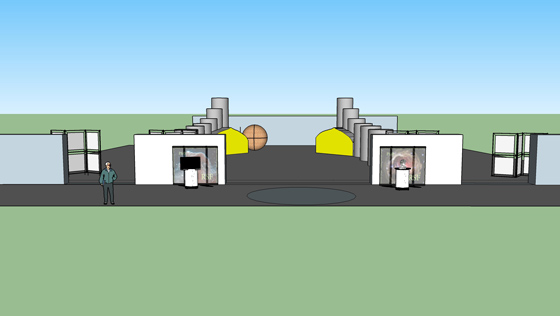 Arseny Zhilyaev. Sketches for the project "Cradle of Humanity 2" at the Memorial Museum of Cosmonautics
Here we would be useful to a new theory of reflection, taking into account all these transformations. If we must state the dissolution of a critical look in his, so to speak, traditional form, then the next step of the progressive museum will be post -critical realism. That is, a gesture that could reflect, reflect this total reflectivity of modern Russian (and not only Russian) reality. Here we approach a very important issue of developing a new method of work. It seems to me that it is through the experience of institutional interaction, the experience that goes beyond the scope of individual artistic gesture, we can outline ways to develop the approaches adequate. In this regard, could you tell more about projects at the Museum of the Armed Forces and the Institute of Africa, as well as the features of their implementation?
Chuchalina: Yes, we, in fact, acted on the basis of this hypothesis about the possibility of exit through institutional interaction. All the institutions with which we worked were intentionally different in their bureaucratic and social status - a private tiny museum, an institute in the RAS system, a branch of the Great State Museum, the VDNH Pavilion, and the Museum of Subordination of the Ministry of Defense - these are all cultural institutions with different reflective ability.
The Museum of the Armed Forces, for example, in which we made a project with Misha Tolmachev “outside the visibility zone” , is in a state of radical monumentalization. The social request for the history of wars as a lever of civil education is so high that the museum exposition appears before us as a sacred story, drawn on tablets, not subject to either doubt or discussion. A critical statement there is simply impossible, moreover, criticism would immediately lead to a breakdown of the project. Therefore, the artist’s work was such a metatex that encircle the halls of the main exposition, in which the issues of “certificate-vision” basic for such a museum implicitly raised. There was probably no way to approach closer. In this case, apparently, there is no complex system of mirrors, there is an order from the Department of Culture of the Ministry of Defense for modernization and a certain “contemporary art” in the museum; It must be fulfilled - and executed. The path is formally free, but the museum remains impenetrable for conversation due to its internal device.
I come out of the boundless faith to the museum. This gives strength to act, no matter what.
I must say that all the projects that we did strive for intervention, for the presence of the artist not in the hall for temporary exhibitions, but in a permanent exposition. This simple technique allows you to understand the museum and work with it, and not in it. Of course, any museum is always defended from this technique, and this is normal - this is one of the basic principles of its functioning: protecting the visual and ideological shell. Attempts to rearrange objects inside the museum window or report to them something new are considered as an attack, desecration. The museum showcase is a clogged bottle, no one wants to produce genies. And this, by the way, is legally enshrined - the set of exhibits inside it is confirmed by the document in the higher instance. Obviously, the museum, claiming the general line in the presentation of the history of the state, war or scientific and technological progress, is afraid of any crack, gaps, when the body of this story can begin to transform-and therefore, there can be many stories.
All these exhibitions were and remain social constructions compiled not only from the statement of the artist, but also from the mezhin -institutional relations. Interaction with museum workers at all levels (in funds, archive, scientific department) is interesting in the same way as diplomatic negotiations with leadership. The Museum of the Armed Forces had a lot of such internal work - the artist included in his statement a lot of the museum funds. And, for example, the project “Ten thousand tricks and one hundred thousand tricks”, which was supervised by the WHW group , would not take place at the African Institute, if not for the solidarity of such institutional structures as the Council of Young Scientists and the Film Club. About a month before the opening, an acute crisis of relations between us and the institute began; The director asked to “leave everyone alone” - in the silence and dust of their luxurious interiors of an abandoned colonial shop of the Soviet project. The Council made an official note of support for the project, which led to a fragile truce, which was still violated - the work of the group “What to do” in the courtyard was censored by the director and at the opening was closed with black cloth.
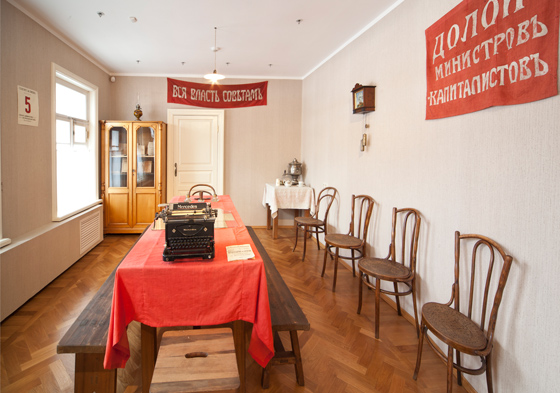 "Pedogagic poem" in the Presnya Museum
Together with you and Ilya Budraitskis made a “pedagogical poem” in the Presnya Museum. They invited theorists, historians, curators, artists from different countries to discuss issues of history, art, and museum. This is an unprecedented event, in my opinion, for the museum, while the leadership managed to remain absolutely indifferent to what was happening throughout the year. Until the matter has come to the final exhibition . Tell me what gives you a comparison of these two experiences - on Presna and in MMK - to understand what the artist’s project should be to work with museums in this social situation?
Zhilyaev: I get out of the boundless faith to the museum. This gives strength to act, no matter what. On the one hand, there is a great temptation to click on the hermetic bottle of contemporary art and go on a trip to the ocean of time in the hope that sooner or later the bottle will be caught by fishermen, and the message located inside will be deciphered. Probably, in a sense, this scenario is inevitable, especially if we are talking about Russia, where the actual artistic context is deprived of minimal tools for an adequate perception of what is happening here and now. But the transformation of this scenario into an end in itself, the fetishization of a single artist and-wider-autonomy of art, I see a pretentious decadence.
Obviously, real institutional machines are transformed extremely slowly. Perhaps much longer than the life of one artist, one art project, especially. If we proceed from radical views on the museum as a place that can not only adequately reflect reality, but be an agent of progressive changes for her, then, of course, the artist’s position is more profitable. In the sense that an artist can create a reality development scenario in a laboratory experiment mode, including including a museum as his important part. Is the resurrectioning Museum of Fedorov possible today? In full - of course, no. But the concept of the museum as a community, a museum as a cathedral of people who direct their activities to the transformation of art, society and human appearance as a whole, is quite embodiment in art. The first resurrecting museum appeared during Fedorov’s life in Voronezh. It was organized in his house by Leo Soloviev. The museum was dedicated to the deceased wife of Solovyov and, in addition to the constant exposition, included a free picturesque school. Or an example from the present: “Museum of Immortality” , the idea of which was proposed by Boris Grois, and the installation was organized by Anton Vidox along with the participants of his Beirut school.
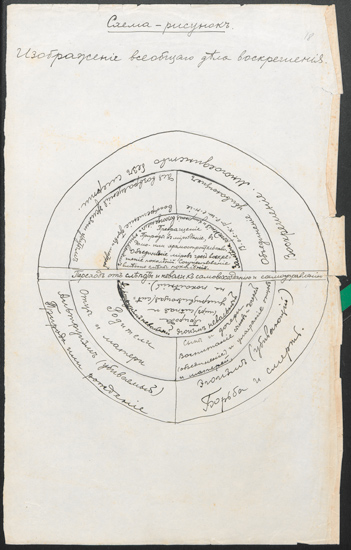 Supramoralism scheme. The manuscript of Fedorov
But you can go further, try to go beyond the laboratory format. In a sense, what the special services and corporations like Google and Facebook do today, largely corresponds to Fedorov’s impulse about the most complete preservation of data on the life of each person. But it is obvious that the archives formed by special services and corporations will not be used for resurrection from the dead or any social transformations aimed at developing human potential. Control, suppression and making money - these are their main goals. But can we present a connection in the artist’s museum with the technologies and institutional capabilities that corporations and special services have? This is a daring formulation of the question, but it cannot but inspire.
Modern museums are complex in the sense that they are a product of a confusing composition of conflicting forces and circumstances. So, I have a warm relationship with some employees of the MMK. I am sure that such people sincerely loving their work will not allow the museum to die. Therefore, in each conflict it is necessary to remember that there is a certain monolithic image of the museum as a thing in itself, but there is a real state of affairs. For example, as it turned out, in the MMK, the authorities, including director Natalia Artyukhin and deputy director of Vyacheslav Klimentov , worked under a contract for a year. The contract concluded under one political situation and ends with completely different. Outings within the framework of a pre-outraged ideological and business plan for a year are a ceiling of their abilities. In this sense, there is nothing surprising in their conflicting statements and the need for lies, which for an external observer arise, as it seems, suddenly. Although in fact they are an attempt to adapt to new trends in the presidential apparatus or the transformation of Moscow cultural policy.
But is it enough only to serve the wishes of political elites for an institution such as a museum? Obviously, no. So, it seems to me that such “museum limiters”, along with their trends, contracts and other human weaknesses for a long time in the museum. They do not need him, is not interesting, he surpasses them, he is too complicated. Therefore, I do not lose optimism. Although the history of the Presnya museum is a more dramatic example to us. There, dear to me and colleagues, people who believed in the museum were forced to leave him. Recently, Sasha Poser told me how he was overtaken by a taxi on one of the turns, which was the former director of the Presnya museum. The one that helped us with the “pedagogical poem”, and after that with Ilya Budraitskis, he oversaw an exhibition dedicated to the tragic events of 1993. Sasha remembered the director, as he helped him with the exhibiting of his work on the facade of the building.
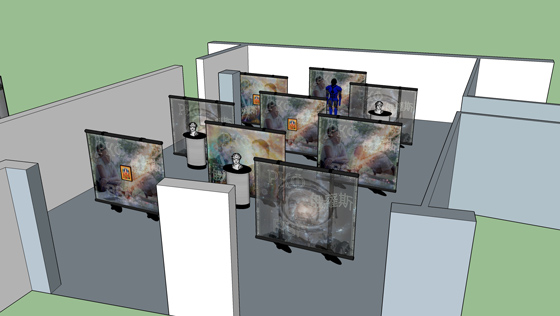 Arseny Zhilyaev. Sketches for the project "Cradle of Humanity 2" at the Memorial Museum of Cosmonautics
If you return your question to you. Talk a little more about the methodology of artistic work with museums and art projects using the museum as a medium. I was always interested in: how do you feel in the role of a curator in them? Где, собственно, проходит граница между художником и куратором, если речь идет о мутации границ индивидуального художественного высказывания и фигура художника сама вбирает в себя позицию куратора? Мне кажется, что у многих музейных проектов, которые ты делала, можно найти общие черты, говорящие о глубине твоего вклада в них. Не могла бы ты раскрыть свою кураторскую или кураторско-художническую кухню?
Чучалина: Ты говоришь, что безгранично веришь в музей и его потенциал как агента прогрессивных изменений. Говоря отвлеченно, я тоже. Но, боюсь, в реальности я не вижу никаких оснований надеяться на его активную позицию и силы прямо сейчас. Я думаю, что вернуть это музеям может только полная разгерметизация, открытое взаимодействие с разными видами человеческой деятельности, в частности, с искусством, с художниками, но никакого движения в эту сторону я не вижу. Конечно, для музея это ведет к растворению концепта и самого института, но другого пути нет.
Я вообще действую и чувствую себя как бы в отсутствие музея — не в тоске по утраченному, разумеется, а внимательно рассматривая то, что называется музеем сейчас. Наше общество радиоактивно, ДНК общественных институтов ломается и мутирует. Честно говоря, я даже не уверена, что сейчас возможно анализировать какой-то список институций под общим наименованием «музей». Что общего у музея «Гараж» и Музея предпринимателей, меценатов и благотворителей? Пожалуй, ничего (кроме анекдотической оппозиции: у последнего нет, к сожалению, благотворителей, а у первого — гаража).
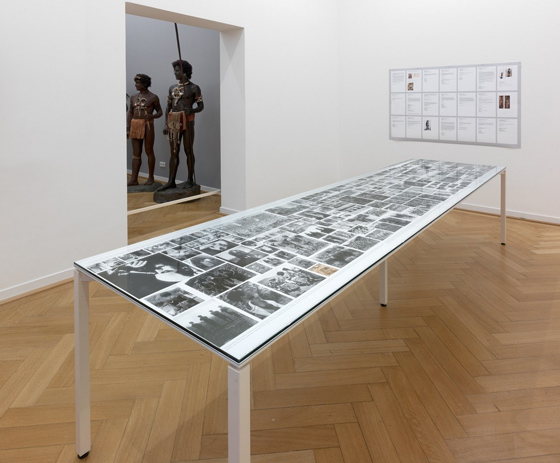 © Wolfgang Günzel Foreign Exchange (or the stories you wouldn't tell a stranger), 2014. Installation by Peggy Buth
Надо сказать, что в условиях недофинансирования и оскудения музеи тем не менее отчаянно боятся пустоты, стремясь заполнить каждый сантиметр своих площадей, постоянно производят визуальную среду. Важно понимать, кто, как и зачем это делает. Макеты в музее Бутырки делаются руками заключенных; Музей леса состоит из продукции деревообрабатывающей промышленности; в экспозиции Исторического музея — фотоколлажи из голливудских фильмов; торгово-промышленное оборудование повсеместно; гирлянды над входом в концлагерь; километры пейзажей в биологических музеях и т.д. Работать с этой средой увлекательно, тем более что искусство занято ровно тем же — документами, архивами, объектами, пространственными композициями, зрителем, социальными связями, медиаэффектами. Но мы, музеи и современное искусство, как будто находимся в двух запертых друг от друга мирах, посещая друг друга в качестве брезгливых критиков или вовсе сторонясь. Справедливости ради надо признать, что это обоюдно.
Есть, к слову сказать, потрясающе интересные явления, достойные отдельного исследования музеологического, но и художественного. Недавно я была на семинаре музейщиков, организованном Музеем ГУЛАГа, — они пригласили людей, которые по всей стране создали экспозиции про ГУЛАГ. Это все совершенно автономные интенции и самостоятельные музейные решения, не объединенные ни директивами сверху, ни методологией, появившиеся в рамках одной общей потребности, но в разных обстоятельствах: один музей сделали любители турпоходов, другой создал владелец районного торгового центра, третий — добывающая ресурсы корпорация. Или музеи-клоны закрытых военных городов, которые, ровно наоборот, были созданы одинаковыми, а теперь формируют свою визуальную идентичность, несмотря на принудительно общую историю.
В интернациональном поле я ощущаю себя действующей на территории, обозначенной некогда такими проектами, как хорошо известный « Mining the Museum» Фреда Уилсона. Эта территория развивается, радикализируется иногда, например, усилиями Клементины Делисс — куратора, возглавившего недавно городской этнографический музей во Франкфурте (контракт прошлой весной расторгнут городскими властями ). Она действовала абсолютно радикально, «отменив» основную экспозицию и предоставив художникам исключительное право интерпретировать огромную и, можно сказать, градообразующую коллекцию классического немецкого музея. На этой территории, разумеется, много имен и проектов.
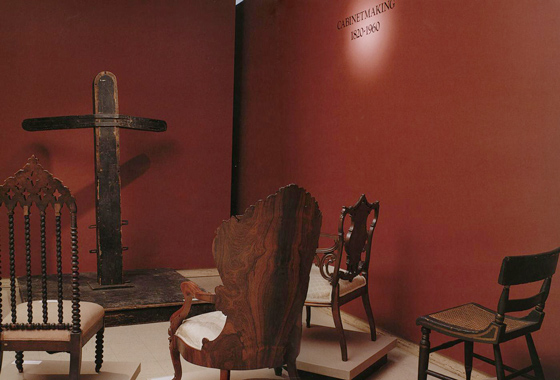 Fred Wilson, Mining the Museum
Возвращаясь к своей деятельности, могу сказать, что мне равно интересны и художественные исследования отдельного реального музея, и системные явления — лакуны и утраты (тематические и исторические), аберрации (музеи пыток и бабочек), и полностью фиктивные музейные проекты, созданные художником.
Мне кажется, что «Авангардная музеология» — серьезный вклад в этот разговор. Меня иногда спрашивают, в каких отношениях ты находишься как художник с корпусом собранных тобой текстов и как в этой ситуации твоя роль отличается от художника, скажем, «Колыбели человечества».
Жиляев: Да, наверное, такого рода постановка вопроса имеет право на жизнь. Я отслеживал отзывы на английскую публикацию книги. Так вот, однажды мне попалась заметка, в которой неизвестный мне человек описывал «Авангардную музеологию» как замечательный пример литературной мистификации. Ведь действительно многие тексты даже для меня самого кажутся столь экстравагантными, что сложно поверить в их аутентичность. Это касается прежде всего материалов, связанных с марксистскими экспериментами. После революции в рамках идеи формирования новой пролетарской идентичности в музеи пришло работать много людей без профессионального культурного образования. Их язык очень похож на язык пропагандистского плаката. Он полон энергии преобразования, хоть и выражает себя зачастую через набор шаблонов. Сегодня ничего подобного нам не найти. Ну разве что в литературе, например, в заключительной части раннего романа Владимира Сорокина «Тридцатая любовь Марины», которая состоит из потока идеологических клише, взятых из речей советской номенклатуры. Главное отличие сорокинского автоматического письма от материалов музеолога в том, что в конце 1920-х эта речь еще несла в себе смысл. Но представь себе, что должен думать англоговорящий исследователь, читающий про то, как заслуженный советский нейрофизиолог Бехтерев предлагает создать музейную комиссию, которая будет вскрывать черепные коробки видных граждан советского государства с целью изъятия из них мозгов и демонстрации их в музее!
Обычно в моих художественных проектах речь идет о фиктивной истории, которая мимикрирует под нон-фикшн. В случае с «Авангардной музеологией» имеет место обратная ситуация. Так что в некотором смысле более художественное прочтение умаляет радикальность представленных в публикации материалов.
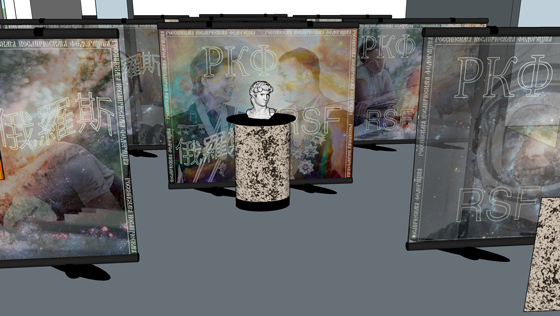 Арсений Жиляев. Эскизы к проекту «Колыбель человечества 2» в Мемориальном музее космонавтики
Но если говорить серьезно, то, конечно, я во многом воспринимаю «Авангардную музеологию» как свой концептуальный проект. Идея возникла как следствие моего художнического исследования, и оно несет травму своего рождения. Если подходить к «Авангардной музеологии» с позиции строгих критериев академического знания в хорошем смысле этого слова, то я должен признать, что книга не может им полностью соответствовать. Но у меня и не было такой цели. Идея была в том, чтобы обозначить новую территорию и сделать предварительную разметку на ней. Собственно, термин «авангардная музеология» не существовал прежде, как никогда не объединялись столь разные авторы и разные музейные проекты. И мои основные усилия были направлены на то, чтобы доказать возможность их совместного рассмотрения в виде цельного проекта, хоть на поверхностном уровне и имеющего заметные различия. Так, книга открывается разделом о русском космизме, который рождается из русской религиозной философии. В частности, мы печатаем в нем замечательный текст Флоренского об уникальности церковного ритуала как особого вида синтетического искусства, не поддающегося музеефикации. В последней части есть раздел, посвященный музеям атеизма и попыткам секулярной экспозиции превзойти силу этого религиозного ритуала. Но все это — часть одной большой дискуссии о границах музея, нашего общества, человека, науки и Вселенной, если хочешь.
Чучалина: Хотелось бы продолжить этот разговор, вовлекая в него все больше участников. Иногда музей — это повод поговорить о Вселенной. А иногда нужно быть прицельно точным и практичным. И я очень надеюсь, что наш общий опыт и книга «Авангардная музеология» станут полем притяжения для постоянно действующей ячейки коллег из разных сфер культуры и искусства и мы сможем осуществлять другие выставочные и издательские проекты в этом направлении.