
Translated material
Re -read Aronzon
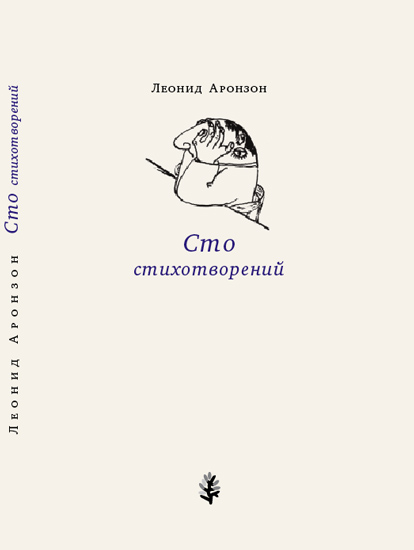
The Barberis publishing house has published a collection of selected poems by Leonid Aronzon. He died in 1970 under the circumstances of not completely clarified (either it was suicide, or an accident), talked with Joseph Brodsky, with whom he was so often compared that this comparison was already filled with, and wrote amazing texts, unlike what his contemporaries did in the sixties. The book included poems already published before in the representative two -volume, published by Ivan Lumbach ten years ago. They are located in chronological order, there are all its most famous texts. The compiler was the director and heir to the author Felix Yakubson, and the poet Valery Shubinsky wrote the preface.
Probably one of the main features of Aronzon's works is their coincidence. His poetic heritage can conditionally be divided into two unequal parts, although it is not easy to draw the border between them: in the first, he restores the tradition of texts in case, and by the second half there are facade poems that most fully express his attitude, where the joy of the surrounding beauty mixes with the foreboding of death. This foreboding does not at all insists on himself and close to the German Unheimlich , which Freud defined Freud with an eye on Schelling as "what was supposed to be secret, in concealment, but surfaced to the surface." At first glance, such a bunch between the poems of Aronzon and the concept of UNHEIMLICH does not seem obvious. However, it will become clear that there is no mistake here if you turn to the genesis of Aronzon. It is well known that the poets of the first half of the XIX century were important to him. The authors of that era, forming Russian romanticism, described nature with a relentless sense of homelessness (the "forest king" of Zhukovsky, "autumn" of Baratynsky). And Aronzon after almost two centuries beat this mood, for example, in the poem "How good in abandoned places!" It should be noted that UNHEIMLICH in Aronzon does not arise straight, not as a given, but in the process of overcoming, when the poet extends his hand to the impression, so that it is neutralized by the happiness of the visionary. That is, we will not meet something frightening from him, because he is starting from him, making an almost inconspicuous feeling of a “terrible” starting point for traveling to the edge of carelessness and peace.
The water flows, and the brick is motionless,
But the water stands, not flows.
The plane sits on my chest,
But the light is that nothing is visible.
As for the works in case, in them the aronzon relies on the emblematic tradition of “album poems” for Russian poetry, from which some of its texts with the epigram follows. However, the epigrams become harmless in him, their satirical potential is softened, which does not prevent them from remaining, firstly, by criticism of “imperial literature” (which brings him closer to Vaginov), and secondly, thereby the stopped moment, which is indicated in the preface to the chosen Valery Shubinsky. Among other things, such an attitude to his work actually removes reproaches from Aronzon in the heterogeneity of his heritage: after all, the poetics of the case in a certain sense does not imply failure, it is only enough that the throw of the bones obey a certain set of options. It is important to note that when it comes to accident, it is not the aleatoric device of the text is implied - this, apparently, cannot have this - but a certain type of imitation, which is characterized by deceptive optionality, a kind of deliberate lightness, nevertheless apparent alive, and not at all artificial. Another thing is that the question will remain unclosed: how much the chosen position limited the author?
Good on the mortal bed:
The smell of roses, other dill,
All you lie, very well -groomed
Not scored and not buried.
But one thing worries me
what is in Dubov this tree
There is no place for the virgin
When I am so laid.
His texts are also related to the fact that he made them an integral part of artistically designed books, and also devoted them to close friends (like Alexander Altshuler) or his wife Rita Purishinskaya, sometimes turning relatives and friends into characters of his works. However, the flip side of this poetic strategy was the widespread subcultural nature of his work, which, however, practically does not interfere with the perception of Aronzon, since the poet managed to withstand the distance of friendly intentions and the literature proper in such a situation. In addition, he perceived the tradition of the Oberiuts, whom he knew mainly from the works of Nikolai Zabolotsky. This is an important point, because the authors of the circle of Oberiu were engaged in case problems, as well as another attitude to time, which differed from strict vertical linearity, which leaves no way for maneuver.
 © Barbaris, 2015
In the poem “Direct Speech”, for some reason not included in the book (the eternal problem of any chosen in the fact that it inevitably narrows the review), we can trace the just mentioned properties of Aronzon’s poetics, which partly connect him with Oberiu: inclusion of acquaintances in the circle of characters, neglect of temporary frames. Alienation can be added to these characteristics: all the heroes - from the Archilochus to the uncle, from Jesus Christ to Gogol and Altshuler - are only insofar as a dialogue, since their remarks are one after another. The motive of detachment is repeated in the “Records of conversations”, where people “didn’t say anymore - handed each other the same flowers, sometimes took masks with one or another grimace or simply pointed to one or another as not to impede themselves with facial expressions.” This scene involuntarily causes Tyutchev’s poem “The Feast of Complete, the choirs fell silent”. Generally speaking, Aronzon often refers to Tyutchev (“There is the presence of mirrors in the fall ...”). Like many significant artists, Aronzon’s poems are compressed, as if a ray of light had not yet broken into a rainbow, contain the search for poets of past eras.
My God, how beautiful everything is!
Every time than ever.
No in a beautiful break.
Turn away b, but where?
Because he is river,
The trembling wind is cool.
No world behind:
Whatever is - before me.
Apparently, the smoking of Anasha affected his work. On the one hand, Aronzon unequivocally declares: “My world is the same as yours - who did not know Anasha” (the poem is not included in the collection), on the other hand, there is a description of symptoms in its texts, which is inherent in drug intoxication, whether it is a feeling of euphoria and causeless fun or something like derelization. It is seen primarily in the decorativeness of the described landscapes, but also in the feeling of Déjà vu : "How happily it is to go down to the garden again, / has never been in which it has never been." By reading the book, you can observe another interesting method of Aronzon. The fact is that the “Record of conversations” cycle is actually a pilimsest: after all, individual fragments of this cycle are in poems written both before its creation and after. “Conversation”, “on the contrary of low sunset ...”, “What does the lot that is thrown into the sky?”, “Thank you for the snow ...”, “Is it that you, who was sleeping on a gentle ...” are the branches of a single bundle, the center of which is a large score, which is one of the most extraordinary texts of the second half of the 20th century. These are not even avant -garde experiments that Aronzon did earlier: in these verses there is something that does not belong to any time. They are so transparent and at the same time hermetic that any interpretation inevitably turns into protocoling.
Of course, all of the above speaks of the postmodern thinking of Aronzon, which Ilya Kukulin has long noticed, who saw in his poetry “a recognizable set of the features of the European-American“ high ”“ high ”counterculture of the 1960s, from fibulaing poets to John Lennon or Alena Rob-Griye. The Aronzon undoubtedly belonged to this international movement - and was a bright and very peculiar representative. ” I would like to think that “one hundred poems” will encourage him to re -read him as a poet who frees it, and does not suppress his arsenal with funds. The protest, including sexual, is inseparable from his work.
Leonid Aronzon. One hundred poems. 1961-1970. - M.: Barberry, 2015. - 144 p., Ill.