
Translated material
What will the Muslims say?
How can the "national subjects" of the Russian Federation in the presidential election in a crisis can lead themselves
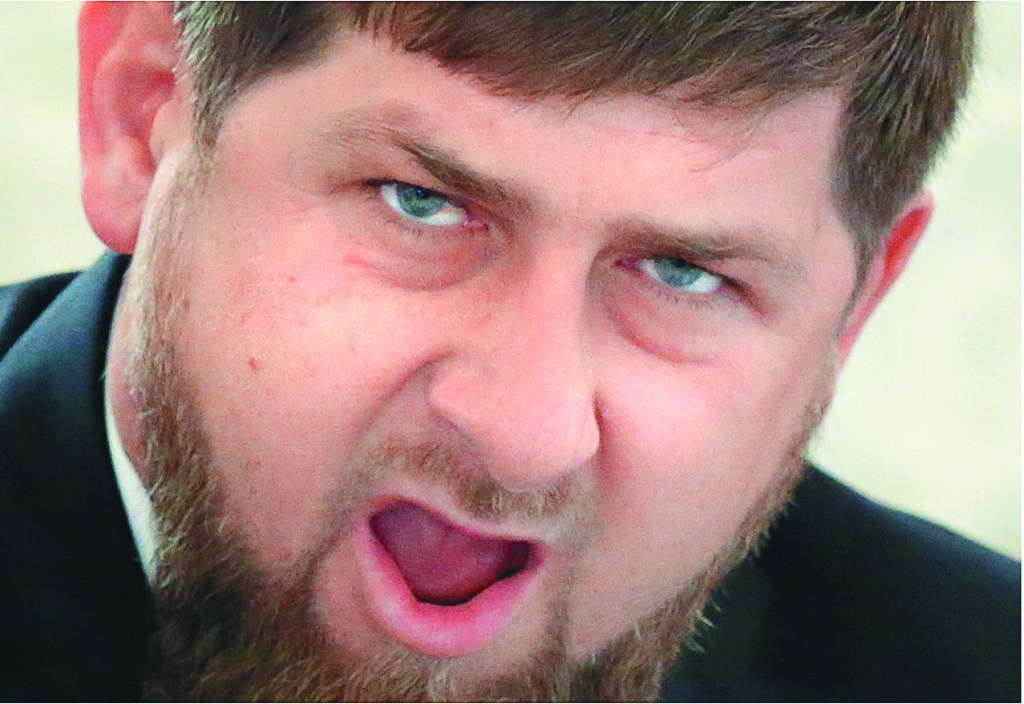
Today Ramzan Kadyrov is scaring the opposition, tomorrow it can come into conflict with the Kremlin, Moscow, December 23, 2015
The systemic economic crisis persistently continues to destabilize the situation in the country. The question is where and when the abscess bursts. Regarding time and place, different assumptions are built. The 2018th year of the presidential election may turn out to be a staged moment. Regardless of whether Vladimir Putin will preserve his post or a new president will have a new president, it can already be assumed what problems will arise in the “national entities” of the Russian Federation - in the North Caucasus, in the Volga region, as well as in regions with a mixed ethno -confessional population.
Islamic factor
It is primarily about Muslims - Russian citizens - there are approximately 16 million people. In the seven subjects of the Muslim Federation, the majority: in Ingushetia-98%, Chechnya-96%, Dagestan-94%, Kabardino-Balkaria-70%, Karachay-Cherkessia-63%, Bashkortostan-54.5%, Tatarstan-54%.
(There are more than 10%of them in nine subjects: in Adygea-21%, Astrakhan region-26%, North Ossetia-21%, in the Orenburg region-16.7%, in the Khanty-Mansi Autonomous Okrug-15%, the Ulyanovsk region-13%, in the Chelyabinsk-12%, in the Tyumen-10.5%, in the Republic of Kalmykia-10%)
In the case of an exacerbation of the situation in the political behavior of minorities, the ethno -confessional emphasis is intensified. In some of the listed regions, something similar already took place, although in the conditions of “strictly” authoritarianism it was not always noticeable on the surface, and in the official statistics of the election results did not find a true reflection.
The population of the "Muslim republics" connects its requirements in the socio-economic sphere with an appeal to ethnocultural and religious traditions. An increasingly irritation is caused by the persecution of Islamic dissent. This is most characteristic of the North Caucasus, but similar moods are also noticeable in the Volga region - in Tatarstan, Bashkortostan. The steps aimed at strengthening the “vertical of power”, part of the society, for example by the intelligentsia, are considered, among other things, as a persecution of identity, the desire for leveling, and creating a Russian version of “Soviet man”.
Identity problems
In multinational Russia there are three identity vectors - civilian (Russian), ethnic and confessional. The hierarchy of belonging to them is different: an individual can first of all feel like a Muslim, then a Tatar (Chechen, a Dargin, etc.) and only then a citizen of Russia. There is nothing unusual in this, especially dangerous. The problem arises when these vectors turn out to be multidirectional and, for example, religious identity comes into conflict with the identity of civilian. Simply put, the individual is more comfortable and prestigious to realize himself as a Muslim than a Russian. (By the way, such a dissonance sometimes arises not only among Muslims. Orthodox identity is not always identical to the Russian, and the latter compared to the first can be presented to the Russian person secondary.)
Steps aimed at strengthening the vertical of power among part of society, in particular the intelligentsia, are considered, among other things, as a persecution of identity, the desire for leveling, and creating a Russian version of the “Soviet man”
A striking and unexpected example of “dissonance of identities” was the “grief” of Tatarstan about the collapse of Russian-Turkish relations. In addition to negative economic consequences-before the conflict that began after the Turks shot down the Russian Su-24 on November 24, the annual volume of Turkish investments in Tatarstan amounted to $ 1.5–2 billion, and bilateral trade in 2013-$ 659.4 million-the Tatars belonged to the Turkic world. In November 2015, a material appeared on the Tatarstan website of Kazanreporter, which stated that Tatarstan and Türkiye were “inseparable, like a nail and a finger”. Tatarstan politicians did not comment on the aggravation between Moscow and Ankara, observing a kind of “neutrality”. While in Moscow the Embassy of Turkey clearly with the blessing of the authorities was a violent demonstration of protest, in Kazan the local police restrained the passions of the manifestants in every possible way.
The anti -Turkish course, in particular the closure of Turkish cultural centers, was painfully perceived in other Turkic -speaking republics - Tuva, Yakutia, Bashkortostan, where the indigenous non -Slavic population, especially the intelligentsia, perceived it as a humiliation of their ethnocultural identity. The Tatars, other Turkic ethnic groups sharply felt their Turkic identity, offended by the policy of Moscow. Similar feelings are preserved in memory for a long time. And this may well affect political sympathies, including personally to Putin, which is the main conductor of the anti -Turkish course.
In the footsteps of Kadyrov
In the regions, moods are increasingly spreading in favor of greater independence when making certain political decisions. Yes, the famous Yeltsin slogan “Take the sovereignty, how much you swallow” today is irrelevant. But in the context of a financial deficit, it seems that he can survive in something else, namely, into the unspoken appeal of the federal government to the regions: “Break what they give (from the federal budget), and then solve your problems as you want.” In the republics they well understand: the “obese years” have passed, the “unhealthy time” has come. And the more local elites are aware of this, the more independence they will begin to achieve. He received the hypersamoma of Kadyrov, who spends even something like his own foreign policy in his Chechnya.
The “Factor of Chechnya”, or rather, “Kadyrov Factor” leaves an imprint on a general vision of the situation in the country. Regional elites understand the reasons for the informally exclusive status of Chechnya, which she received as compensation for two wars, as well as special relations between her head Ramzan Kadyrov and Vladimir Putin. However, in psychological terms, the question “why it is possible, but we can’t” in the air. Kadyrov’s irreplaceability is also interpreted as the fear of Putin, which the latter may not even realize. Today, Kadyrov can guarantee a presidential candidate 100 or more percent of the vote, but in a certain hypothetically extraordinary situation he may not give a similar “quota”.
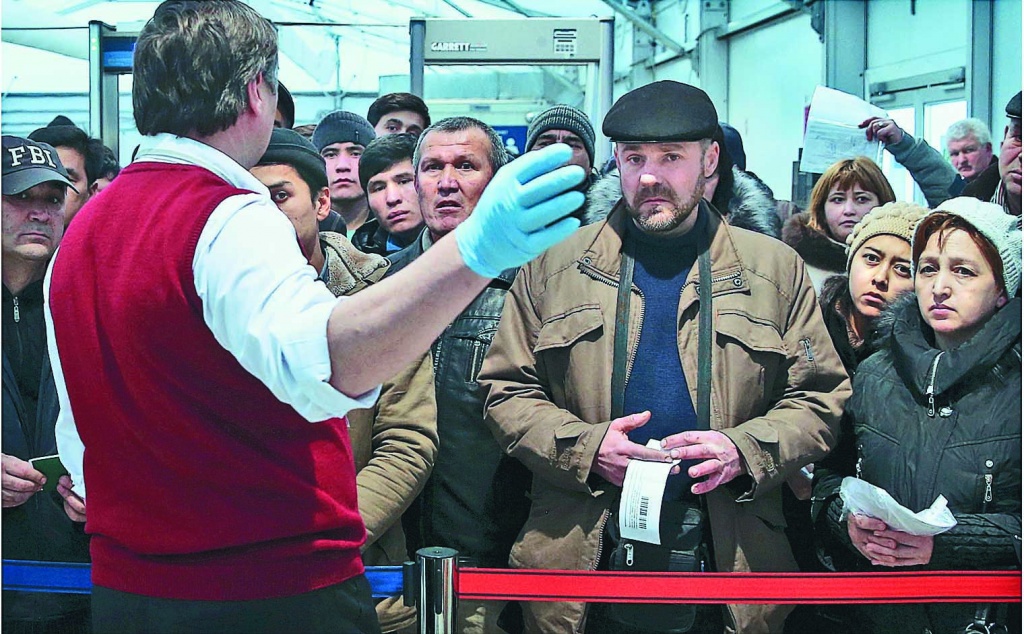
Migrants are not only cheap labor, but also fighters for imposing the traditions of Islam, migration center in the village of Sakharovo, New Moscow, December 14, 2015
From time to time, conversations about the possible presidency of Ramzan Kadyrov, who are going on Facebook, cause a smile. However, his political position is consonant with the thoughts of a significant part of Russian society, including persons of Slavic nationality, it is possible that he can gather no less, or even more than Zhirinovsky himself as a presidential candidate.
Where is independence - there is more, so to speak, “ethnicism” and Islam, in which, by the way, there is a concept of ideal social structure, an ideal state of social justice, i.e. All that is now so missing in Russia.
The reaction to socio-economic tension in the republics, although to varying degrees, takes and will take a religious form. Islam, especially with the current level of its politicization, remains a religion of protest. What is a protest clothed in religion is well known. And if for the past two years the situation in Muslim Russia has been relatively calm, then the main reasons for destabilization are preserved. Many large and small radical and extremist groups continue to operate in the North Caucasus. The media reports the destruction of one or the other of them, but new fighters are replaced by new ones. Former Igilovites return from Syria * . So far, their activity is little noticeable, but the potential is great, and in case of deterioration of the general position, they can play a very noticeable role. From here, not far from the surge of terrorism, which, as has more than once, can go beyond the boundaries of the North Caucasus region. On the eve of the Sochi Olympics, this threat was avoided. However, it can be assumed that at present extremists will begin to “prepare” for the presidential election.
Migrants as a threat
All this is imposed on the problems of migration from Central Asia, Azerbaijan, as well as the internal migration process from the North Caucasus. The number of Muslim migrants from neighboring abroad (the term gradually obsolete) ranges from 4 to 5 million people. When politicians, including the president, talk about the number of Muslims in Russia, they call the figure 20 million people, that is, they include immigrants from Central Asia and Azerbaijanis. And this is right, since visiting Muslims became part of Russian society. Migrants invade economic life, exert increasing pressure on social spheres - medicine, education; Finally, they require the creation of conditions for the departure of a religious cult. All this is irritated by the indigenous population. The negative reaction is enhanced by the demonstration effect - the events in Europe, where the wave of refugees from the Middle East and from North Africa led to the unprecedented surge of interethnic and political tension, caused the growth of conservative, nationalist sentiments in society.
Migrants in the Russian Federation advocate compliance with Islamic traditions, including food, in clothes, their attitude to women
In some ways, it is similar to the attitude to the weak sex among migrants in Europe
A similar scenario for Russia, despite the current relative well -being, is quite likely. Moreover, among migrants, and in the most part these are young men, there are many radical Muslims who actively interact with their Russian like -minded people. This combination creates a combustible mixture. Migrants in Russia advocate observing Islamic traditions, including food, in clothes, their attitude towards women in some ways is similar to the attitude to the weak sex among migrants in Europe.
Among this audience there are supporters of the Islamic Halfate State * , as well as those who have gained, fighting in the Middle East, the experience of jihad. It is this part of Muslims that is most critical of the foreign policy of Russia in the Middle East. Muslim migrants become a factor in the formation of the “great Islamic path”, which begins in the Middle East, crosses Russia, some of the states close to it and reaches the Far East.
On the eve of the presidential election, the problem of Muslim migration will most likely worsen. Already now, the layman is increasingly asking the question: will the Russian government be able to prevent excesses like those that Europe has already encountered?
Purchase issues
Some experts predict Russia's fast and inevitable decay on an ethno -confessional principle. It seems that there is no real reason for extreme Alarmism yet. However, to ignore the growth of ethno -confessional challenges in combination with regionalism would be frivolous.
It may turn out that on the eve of the 2018 election, the president will have to report not only for successes in foreign policy - they may not be enough. Moreover, they may have failures to replace. Who, for example, will entrust that in Syria the heir to Bashar al -Assad, saying thanks to Russia, will not want to say goodbye to her right away? A similar turn will look like a defeat of Moscow in the Muslim world. They can ask the president for poverty, for rising prices, for the same corruption, for the enduring interethnic conflict, for unprofessional policy in the field of state-Islamic relations. There is no doubt: “national entities” will also express their special resentment.
* ISIS ("Islamic State", IG, Daish) - a group prohibited on the treritory of the Russian Federation as terrorist.
Photo: Valery Sharifulin/TASS, Alexander Shalgin/press service of the State Duma of the Russian Federation/TASS