
Translated material
Injection of adaptive longing
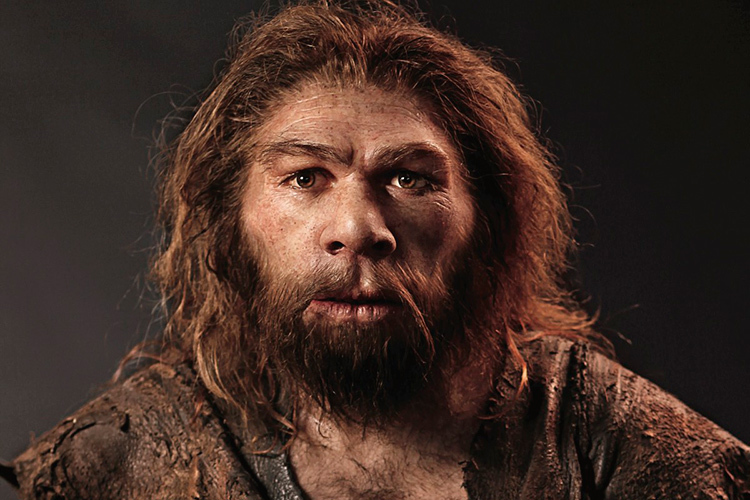
A few years ago, genetics asked for doctors from 10 states of the United States access to electronic cards of patients who have been sequenced in advance DNA. Each time for such a patient, the doctor diagnoses “myopia” or “hernia”, “obesity” or “depression”, geneticists are growing statistics that allows you to clarify something about the hereditary nature of the disease. This is a project of the US National Institute of Health, it is called Emerge and lasts the ninth year in a row.
When the database became quite voluminous, the bioinformatics team John Anthony Kapra from the University of Wanderbilt (Tennessee, USA) decided that the word “heredity” can sometimes be interpreted than usual. And she began to find out how the diseases of modern people were associated with the portion of DNA that people from Neanderthals went.
Europeans have from 1.5 to 4 percent of such DNA, and the indigenous Africans do not have it at all, because the meeting Homo Sapiens with Neanderthals happened after the “Exodus from Africa” between 125 and 60 thousand years ago. Neanderthals themselves and Africa themselves come, they just settled in Eurasia (in the space from the Middle East to the south of Siberia) as a result of an earlier wave of migration - at least 250 thousand years ago, argue about accurate numbers.
From 1.5 to 4 percent of Neanderthal DNA, each European means that you had a direct great-great-grandfather-neandertal.
25 thousand years ago they died out, losing competition with sapiens. They lost, it seems, not because we were more primitive: we got used to the derogatory use of the word “Neanderthal” - but in vain, because their brain was even slightly larger than ours and they seemed to be able to do a lot of things. The oldest caves - with a age of 40 thousand years - belong to them ; They made jewelry of feathers and painted their bodies. Sapiens of the same time are not seen in anything similar.
From 1.5 to 4 percent of Neanderthal DNA, they mean that you had a direct great-great-great-great-a-wander. At the same time, there is no group of people in the world that would come from Neanderthals and only from them. In this sense, they cannot be called the “ancestors of mankind” - biologists talk about intro -aggression, which has repeated two types of crossing for millennia. The most active, as the DNA analysis shows, this crossing went between 50 and 60 thousand years ago.
In the new study of John Kapra and colleagues, which was printed by Nature magazine, 28,416, belonging to adult Americans with European roots, were selected from many tens of thousands of medical scarters - and began to compare their non -radertic genomes.
When they talk about the “Neanderthal Genom” , they mean the genomes of five specific individuals. The most complete genome belongs to the Neanderthal girl from Altai, who died 50 thousand years ago: from her only surviving bone, the phalanges of the finger, obtained well-preserved DNA and deciphered it in 2013. The second is a baby from the Mezmayskaya cave (this is the Krasnodar Territory, Russia), his bones are 60-70 thousand years old. The DNA of three Neanderthals from the Croatian cave Windia is still sequenced at once; These bones are the youngest, 30 thousand years ago.
Only for us they are all Neanderthals, members of one group. But in fact, we are talking about people who lived and died at different ends of the continent with an interval of tens of thousands of years. If some chains of letters in the genome are common-this is not an accident, but the features of Neanderthals as a species.
Of the features of DNA, it is easiest to calculate SNP -point mutations, when one letter of the genetic code is changed on some segment of DNA. Caprah and colleagues found 135 thousand such Neanderthal SNPs (that is, mutations that all Neanderthals are excited among their people, and among people only in some).
Mutations are scattered on DNA not at all like random typos in the text. If the mutation disables any useful gene-its carriers are worse adapted to life, and SNP under the pressure of natural selection is washed out of the population. It is known, for example, that in the X -chromosome of a person (one of the two who determine the gender of the child) of non -anderthal SNP five less than usual -apparently, the signs encoded with “washed” mutations were good for the Neanderthal, but bad for homo sapiens .
Neanderthals left the tropics and subtropics hundreds of thousands of years earlier than Homo sapiens - and therefore had more time to adapt to microbes, climate and food of high shir.
Breaking a well -working mechanism, if you insert other people's spare parts into it, is easy. It is amazing that he can start working better. In the genome there are places with increased density of Neanderthal DNA. In this case, biologists talk about “adaptive introgression” - signs brought by the selection, which turned out to be useful.
Neanderthals left the tropics and subtropics hundreds of thousands of years earlier than homo sapiens , and therefore had more time to adapt to microbes, climate and food of high latitudes. It is already known that the Europeans got the features of the metabolism of sugar and the device of structural skin proteins (Neanderthals were fair -skinned, in the conditions of the dim northern sun, this is more profitable).
With medical cards, tens of thousands of patients in their hands, it became possible to notice much more subtle effects - however, only negative ones, because no one diagnoses positive qualities and does not lead their special registry. Neanderthal SNP increase the risk of myocardial infarction, smoking tobacco and - the most - depression.
What is so profitable here that natural selection has fixed these signs? In case of depression, the authors have an explanation. It is known that its frequency directly depends on the amount of sunlight that a person receives - therefore, in the north, say, there are more suicides than in the south. And the SNP , pro -associated with depression, are found in the genes responsible for circus rhythms that help the body adapt to the rhythm of the change of day and night - that is, directly related to the doses of sunlight that the body receives.
In the north, the duration of daylight hours varies greatly, and the equator is practically no. The mechanism tied to circadian rhythms can calculate this effect - and redistribute the body's resources so that the peak of effectiveness falls on six bright hours of winter day. The reverse side of the same mechanism is that the remaining 18 hours of darkness resources will be in short supply.
How exactly this happens, biologists do not know - because it is much easier to see the correlation between the genome and the work of the brain than to describe at the level of the mechanism, how it works and which molecules are involved. Depression is too complicated a cognitive disorder, and this is an extra argument in favor of the fact that the Neanderthals who handed it to us were not so primitive creatures, since they also suffered from it.