
Translated material
Prophetic dream

On February 6, at the 83rd year of his life, Louis Martinez, a well-known Slavist and university figure, teacher of the university in the ex-envans, a writer, and a translator.
Louis Martinese was an outstanding expert in the Russian language and a professional translator. But the Russian language, and wider - Russian literature and culture were for him the sphere of knowledge in which he felt his own. In his youth, he had a dream that he had lived in Russia for a year, although he had any Russian roots. The dream turned out to be a prophetic in a sense.
He got into the Soviet Union for the first time in 1955 (for language practice for one year), after he graduated from the Higher Normal School ( Ecole Normale Superieure , one of the most prestigious educational institutions of France), where he received a classic education (in addition to Latin and Greek, he studied Russian led by the poet Nikolai Otsup).
In the Union he was monitoring, but he was not afraid of this and showed European freedom of love. I met Andrei Volkonsky - friendship lasted until the last days of the composer’s life. Louis helped him find his homeland in France, took care of him in exse, took care of him.
On the same first visit to Moscow, in the summer of 1956, thanks to the famous Slavist Michel Vkuturia, Louis Martinez met Pasternak. An eight -hour conversation took place in Peredelkino. Pasternak “was in a state of trance, as if he spoke his last word. He talked about his life and his novel “Doctor Zhivago” and asked us to translate him as quickly as possible as soon as we return to France. ”
Martinese translated the fourth part of the book (since he worked in co -authorship with three translators, including the celebration) and showed the translation of Alber Camus, with whom he was closely familiar. The reaction of the great writer was described by Martinese himself: “<...> Camus said to me: Louis, this is still encouraging: forty years of communism-and such a person appeared, such a writer who is absolutely not owed to ideology, and actually this is a miracle. I then told him that Pasternak was both as a poet, and as a person was actually a completely adult before the revolution. And he answered me that sooner or later such a person would appear in Russia anyway. In 1962, when I read “One Day of Ivan Denisovich”, I realized that it was a pity that Camus did not live to meet with Solzhenitsyn. After all, Camus was right, in the end. Not one such person appeared. There were people who were able to speak freely. ” In the following years, Martinez knew many of these people, he was friends with some.
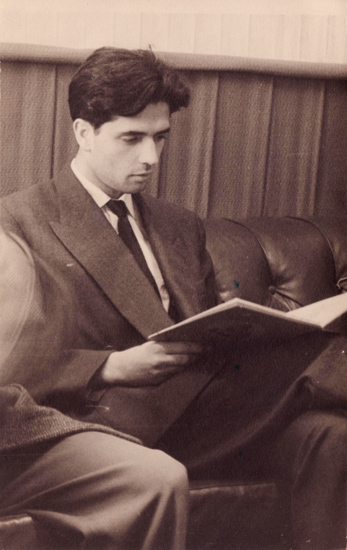
After the “Doctor Zhivago”, the translation activity of Martinosis continued-from Russian classics he translated Saltykov-Shchedrin, Chekhov; From contemporaries - familiar dissidents of Lev Kopelev, Vladimir Bukovsky, Andrei Sinyavsky. He evaluated his translation of "walks with Pushkin" Sinyavsky as one of the most successful.
From 1979 to 1982, Louis Martinese worked on the translation of Solzhenitsyn’s novel “The First”. He translated Mandelstam (“Talking about Dante” and several poems).
He took up Pushkin’s translations and went to the Pushkin house to get acquainted with the poet's manuscripts, but he was not allowed to be the originals, but only photocopies were shown. Louis was terribly upset and even wanted to stop work ... but still continued. He translated “little tragedies”, several poems and a number of Pushkin works.
Then the turn of Anna Akhmatova came. Then were Evgeny Popov, Henry Sapgir, the almanac "Metropol".
About how Louis Martinese was owned by the Russians, the wife of Sinyavsky Maria Rozanova wrote, who published Martinese articles in her magazine Syntax: “... when they blamed me that I, printing a French article, forgot to indicate the name of the translator, I explained with pleasure that there were no translators here, and Sinyavsky added that God forbid Russian writers to feel like that and Russian language, and Russian morals, how this Frenchman manages. ” It was, of course, talking about Louis Martinese.
Since 1999, Louis Martinez has become a writer. He is the author of three novels. All of them are about the life of the Frenchman in Algeria and about the Algerian War. The theme for Louis was not just a familiar, but burning. After all, he was a “Pienoar” (Frenchman of Algerian origin) and a participant in the same war.
The clarity of words pronounced by him and the clarity of thought are unforgettable. His hot discussions about history - and the history of Russia in particular. He participated in the formation of history: during the “solidarity” he carried trucks with humanitarian aid to Poland.
He was a deeply believing Christian, an active figure in the Catholic Church. Always engaged in charity work - it was a rule of his life.
Louis Martinese possessed a powerful mind and beauty, both external and internal. He was a unique person who combined the best features of two cultures - French and Russian. He was our friend. Such people are rarely born.