
Translated material
Before and at the same time
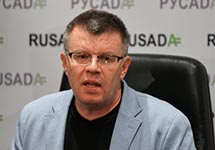
Former Executive Director of the Russian Anti -Doping Agency Nikita Kamaev died at the age of 50. According to TASS, this was announced by the former general director of Rusad Ramil Khabriev.
According to him, what happened is like an extensive heart attack. “I found out that he was skiing, came home and felt pain in the heart of the heart. They called an ambulance, but they couldn’t start his heart. I never heard him complain about his heart. Perhaps his wife was aware of some problems,” Khabriev said.
Kamaev served as executive director of Rusad since March 2011. In December 2015, all the highest leadership of Rusad, including Kamaev and Khabriev, resigned. This happened amid a doping scandal when an independent commission of the World Anti-Doping Agency (WADA) published a report in which she accused the Russian athletics of "deeply rooted fraud culture" with doping tests.
On February 3, the former chairman of the executive council of Rusad and the ex-head of the organization Vyacheslav Sinev, who headed the organization until 2010, died. The official causes of Sinov’s death were not disclosed.
In mid -January, the second chart of the WADA report was published. It said that Vladimir Putin could influence the concealment of the positive doping of Russian athletes. The report claims that the ex-president of the International Association of Factic Federations (IAAF) Lamina Diack and Putin connected friendly relations. Lawyer IAAF Hav Roberts personally transmitted Diac about nine cases of doping to use Russian athletes, learning what actions he plans to take.
The ex-head of IAAF objected to the lawyer that "he is in a difficult situation that only Russian President Vladimir Putin, with whom his friendship connects him." The document states that after that none of the nine Russian athletes took part in the competition, but their affairs were not investigated.
The first part of the WADA committee report was published on November 9, 2015. With reference to the data transmitted by the Interpol, it was argued that leading Russian athletes, including participants in the Olympic Games and winners of prestigious competitions, have been taking doping for years . In addition, the authors of the document stated that instructors, coaches and doctors, as well as various institutions, were involved in the Russian doping program.
The report included Rusada and the Anti -Doping Center, which studied samples for the 2014 Olympics in Sochi, were among the reports in Sochi. It was reported on remuneration for concealing doping tests and agreements with athletes who knew that the samples taken from them would be destroyed.
The orders of manipulations with doping tests of athletes, according to the report, were personally given by the Minister of Sports Vitaly Mutko, and operatives of the FSB were observed in the destruction of samples in the laboratory. As noted, three days before the audit, which WADA sent to the "Anti-Doping Center", its director Grigory Rodchenkov destroyed 1417 doping tests.
On November 10, WADA suspended the accreditation of the FSUE "Anti -Doping Center". The decision entered into force immediately. All doping tests that are now in Moscow were decided "quickly and in compliance with the conditions of reliability and transparency" to transport to another laboratory accredited by the agency.
On November 14, the Council of the International Association of Athletics Federations (IAAF) temporarilyremoved Russia from competitions under its auspices for an indefinite period. The decision entered into force immediately. This makes the participation of the Russian national athletics team in the Olympic Games in Rio de Janeiro.