
Translated material
Monkey in fire
"Carnegies" on "Medusa": Alexander Gabuev - about what awaits China in the near future
Medusa continues a joint project with the Moscow Center of Carnegie . In the new material, the head of the Carnegie program “Russia in the Asia-Pacific region” Alexander Gabuev talks about the eight of the most important things in China, which will determine the country's life in the year difficult for the economy and politics of the Fiery Monkey.
Popular in China sites of predictions , which are increasingly replacing the blind fortifications sitting in the temples, warn that the year of the fire monkey promises a lot of sharp and unexpected turns of fate. The New Year on February 8 by the Chinese lunar calendar determines the explosive combination of the elements: metal (金) and fire (火). And the character of the animal-patron of this year to match that the monkeys of monkeys Sun from the classic novel of the 16th century “Journey to the West” is forever falling into all sorts of showdowns and troublemakes.
Astrological turbulence completely reflects the current state of China itself. The economy is inhibited, the people are worried, tension is growing at the southern sea borders, and the leadership continues not always a noticeable struggle for power between the new leader Xi Jinping (习近平) and the old party oligarchy. It is completely impossible to say what each of the conflict turns out - faith in the predictability of China collapses before our eyes, like stock indices in Shanghai and Shenzhen. However, there are at least eight indicators, observing which you can understand how the situation in the PRC will develop and where to wait for trouble.
Nuclear si
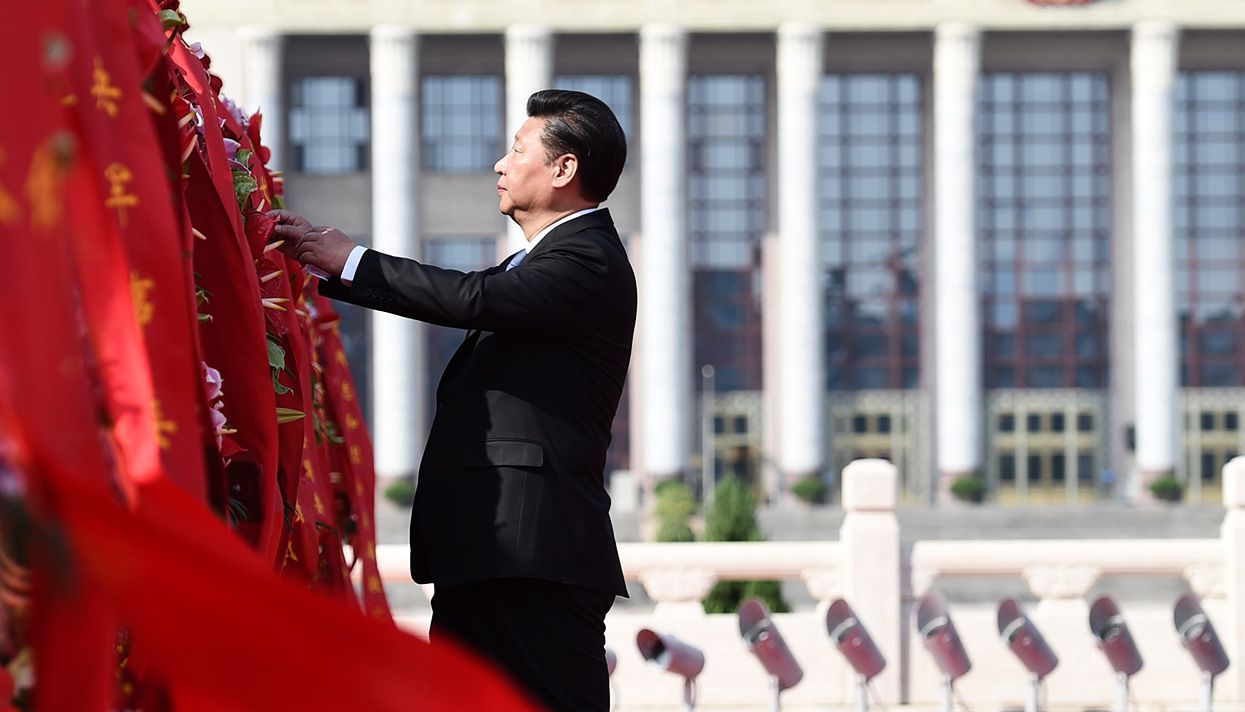
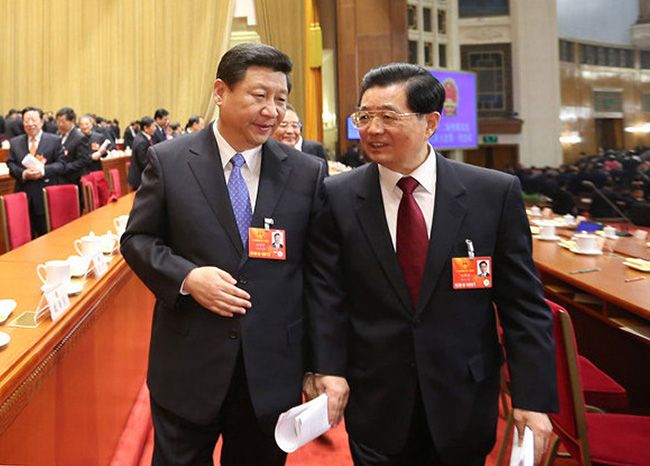
When Xi Jinping came to power in 2012, he was compared with the architect of Chinese reforms Dan Xiaopin (邓小平)-due to a clear installation on the transformation. Recently, comparisons are increasingly sounding with Mao Zedong (毛泽东). If Dan tried to agree with other party elders, then Mao was obsessed with the idea of personal power. The system of collective leadership (集体领导) built by Dan, where all issues are resolved by consensus, insured China from the excesses of leadership, but at the same time became a brake for urgent reforms. Attempts to concentrate powers and dismantle the collective leadership - the main nerve of political life in China. One of the important indicators indicating the successes of SI will be the formula used to describe its position in the party.
The New Year, according to the lunar calendar, will be difficult for the economy of China, and for politicians, and for society - in full accordance with the nature of the fire monkey. It is impossible to predict the development of events, but to understand the situation in China, attention should be paid to eight indicators.
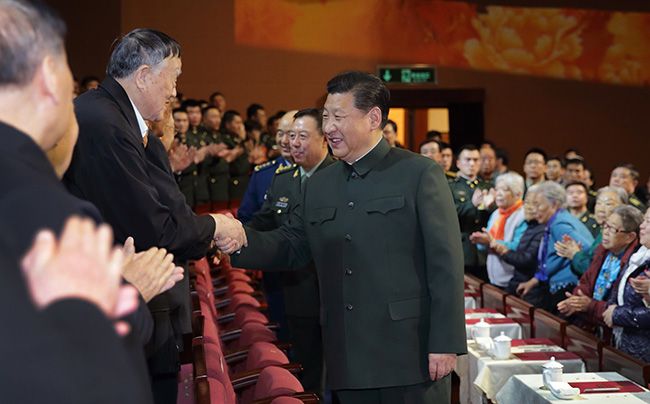
Since the beginning of the year, the expression “nucleus” (核心) has increasingly sounds from the mouth of officials against Xi Jinping. For the first time, such a wording was applied to the leader of the CCP in 1989, when, after the events on the Square of TiananMen Secretary General, Jiang Zemin (江泽民) became. The authority of the young Shanghai boss, who suddenly headed the party for the successes in suppressing student unrest, was not high - he did not stand at the source of the PRC and did not even participate in the civil war. To compensate for this, Dan Xiaopin came up with a special formula that distinguished Jiang among other permanent members of the Politburo. The status of the “nucleus” was not clearly spelled out anywhere, but its consolidation in party documents allowed Jiang Zemin to consolidate power and bring to important posts of his supporters from the Shanghai clan (上海帮).
Since 2003, when the party was headed by Hu Jintao (胡锦涛), the new leader lost the “nuclear” title - the formula “Central Committee, headed by the Secretary General of Hu Jintao” (以胡锦涛为总书记的党中央), entered the everyday life. An indication of the formal position of HU and the lack of mention of the “nucleus” was interpreted by many as a decrease in the role of the supreme leader and the institutionalization of collective leadership. According to Alice Miller, one of the best analysts of layouts in the Chinese elite (in the past of the leading analyst of the CIA), this trend was strengthened throughout the administration of Hu Jintao, and the beginning of the reign of SI was also under the sign of the collective leadership. Although the new leader closed more and more governing bodies, the absence of the “nucleus” title indicated that the status quo remains. But, it seems, changes are coming in the year of the fiery monkey.
Pochin to call Xi Jinping the “nucleus” was laid by Juan Singgo (黄兴国), the party secretary of the city of Tianjin (天津) and one of the protege of SI. Speaking on January 8 to local officials, he called the Secretary General of Xi Jinping the “nuclear” and called for “protecting it at all costs”. Following this, local party bosses began to speak with similar speeches one by one, bringing a peculiar oath of allegiance to the “nucleus”. The final of this campaign was the performance of a member of the Politburo and the head of the office of the Central Committee of the CCP (Russian analogue - head of the presidential administration) Lee Zhansh (栗战书), one of the closest to the people who urged all the leadership to rally around the Secretary General and “strengthen the idea of Xi Jinping as a nucleus” (加强核心意识).
If the status of the "nucleus" is assigned to Xi Jinping in official party documents, for example, in the resolution of the autumn plenum of the Central Committee, this will become an important evidence of the consolidation of the authorities. Victory will be of great importance for creating the “Big SI” regime (习大大). All Chinese politics is permeated with symbolism, and the terms contain great power. The anonymous user of the popular in China forum SOHU.com, judging by the enthusiastic comments working in the propaganda department of the Central Committee, remembered the well -known quote from Confucius on this subject: “If the names are incorrect, then the speech is unsubstituted, and if the speech is not cheap, then things are not fret” (名不正则言不顺,言不顺则事不成 名不正则言不顺,言不顺则事不成).
Who will replace the people's banker?
One of the main sources of China's instability is the situation in the economy. There are so many problems in it, and they are so closely intertwined that you don’t even know which of the indicators to follow. Formally the main economic event of the year of the monkey will be the March session of the All -Chinese Assembly of People's Representatives. It will adopt a plan of the 13th five-year plan (十三五), which sets the development parameters of the economy until 2021. The party devotes special cartoon videos in English with characters like Jimi Hendrix and David Bowie, trying to convince both the population and the outside world that the document will be the answer to all questions. However, many analysts doubt in advance that the tasks indicated in the five -year plan are realistic, and therefore they offer to look not at government documents or vigorous reports, but at other indicators.
If we assume that the Chinese economy needs to leave the model of investment growth and expand consumption, you can monitor retail sales or the reporting of companies like the Alibaba electronic commerce giant. If we assume that the consumption of the middle class has not yet become a new driver, you can focus on the “ Lee Catcian Index ”, reflecting the dynamics of electricity consumption, railway transportation and issuing bank loans. The PRC State Council itself in November proposed the “new Lee Catcian Index”, where the indicators became employment, incomes of the population and the state of the environment. Finally, we can, after colleague , Michael Pattis, consider the main problem of the Chinese economy the uncontrolled growth of debts, and therefore monitor the accounting rate, the norm of reservation, the reporting of the Chinese state banks and the state of the shadow banking sector (for example, according to the state of credit online platforms P2R).
However, more and more observers and insiders agree that the adequacy of the leadership reaction to new challenges is the most important factor in the Chinese economy. The numbers are not important, but by people who make decisions. In this sense, the most important figure now, of course, is the head of the People’s Bank of China Zhou Xiaocuan (周小川). The 68-year-old Zhou, one of the most respected in China and the world of Central Bankers and a supporter of structural reforms, had to retire several times already-he has been led by the Central Bank unprecedented for the PRC for 13 years and for three years should be dismissed by age. But to find a new head of the People’s Bank, which could not have reassured the markets with one fact of its existence.
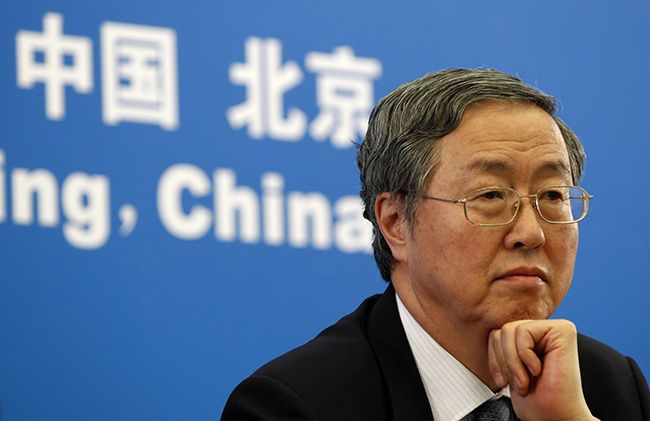
The long -awaited resignation becomes more likely in the year of the fiery monkey. In 2015, Zhou achieved the main personal goal - the IMF consent to include Yuan in the basket of world reserve currencies. According to insiders, now the head of the Central Bank wants to rest at the peak of fame, and therefore has lost interest in storms in the foreign exchange market. This explains the surprise of the transition to the new mechanism of the formation of the Yuan course in August, and the inconsistency of the actions of the People’s Bank in recent months. They influence the moods of Zhou and the actions of SI, which concentrates the powers in the narrow circle of closest advisers. For example, in January, the situation around the yuan with the Minister of Finance of the United States Jacob Lew discussed not Zhou on the phone and not a profile deputy prime minister Van Yang (汪洋), but the deputy head of the State Committee on Reform and Development (former State Planning Commission) Li Hae (刘鹤). Although Liu is not even a member of the Politburo, he is considered a confidant of Xi Jinping and the closest economist to him. For example, he heads the office (apparatus) of a small leading group in finance and economics (中央财经领导小组办公室 中央财经领导小组办公室) is the most important center for making economic decisions, which is headed by SI himself.
The monetary policy of China will depend on the one who is replacing Zhou Xiaochuan, whose verification is extremely important in the current situation. But even more important is that the candidacy of the new head of the Central Bank will say about the future style of economic management.
Black Statistics of Customs
As you know, Chinese statistics are often not a reliable indicator of the processes that it should describe. At least if you perceive her data in the forehead. But the difference in these from various sources can give interesting food for thought.
One of the most interesting differences is the statistics of bilateral trade between mainland China and Hong Kong. For example, in December 2015, the difference between export to Hong Kong recorded by China customs, and imports from the mainland reflected in Hong Kong statistics, amounted to almost $ 22.3 billion. For each dollar of imports received in Hong Kong accounts for $ 1.94 recorded in the PRC of export. Most observers agree that the difference arises due to fake foreign economic contracts, with which the Chinese elite withdraws money from the country. A surge of attention to such schemes was recorded in the fall of 2014 - at the height of the public part of the investigation around the former member of the Politburo Zhou Yuncan (周永康).
According to Bloomberg Intelligence, the outflow of capital in 2015 was a record trillion of dollars. It is unclear how much of this money was withdrawn by the elite representatives who were afraid for the preservation of their assets. It is all the more interesting to follow such schemes as Hong Kong. In the end, if money is withdrawn from the country, best of all aware of the real state of affairs in the Middle Kingdom, it is important to imagine the scale of the phenomenon.
The website of the discipline verification commission
The main tool for the consolidation of power by Xi Jinping was a large -scale campaign to combat corruption. The weapon of the new Secretary General is the Central Commission for checking the discipline (CCPD; 纪律检查委员会), a special service that fights for the purity of the ranks of the 88-millionth party. The CCPD website , the name of which reproduces the telephone number of the hotline for combating corruption, is extremely laconic - in fact, this is an electronic form for denunciation of a corrupt official, as well as a brief section with the legal framework, although it is widely known that the usual methods of work of the commission, like the unexpected disappearance of suspects and secret prisons, are not described in any laws.
The site cannot find the statistics of the commission, but it periodically appears in the section of the general website of the Communist Party, which is dedicated to the work of Van Tsishan (王岐山), the head of the CCPD and one of the leading "seven" of the Politburo. Formally, 67-year-old Van is the sixth person in the Chinese hierarchy. But in reality, due to the specifics of work and proximity to Xi Jinping, whom he met at the dawn of his career as a small provincial official, Van is considered the second person in the country. The flywheel of anti -corruption repressions, promoted by SI and Van, has long surpassed the scale of intra -elite purges at Jiang Zemin and Hu Jintao. The goal of the campaign, apparently, is the full defeat of the internal party opposition and the submission of the entire vertical of power by Xi Jinping - only this ambitious Secretary General will be able to carry out reforms. The problem is that the campaign gave rise to a lot of side effects like fear and inanimateness in the ranks of the bureaucracy, as well as the hidden consolidation of the enemies of SI and Van.
As in systems where the chief of the secret police plays a huge role in the dictator gaining power, the future of the most important fighter with corruption also attracts a lot of attention. In 2017, when the party will gather at the XIX Congress, Van Tsishan must leave the ranks of the Politburo due to age-related restrictions. However, it is unclear whether Xi Jinping has an equally trusted and authoritative person to take such an important position. On the other hand, recently in Beijing, rumors have begun to circulate that the relationship between Si and Van is much more complicated than the image of non-time friends from an article by Brookings expert Lee Chan, thanks to which the general public became aware that they spent the night under one blanket-Lee Chen reproduced the information of the Mirror Hong Kong magazine (明镜周刊). According to rumors, Si is burdened by the influence of Van Tsishan and will be happy to retire an old friend. The General Secretary will look for a replacement for the party Cerberus just a year of a fiery monkey.
Successors on demand
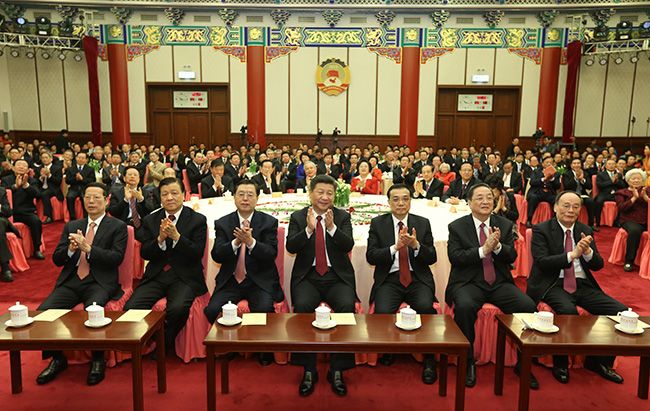
The party’s congress in 2017 is important not only for understanding who of the current rulers will rest, but also who will be part of the permanent members of the Politburo. According to the prevailing tradition at the congress to the board of directors of China Inc. The tandem of the leaders who Xi Jinping and Lee Kesyan should be prepared for the next five years will prepare for the occupation of two senior posts - the Secretary General of the party and the prime minister of the State Council. This is how Dan Xiaopin, the power change, created by Dan Xiaopin, the SI and Lee themselves have passed such a school. In 2007, they became permanent members of the Politburo, having received the posts of the Vice-Chairman of the PRC and the First Deputy Prime Minister of the State Council.
The successors who should take the baton at the twentieth congress in 2022 have already been selected. As the most likely replacements of the current tandem, the two youngest members of the current composition of the twenty -five -seater Politburo are considered. This is Hu Chunhua (胡春华), party secretary of the Steshemillion Province of Guangdun (广东 广东), and Sun Zhentsai (孙政才), party secretary of the largest metropolis of the world Chunzin (重庆 重庆). There are no doubts about the chosenness of these two - they became the only regional leaders who, while entering the Politburo in 2012, have not yet been 50 years old. Hu Chunhua-a long-standing protege of ex-ex-secture Hu Jintao, a native of the Komsomols group. Sun to Zhentsu favored Jiang Jijamin. Both of them were considered leaders of the sixth generation of leaders, and until recently the question was only how they would share the portfolios of the Secretary General and Prime Minister.
The transformation of Xi Jinping into a sole leader who is not considered the opinion of predecessors can destroy this harmonious mechanism. In private conversations, many insiders believe that Hu and Sun are already developed material. Si does not consider them his people and will not trust them with the management of the country. Whether this can be understood by observing both applicants this year: whether the leadership led by SI praises their work that the central media write about them, whether the scandal in Guangdun or Chunzin will flare up after the emergence of auditions from the capital. No less interesting is the possible appearance in the Politburo someone as young as Hu Chunhua and Sun Zhentsai. If Xi Jinping intends to comply with at least some rules of the game, he must spend his people along the entire career ladder, and not force the protege to gallop the monkeys through it, jumping over the steps.
Lips of the military
Xi Jinping knows well what the rifle gives rise to power - all Chinese schoolchildren teach this phrase Mao Zedong. Confirmation of this is the family history of SI, whose father, Xi JunSun (习仲勋), was an influential field commander of the Civil War and returned to power in the 1980s largely thanks to the old army relations. Army control has always been an important task for any Chinese leader. Hu Jintao facilitated this task, giving him the post of head of the Central Military Council (CVS) in 2013 without any delays. Immediately after this, the same total stripping began in the army as in the civilian bureaucracy, the benefit of corruption in the Chinese army with its huge budget ($ 144.2 billion in 2015) was no less than in a citizen. Самыми высокопоставленными жертвами стали бывшие зампреды ЦВС Сюй Цайхоу (徐才厚) и Го Босюн (郭伯雄).
Календарный 2015 год начался с объявления о масштабной реформе, которая полностью изменит систему управления Народно-освободительной армией Китая (НОАК). Как отмечает лучший российский специалист по вооруженным силам КНР Василий Кашин, перекройка всей управленческой структуры китайской армии будет иметь заметные политические последствия, поскольку множество военных входят в ЦК, а два зампреда ЦВС традиционно были членами Политбюро. В год Огненной Обезьяны нам предстоит наблюдать, как армия зачищается от выдвиженцев времен Ху и Цзяна и как новые должности заполняются сторонниками Си Цзиньпина.
Укрепление лояльности армии нередко проводится и с помощью дорогих подарков — новых отечественных и импортных систем вооружения вроде российских Су-35 . Взгляды и роль новой военной элиты Китая особенно важны в период, когда страна ужесточает позиции по территориальным конфликтам в Южно-Китайском море , а на Тайване к власти пришли сторонники независимости. Высказывания и особенно действия новых руководителей китайской армии станут одним из важнейших индикаторов траектории развития страны.
Катастрофы
Одним из самых обсуждаемых событий 2015 года в Китае стала катастрофа в Тяньцзине , когда в результате взрыва погибли десятки человек. Техногенные и природные катастрофы не редкость для Китая. Однако в ходе каждой подобной трагедии выясняется, что причиной многочисленных жертв становится не разгул стихии или отказ техники, а коррупция. Так было во время землетрясений в провинции Сычуань (四川) в 2008 году, когда из-за воровства чиновников здания школ, построенные по особой программе и считавшиеся сейсмоустойчивыми, сложились на головы сотен детей и их учителей. Так было во время столкновения высокоскоростных поездов под Вэньчжоу (温州) в 2011 году. Так было в декабре во время оползня в Шэньчжэне (深圳).
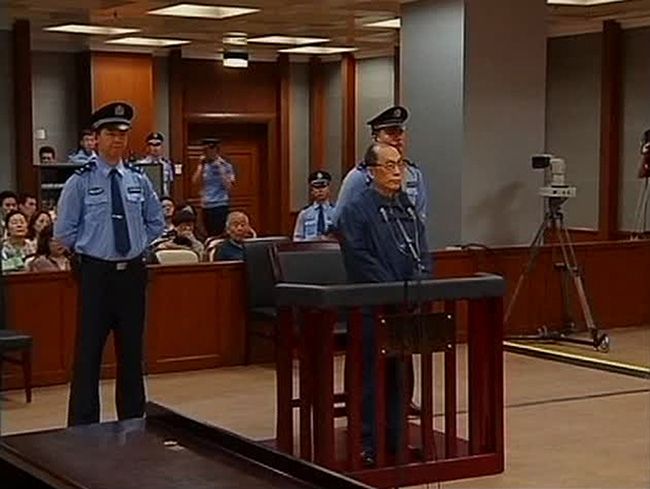
Обычная реакция властей — наказание непосредственно ответственных чиновников вроде смертного приговора бывшему министру железных дорог Лю Чжицзюню (刘志军) по итогам вэньчжоуской трагедии. Однако возмущение системными причинами растет от катастрофы к катастрофе, стимулируя расширение базы протеста и его радикализацию.
Запретные слова
Список табуированных слов — один из лучших способов понять, что именно волнует граждан КНР и китайские власти. Помимо слов и выражений вроде «Тяньаньмэнь-1989», перманентно заблокированных для поиска в китайском сервисе микроблогов Sina Weibo и поисковике Baidu.com, цензоры каждый день блокируют какие-то новые слова. Например, пару месяцев назад в китайском сегменте интернета появился мем «люди семьи Чжао» (赵家人), описывающий околовластных олигархов, но вскоре он был запрещен. Один из лучших ресурсов для отслеживания новых заблокированных терминов — проект China Digital Times , с которым анонимно сотрудничают журналисты многих государственных СМИ в Китае, сливая инструкции отдела пропаганды ЦК КПК.
Ужесточение цензуры в СМИ и соцсетях — далеко не единственное проявление нарастающего беспокойства партии о состоянии умов. Помимо запретных слов, интересным индикатором могут стать полки университетских книжных магазинов. В январе 2015 года министр образования КНР Юань Гуйжэнь (袁贵仁) заявлял , что университеты должны ограничить использование учебников, пропагандирующих западные ценности. После этого в китайских университетах стала популярной шутка: «Если западные учебники читать нельзя, то Маркса с Энгельсом тоже нельзя?»
Учитывая нервную внутреннюю и внешнюю обстановку, степень мракобесия в академической среде будет хорошим индикатором способности руководства КНР мыслить здраво. В наступающем году Огненной Обезьяны эта способность Пекину очень понадобится. Внешним же наблюдателям остается только смотреть на косвенные индикаторы — китайская верхушка становится все более закрытой, и получить достоверную информацию для проникновения в суть происходящих процессов все труднее. Возможно, впору идти к китайским гадателям или обратиться к телепатам из спецслужб для дистанционного чтения мыслей Си и его окружения.
Other texts of the Carnegie Moscow Center on the topic:
Поворот в никуда: итоги азиатской политики России в 2015 году
Зачем Китай купил у России новые истребители?
Панда в мундире: как армия Китая пытается понравиться соседям
Alexander Gabuev
Moscow Center of Carnegie