
Translated material
With German thoroughness
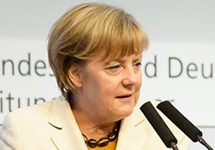
German Chancellor Angela Merkel announced his readiness to lifting sanctions from Russia, however, according to her, she has not yet seen the grounds for this. It is reported by Reuters, referring to a source in the faction of the Christian Democratic Union in the Bundestag. Merkel noted that she would have lifted the sanctions from Russia "the sooner the better", but such a decision should be "based on the facts" compliance with the Minsk agreements. So far, according to her, these agreements are not executed.
According to Merkel, the actions of the Russian leadership in Syria do not cause her confidence. She also expressed concern about Russia's attempts to “intentionally inflate the scandal” around the incident with a 13-year-old Russian woman in Berlin.
In early February, the Chancellor of the Federal Republic of Germany stated that the sanctions against Russia will continue, "since the Minsk agreements were not fulfilled to the end."
On February 15, Dmitry Medvedev in an interview with Time magazine said that the Russian authorities would not ask the West to cancel the sanctions. "Our position is simple, I have formulated it many times: we will not ask for anything. You know our literature well. Mikhail Bulgakov has an excellent phrase in the book" Master and Margarita ", when Woland says that they will never ask and give anything. So we will never ask for the abolition of these sanctions. We will come and finally do not care about all this, because we will not care for all because they will not do it because Better, everyone is only worse, ”the prime minister said.
A few days earlier, in an interview with EURONEWS, Medvedev advised the West to "gain courage" and name the date of cancellation. “We didn’t come up with this, it’s not for us to start cancel it. We were scared all the time, these sanctions were introduced into the Soviet period many times. Never led to anything, they lost money. And now it will be the same. We must gain courage and say: you know, we are completing it from this day, we also ask you to suspend the right approach,” said this is the right approach. Prime Minister.
The sectoral sanctions of the European Union, adopted due to aggression of Russia in Ukraine, came into force on August 1, 2014 . They were introduced for a period of 1 year. Restrictive measures affected the banking and oil sector, the defense and industrial complex, dual-use products and technology. In particular, a ban on the supply of equipment for the oil industry, on technological cooperation with Russia in the development of Arctic shelf and shale deposits was introduced. The EU also introduced the embargo for weapons with Russia and the export of dual -purpose technologies.
In September 2014, the European Union strengthened sanctions against Russia . The sanctions list included new companies, and the period for which it is allowed to attract credit funds was reduced from 90 to 30 days.
In June, foreign ministers of countries - members of the European Union extended the effect of sanctions against Russia for six months, until January 31, 2016. Initially, this was supposed to be done at the EU summit on June 25-26, but then the decision was made to the Foreign Minister . On June 17, the renewal of sanctions approved the Committee of the Permanent Representatives of the EU members .
In addition to sectors, in relation to a number of individuals and legal entities from Russia and the self -proclaimed republics of the East of Ukraine, personal sanctions are valid. They were introduced in March 2014 in response to the annexation of Crimea. On September 14, the EU Council extended the validity of this "black list" until March 15, 2016.